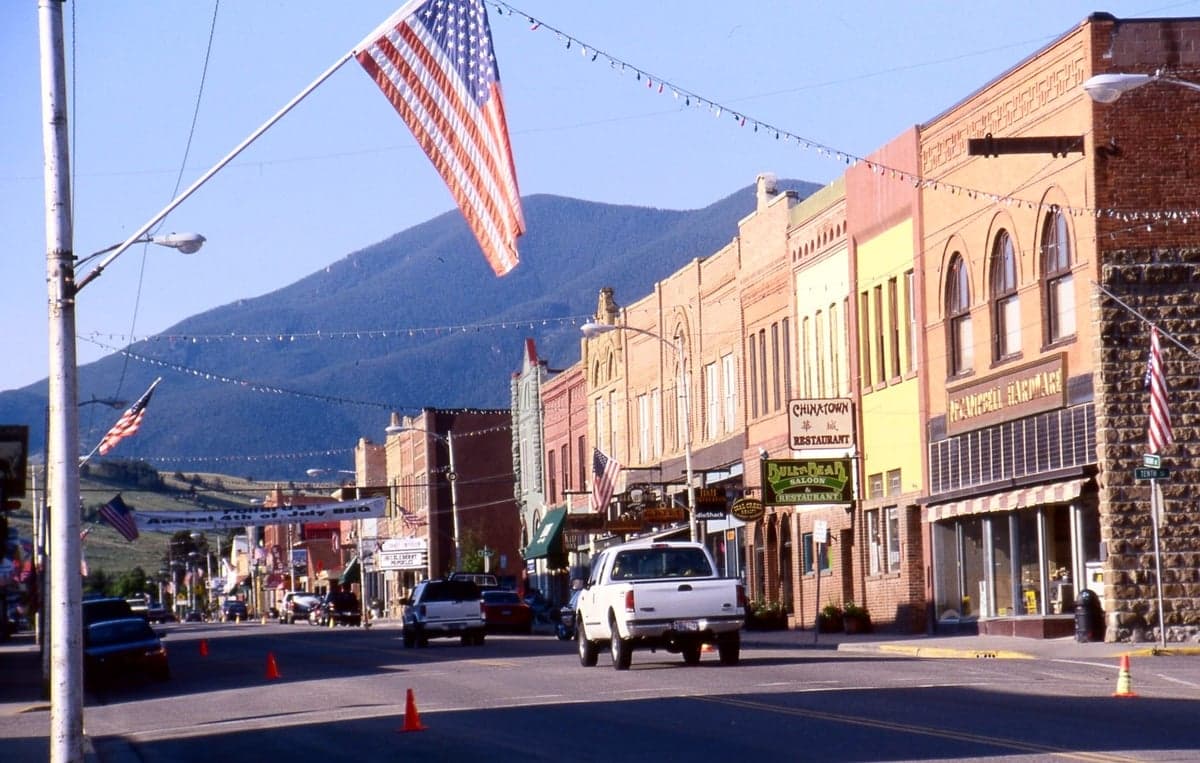
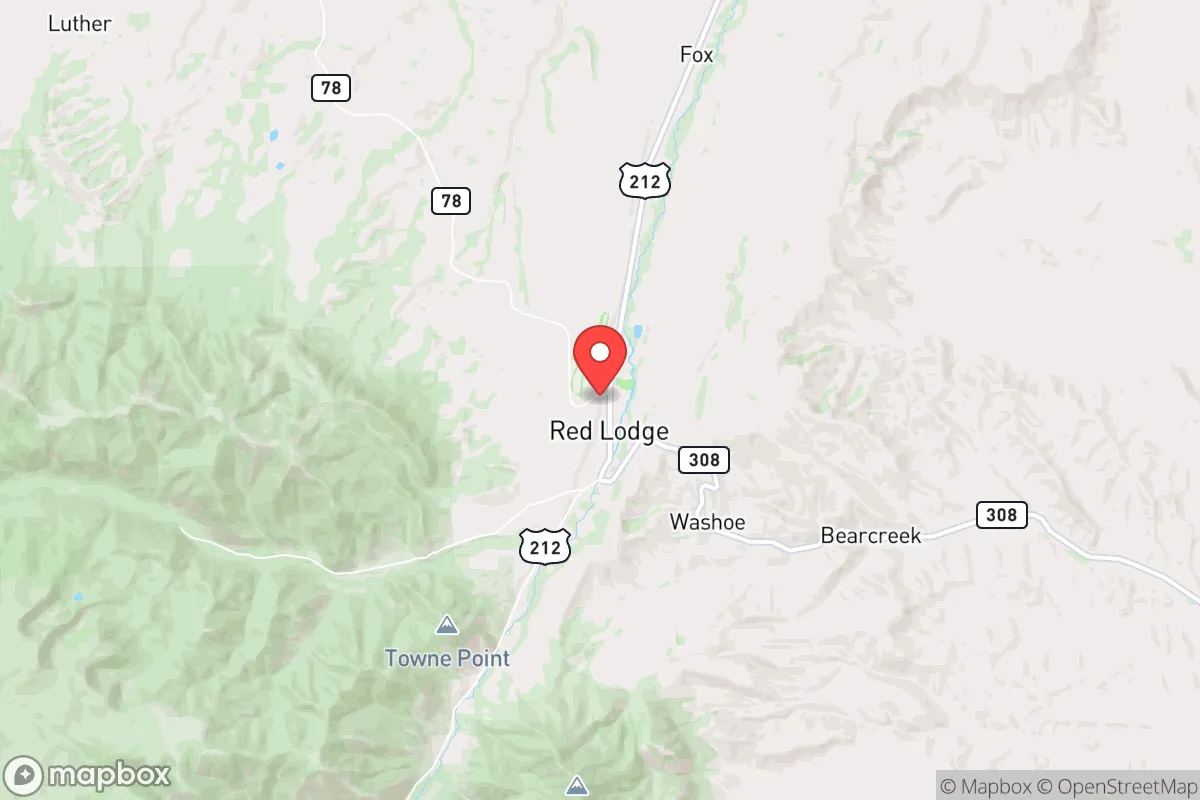
Photo: Wikipedia
Strategic Assessment of Red Lodge, MT
Workable tactical position. Some exposure to population density or targets, but generally defensible in a crisis.
What does the Strategic Assessment tell us?
Our Strategic Assessment grades tactical survivability of an area. Major population centers, military targets, fallout zones, natural disasters, and border exposure all drive risk — lower exposure means a more defensible position in a crisis.
This is heavily inspired by Joel Skousen's Strategic Relocation book. Highly recommended you checkout the book ($)What does this tell us?
Our Strategic Assessment grades tactical survivability of an area. Major population centers, military targets, fallout zones, natural disasters, and border exposure all drive risk — lower exposure means a more defensible position in a crisis.
This is heavily inspired by Joel Skousen's Strategic Relocation book. Highly recommended you checkout the book ($)Strategic Pillars

Key Distances
Regional Safe Places
Below is our recommended "safe zones" in Montana and the surrounding area based on our strategic heuristics. For most people, it's unrealistic to live in a “safe zone” full-time due to work, family or other personal reasons. They tend to be more rural. However, many of these areas are perfect for second homes and retreat properties that double as a vacation home or even a short-term rental.
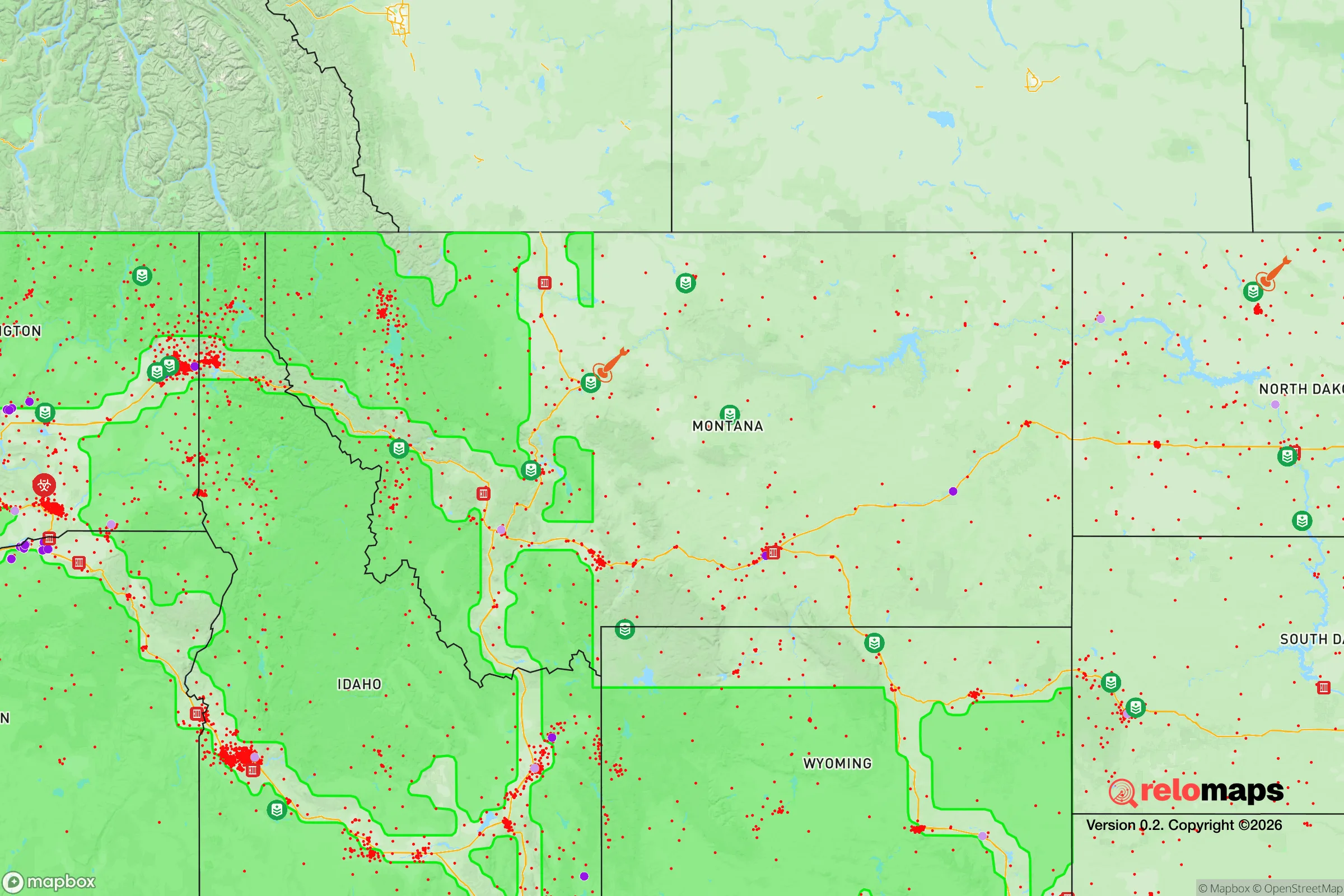


Important Note: For informational purposes only. This does not mean nothing bad ever happens in the green zones. Please use common sense. This is based on public data and modeled with AI. We tried to take a conservative approach but mistakes happen. We update this regularly as new information becomes available.
Solar Generator Recommendations
Backup power matters more here than in safer locations. We've picked three solar generators across budgets and capacity tiers — start with the budget unit if you only need a few essentials, or step up if you want to run a fridge and HVAC for days at a time.

Jackery Portable Power Station Explorer 300
Budget OptionPower on the Go: Weighing only 11 lbs, it's convenient to set up and store with book-sized foldable solar panels

BLUETTI Portable Power Station AC180
Designed for both indoor and outdoor scenarios, AC180 is highly capable as it has a robost capacity and continuous output power.

EF ECOFLOW DELTA Pro Ultra Power Station
Upgraded PickEcoFlow DELTA Pro Ultra is a whole-home energy system designed to grow with your family. Integrated with the Smart Home Panel 2, it scales to meet your evolving energy needs — keeping your home powered, intelligent, and secure through every stage of life.
We earn a commission, at no additional cost to you.
Strategic Assessment Analysis
Red Lodge, Montana, offers a compelling strategic profile for those prioritizing long-term resilience, anchored by its position as a self-contained gateway community with significant natural buffers. Situated at the foot of the Beartooth Mountains and roughly 60 miles southwest of Billings, this town of roughly 2,300 permanent residents provides a rare combination: direct access to high-altitude wilderness and a functional, if small, local economy that isn't wholly dependent on a single industry. For a relocator assessing survivability in an era of potential systemic shocks, Red Lodge’s primary advantage is its location—close enough to a regional hub for supply runs, yet far enough to avoid the immediate chaos of a major metropolitan collapse.
Geographic position and natural advantages for long-term security
Red Lodge sits at an elevation of 5,553 feet, nestled in a valley where the Beartooth Highway (US-212) begins its dramatic ascent into the Absaroka-Beartooth Wilderness. This geography is a double-edged sword, but for security-minded individuals, the natural barriers are a net positive. The surrounding mountains create a natural funnel for access, with only a few primary routes into the valley: US-212 from the east (connecting to the Crow Reservation and I-90), and the Beartooth Highway itself, which is impassable for much of the year due to snow. This limited ingress makes the area inherently defensible against large-scale movement, whether from civil unrest or a disorganized population fleeing a disaster. The town's water supply is drawn from deep mountain aquifers and the West Fork of Rock Creek, a reliable, gravity-fed system that is less vulnerable to grid failure than pumped municipal supplies. The local climate, while harsh with long winters and short growing seasons, also acts as a natural filter—those unprepared for -30°F wind chills will not linger. For a prepper, this means the population that remains will be self-selecting for resilience.
Risks, exposures, and proximity to fallout-relevant landmarks
No location is without vulnerabilities, and Red Lodge has specific exposures that must be weighed. The most immediate concern is its proximity to the Yellowstone Caldera supervolcano, roughly 70 miles to the west. While a full-scale eruption is a low-probability event, the region experiences frequent earthquake swarms and hydrothermal activity. A major seismic event could disrupt the Beartooth Highway and potentially trigger landslides, isolating the town for weeks. More pressing for a conservative survivalist is the town's proximity to the Crow and Northern Cheyenne Indian Reservations, which have experienced periodic civil unrest and have limited economic infrastructure. In a collapse scenario, these areas could become sources of population movement toward Red Lodge, as it is the nearest town with a grocery store, hardware store, and medical clinic for many rural residents. Additionally, while Billings is 60 miles away, it is home to a major oil refinery (the ExxonMobil Billings Refinery) and a rail hub. A major accident or targeted disruption at that facility could create a hazardous plume or disrupt fuel supplies for the entire region. Red Lodge itself has no major industrial targets, but its dependence on trucked-in goods means any disruption to I-90 or US-212 would quickly strain local supplies.
Practical resilience for a relocator: food, water, energy, and defensibility
For a relocator serious about self-sufficiency, Red Lodge presents a mixed but workable picture. Water is the strongest asset: most homes in the area have access to well water, and the municipal supply is sourced from protected mountain watersheds. A hand pump or solar-powered well pump would provide redundancy. Food security is the weakest link. The growing season is short (roughly 90-100 frost-free days), and the soil is rocky and alkaline. Greenhouse or high-tunnel growing is essential for any serious food production. The local grocery store (IGA) is adequate for normal times but would be depleted within days of a supply chain disruption. The town does have a strong local ranching community, and relationships with area ranchers for meat and dairy would be a critical pre-collapse investment. Energy is manageable. The area has good solar potential despite the long winters, and many properties are off-grid or have backup propane. Wood heating is the norm, with ample public land for firewood collection (with a permit). The local electric co-op (Beartooth Electric) is generally reliable but vulnerable to winter storms. Defensibility is excellent at the micro level. The town itself is compact, with a single main street and limited side roads. A small, organized group could effectively control access points. The surrounding national forest provides excellent cover and resources for those willing to live remotely, but note that building codes and fire restrictions are strict, and the Forest Service actively patrols for unauthorized structures.
The overall strategic picture for Red Lodge is one of a high-potential but high-maintenance outpost. It is not a place for those seeking easy living or a bug-out location that requires no ongoing effort. The climate demands serious preparation—adequate winter clothing, a four-wheel-drive vehicle with snow tires, and a stockpile of heating fuel are non-negotiable. The community itself is politically mixed, with a strong libertarian and conservative ranching culture, but also a growing tourist and second-home demographic that may not share the same survivalist priorities. For a single individual or family willing to invest in a greenhouse, a woodlot, and a network of local contacts, Red Lodge offers a defensible, resource-rich base with a low probability of being a primary target in any national-scale disruption. The key is to arrive prepared, not to expect the town to provide what you haven't brought. If you can handle the isolation and the cold, this is one of the better options in the lower 48 for a long-term strategic relocation.

* Values derived from national, state, county, city and local statistics and may differ in a specific area. Last updated: 2026-04-30T05:10:48.000Z
Narrative content on this page is AI-generated and may contain mistakes. Verify any details that matter before acting on them.
ReloMaps may earn a commission from affiliate links at no extra cost to you.

