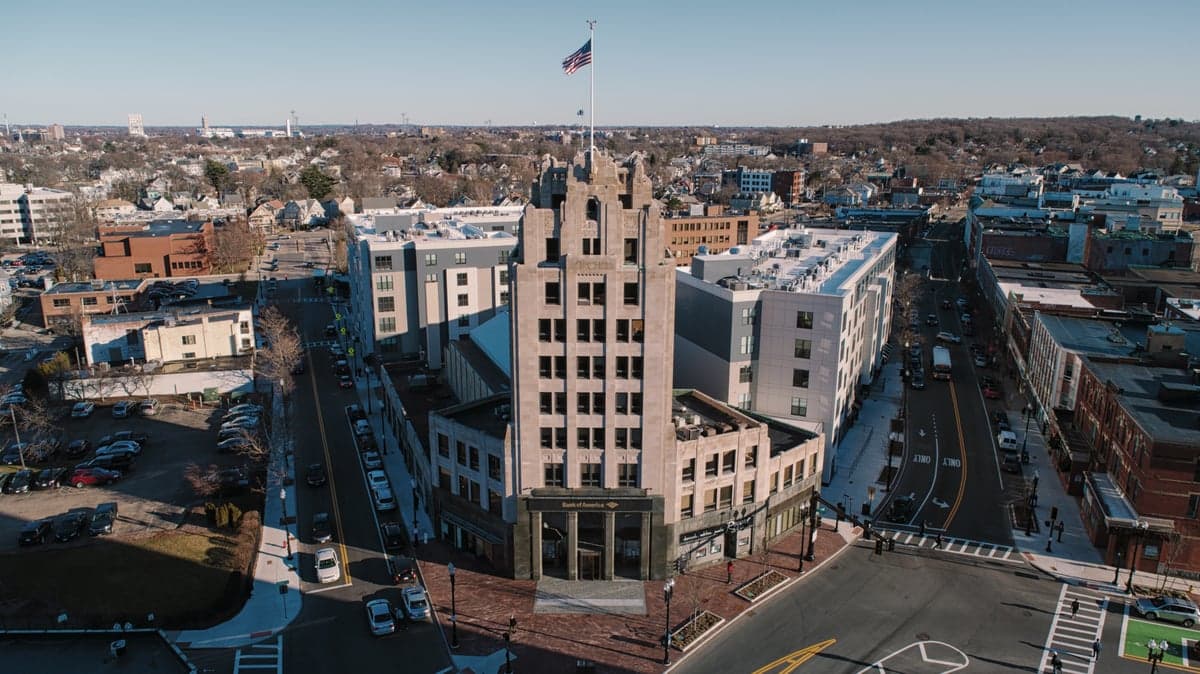
Photo: Wikipedia
Political ClimatePolitical Climate in Quincy, MA
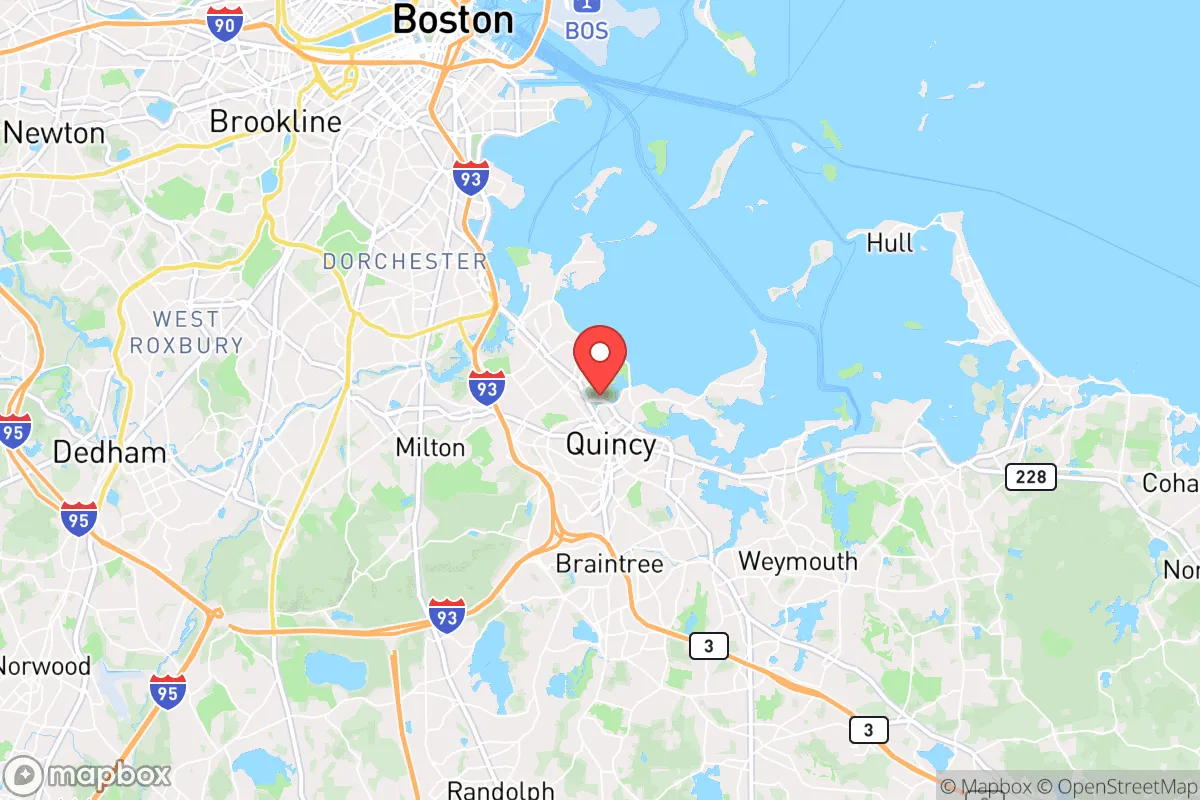
District shown is the primary district for this city’s centroid. Cities may span multiple districts.
Local Political AnalysisPolitical Analysis of Quincy, MA
Quincy, Massachusetts, has a political climate that leans heavily to the left, with a Cook PVI of D+15, meaning it votes about 15 points more Democratic than the national average. This wasn't always the case—this city used to be a classic blue-collar, union Democrat stronghold, where folks were fiscally conservative and socially moderate. Over the last decade or so, the shift has been unmistakable: the local Democratic party has moved further left, and the Republican presence has all but vanished in local elections. If you're looking for a place where your vote might actually balance things out, Quincy isn't it—you're swimming against a very strong current here.
How it compares
To understand Quincy's politics, you have to look at its neighbors. Head south to Weymouth or Braintree, and you'll find a more mixed bag—still blue-leaning, but with a noticeable Republican minority that can win local seats and keep the conversation grounded. Quincy, by contrast, is more like a mini-Boston: dense, diverse, and increasingly progressive. The city's large Asian-American population, particularly of Chinese descent, has historically been more moderate, but younger generations are trending left. Meanwhile, Milton to the west is a wealthy, deep-blue suburb that makes Quincy look almost centrist. The real contrast is with towns like Norwell or Hanover to the south, where you'll still see Republican signs in yards and a healthy skepticism of state-level overreach.
What this means for residents
For a conservative-leaning resident, the practical effects are real and growing. Property taxes in Quincy have climbed steadily, and the city council has shown little appetite for cutting spending—new schools, new municipal buildings, and expanded social programs are the norm. The school system, while decent, has embraced progressive curricula that some parents find intrusive, with less room for parental opt-outs than you'd see in surrounding towns. Zoning and development are heavily controlled by the city, meaning if you want to build a fence, add a deck, or run a small business from home, you'll need to navigate a thicket of permits and neighborhood board approvals. The police department is professional, but the city has embraced "reimagining public safety" initiatives that shift resources away from traditional law enforcement—something that concerns long-time residents who remember when Quincy was a safer, quieter place.
On the cultural front, Quincy has a distinct identity that's worth noting. It's the birthplace of John Adams and John Quincy Adams, and there's still a proud, old-school New England vibe in parts of the city—especially among the older Irish and Italian families. But that's fading. The city government has been aggressive in pushing "equity" initiatives, from hiring quotas to mandatory training programs for city employees. The public library and community centers now host more activist events than traditional civic gatherings. If you value personal freedom—meaning the right to live your life without the government telling you how to think, what to say, or how to run your household—Quincy is becoming a place where you'll feel that pressure. The trajectory is clear: more regulation, more progressive social policy, and less room for dissent. It's a shame, because the bones of the city are still good—great location on the water, solid infrastructure, and hardworking people. But the political winds are blowing in a direction that should give any freedom-minded person pause.

State Political ClimatePolitical Climate in Massachusetts
State Political AnalysisPolitical Environment in the State
Massachusetts has become one of the most reliably Democratic states in the country, with a partisan lean of roughly D+30 in federal elections and a political culture that has shifted steadily leftward over the past two decades. The state hasn’t voted for a Republican presidential candidate since 1984, and the GOP’s presence in the legislature has dwindled to a superminority — roughly 25% of seats in the House and Senate combined. While the state was once home to moderate Republicans like Governors William Weld and Mitt Romney, the party has all but collapsed at the state level, replaced by a dominant progressive coalition that controls every lever of government. For a conservative considering relocation, the political environment here is a one-party state with policies that reflect that reality.
Urban vs. rural divide
The political map of Massachusetts is a textbook case of urban dominance. Greater Boston — including Boston proper, Cambridge, Somerville, and Brookline — drives the state’s progressive tilt, with precincts routinely voting 80-90% Democratic. The western part of the state, particularly Berkshire County (home to Pittsfield and North Adams), is also reliably blue, though less intensely so. The real Republican strongholds are in the central and southeastern regions. Plymouth County and Bristol County (including towns like Taunton and Fall River) have shown more competitive races, with some precincts flipping red in recent cycles. Worcester County is a mixed bag: the city of Worcester leans Democratic, but the surrounding towns like Holden and Paxton are reliably Republican. The Cape and Islands (Barnstable, Falmouth) lean moderate but have trended left in recent years. The rural towns of the Berkshires and Franklin County are more libertarian-leaning than the Boston suburbs, but they’re still solidly blue in statewide races. The bottom line: if you’re looking for a red enclave, you’ll find pockets in the central and southeastern parts of the state, but they’re surrounded by blue territory.
Policy environment
Massachusetts has one of the highest tax burdens in the nation. The state income tax is a flat 5% (with a recent surtax on income over $1 million pushing the effective rate to 9% for high earners), and property taxes are among the highest in the country — averaging about 1.2% of assessed value, but often much higher in desirable suburbs. Sales tax is 6.25%, with no exemptions for groceries or clothing. The regulatory environment is dense: the state has some of the strictest environmental regulations, building codes, and labor laws in the country. Education policy is dominated by the teachers’ unions, with school choice limited to inter-district transfers and charter schools capped by law. Healthcare is heavily regulated, with the state having its own individual mandate and a robust Medicaid expansion. Election laws are among the most progressive: no-excuse mail-in voting, same-day registration, and automatic voter registration are all in place. For a conservative, the policy environment feels like a laboratory for progressive governance — high taxes, heavy regulation, and a strong safety net.
Trajectory & freedom
Over the past decade, Massachusetts has become less free across multiple dimensions. On gun rights, the state passed the 2024 “Massachusetts Gun Safety Act,” which expanded the existing assault weapons ban, required microstamping for new handguns, and created a state-level firearm licensing system that effectively makes it a “may-issue” state for concealed carry — a direct challenge to the Bruen decision. On parental rights, the state passed a 2022 law that allows minors 16 and older to consent to gender-affirming care without parental notification, and a 2023 law that requires schools to adopt policies supporting LGBTQ+ students, which some districts have interpreted as limiting parental opt-out rights. On speech, the state has considered legislation to regulate “hate speech” online, though it hasn’t passed yet. On medical autonomy, the state expanded abortion access in 2020 with the ROE Act, allowing for late-term abortions and removing parental consent requirements for minors. Property rights are constrained by strict zoning laws and rent control measures in Boston and Cambridge. The trajectory is clear: the state is moving further left on every front, with little political opposition to slow it down.
Civil unrest & political movements
Massachusetts has seen its share of political flashpoints. The 2020 Black Lives Matter protests in Boston were large and occasionally violent, with property damage in the Downtown Crossing area. The state’s sanctuary policy — codified in a 2017 law that limits cooperation between local law enforcement and ICE — has been a source of tension, particularly in Lawrence and Lowell, where immigration enforcement clashes have made local news. On the right, the “Massachusetts Fiscal Alliance” and “MassResistance” have been active, but they’re small and largely ineffective. The 2020 election integrity debate was muted here compared to other states, though some local Republican committees raised concerns about mail-in voting procedures. The most visible political movement in recent years has been the “Yes on 2” campaign to expand charter schools, which was defeated in 2016 after heavy union spending. For a new resident, the political climate feels like a one-party state where dissent is tolerated but not influential.
Projection
Over the next 5-10 years, Massachusetts is likely to become more progressive, not less. Demographic trends favor the left: the state’s population is aging, but the young, college-educated voters moving into Boston and its suburbs are overwhelmingly Democratic. In-migration from other states is modest, and the people leaving — often to Florida, Texas, or New Hampshire — tend to be more conservative. The state’s Republican Party is in disarray, with no clear leader or strategy. The most likely scenario is continued one-party rule, with incremental expansions of the welfare state, tighter gun laws, and more regulation of housing and healthcare. For a conservative moving in now, the expectation should be that the political environment will be even less friendly in a decade than it is today.
For a conservative considering Massachusetts, the bottom line is this: you’ll be living in a state where your vote for statewide office won’t matter, where taxes are high and rising, and where personal freedoms — particularly on guns, speech, and parental rights — are under constant pressure. If you’re moving here for a job or family, you’ll find good schools and strong infrastructure, but you’ll need to accept that the political culture is fundamentally opposed to your values. The best you can do is find a red-leaning town in the central or southeastern part of the state, vote in local races, and hope the national trend toward blue-state flight accelerates.
* Values derived from national, state, county, city and local statistics and may differ in a specific area. Last updated: 2026-05-02T14:10:01.000Z
Narrative content on this page is AI-generated and may contain mistakes. Verify any details that matter before acting on them.
ReloMaps may earn a commission from affiliate links at no extra cost to you.

