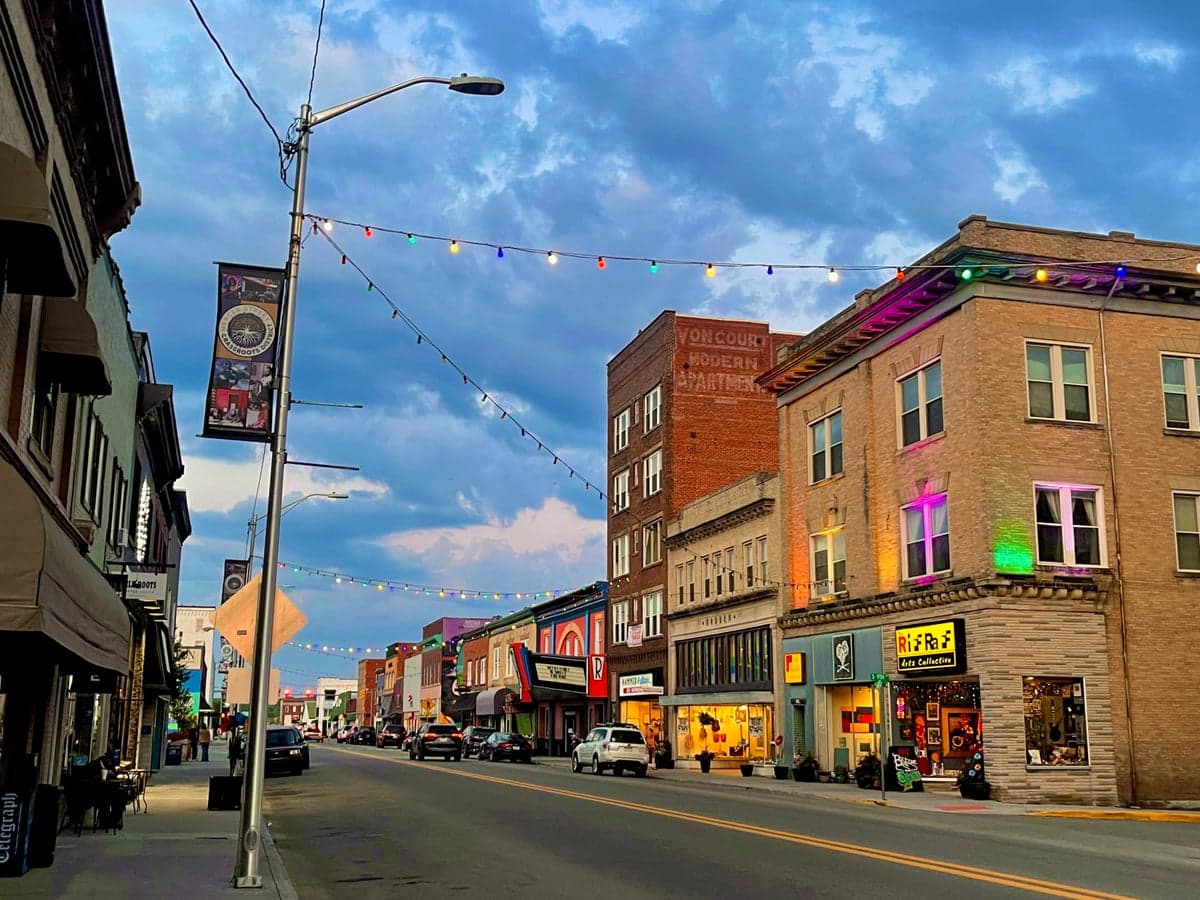
Photo: Wikipedia
Political ClimatePolitical Climate in Princeton, WV
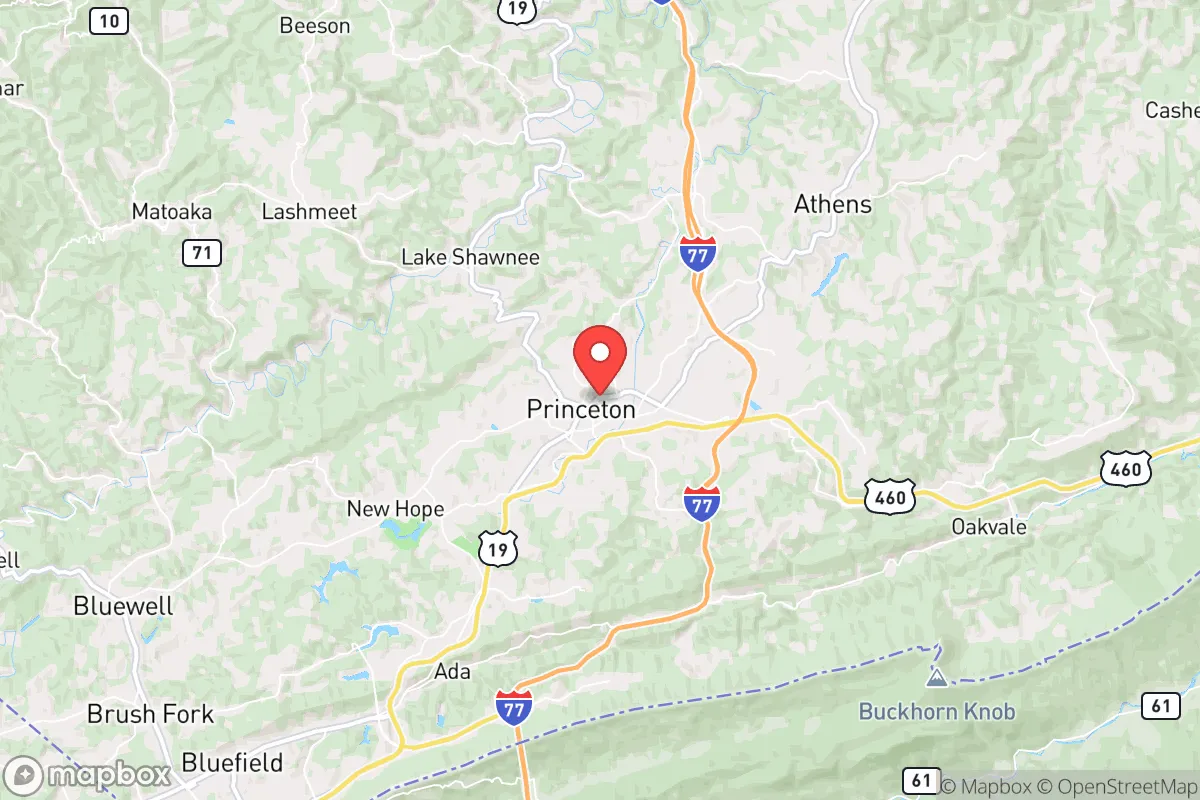
District shown is the primary district for this city’s centroid. Cities may span multiple districts.
Local Political AnalysisPolitical Analysis of Princeton, WV
Princeton, West Virginia, sits deep in reliably conservative territory, with a Cook PVI of R+22 that reflects generations of traditional values and a healthy skepticism of federal overreach. This isn't a place that's suddenly flipped; it's been a Republican stronghold for decades, and the local culture still prizes self-reliance, gun rights, and a government that stays out of your business. If you're looking at the political climate here, the short version is that Princeton leans hard right, and while there's been some chatter about younger folks drifting left, the overall trajectory has held steady—if anything, the area has become more vocal about pushing back against progressive policies coming out of Charleston and D.C.
How it compares
To really understand Princeton, you have to look at the surrounding area. Drive 20 minutes north to Bluefield, and you'll find a similar conservative bent, though Bluefield's economy has taken more hits from coal's decline, making local politics a bit more focused on jobs than cultural battles. Head east toward Blacksburg, Virginia, and you're entering a completely different world—a college town that votes reliably blue, with all the progressive energy that brings. Princeton sits in that buffer zone, where folks from both sides of the mountain come to shop and work, but the local politics remain firmly rooted in the old-school values of southern West Virginia. The contrast is sharp: Blacksburg's city council debates bike lanes and diversity initiatives, while Princeton's leaders are more likely to be talking about property taxes, Second Amendment sanctuary resolutions, and keeping the county's business climate friendly to small manufacturers.
What this means for residents
For someone moving here, the political climate translates into a few concrete realities. You won't see mask mandates or vaccine passports enforced at local businesses—most places let you decide for yourself. The local school board has been vocal about parental rights, and there's a strong pushback against any curriculum that feels like indoctrination. Property taxes are low compared to northern states, and the county commission generally takes a hands-off approach to zoning and business regulation. That said, there's a growing concern among longtime residents about the slow creep of progressive ideas through social media and transplants from places like Roanoke or Charlotte. The fear is that as Princeton grows—and it is growing, slowly—some of that small-town common sense could get diluted by outsiders who don't understand why folks here value their freedoms so much.
One cultural distinction worth noting: Princeton has a strong tradition of church involvement in community life, which shapes everything from local charity work to political endorsements. You'll see more "God Bless America" signs than political yard signs, and the local Republican club is more active than the Democratic one by a wide margin. The biggest policy fights in recent years have been over land use—specifically, keeping the county open to private development without heavy-handed government interference. There's also been a steady push to protect Second Amendment rights, with the county passing a resolution declaring itself a "Second Amendment Sanctuary" back in 2020. Looking ahead, the concern among locals is that if the state legislature in Charleston keeps drifting toward more moderate positions—like expanding Medicaid or loosening gun laws—Princeton will have to fight harder to preserve the way of life that's kept this area stable and free for generations. For now, though, it's still a place where a handshake means something and the government knows its place.

State Political ClimatePolitical Climate in West Virginia
State Political AnalysisPolitical Environment in the State
West Virginia has long been one of the most reliably Republican states in the nation, but that wasn’t always the case. As recently as the 1990s, it was a Democratic stronghold at the state and local level, with a strong union and coal-mining heritage that leaned blue. Over the last 20 years, a massive realignment has taken place: the state flipped from voting for Bill Clinton twice to giving Donald Trump a 39-point margin in 2024, the largest of any state. Today, the dominant coalition is a mix of rural, working-class voters, evangelical Christians, and former Democrats who feel abandoned by the national party on cultural and economic issues. The trajectory has been a steady march rightward, with no signs of reversing.
Urban vs. rural divide
The political map of West Virginia is starkly divided between a few small urban islands and a vast, deeply red rural landscape. The state’s largest city, Charleston, is the only real blue dot, with Kanawha County voting Democratic in recent presidential races by narrow margins—though even that is fading. Morgantown, home to West Virginia University, leans left due to the academic and younger population, but Monongalia County still votes Republican overall. Huntington and Wheeling are more purple but trending red. Everywhere else—from the coal fields of Logan and Mingo counties to the eastern panhandle’s Berkeley County—is deep Republican territory. The rural-urban divide is less about ideology and more about population density: the few cities are moderate, while the countryside is overwhelmingly conservative. If you’re moving to Lewisburg or Shepherdstown, you’ll find a slightly more moderate vibe, but the state legislature is dominated by rural conservatives.
Policy environment
West Virginia’s policy environment is aggressively conservative, and it’s been shaped by a Republican supermajority in the legislature since 2014. The state has no personal income tax on Social Security benefits and has been phasing down its personal income tax rate—currently at 3.99% with a goal of elimination. Property taxes are among the lowest in the nation, capped by the state constitution. The regulatory posture is business-friendly, with right-to-work laws and no state-level minimum wage above the federal $7.25. On education, the state passed a robust school choice law in 2021, creating the Hope Scholarship, which allows parents to use state education funds for private school, homeschooling, or tutoring. Healthcare is a mixed bag: the state expanded Medicaid under the Affordable Care Act, but there’s a strong push for medical freedom, including a 2023 law protecting healthcare workers from being forced to participate in procedures they object to. Election laws are strict: voter ID is required, and the state has no early voting by mail without an excuse. It’s a low-tax, low-regulation environment that appeals to conservatives looking to escape high-cost states.
Trajectory & freedom
West Virginia is becoming more free in many respects, especially on gun rights, parental rights, and tax policy. In 2024, the legislature passed a constitutional carry law, allowing permitless carry of firearms for anyone 21 or older. Parental rights were strengthened with the Parental Bill of Rights (2022), which requires schools to notify parents about curriculum changes and medical services. On medical autonomy, the state passed a law in 2023 prohibiting COVID-19 vaccine mandates by private employers and government entities. Property rights were bolstered by a 2022 law limiting eminent domain for private economic development. However, there are concerns: the state has a high addiction rate, and the government has expanded surveillance of prescription drug monitoring, which some see as overreach. The trajectory is toward more personal liberty, but the state’s fiscal challenges—an aging population and shrinking workforce—could force tax increases down the road. For now, it’s a freedom-friendly environment that’s trending in the right direction.
Civil unrest & political movements
West Virginia has a history of labor unrest, but modern political movements are quieter. The 2018 teachers’ strike was a major flashpoint, shutting down schools statewide for nine days and leading to a 5% pay raise—a rare show of organized labor power in a red state. Since then, the legislature has passed laws restricting public-sector union power. On the right, the West Virginia Patriot movement is active, with groups like the West Virginia Citizens Defense League pushing for gun rights and election integrity. There have been no major sanctuary city policies; in fact, the state passed a law in 2020 requiring local law enforcement to cooperate with federal immigration authorities. Election integrity controversies are minimal, but the state did pass a 2021 law banning ballot drop boxes and limiting absentee voting. You won’t see protests in the streets like in Portland or Seattle, but there’s a palpable distrust of federal authority, especially around land use and environmental regulations. The Mountain Valley Pipeline protests in the early 2020s drew activists from both sides, but they were small and localized.
Projection
Over the next 5-10 years, West Virginia will likely become even more conservative, but with a twist. The state is losing population—down about 3% since 2020—and the people leaving are often younger and more moderate, while those moving in are retirees and remote workers from blue states seeking lower taxes and freedom. This in-migration is concentrated in the eastern panhandle (Jefferson County, Berkeley County), where housing is cheaper than nearby Washington, D.C. These newcomers tend to be fiscally conservative but socially moderate, which could soften the state’s hard-right edge on issues like marijuana legalization (still illegal) and abortion (banned at conception with no exceptions for rape or incest). The state’s economy is slowly diversifying away from coal toward tourism, outdoor recreation, and data centers (like the Green Bank Observatory area). Expect the tax burden to continue dropping, but watch for a potential sales tax increase to offset income tax cuts. If you’re moving in now, you’ll find a state that’s deeply red, increasingly free, but facing demographic headwinds that could reshape its politics in a decade.
For a conservative-leaning individual or family, West Virginia offers a rare combination of low taxes, strong gun rights, school choice, and a culture that values self-reliance. The trade-offs are a struggling economy in many areas, limited healthcare access in rural regions, and a state government that sometimes overreaches on social issues. If you value personal freedom and don’t mind a slower pace of life, it’s a solid bet—but keep an eye on the eastern panhandle, where the influx of out-of-state transplants could shift the political balance over time.
* Values derived from national, state, county, city and local statistics and may differ in a specific area. Last updated: 2026-05-01T10:12:43.000Z
Narrative content on this page is AI-generated and may contain mistakes. Verify any details that matter before acting on them.
ReloMaps may earn a commission from affiliate links at no extra cost to you.

