 Popular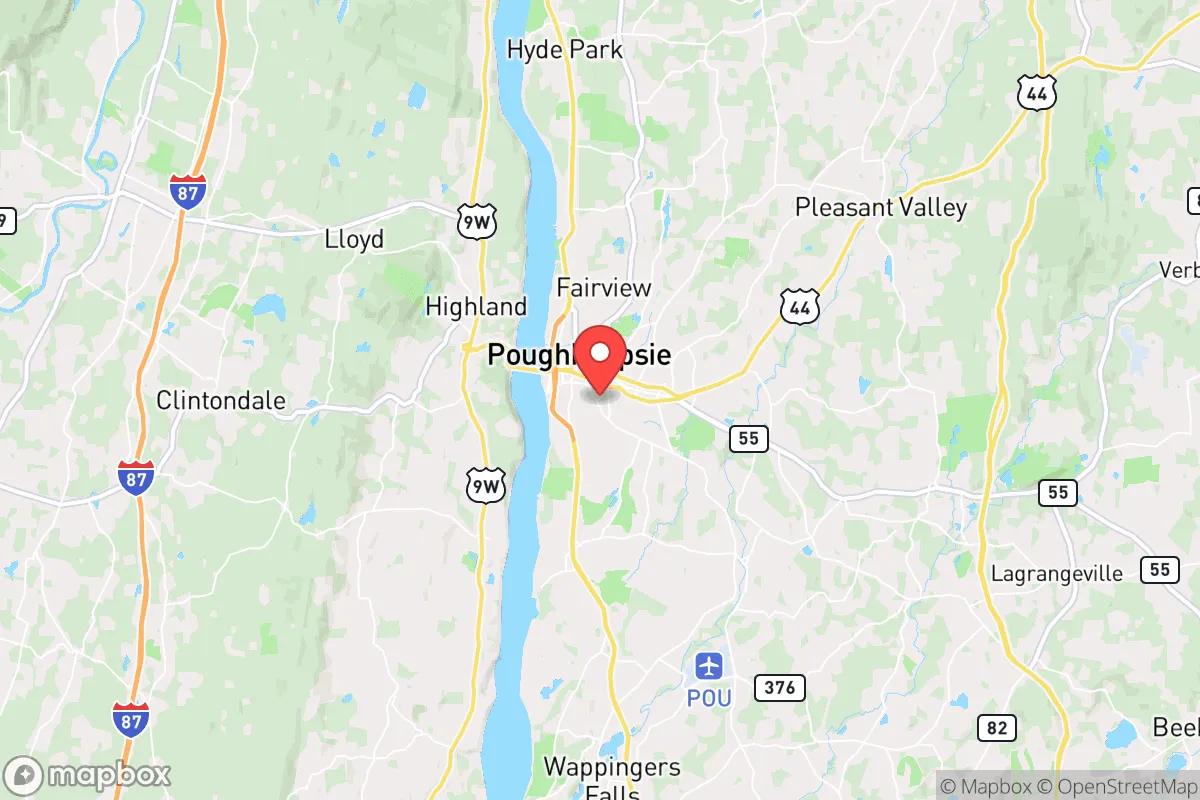
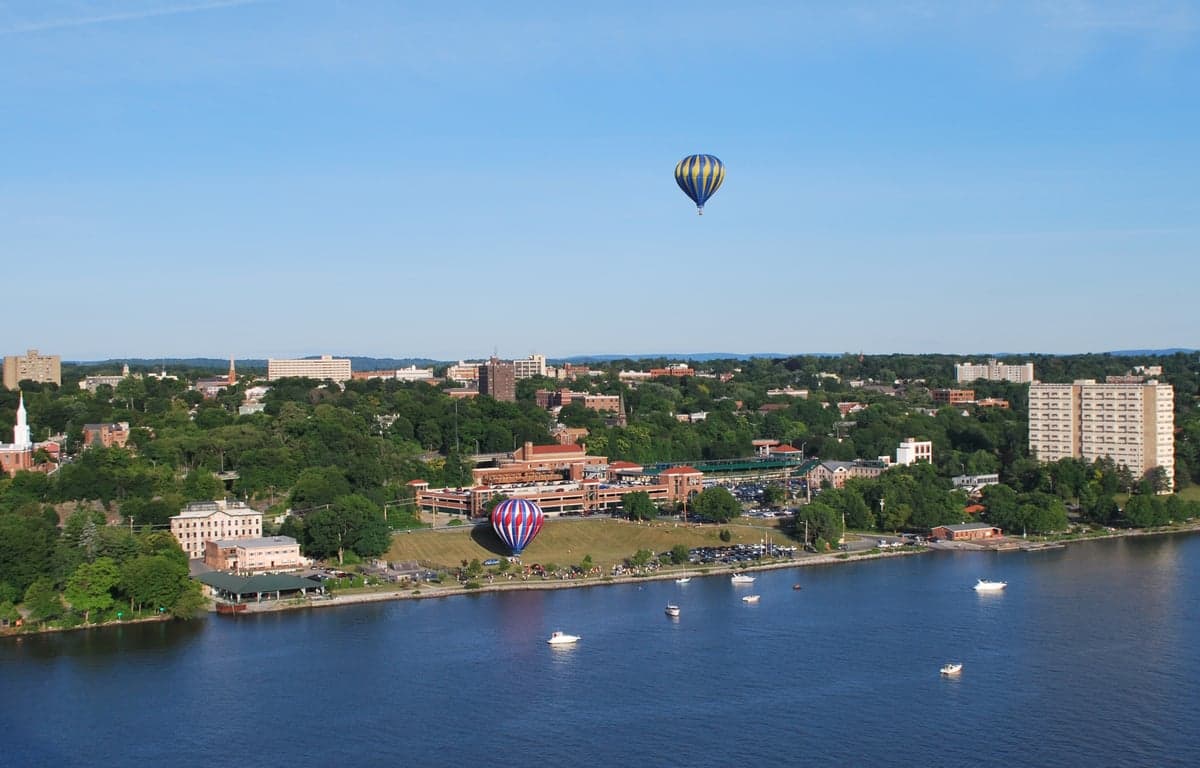
Photo: Wikipedia
Political ClimatePolitical Climate in Poughkeepsie, NY
District shown is the primary district for this city’s centroid. Cities may span multiple districts.
Local Political AnalysisPolitical Analysis of Poughkeepsie, NY
Poughkeepsie’s political climate has shifted noticeably over the past decade, and not in a direction that sits well with folks who value personal freedom and limited government. The city itself leans left, with a Cook PVI of D+2, but that number doesn’t tell the whole story—it’s the cultural and policy drift that’s more concerning. Where the area used to be a quiet, middle-of-the-road Hudson Valley town, it’s now increasingly defined by progressive activism and a local government that seems eager to regulate everyday life, from housing to small business operations.
How it compares
Drive ten miles in almost any direction and you’ll find a different political reality. Hyde Park and Red Hook to the north still hold a strong conservative undercurrent, with town boards that push back on state mandates and keep taxes relatively low. Across the river, Highland and Lloyd are more libertarian-leaning, where residents grumble about Albany’s overreach but still enjoy a fair bit of local autonomy. Poughkeepsie, by contrast, has embraced the progressive playbook: the city council has pushed zoning changes that favor dense development, and there’s a growing appetite for rent control measures that scare off small landlords. Dutchess County as a whole voted +9 Republican in the 2024 presidential race, so the city is an island of blue in a sea of red—and that tension is palpable when you talk to neighbors who feel their voices are drowned out by a vocal minority.
What this means for residents
For the average person, the biggest red flag is how quickly personal freedoms get chipped away. Poughkeepsie’s local government has shown a willingness to impose mask mandates and business restrictions that go beyond state requirements, and there’s a persistent push for “equity” policies that often translate into higher fees and more paperwork for small business owners. If you run a shop on Main Street, you’re dealing with a permitting process that’s gotten slower and more expensive, while the city council debates things like “sanctuary city” status and police reform that don’t do much to help you keep the lights on. The school board has also leaned hard into progressive curriculum changes, which has driven some families to private schools or to move out to the more conservative towns in the county. Property taxes are already high in New York, and Poughkeepsie’s are among the steepest in the region, so you’re paying a premium for a government that seems more interested in social engineering than in keeping the streets clean and the potholes filled.
Looking ahead, the trajectory is concerning. The city’s population has been flat to declining, while the surrounding towns are growing—a sign that people are voting with their feet. If the current trend continues, Poughkeepsie risks becoming a place where only those who can afford the high taxes and tolerate the regulatory creep stay put, while everyone else heads to places like Lagrange or Wappinger where the local government still remembers that its job is to serve the people, not manage them. For now, it’s a place where you can still find good neighbors and a sense of community, but you’ll have to work harder to protect your own freedoms from a city hall that doesn’t seem to trust you to make your own choices.

State Political ClimatePolitical Climate in New York
State Political AnalysisPolitical Environment in the State
New York State has been a solidly blue stronghold for decades, but the picture is more complicated than the statewide numbers suggest. The Democratic coalition dominates, powered by New York City and its immediate suburbs, but the rest of the state—especially upstate and the Finger Lakes region—has been trending redder, creating a stark political chasm. Over the last 10-20 years, the state has lurched further left on social and economic policy, driven by a supermajority in Albany that has little incentive to compromise, while rural and exurban counties have flipped from purple to deep red in response.
Urban vs. rural divide
The political map of New York is a tale of two states. New York City—Manhattan, Brooklyn, Queens, the Bronx, and Staten Island—along with its inner-ring suburbs like Westchester County and Nassau County on Long Island, provide the overwhelming Democratic vote share. In 2024, Manhattan voted roughly 85% Democratic, while Erie County (Buffalo) and Monroe County (Rochester) also lean blue, though less overwhelmingly. Meanwhile, the vast rural expanse—from the North Country near the Canadian border down through the Southern Tier—votes heavily Republican. Allegany County and Wyoming County routinely go 65-70% Republican. The real battlegrounds are the "collar counties" like Orange County and Sullivan County, which have shifted right as New York City residents flee north for lower taxes and more space. Staten Island remains a Republican outlier within the five boroughs, often voting 55-60% GOP, a testament to its more suburban, blue-collar character.
Policy environment
Albany’s policy environment is aggressively progressive, and it shows in the tax code and regulatory climate. New York has the highest combined state and local tax burden in the nation, with a top income tax rate of 10.9% and property taxes that can exceed 2% of home value in places like Westchester and Nassau. The state’s regulatory posture is heavy-handed, especially in energy (the ban on natural gas hookups in new construction by 2026) and labor (a $15 minimum wage that rises with inflation). Education policy is dominated by the teachers’ unions, with school choice virtually nonexistent—charter schools are capped and heavily restricted. Healthcare is a mixed bag: the state expanded Medicaid aggressively and runs its own health insurance exchange, but wait times for specialists in rural areas are long. Election laws are among the most liberal in the country: no-excuse absentee voting, early voting, and automatic voter registration are all in place, which critics argue opens the door to fraud, though no major scandals have been proven. The state also has a "sanctuary" law (the Green Light Law) that bars state and local law enforcement from cooperating with federal immigration authorities, a flashpoint for many conservatives.
Trajectory & freedom
Over the past five years, New York has become less free by almost any measure of personal liberty. The 2022 gun law (the Concealed Carry Improvement Act) effectively ended the ability to carry a firearm in most public places, requiring "good moral character" affidavits and banning carry in "sensitive locations" like Times Square and public transit—a direct response to the Supreme Court’s Bruen decision. Parental rights took a hit with the 2019 Child Victims Act, which extended the statute of limitations for child sex abuse claims but also led to lawsuits against schools and churches that some argue went too far. Medical autonomy was curtailed during COVID, with New York imposing some of the strictest and longest-lasting mandates in the country, including vaccine requirements for healthcare workers that remain in effect. Property rights are under pressure from rent control laws in New York City and the 2019 Housing Stability and Tenant Protection Act, which made it nearly impossible for landlords to evict non-paying tenants. On the plus side, the state has not enacted a wealth tax (yet), and the 2023 repeal of the "pied-à-terre" tax on second homes was a small win for property owners. But the overall trajectory is toward more government control, not less.
Civil unrest & political movements
New York has been a hotbed of political activism on both sides. The 2020 Black Lives Matter protests in New York City were massive and occasionally violent, leading to property damage and a subsequent "defund the police" push that was partially reversed after crime spikes. On the right, the "New York State Rifle & Pistol Association" remains a powerful lobbying force, and grassroots groups like "Upstate United" organize against sanctuary policies and tax hikes. Immigration politics are a constant flashpoint: the Green Light Law has led to standoffs between the state and local sheriffs in counties like Rensselaer and Niagara, who refuse to comply with state directives to release undocumented immigrants from jail. Election integrity controversies flared in 2020 and 2022, with Republicans questioning the handling of absentee ballots in close races—though no court has overturned a result. The "New York City is not New York State" sentiment is real, and you’ll hear talk of secession in places like Staten Island and Sullivan County, though it’s mostly rhetorical. A new resident will notice the political tension at the local level: town hall meetings in Orange County often devolve into shouting matches over school curriculum and mask mandates.
Projection
Over the next 5-10 years, New York will likely become more polarized, not less. The Democratic supermajority in Albany is entrenched due to gerrymandering and the concentration of population in NYC, so progressive policies will continue to roll out—expect a push for single-payer healthcare (the New York Health Act) and a state-level wealth tax on high earners. Meanwhile, the exodus of residents to Florida, Texas, and the Carolinas will accelerate, especially among families and small business owners who can’t stomach the tax burden. The upstate population will continue to stagnate or decline, while New York City’s population may stabilize as remote work brings in younger, more liberal transplants. The political divide will widen: rural counties may become even more Republican, but their votes will matter less as the state’s electoral power shifts further to the city. A new resident moving in now should expect a state that is increasingly hostile to conservative values on guns, taxes, and education, but with pockets of resistance in the exurbs and rural areas that offer a more traditional lifestyle.
For a conservative-leaning individual or family, the bottom line is this: New York offers world-class career opportunities in finance, tech, and media, but you’ll pay a steep price in taxes, regulation, and cultural friction. If you’re moving here, pick your county carefully—Orange County or Sullivan County offer a more balanced political climate than Westchester or the city. Be prepared for a state government that sees itself as a national leader in progressive policy, and understand that your vote in state elections will be largely symbolic. The trade-off is access to the economic engine of the Northeast, but it comes with a heavy dose of government overreach that shows no signs of abating.
* Values derived from national, state, county, city and local statistics and may differ in a specific area. Last updated: 2026-05-01T10:03:27.000Z
Narrative content on this page is AI-generated and may contain mistakes. Verify any details that matter before acting on them.
ReloMaps may earn a commission from affiliate links at no extra cost to you.

