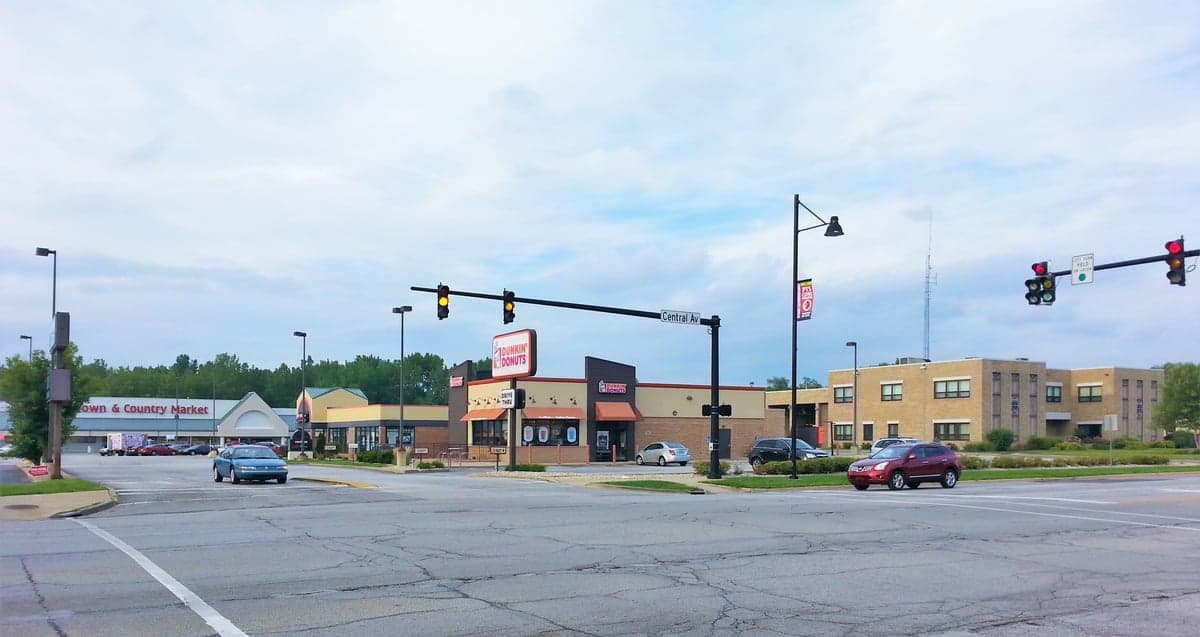
Photo: Wikipedia
Strategic Assessment of Portage, IN
Meaningful friction. Expect exposure to either population pressure, blast zones, or natural disaster risk. Consider buying a retreat property.
What does the Strategic Assessment tell us?
Our Strategic Assessment grades tactical survivability of an area. Major population centers, military targets, fallout zones, natural disasters, and border exposure all drive risk — lower exposure means a more defensible position in a crisis.
This is heavily inspired by Joel Skousen's Strategic Relocation book. Highly recommended you checkout the book ($)What does this tell us?
Our Strategic Assessment grades tactical survivability of an area. Major population centers, military targets, fallout zones, natural disasters, and border exposure all drive risk — lower exposure means a more defensible position in a crisis.
This is heavily inspired by Joel Skousen's Strategic Relocation book. Highly recommended you checkout the book ($)Strategic Pillars

Key Distances
Regional Safe Places
Below is our recommended "safe zones" in Indiana and the surrounding area based on our strategic heuristics. For most people, it's unrealistic to live in a “safe zone” full-time due to work, family or other personal reasons. They tend to be more rural. However, many of these areas are perfect for second homes and retreat properties that double as a vacation home or even a short-term rental.

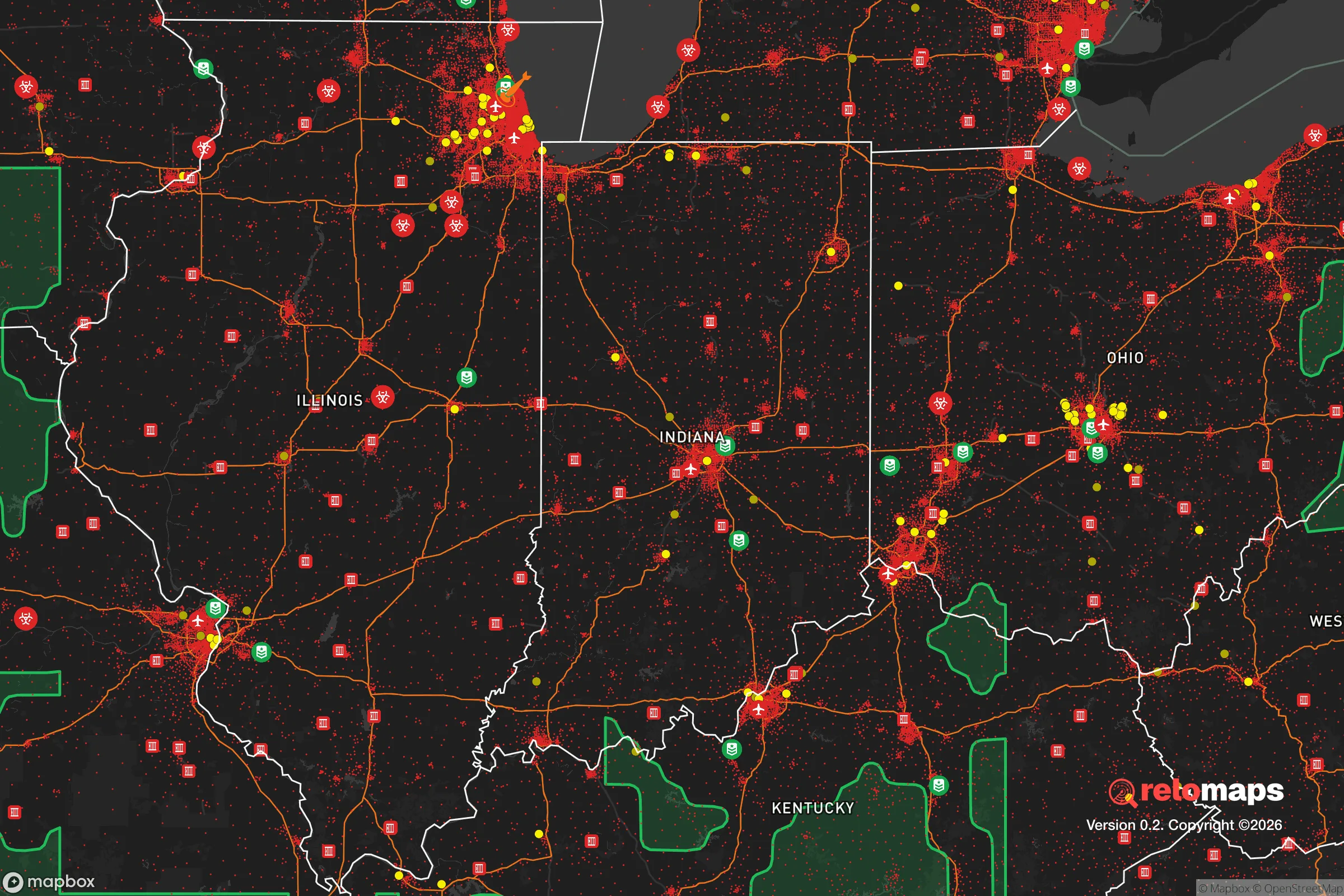


Important Note: For informational purposes only. This does not mean nothing bad ever happens in the green zones. Please use common sense. This is based on public data and modeled with AI. We tried to take a conservative approach but mistakes happen. We update this regularly as new information becomes available.
Solar Generator Recommendations
Backup power matters more here than in safer locations. We've picked three solar generators across budgets and capacity tiers — start with the budget unit if you only need a few essentials, or step up if you want to run a fridge and HVAC for days at a time.

Jackery Portable Power Station Explorer 300
Budget OptionPower on the Go: Weighing only 11 lbs, it's convenient to set up and store with book-sized foldable solar panels

BLUETTI Portable Power Station AC180
Designed for both indoor and outdoor scenarios, AC180 is highly capable as it has a robost capacity and continuous output power.

EF ECOFLOW DELTA Pro Ultra Power Station
Upgraded PickEcoFlow DELTA Pro Ultra is a whole-home energy system designed to grow with your family. Integrated with the Smart Home Panel 2, it scales to meet your evolving energy needs — keeping your home powered, intelligent, and secure through every stage of life.
We earn a commission, at no additional cost to you.
Strategic Assessment Analysis
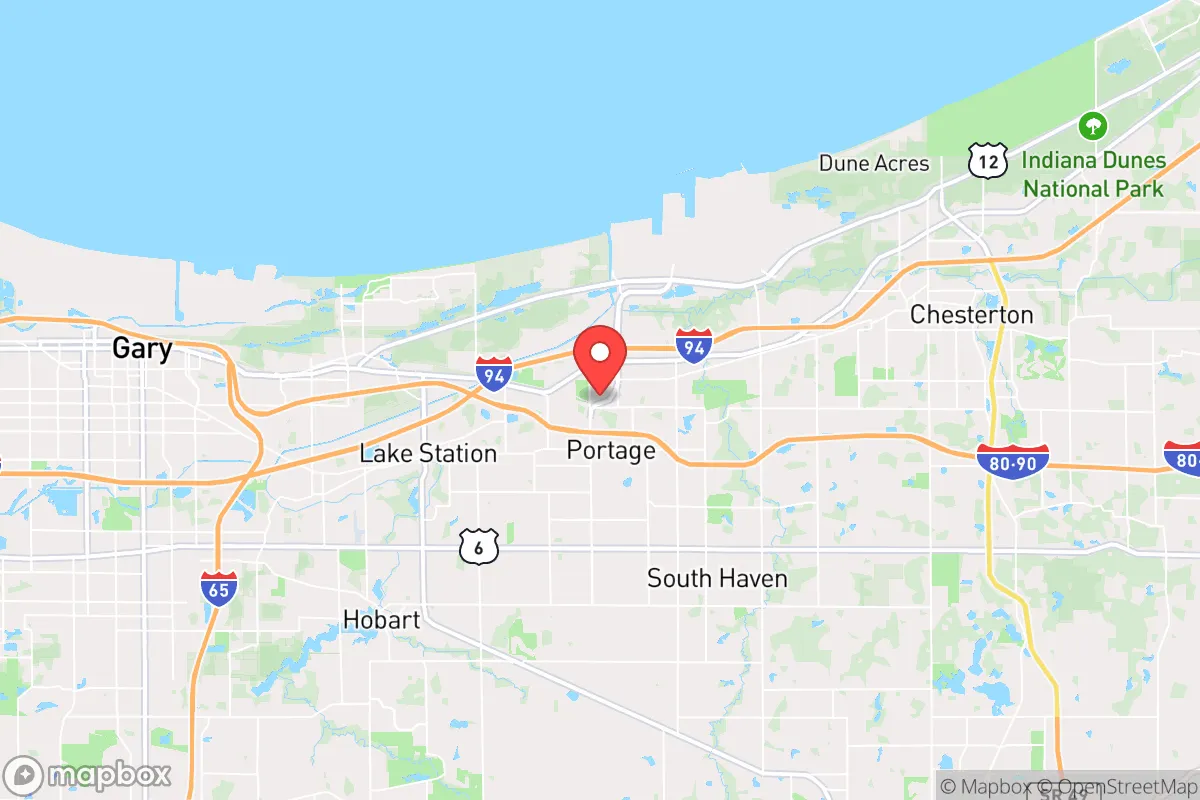
Portage, Indiana, sits in a precarious but potentially strategic pocket of the Midwest, offering a mix of industrial resilience and geographic exposure that demands a clear-eyed assessment. Located on the southern shore of Lake Michigan, roughly 40 miles from Chicago’s Loop and 15 miles from the Gary-Chicago border, this city of about 37,000 residents is a classic Rust Belt pivot point—close enough to major economic arteries but far enough to avoid the immediate blast radius of a worst-case scenario. For the conservative relocator thinking about long-term stability, Portage’s real advantage is its position as a secondary hub: it’s not a primary target, but it’s near enough to critical infrastructure that you need to understand what that means for daily life and disaster preparedness.
Geographic position and natural advantages for long-term stability
Portage’s location on Lake Michigan is its single greatest strategic asset. The lake provides an immense, renewable freshwater source—roughly 1,180 cubic miles of water—that no drought or contamination event in the interior could easily threaten. The city sits on a relatively flat, sandy plain that drains well, reducing flood risk compared to river towns like Valparaiso or Kankakee. The surrounding Porter County is part of the Indiana Dunes region, which means a mix of forested dunes, wetlands, and agricultural land within a 15-minute drive. This isn’t mountain defensibility, but it offers multiple egress routes: you can head south on I-65 toward Indianapolis, east on the Indiana Toll Road toward Ohio, or west along the lakefront—though west is Chicago, which is the direction you’d likely avoid in a crisis. The area’s moderate climate means no extreme wildfire risk, no hurricane threat, and only occasional lake-effect snow that, while heavy, is predictable and manageable with proper preparation. For a prepper, the key takeaway is that Portage has reliable water access, multiple evacuation corridors, and a climate that won’t kill you during a grid-down event.
Risks, exposures, and proximity to fallout-relevant landmarks
Here’s where the analysis gets sobering. Portage’s proximity to Chicago—the nation’s third-largest city and a likely target for any major geopolitical conflict or domestic unrest—is the single biggest liability. Chicago’s O’Hare and Midway airports, its rail hubs, and its concentration of financial and government infrastructure make it a high-value target. A nuclear detonation or major conventional strike on Chicago would produce fallout that could reach Portage within hours, depending on wind patterns. The prevailing westerlies mean that a Chicago event would push contamination eastward, directly over Lake County and into Porter County. Additionally, Portage is home to the Port of Indiana-Burns Harbor, a deep-water port that handles steel, coal, and chemicals. That port is a strategic asset for the region’s economy but also a potential target for sabotage or attack. The nearby BP Whiting Refinery—one of the largest in the Midwest, just 10 miles west in Whiting, Indiana—is another major risk. A refinery fire, explosion, or deliberate attack could release toxic clouds or cause a cascading industrial disaster. The city also sits within 20 miles of the Bailly Generating Station (a decommissioned nuclear plant) and the D.C. Cook Nuclear Plant in Bridgman, Michigan, about 30 miles north. While both are currently safe, any incident at Cook would put Portage in a potential evacuation zone. For the conservative relocator, the calculus is clear: you are trading the benefits of lake access and economic opportunity for a position within the fallout shadow of Chicago and heavy industrial targets.
Practical resilience for a relocator: food, water, energy, and defensibility
On the ground, Portage offers a mixed bag for the prepper. Water is abundant—Lake Michigan is right there—but treating it for consumption during a grid-down scenario requires filtration or boiling, as the lake is also a shipping and industrial waterway. The city’s water utility draws from the lake, but a power outage would stop pumps. Having a hand-pump or gravity-fed filter system is non-negotiable here. Food access is decent: Porter County has a strong agricultural base, with corn, soybeans, and livestock operations within a 20-minute drive. The local farmers’ markets and U-pick farms are good for building relationships with producers before a crisis. Energy is a concern—Portage is served by NIPSCO, which relies on a mix of natural gas, coal, and renewables. The grid is aging and vulnerable to both cyberattack and physical sabotage, as seen in the 2022 Moore County substation attacks in North Carolina. A long-term outage would be a real possibility. Solar panels with battery storage are a wise investment here, given the area’s 180+ sunny days per year. Defensibility is the weak point. Portage is a suburban grid of subdivisions, strip malls, and industrial parks. There are no natural chokepoints or high ground. The city’s layout is designed for car access, not perimeter defense. If civil unrest spreads from Chicago, Portage’s main roads—U.S. 20, U.S. 12, and I-94—become evacuation routes for hundreds of thousands of people, which also means they become vectors for looters and desperate crowds. Your best bet for defensibility is to buy property on the southern edge of the county, near the agricultural land, where you have more space and fewer neighbors. The city itself is not a place you want to hunker down in during a prolonged crisis.
The overall strategic picture for a conservative relocator
So where does that leave Portage? It’s a location that demands a clear-eyed trade-off. You get unmatched freshwater access, a moderate climate, and proximity to a major economic region that still offers decent jobs and services. But you also get proximity to a primary target (Chicago), heavy industrial hazards, and a suburban layout that offers little natural defensibility. For the single individual or family who is serious about preparedness, Portage works best as a transitional base—a place to build skills, stockpile supplies, and establish a network while you scout more defensible property farther south or east, say in the hills of southern Indiana or Ohio. If you’re willing to invest in a well-fortified home with off-grid water, solar power, and a solid security plan, you can make Portage work. But if your goal is to be truly remote and self-sufficient, this isn’t the endgame. It’s a staging ground—and a decent one at that, as long as you understand the risks and prepare accordingly. The conservative mindset here is about being ready for the worst while living in a place that still offers a normal life today. Portage gives you that balance, but only if you’re honest about what you’re signing up for.

* Values derived from national, state, county, city and local statistics and may differ in a specific area. Last updated: 2026-04-24T08:37:28.000Z
Narrative content on this page is AI-generated and may contain mistakes. Verify any details that matter before acting on them.
ReloMaps may earn a commission from affiliate links at no extra cost to you.

