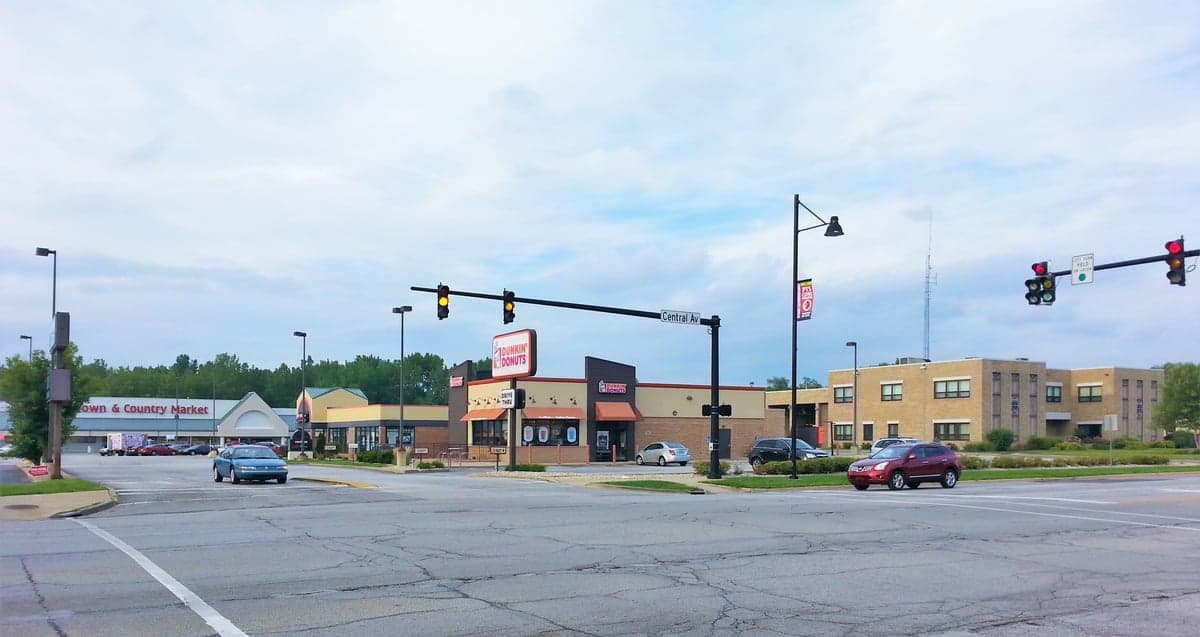
Photo: Wikipedia
Personal Sovereignty in Portage, IN
Viable for self-reliance. Generally workable, though some barriers may limit total independence.
What does Personal Sovereignty tell us?
Personal Sovereignty measures your capacity for self-reliance and independence with minimal government friction. Higher scores mean fewer barriers between you and the way you want to live... but it assumes you have the space you need and good neighbors.
What does this tell us?
Personal Sovereignty measures your capacity for self-reliance and independence with minimal government friction. Higher scores mean fewer barriers between you and the way you want to live... but it assumes you have the space you need and good neighbors.
State Policy
Energy independence: Importer (35% of energy produced in-state)
Personal Liberty
Homesteading

Personal Liberty Analysis
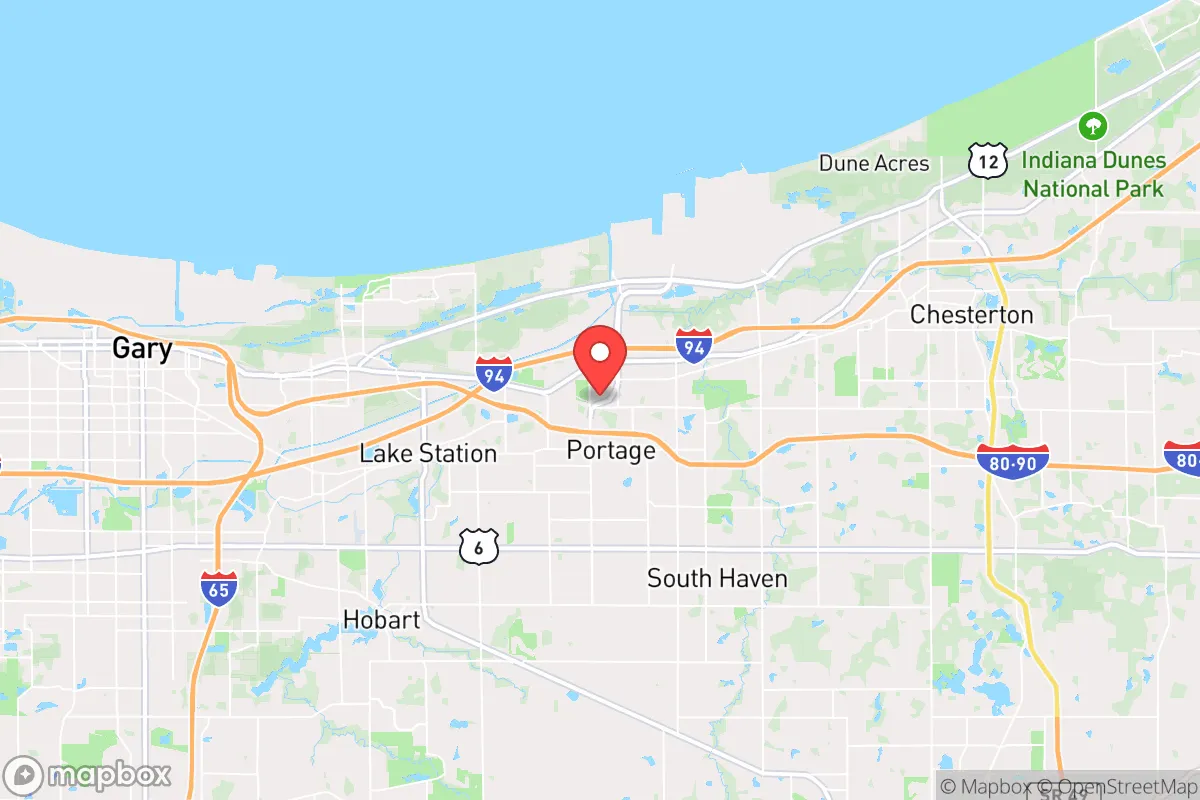
Portage, Indiana, offers a mixed bag for those prioritizing personal sovereignty, but the state-level framework provides a stronger foundation for autonomy than many coastal or Midwestern alternatives. While Porter County and the city itself have local ordinances that can chafe, Indiana’s constitutional carry law, right-to-work status, and relatively low property tax caps create a baseline of freedom that is increasingly rare. For a survivalist or prepper evaluating this Lake Michigan shoreline town, the key trade-off is between the practical advantages of a blue-collar, self-reliant community and the creeping influence of regional governance from the Chicago metro area, which is only 40 miles west.
Tax burden and regulatory posture: How much of your income and property stays yours
Indiana’s tax structure is a net positive for personal sovereignty, though it is not a tax-free haven. The state levies a flat income tax of 3.05% (as of 2025, with scheduled reductions), which is predictable and avoids the progressive brackets that penalize success. Property taxes in Portage are capped at 1% of assessed value for homesteads under the state’s constitutional amendment, a hard limit that prevents the kind of runaway assessments seen in Illinois or California. Porter County’s overall property tax rate hovers around 1.2% to 1.5% of market value, which is moderate for the region. Sales tax is 7% (state plus county), which is standard for Indiana. The regulatory posture is business-friendly: Indiana is a right-to-work state, meaning you cannot be forced to join a union as a condition of employment, and there is no state-level occupational licensing for many trades that would otherwise require government permission. However, Portage city government does impose typical zoning and building permit fees, and the local stormwater utility fee is a minor but persistent annoyance. For a prepper, the lack of a state income tax on retirement income (Social Security, pensions, 401(k) withdrawals) is a significant win, allowing you to retain more of your resources for self-reliance projects.
Self-defense and gun law specifics: Constitutional carry and castle doctrine in practice
Indiana is a strong Second Amendment state, and Portage residents benefit directly from this. Since July 2022, Indiana has been a constitutional carry state, meaning law-abiding adults can carry a handgun openly or concealed without a permit. No license, no fee, no government permission slip is required. This is a non-negotiable for anyone serious about personal sovereignty. The state also has a robust castle doctrine and Stand Your Ground law, codified in Indiana Code 35-41-3-2. There is no duty to retreat in any place you are legally present, including your home, vehicle, or workplace. This extends to the use of deadly force if you reasonably believe it is necessary to prevent imminent death or great bodily harm to yourself or another. Portage itself has no additional local gun ordinances that preempt state law, which is critical because Indiana has strong preemption statutes — cities cannot ban guns in parks, restrict magazine capacities, or impose waiting periods. The only practical limitation is that carrying in a school (K-12) requires a license, but that is a federal restriction. For a prepper, this means you can keep a rifle in your truck, carry a sidearm daily, and defend your property without fear of prosecution for exercising a natural right. The local police department in Portage is generally professional and does not harass legal carriers, though the proximity to Chicago means you should be aware of Illinois’ draconian gun laws if you cross the state line.
Self-reliance and homesteading viability: Lot sizes, zoning, and off-grid feasibility
Portage offers a mixed landscape for homesteading and off-grid living, heavily dependent on which part of the city you choose. The city’s zoning code is typical of a suburban municipality: most residential lots are in the R-1 (single-family) district, with minimum lot sizes of 7,500 to 10,000 square feet. This is enough for a substantial garden, a chicken coop, and a small workshop, but not for livestock like goats or pigs without a variance. The city does allow backyard chickens (hens only, no roosters) with a permit, which is a small win for food sovereignty. For those seeking true self-reliance, the unincorporated areas of Porter County just outside Portage — particularly south of U.S. 6 or east toward County Line Road — offer larger parcels (1 to 5 acres) with fewer restrictions. Off-grid feasibility is limited within city limits: Portage requires connection to municipal water and sewer, and building codes mandate grid-tied electrical service. Solar panels are allowed but must be permitted and interconnected with the grid; battery storage is not prohibited but adds cost. Rainwater collection is legal in Indiana (no state ban), but local covenants may restrict it. For a serious prepper, the best strategy is to buy a property in the county’s A-1 (agricultural) zoning district, where you can have a well, septic, and livestock without city interference. The soil in Porter County is sandy loam, good for gardening, and the growing season is about 160 days — enough for a solid vegetable crop.
Personal liberties: Parental rights, medical autonomy, speech, and property
Indiana has a strong track record on several key personal liberties that matter to conservative families and preppers. Parental rights are explicitly protected under state law: Indiana Code 31-34-1-3 affirms that parents have the fundamental right to direct the upbringing, education, and healthcare of their children. The state does not have a universal vaccine mandate for schoolchildren (only standard childhood immunizations are required, with broad religious and medical exemptions), and during the COVID era, Indiana was one of the few states that never imposed a statewide mask mandate on children. Medical autonomy is more nuanced: Indiana has a strict abortion law (banning the procedure with narrow exceptions), which aligns with a pro-life stance, but it also has a relatively low threshold for medical malpractice claims, which some see as government overreach into doctor-patient relationships. On speech, Indiana has no state-level hate speech laws that criminalize political expression, and Portage has no local ordinances restricting signs or public assembly. Property rights are strong: Indiana is a “Dillon’s Rule” state, meaning local governments have only the powers explicitly granted by the state, which limits the ability of Portage to impose rent control, inclusionary zoning, or other socialist-style property restrictions. Eminent domain abuse is possible but rare; the state requires “just compensation” and a public purpose. For a prepper, the ability to store firearms, stockpile food, and build a secure perimeter without HOA interference is critical — and Portage has few HOAs compared to newer suburbs, so you can generally do what you want on your own land as long as it meets basic code.
Overall, Portage provides a workable but not ideal environment for personal sovereignty. It is significantly better than Illinois or California, where state-level overreach on guns, taxes, and parental rights is severe. Compared to other Indiana towns, Portage is middle-of-the-pack: it lacks the rural freedom of places like Jasper or the libertarian lean of parts of southern Indiana, but it also avoids the urban restrictions of Indianapolis or Gary. For a survivalist, the best move is to locate just outside city limits in Porter County, where you get the benefits of Indiana’s state-level protections (constitutional carry, right-to-work, property tax caps) without the minor annoyances of city zoning and utility mandates. The proximity to Lake Michigan and the industrial base of Northwest Indiana means you have access to resources and trade, but the region’s political drift toward Chicago-style governance is a long-term risk worth monitoring. If you value your autonomy and are willing to navigate local ordinances, Portage can be a defensible outpost — but it is not a fortress.

* Values derived from national, state, county, city and local statistics and may differ in a specific area. Last updated: 2026-04-24T08:37:28.000Z
Narrative content on this page is AI-generated and may contain mistakes. Verify any details that matter before acting on them.
ReloMaps may earn a commission from affiliate links at no extra cost to you.

