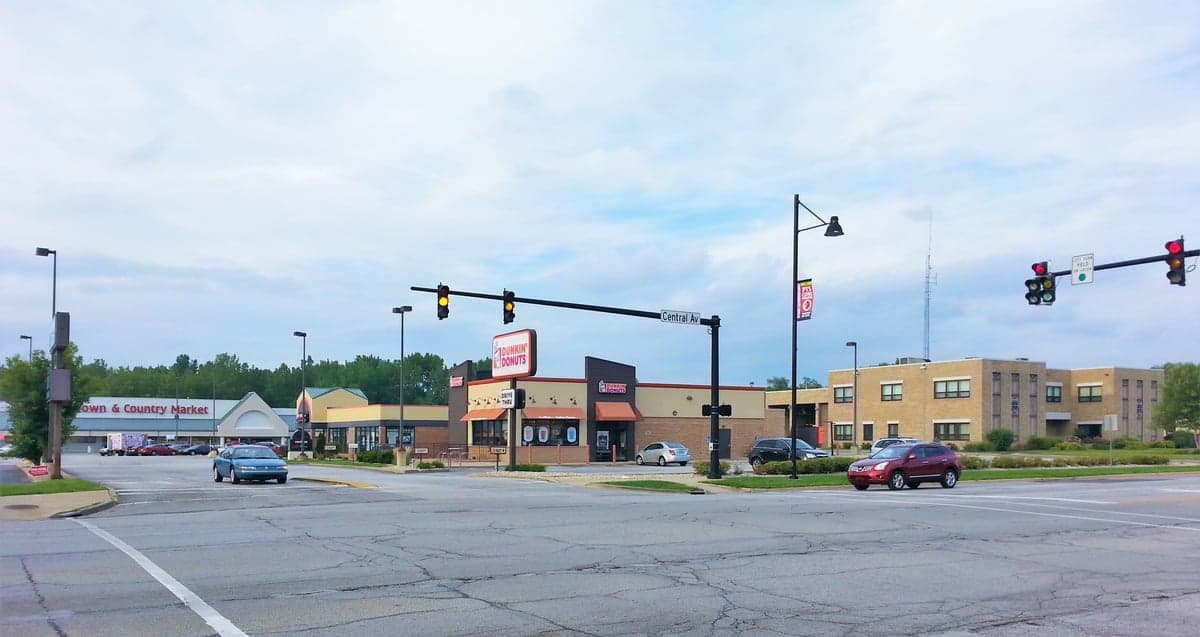
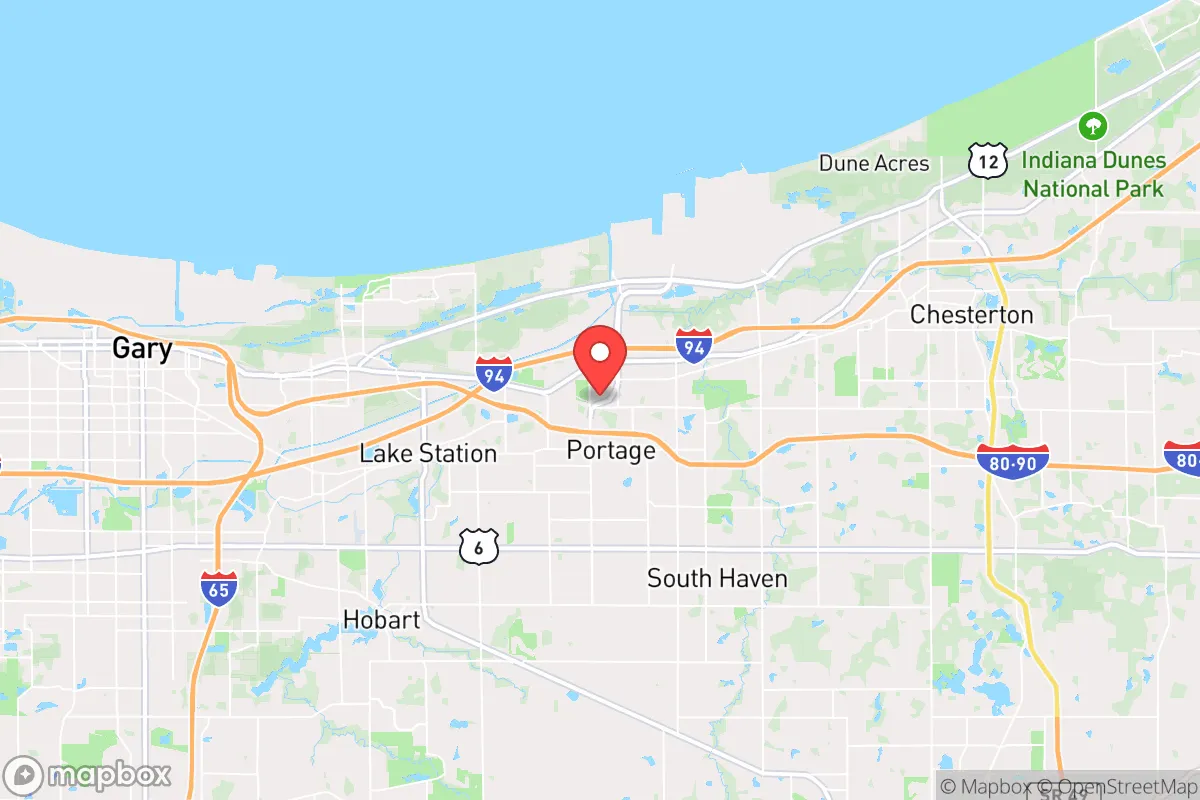
Photo: Wikipedia
Demographics of Portage, IN
Affluence Level in Portage, IN
A middle-class area roughly in line with national averages across income, home values, education, and employment.
People of Portage, IN
The people of Portage, Indiana, today form a predominantly white, working-class community of 37,951 residents, with a notable Hispanic minority of 18.9% and a Black population of 10.1%. The city is characterized by a low foreign-born rate of just 1.0% and a college attainment rate of 16.0%, reflecting its roots as a blue-collar industrial hub. Distinctive identity markers include a strong union and family-oriented culture, a reliance on the nearby steel mills and logistics centers, and a population that is more ethnically diverse than many of its neighbors in Northwest Indiana, yet remains largely native-born and rooted in the region.
How the city was settled and grew
Portage was not a colonial-era settlement; its growth is almost entirely a 20th-century phenomenon driven by heavy industry. The area was originally a sparsely populated farming and marshland region, with the first permanent settlers arriving in the 1830s and 1840s, mostly of Yankee and German stock. The real transformation began in 1906 with the construction of the U.S. Steel Gary Works just to the north, which drew a massive wave of immigrant laborers—primarily from Eastern Europe (Poles, Slovaks, Croats) and Southern Europe (Italians). These workers settled in the city's earliest neighborhoods, such as South Haven and the area around Portage Avenue, building modest homes near the railroad lines. A second wave came during the 1920s and 1930s, when the Midwest Steel plant opened directly within Portage's borders, attracting more European immigrants and internal migrants from the rural Midwest. The city was officially incorporated in 1959, and its population exploded from under 3,000 in 1950 to over 19,000 by 1970, as the steel industry boomed. The Willowcreek neighborhood, developed in the 1950s and 1960s, became a key area for these second-wave workers and their families, featuring ranch-style homes and proximity to the mills.
Modern era (post-1965)
The post-1965 era brought significant demographic shifts to Portage, though the city remained overwhelmingly native-born. The 1970s and 1980s saw the first substantial influx of Black families, many moving from Gary and Chicago as deindustrialization and white flight reshaped the region. These families concentrated in the Lake Eliza and Crisman neighborhoods, which offered more affordable housing and access to the remaining industrial jobs. The Hispanic population began growing in the 1990s, driven by Mexican and Puerto Rican migrants seeking work in the steel mills, warehouses, and service industries. This community settled primarily in the Portage Commons area and along the U.S. 20 corridor, where older, lower-cost housing stock was available. The Asian population remains very small (0.8% East/Southeast Asian, 0.3% Indian), with no distinct ethnic enclave forming; these residents are scattered across the city, often in newer subdivisions like Woodland Park. The white population, while still the majority at 66.8%, has declined from over 90% in 1970, as younger families have moved to more suburban areas like Valparaiso or Chesterton. The foreign-born rate of 1.0% is strikingly low for a city of this size, indicating that nearly all demographic change has come from domestic migration rather than immigration.
The future
Portage's population is heading toward a slow homogenization of its working-class character, rather than tribalization into distinct enclaves. The Hispanic share (18.9%) is expected to continue growing gradually, driven by natural increase and continued migration from other parts of the Midwest, but the city's low foreign-born rate suggests this growth will not accelerate dramatically. The Black population (10.1%) appears stable, with no major new influx expected. The white population will likely continue a slow decline, but will remain the majority for the foreseeable future. The city is not seeing the formation of new ethnic enclaves; instead, existing neighborhoods like South Haven and Willowcreek are becoming more mixed, with Hispanic and Black families moving into areas once dominated by white ethnic groups. The college attainment rate of 16.0% is below the national average, and without a major shift toward a knowledge-economy base, Portage will likely remain a blue-collar community. The next 10-20 years will probably see a slight increase in Hispanic representation, a stable Black population, and a continued low level of Asian and Indian presence, with the city's identity anchored by its industrial past and family-oriented present.
For someone moving in now, Portage is becoming a more ethnically diverse but still predominantly white, working-class city with a strong sense of local identity. The population is stable, native-born, and rooted in the steel and logistics industries, with little immigration-driven change. New residents should expect a community that values family, unions, and practicality, where neighborhoods are increasingly integrated but the overall character remains blue-collar and Midwestern. The city is not trending toward cosmopolitan diversity or rapid gentrification, but rather a slow, organic blending of its existing groups.

* Values derived from national, state, county, city and local statistics and may differ in a specific area. Last updated: 2026-04-24T08:37:28.000Z
Narrative content on this page is AI-generated and may contain mistakes. Verify any details that matter before acting on them.
ReloMaps may earn a commission from affiliate links at no extra cost to you.

