
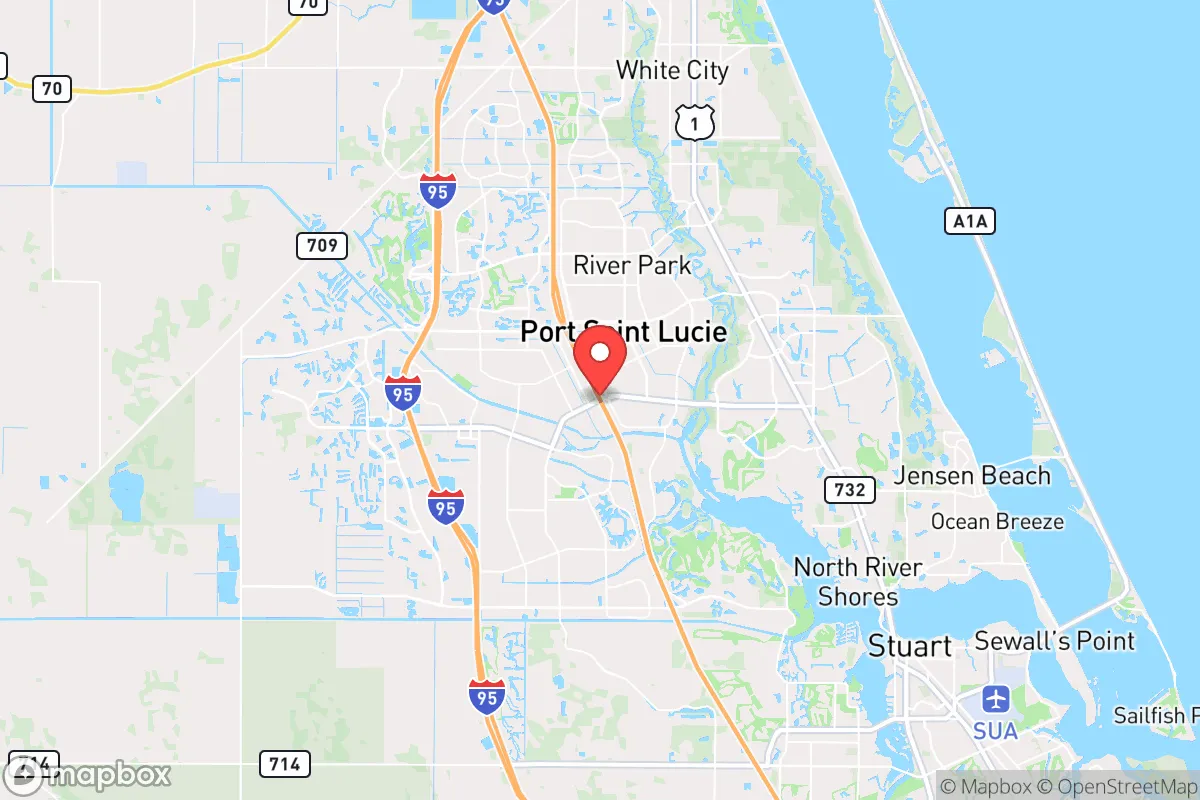
Photo: Wikipedia
Personal Sovereignty in Port Saint Lucie, FL
Viable for self-reliance. Generally workable, though some barriers may limit total independence.
What does Personal Sovereignty tell us?
Personal Sovereignty measures your capacity for self-reliance and independence with minimal government friction. Higher scores mean fewer barriers between you and the way you want to live... but it assumes you have the space you need and good neighbors.
What does this tell us?
Personal Sovereignty measures your capacity for self-reliance and independence with minimal government friction. Higher scores mean fewer barriers between you and the way you want to live... but it assumes you have the space you need and good neighbors.
State Policy
Energy independence: Importer (12% of energy produced in-state)
Personal Liberty
Homesteading

Personal Liberty Analysis
Port Saint Lucie offers a notably high degree of personal sovereignty within the broader framework of Florida’s pro-freedom legal and regulatory environment. As a rapidly growing city in St. Lucie County, it combines the state’s strong preemption laws—which limit local government overreach in areas like firearms and property rights—with a relatively low-tax, low-regulation atmosphere that appeals to individuals and families seeking autonomy. While not as rural or libertarian-leaning as some inland counties, Port Saint Lucie provides a practical balance of personal liberty and access to urban amenities, making it a compelling option for those prioritizing self-reliance and minimal government interference.
Tax burden and regulatory posture: How Florida’s policies shape local freedom
Florida’s absence of a state income tax is the cornerstone of its tax-friendly reputation, and Port Saint Lucie residents benefit directly from this policy. The city’s combined state and local sales tax rate is 7%, which is moderate by national standards but lower than many Northeast or Midwest jurisdictions. Property taxes in St. Lucie County average around 0.85% of assessed value, slightly below the Florida median, meaning homeowners retain more equity and face less annual tax drag than in comparable coastal markets like Broward or Palm Beach counties. Regulatory posture at the city level is generally permissive. Port Saint Lucie does not impose rent control, has no local income tax, and follows state preemption on occupational licensing, meaning most businesses can operate without excessive bureaucratic hurdles. The city’s zoning code is relatively straightforward for standard residential uses, though it does require permits for major structural changes. For a reader accustomed to heavy-handed municipal regulation, Port Saint Lucie’s approach feels light-touch—especially compared to cities in California, New York, or Illinois. The absence of a local business tax receipt requirement for many home-based enterprises further supports entrepreneurial autonomy.
Self-defense and gun law specifics: Stand-your-ground and constitutional carry in practice
Port Saint Lucie operates under Florida’s robust self-defense legal framework, which is among the most protective of individual rights in the United States. The state’s Stand Your Ground law, codified in Florida Statute 776.013, eliminates any duty to retreat before using deadly force in any place where a person has a legal right to be. This applies directly to Port Saint Lucie residents, whether in their homes, vehicles, or public spaces. In 2023, Florida enacted permitless (constitutional) carry, allowing law-abiding adults to carry concealed firearms without a permit or training requirement. This means a Port Saint Lucie resident can legally carry a handgun in most public areas, including parks and commercial districts, though private property owners and businesses retain the right to prohibit firearms on their premises. The city itself has no local gun ordinances that exceed state law, thanks to Florida’s strong preemption statute (790.33), which prohibits municipalities from regulating firearms. Open carry is generally restricted to hunting and fishing activities, but concealed carry is fully unrestricted for those 21 and older. For self-defense-minded individuals, Port Saint Lucie’s legal environment is permissive and predictable, with no waiting periods for firearm purchases and no requirement to register firearms. The local sheriff’s office, St. Lucie County Sheriff’s Department, is known for a pro-Second Amendment stance, and the county’s concealed weapon license issuance rate is above the state average.
Self-reliance and homesteading viability: Lot sizes, zoning, and off-grid feasibility
Port Saint Lucie’s residential landscape is dominated by planned subdivisions with standard lot sizes ranging from 6,000 to 10,000 square feet, which limits large-scale homesteading but still allows for meaningful self-reliance activities. The city’s zoning code permits backyard chickens in most residential districts, subject to a limit of four hens (no roosters) and a 10-foot setback from property lines. Vegetable gardens are unrestricted, and rainwater collection is legal, though the city encourages but does not require permits for larger cisterns. For those seeking more land, the western and northern fringes of St. Lucie County offer rural parcels of 1 to 10 acres with agricultural zoning, where livestock, beekeeping, and small-scale farming are permitted without special exceptions. Off-grid living—defined as disconnecting from municipal water, sewer, and electric grids—is technically feasible but practically challenging within city limits. Port Saint Lucie requires connection to municipal water and sewer for all new construction, and solar panels are allowed but must comply with building codes and HOA covenants in many subdivisions. However, in unincorporated areas of the county, well and septic systems are standard, and solar-plus-battery setups are increasingly common. The county’s building department is generally efficient for permits related to renewable energy and agricultural structures, with no punitive fees for self-sufficient systems. For a family aiming to reduce reliance on external systems, the western rural corridor offers viable options, while city residents can achieve partial self-reliance through gardening, rainwater harvesting, and solar without full off-grid independence.
Personal liberties: Parental rights, medical autonomy, speech, and property
Florida has been a national leader in codifying parental rights, and Port Saint Lucie residents enjoy strong protections under state law. The Parental Rights in Education Act (HB 1557) affirms that parents have the fundamental right to direct their children’s upbringing, education, and healthcare. This means local school districts, including St. Lucie Public Schools, cannot withhold information from parents about their child’s health or well-being, and parents retain the ability to opt their children out of specific curricula or activities. Medical autonomy is similarly robust: Florida law prohibits any vaccine mandate for adults or children without a medical exemption, and the state’s emergency powers were reformed post-2020 to prevent indefinite lockdowns or business closures. In Port Saint Lucie, no local health orders have been issued since 2021, and the city council has shown no appetite for reimposing restrictions. Free speech is protected under both the First Amendment and Florida’s strong anti-SLAPP statute, which shields citizens from frivolous lawsuits aimed at silencing criticism. Property rights are reinforced by the Bert J. Harris Jr. Private Property Rights Protection Act, which allows landowners to seek compensation when government regulations reduce property value. Port Saint Lucie’s zoning board has a reputation for being reasonable with variance requests, and the city does not impose short-term rental bans, though it does require registration and a 6% tourist development tax for Airbnb-style rentals. For a reader prioritizing personal liberties, Port Saint Lucie’s legal environment is permissive across the board, with no local ordinances that significantly curtail individual choice in parenting, healthcare, speech, or property use.
Overall, Port Saint Lucie ranks as a strong-to-moderate sovereignty environment relative to other Florida cities and most of the United States. It lacks the extreme libertarian character of rural counties like Okeechobee or Liberty, but it also avoids the heavy-handed regulation found in cities like Miami Beach or Tallahassee. The combination of no income tax, constitutional carry, strong parental rights, and permissive zoning for self-reliance activities makes it a practical choice for families and individuals who value independence without sacrificing access to jobs, schools, and healthcare. For a conservative-leaning reader weighing relocation, Port Saint Lucie offers a legal and regulatory framework that respects personal autonomy while maintaining the infrastructure and services of a modern mid-sized city.

* Values derived from national, state, county, city and local statistics and may differ in a specific area. Last updated: 2026-11-08T11:04:56.000Z
Narrative content on this page is AI-generated and may contain mistakes. Verify any details that matter before acting on them.
ReloMaps may earn a commission from affiliate links at no extra cost to you.

