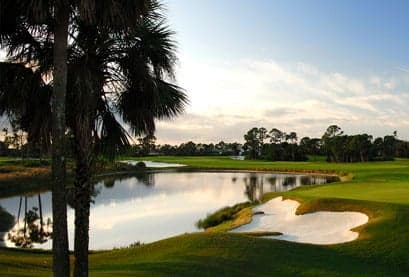
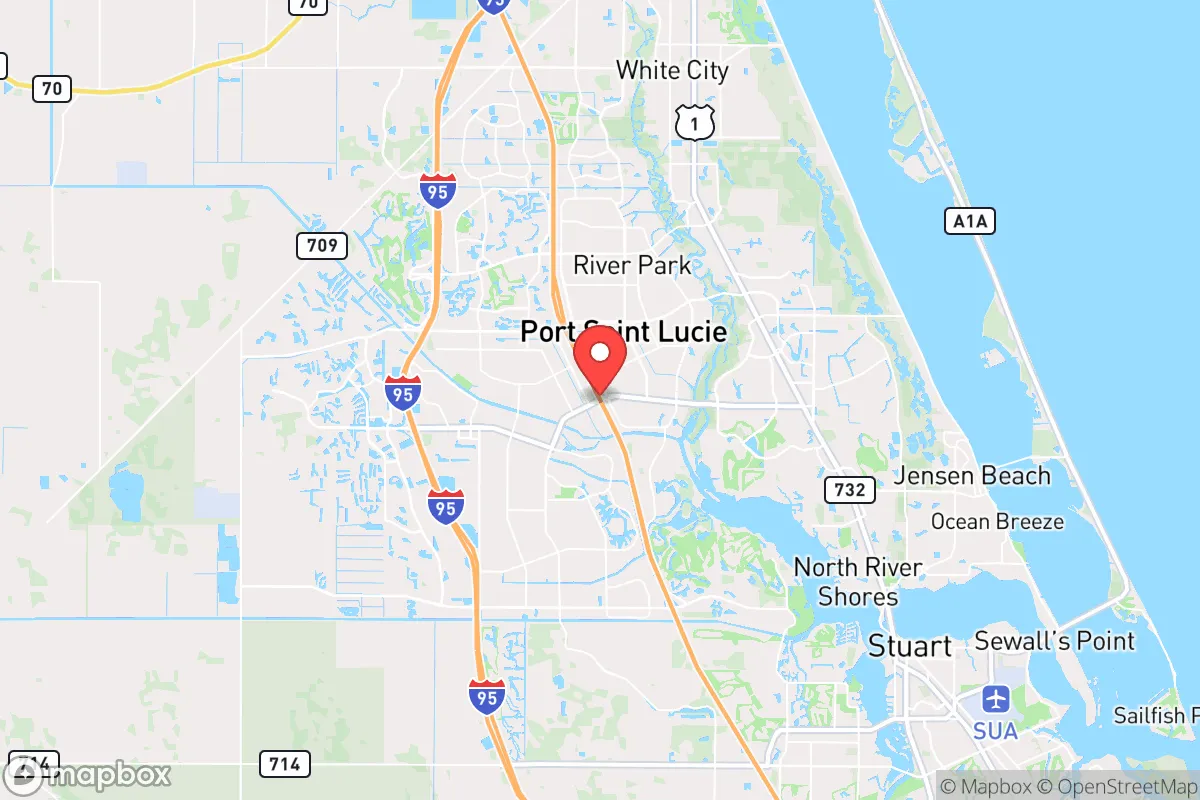
Photo: Wikipedia
Demographics of Port Saint Lucie, FL
Affluence Level in Port Saint Lucie, FL
A middle-class area roughly in line with national averages across income, home values, education, and employment.
People of Port Saint Lucie, FL
The people of Port Saint Lucie, Florida, today form a predominantly middle-class, family-oriented population of 220,453 that is notably more diverse than the city’s original planned retirement community. The city’s character is defined by a mix of native-born retirees, young families from the Northeast and Midwest, and a growing Hispanic and Black population, creating a suburban landscape where strip-mall convenience meets sprawling residential subdivisions. With a foreign-born share of just 5.4%—well below the national average—Port Saint Lucie remains a largely domestic destination, shaped by waves of in-migration rather than international immigration.
How the city was settled and grew
Port Saint Lucie is a genuinely post-1960s planned community, with no colonial or 19th-century settlement to speak of. The land was originally part of the vast Florida wilderness, sparsely populated by Seminole and Miccosukee peoples before being drained for agriculture in the early 20th century. The city’s founding dates to 1960, when the General Development Corporation (GDC) began marketing the area as a retirement haven for Northerners. The original planned neighborhoods—Port Saint Lucie Boulevard and St. Lucie West—were laid out with wide roads, canals, and golf courses, attracting mostly white retirees from New York, New Jersey, and the Midwest. These early residents were drawn by cheap land, warm winters, and the promise of a quiet, low-tax lifestyle. By 1970, the population was barely 330, almost entirely white and over 55.
Modern era (post-1965)
The 1965 Hart-Cellar Act had little direct effect on Port Saint Lucie, as the city’s growth remained overwhelmingly domestic. The real transformation began in the 1980s and 1990s, when the city’s reputation as an affordable alternative to Fort Lauderdale and Miami drew a younger, more diverse wave of residents. Tradition, a master-planned community in the southern part of the city, became a magnet for families from the Northeast and Midwest seeking new construction and good schools. Meanwhile, Lake Charles and Savannah Preserve attracted a growing Black middle class, many of whom moved from South Florida and the Caribbean-influenced areas of Broward and Palm Beach counties. The Hispanic population, now 23.0%, concentrated in neighborhoods like St. Lucie West and the area around Floresta Drive, drawn by service-sector jobs in healthcare, retail, and construction. The city’s Black population rose to 18.2%, with many families settling in the southern corridor near Port Saint Lucie Boulevard, where older, more affordable housing stock remains. East/Southeast Asian residents (1.7%) and Indian-subcontinent residents (0.5%) are small but visible in professional fields, with clusters near the St. Lucie Medical Center and in newer subdivisions like Veranda. The white population, now 51.8%, remains the largest group but has aged in place, while younger white families continue to arrive from the Northeast and Midwest, often settling in the newer western sections of the city.
The future
Port Saint Lucie’s population is becoming more diverse, but the shift is gradual and driven by domestic migration rather than international immigration. The Hispanic and Black shares are expected to continue rising, as younger families from South Florida and the Orlando area seek lower housing costs. The white share will likely decline further, though the city will remain majority-white for at least another decade. New construction is concentrated in the western edge of the city—West Port Saint Lucie and the area around Becker Road—where large-lot subdivisions are attracting a mix of white, Hispanic, and Black families. The city’s cultural identity is evolving from a retiree enclave to a more family-oriented, multi-ethnic suburb, though it remains politically conservative and culturally traditional. The next 10-20 years will likely see continued infill development, a gradual increase in college-educated residents (currently 26.8%), and a slow diversification of the housing stock to include more apartments and townhomes for younger professionals.
For someone moving in now, Port Saint Lucie is a place where the old Florida of retirement communities is giving way to a younger, more diverse suburban reality. The city offers affordable housing, good schools, and a safe environment, but it lacks the cultural amenities and job density of larger metros. It is becoming a solidly middle-class, family-oriented suburb with a growing Hispanic and Black presence—a place where the next generation of residents will be more diverse than the last, but still overwhelmingly American-born and conservative-leaning.

* Values derived from national, state, county, city and local statistics and may differ in a specific area. Last updated: 2026-11-08T11:04:56.000Z
Narrative content on this page is AI-generated and may contain mistakes. Verify any details that matter before acting on them.
ReloMaps may earn a commission from affiliate links at no extra cost to you.

