
Photo: Wikipedia
Personal Sovereignty in Port Gibson, MS
Viable for self-reliance. Generally workable, though some barriers may limit total independence.
What does Personal Sovereignty tell us?
Personal Sovereignty measures your capacity for self-reliance and independence with minimal government friction. Higher scores mean fewer barriers between you and the way you want to live... but it assumes you have the space you need and good neighbors.
What does this tell us?
Personal Sovereignty measures your capacity for self-reliance and independence with minimal government friction. Higher scores mean fewer barriers between you and the way you want to live... but it assumes you have the space you need and good neighbors.
State Policy
Energy independence: Importer (28% of energy produced in-state)
Personal Liberty
Homesteading

Personal Liberty Analysis
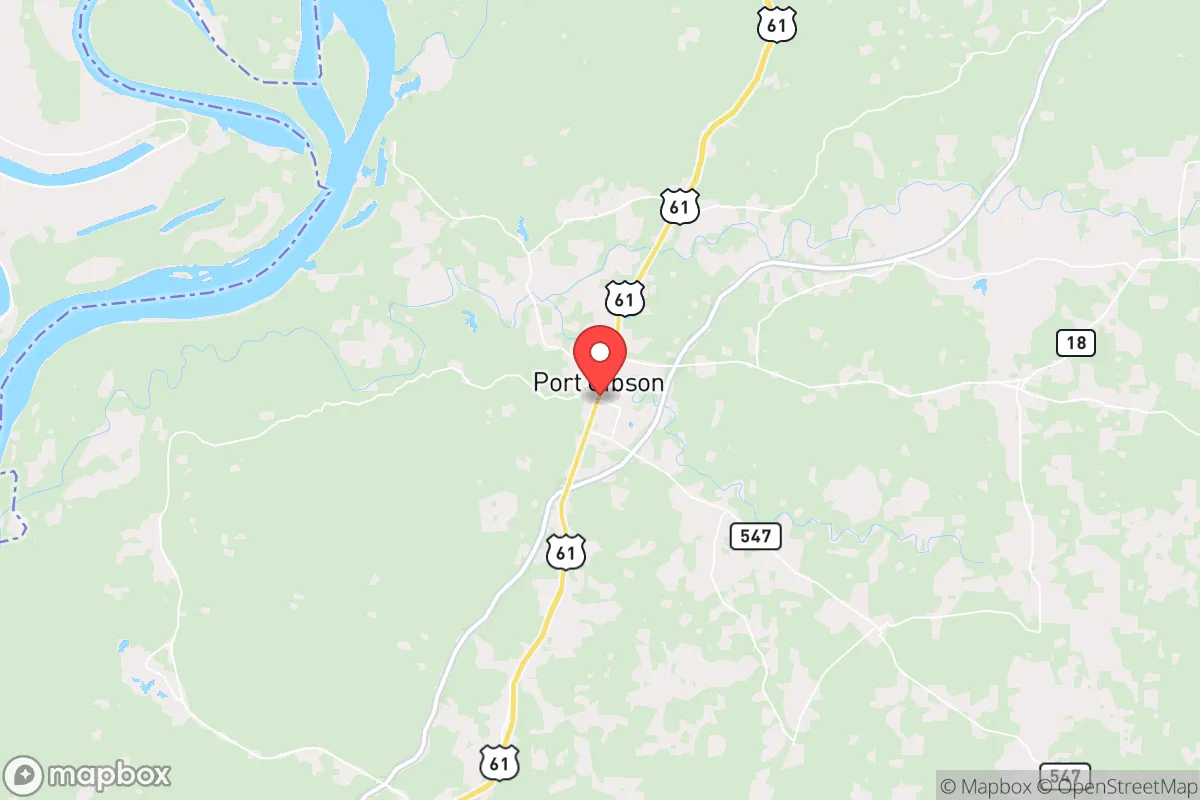
Port Gibson, Mississippi, offers a personal sovereignty environment shaped by the state’s traditionally light-touch regulatory philosophy and a deep-rooted culture of self-reliance, though local ordinances and economic realities can temper some of the theoretical freedoms. For individuals and families prioritizing autonomy, the town sits within a state that consistently ranks among the most permissive in the nation for gun laws, property rights, and low taxation, but the practical experience of that freedom depends on understanding the specific local context of a small, rural Claiborne County seat. The overall atmosphere is one where government intervention is minimal in daily life, but the trade-off is that residents must be prepared to handle many aspects of their own security, infrastructure, and community governance without expecting robust public services.
Tax burden and regulatory posture in Port Gibson
Mississippi’s tax burden is among the lowest in the United States, and Port Gibson residents benefit directly from that state-level posture. There is no state income tax on Social Security benefits, and the state’s flat personal income tax rate is scheduled to phase down to zero by 2026, meaning most earners will pay no state income tax at all. Property taxes are also exceptionally low: the effective property tax rate in Claiborne County hovers around 0.72% of assessed home value, well below the national average of roughly 1.1%. For a $150,000 home, that translates to about $1,080 annually in property taxes. Sales tax in Port Gibson is 7%, which is the state rate plus a local add-on, but this is moderate compared to many Southern states. The regulatory environment at the county level is similarly hands-off. Claiborne County does not impose zoning ordinances in the way that larger Mississippi municipalities do, which means fewer bureaucratic hurdles for building, land use, or home-based businesses. However, this lack of zoning also means that property uses can be unpredictable—a neighbor could legally operate a mechanic shop or keep livestock next to a residential home. For those seeking maximum autonomy over their property, this is a net positive, but it requires a tolerance for mixed-use surroundings. The state’s business climate is ranked highly by organizations like the Tax Foundation for its low regulatory costs, but Port Gibson’s small population (roughly 1,500) means that local permitting and code enforcement are handled by a small city staff, which can lead to slower processing times for any required approvals.
Self-defense and gun law specifics in Mississippi
Mississippi is a constitutional carry state, meaning that as of 2016, any adult who can legally possess a firearm may carry it openly or concealed without a permit. Port Gibson residents enjoy this right fully, with no additional local restrictions beyond state law. The state also has a strong Castle Doctrine and Stand Your Ground law, codified in Mississippi Code § 97-3-15, which removes any duty to retreat before using deadly force in self-defense when lawfully present. This applies in a person’s home, vehicle, or any place they have a legal right to be. For families, this means that defending one’s home against an intruder carries no legal presumption of wrongdoing. The state also preempts local firearm ordinances, so Port Gibson cannot enact its own gun bans or restrictions that are stricter than state law. Magazine capacity, firearm types, and ammunition are not restricted at the state level. The only notable limitation is that carrying a firearm on school property (K-12) is generally prohibited without specific authorization, though the state does allow enhanced carry permit holders to do so in some circumstances. For those who prioritize self-defense autonomy, Mississippi’s legal framework is among the most permissive in the country, and Port Gibson’s rural setting means that law enforcement response times can be 15–30 minutes or longer, making personal preparedness a practical necessity rather than just a legal right.
Self-reliance and homesteading viability in Claiborne County
Port Gibson’s rural character makes it a strong candidate for homesteading and off-grid living. Lot sizes in the unincorporated areas of Claiborne County are typically generous—many residential parcels are 1 to 5 acres, and larger tracts of 10 to 40 acres are available at relatively low prices (often under $2,000 per acre for raw land). The county has no countywide building codes for single-family homes, though the city of Port Gibson does require building permits for new construction within its limits. For those seeking to live off-grid, Mississippi law is favorable: there are no state-level prohibitions on rainwater collection, composting toilets, or solar panel installation. The state’s net metering policy is limited, but for a fully off-grid system, no utility connection is required. Raising livestock is generally unrestricted in unincorporated areas—chickens, goats, and even cattle are common on small acreages. The main practical constraint is water access: many rural lots lack municipal water, so drilling a well (costing $3,000–$8,000 depending on depth) is necessary. Septic systems require a county permit and inspection, but the process is straightforward for standard gravity-fed systems. The growing season is long (roughly 220 days), and the soil in the Mississippi River alluvial plain is fertile, making subsistence gardening viable. For families seeking to reduce reliance on grocery stores and utility companies, Port Gibson offers a low-barrier entry point compared to more regulated states in the Northeast or West Coast.
Personal liberties in Port Gibson: parental rights, medical autonomy, speech, and property
Mississippi’s legal culture strongly favors parental rights and limited government intrusion into family decisions. The state has a parental rights law (Mississippi Code § 93-1-3) that affirms parents’ fundamental right to direct their children’s upbringing, education, and healthcare. This means that parents in Port Gibson have broad latitude to choose homeschooling, private school, or public school without excessive state oversight. Homeschooling requires only a simple notice of enrollment and an annual standardized test or portfolio review, but no curriculum approval or teacher certification is required. Medical autonomy is more constrained: Mississippi has not expanded Medicaid, and the state’s healthcare system is among the weakest in the nation, with Port Gibson’s closest hospital being in Vicksburg (30 miles away). For those seeking alternative or holistic medicine, the state does not have specific restrictions beyond standard licensing, but finding practitioners locally is difficult. Free speech protections are robust, as Mississippi has no state-level hate speech laws that would restrict expression beyond the First Amendment. Property rights are strongly protected: the state has a right-to-farm law that shields agricultural operations from nuisance lawsuits, and eminent domain is limited to public uses with just compensation. For landowners, this means that using one’s property for farming, hunting, or recreation is generally free from local interference. The only notable limitation is that Port Gibson’s historic district (the town has several blocks listed on the National Register) imposes design review for exterior changes to buildings within that district, but this applies only to a small area of the city.
Overall, Port Gibson offers a level of personal sovereignty that is high by national standards, particularly in the areas of gun rights, low taxation, and property freedom, but it comes with the expectation that residents will handle their own infrastructure, healthcare access, and security. Compared to states with more comprehensive public services and tighter regulations, the trade-off is clear: more autonomy in daily decisions, but less support from government systems. For a conservative-leaning individual or family who values independence over convenience, Port Gibson represents a place where the legal framework aligns closely with self-reliance, though the practical realities of rural life—distance from hospitals, limited shopping, and slower internet—are the price of that freedom.

* Values derived from national, state, county, city and local statistics and may differ in a specific area. Last updated: 2026-10-27T04:39:57.000Z
Narrative content on this page is AI-generated and may contain mistakes. Verify any details that matter before acting on them.
ReloMaps may earn a commission from affiliate links at no extra cost to you.

