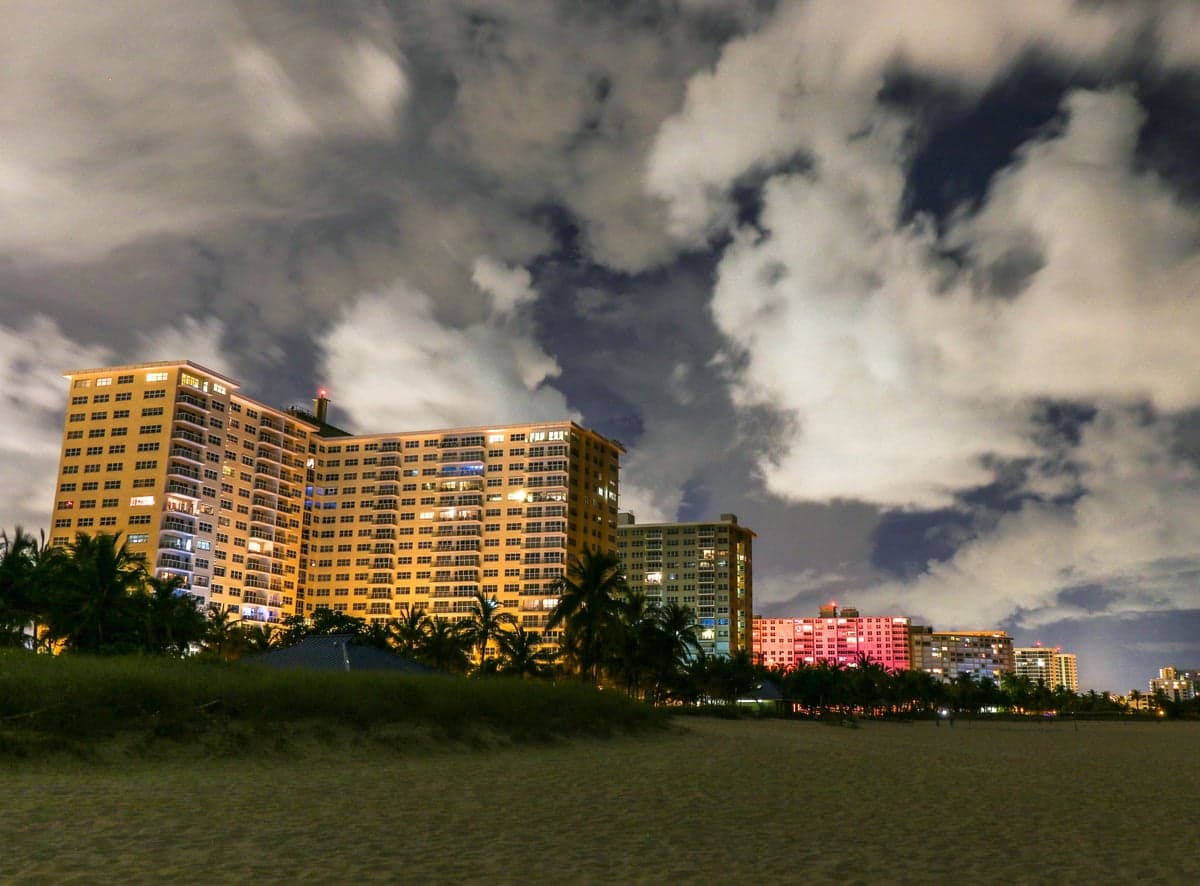
Photo: Wikipedia
Political ClimatePolitical Climate in Pompano Beach, FL
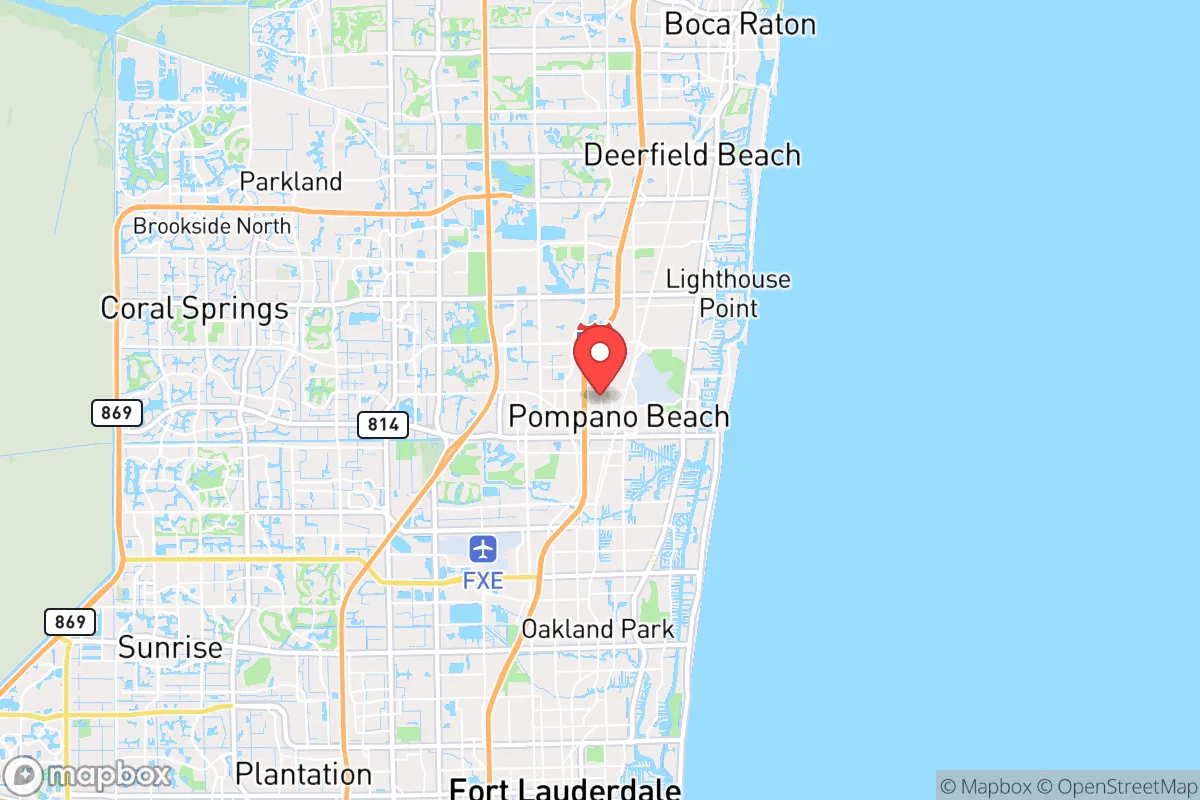
District shown is the primary district for this city’s centroid. Cities may span multiple districts.
Local Political AnalysisPolitical Analysis of Pompano Beach, FL
Pompano Beach has shifted hard to the left over the past decade, and it’s not subtle anymore. The Cook PVI sits at D+22, meaning the area votes about 22 points more Democratic than the national average—a number that would have been unthinkable here twenty years ago. If you’re looking at the political landscape, understand that this isn’t a purple town anymore; it’s a deep blue stronghold, and the trend line is only getting steeper as new development and out-of-state transplants pour in.
How it compares
Drive ten miles west to Parkland or Coral Springs, and you’ll find a much more balanced political mix—those areas still have a strong conservative base, especially around tax and school issues. Head north to Deerfield Beach, and it’s similar to Pompano, though slightly less lopsided. But the real contrast is with Boca Raton to the south, which has its own progressive energy, or with rural Palm Beach County communities like Loxahatchee, where you’ll see Trump signs year-round. Pompano Beach itself used to be a working-class, retiree-heavy town with a live-and-let-live attitude. Now, the city council and county commissions are dominated by voices pushing for higher density zoning, more public spending on social programs, and stricter environmental regulations that often hit small businesses and property owners hardest. The local school board elections have become battlegrounds, with progressive candidates winning most seats in recent cycles, meaning curriculum and parental rights are constant fights.
What this means for residents
If you value personal freedom—especially around property rights, business operations, and how you raise your kids—you’re going to feel the squeeze. The city has been aggressive with rental registration ordinances, short-term rental bans, and even tree removal permits that require city approval. Property taxes have crept up as the city expands its budget for new parks and “equity” initiatives, and there’s talk of a local sales tax increase for transit projects that many residents don’t want. The police department is still professional and responsive, but the political pressure to defund or redirect resources has been a real conversation at commission meetings. For gun owners, Florida’s preemption laws offer some protection, but local leaders have tried to create “gun-free zones” in city parks and public buildings beyond what state law allows. The long-term worry is that as more people move here from high-tax, high-regulation states like New York and California, they bring the same policies that made them leave in the first place.
On the cultural side, Pompano Beach has lost a lot of its old Florida character. The fishing piers, the mom-and-pop diners, the laid-back beach bars—they’re being replaced by high-rise condos, chain restaurants, and boutique hotels catering to tourists. The city has poured millions into a “cultural district” downtown, but it feels more like a government project than organic community life. The annual holiday parade and the seafood festival still draw crowds, but the sense of local identity is fading. If you’re thinking of moving here, just know that the political climate isn’t neutral—it’s actively progressive, and it’s shaping everything from your tax bill to what your kids learn in school. For those who lean conservative, the best strategy is to get involved in local civic groups, attend city council meetings, and vote in every single election, because the margins are tight in the precincts that still have a voice.

State Political ClimatePolitical Climate in Florida
State Political AnalysisPolitical Environment in the State
Florida has transformed from a classic swing state into a solidly Republican-leaning powerhouse over the past decade, with a registered Republican voter advantage of over 700,000 as of 2026 and a consistent 3-5 point rightward shift in every statewide election since 2020. The dominant coalition is a mix of conservative retirees, Hispanic exiles from socialist regimes, and native-born families fleeing high-tax states, all united by a deep skepticism of federal overreach and a desire for personal autonomy. The trajectory has been unmistakably red since 2016, when Donald Trump carried the state by 1.2 points, ballooning to a 3.4-point win in 2020 and a decisive 5.5-point margin in 2024, with Governor Ron DeSantis winning re-election by a staggering 19 points in 2022.
Urban vs. rural divide
The political map of Florida is a stark patchwork. The Miami-Dade County area, once a Democratic stronghold, has been the single most dramatic shift in the nation: in 2020, Trump lost the county by only 7 points after Obama won it by 29 points in 2012, and by 2024 the margin had tightened further to around 5 points, driven by Cuban, Venezuelan, and Nicaraguan voters who remember socialism firsthand. The Tampa Bay region, anchored by St. Petersburg and Tampa, remains a competitive battleground, with Hillsborough County flipping to Trump in 2024 after years of Democratic gains. Meanwhile, the Jacksonville metro area (Duval County) has trended right, with the suburbs of Ponte Vedra Beach and Nocatee voting overwhelmingly Republican. The rural Panhandle, from Pensacola to Tallahassee, is deep red, with counties like Liberty and Holmes routinely giving Republicans 80%+ of the vote. The I-4 corridor, stretching from Daytona Beach through Orlando to Lakeland, remains the state’s political fulcrum, but even Orange County (Orlando) is showing cracks in its Democratic armor, with Trump improving his margin there by 4 points between 2020 and 2024. The only true blue holdouts are Alachua County (Gainesville) and Leon County (Tallahassee), both anchored by large state universities and government employment.
Policy environment
Florida’s policy environment is a masterclass in conservative governance. There is no state income tax, a constitutional protection that makes it a magnet for high-earners from New York, California, and Illinois. Property taxes are capped by the Save Our Homes amendment, which limits annual increases to 3% for homesteaded properties, a massive protection for long-term residents. The regulatory posture is aggressively pro-business, with a right-to-work law and a tort reform package passed in 2023 that capped attorney fees and limited lawsuit abuse, making it harder for trial lawyers to drive up insurance costs. Education policy is a national model: the Family Empowerment Scholarship program gives parents direct control over their child’s education funding, usable for private school tuition or homeschooling, and the state has banned Critical Race Theory and DEI initiatives in public schools and universities. Healthcare is a mixed bag; Florida did not expand Medicaid under Obamacare, keeping the system leaner, but the state has also passed laws to protect medical conscience rights and ban vaccine mandates for private employers. Election laws are among the most secure in the nation, with strict voter ID requirements, a ban on ballot harvesting, and a 2021 law that limited drop boxes and required signature matching, all of which have withstood court challenges.
Trajectory & freedom
Florida is unequivocally becoming more free for those who value personal responsibility and limited government. The 2023 “Parental Rights in Education” law (HB 1557) codified that parents have the fundamental right to direct their child’s upbringing, including medical decisions and school curriculum access, and it banned classroom instruction on sexual orientation and gender identity through 8th grade. The 2024 “Live Free” Act expanded gun rights by allowing permitless carry of concealed firearms for anyone 21 or older, making Florida the 26th state to do so. Property rights were strengthened by the 2023 “Live Local Act,” which preempted local zoning restrictions to allow more housing density near commercial corridors, but also protected existing homeowners from being forced to sell to developers. Medical autonomy was bolstered by a 2023 law banning mRNA vaccine mandates for private employers and a 2024 law prohibiting discrimination based on vaccination status. The only area where freedom has arguably contracted is in the realm of COVID-era emergency powers: the 2023 “Emergency Management” law reined in the governor’s ability to issue unilateral shutdowns, but also gave the legislature more control, which some see as a necessary check. Overall, the trend is unmistakably toward expanding individual liberty and shrinking government overreach.
Civil unrest & political movements
Florida has seen remarkably little civil unrest compared to blue states. The 2020 BLM protests in Miami, Orlando, and Jacksonville were largely peaceful, with property damage minimal compared to Portland or Seattle, thanks in part to the state’s quick deployment of the Florida National Guard and a “no retreat” policy from local law enforcement. The most visible political movements are on the right: the “Moms for Liberty” chapter network, which started in Brevard County in 2021, has become a national force for school board accountability and parental rights. On the left, the “Dream Defenders” and “Florida Rising” groups organize around criminal justice reform and voting access, but they have little legislative success. Immigration politics are a flashpoint: the 2023 “SB 1718” law requires businesses with 25+ employees to use E-Verify, bans local governments from issuing ID cards to illegal immigrants, and makes transporting illegal aliens into the state a felony. This has led to a visible exodus of illegal immigrants from the state, with the Pew Research Center estimating a 15% drop in the undocumented population between 2022 and 2025. There is no serious secession or nullification rhetoric, but the state has aggressively sued the federal government over immigration enforcement, environmental regulations, and education mandates, with a 2024 lawsuit against the Biden administration over Title IX changes being the most recent example. Election integrity controversies are minimal; the 2020 and 2022 elections were certified without major issues, and the state’s voter roll maintenance is considered a national model.
Projection
Over the next 5-10 years, Florida will likely become even more conservative as the demographic trends accelerate. The in-migration from blue states, which has averaged 300,000 net new residents per year since 2020, is disproportionately composed of high-income, conservative-leaning families and retirees who are fleeing high taxes and crime. The Hispanic vote, which is now 22% of the electorate, will continue to shift right as second-generation Cuban and Venezuelan Americans become more politically active. The only potential counterweight is the growth of the Orlando and Tampa metro areas, which attract younger, more diverse populations, but even there, the trend is toward moderation rather than progressive activism. The state’s housing affordability crisis, driven by soaring insurance costs and limited supply, could become a political liability if it pushes out the middle class, but the legislature is actively addressing this with the Live Local Act and insurance reform. Expect Florida to remain a solidly red state for at least the next decade, with the possibility of becoming a safe Republican state like Texas or Georgia if the Democratic Party continues to drift left on cultural issues.
For a new resident, the bottom line is this: Florida offers a political environment where your tax dollars are respected, your children’s education is under your control, and your personal freedoms are protected by law. You will see fewer mask mandates, no state income tax, and a government that actively fights federal overreach. The trade-off is that you’ll pay higher property insurance premiums and deal with intense summer heat, but for most conservatives, that’s a small price to pay for living in a state that still believes in the American experiment. If you move here, you’ll find a community of like-minded people who are building a future free from the chaos of blue-state governance. Just be prepared for the occasional snowbird from New York who can’t stop talking about how much better things are here.
* Values derived from national, state, county, city and local statistics and may differ in a specific area. Last updated: 2026-05-03T04:49:32.000Z
Narrative content on this page is AI-generated and may contain mistakes. Verify any details that matter before acting on them.
ReloMaps may earn a commission from affiliate links at no extra cost to you.

