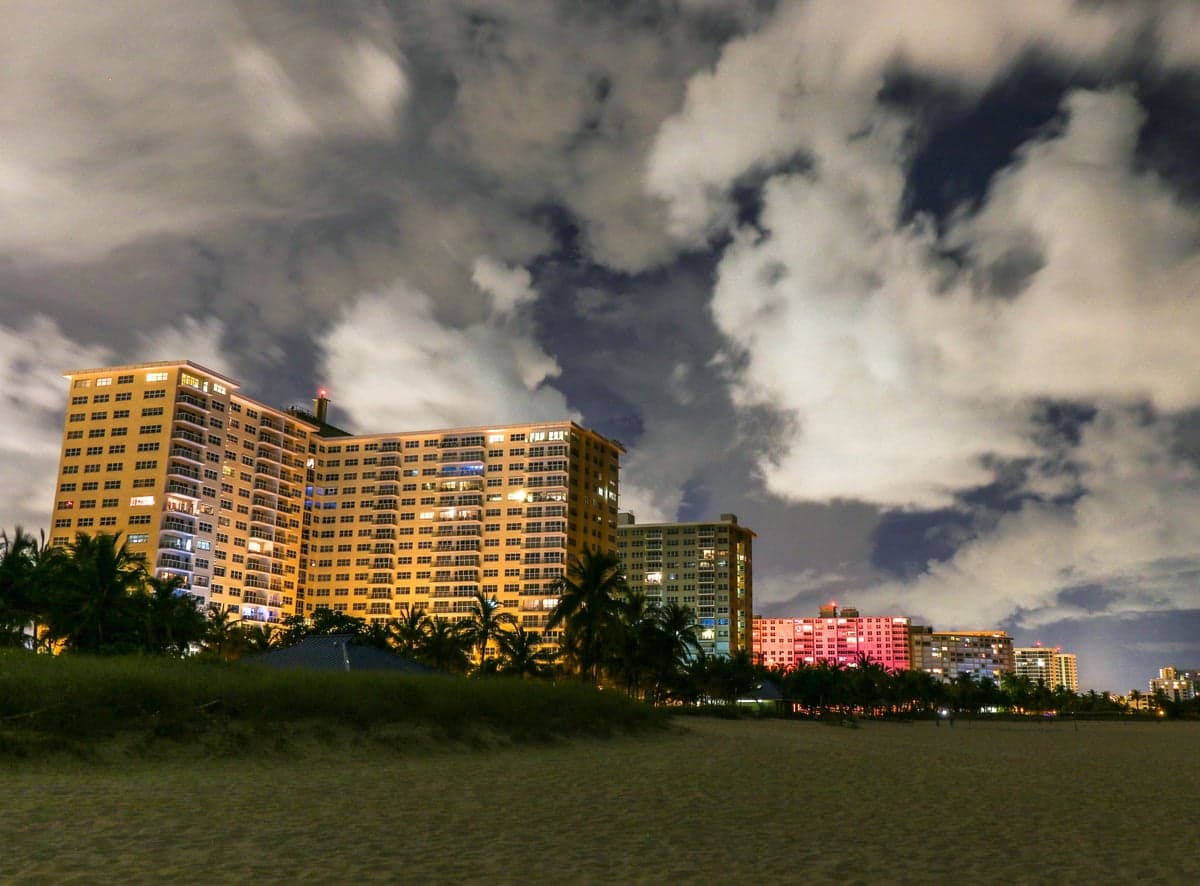
Photo: Wikipedia
Strategic Assessment of Pompano Beach, FL
Meaningful friction. Expect exposure to either population pressure, blast zones, or natural disaster risk. Consider buying a retreat property.
What does the Strategic Assessment tell us?
Our Strategic Assessment grades tactical survivability of an area. Major population centers, military targets, fallout zones, natural disasters, and border exposure all drive risk — lower exposure means a more defensible position in a crisis.
This is heavily inspired by Joel Skousen's Strategic Relocation book. Highly recommended you checkout the book ($)What does this tell us?
Our Strategic Assessment grades tactical survivability of an area. Major population centers, military targets, fallout zones, natural disasters, and border exposure all drive risk — lower exposure means a more defensible position in a crisis.
This is heavily inspired by Joel Skousen's Strategic Relocation book. Highly recommended you checkout the book ($)Strategic Pillars

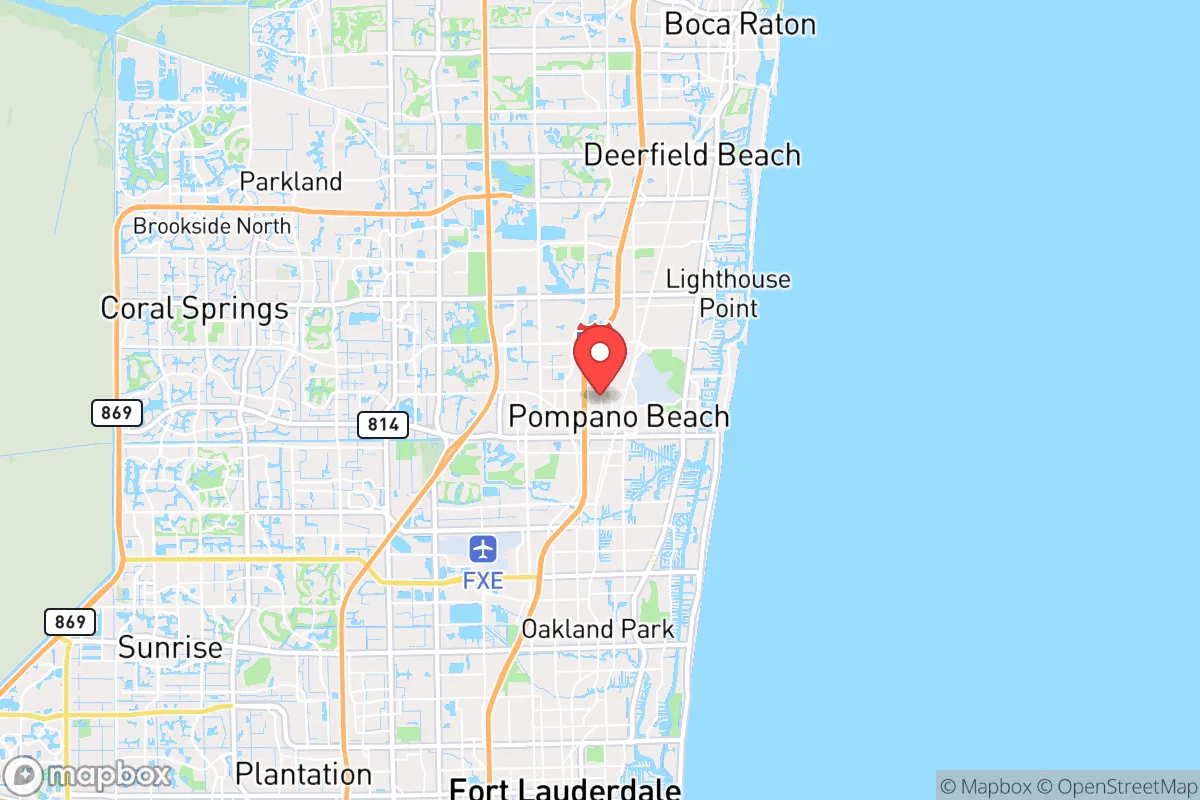
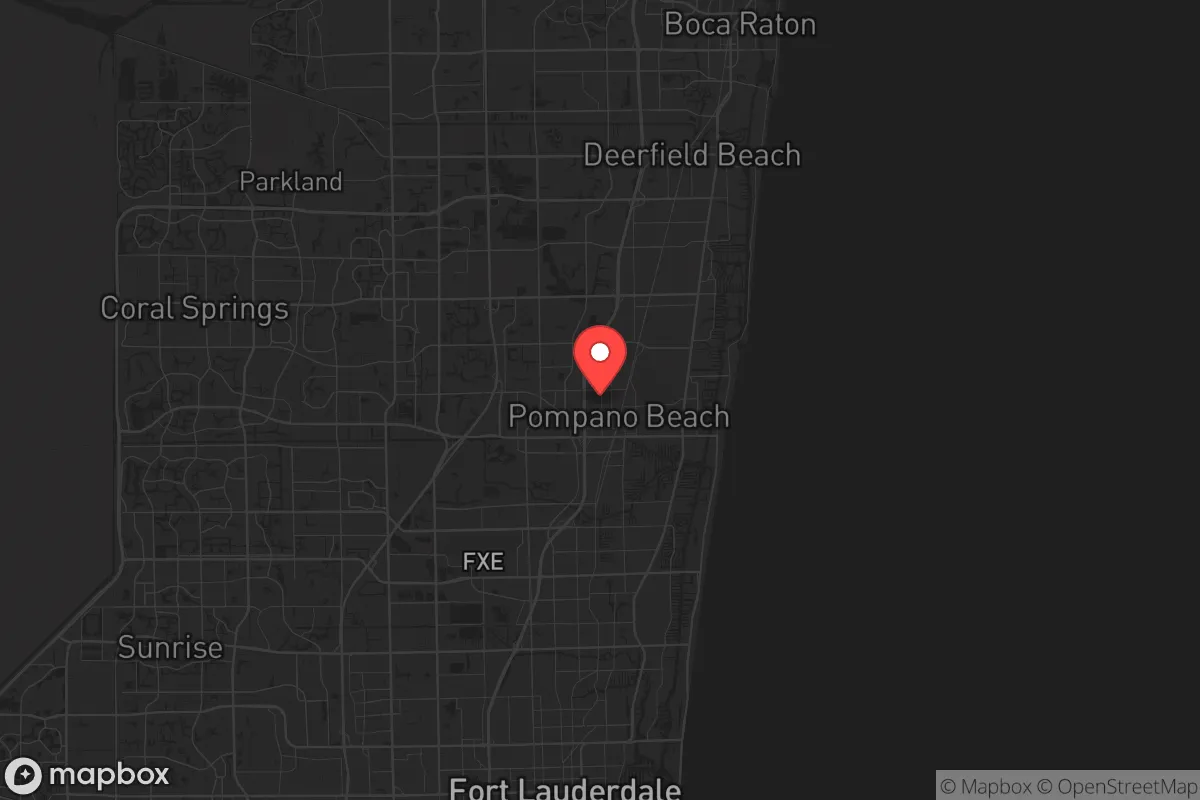
Key Distances
Regional Safe Places
Below is our recommended "safe zones" in Florida and the surrounding area based on our strategic heuristics. For most people, it's unrealistic to live in a “safe zone” full-time due to work, family or other personal reasons. They tend to be more rural. However, many of these areas are perfect for second homes and retreat properties that double as a vacation home or even a short-term rental.

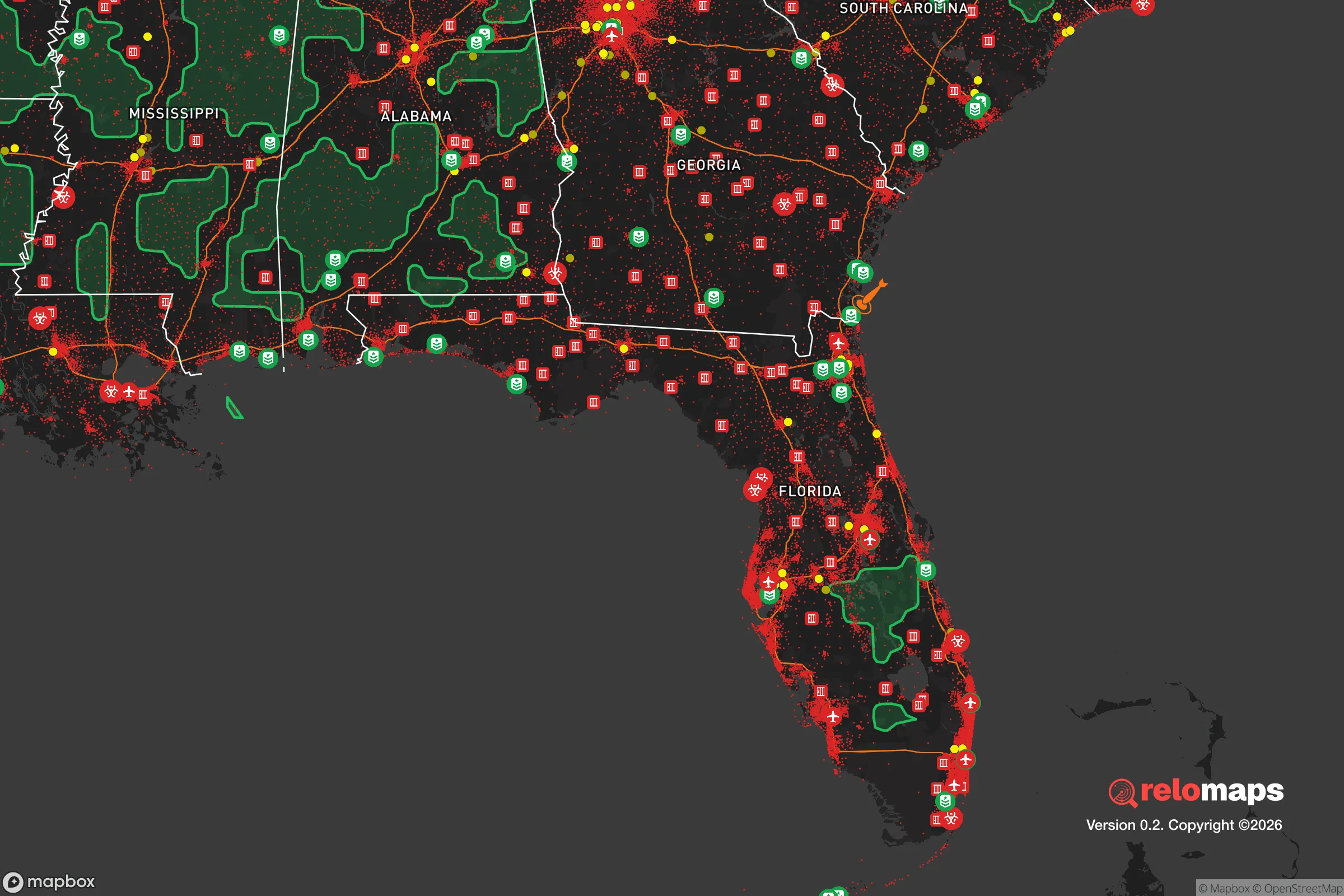


Important Note: For informational purposes only. This does not mean nothing bad ever happens in the green zones. Please use common sense. This is based on public data and modeled with AI. We tried to take a conservative approach but mistakes happen. We update this regularly as new information becomes available.
Solar Generator Recommendations
Backup power matters more here than in safer locations. We've picked three solar generators across budgets and capacity tiers — start with the budget unit if you only need a few essentials, or step up if you want to run a fridge and HVAC for days at a time.

Jackery Portable Power Station Explorer 300
Budget OptionPower on the Go: Weighing only 11 lbs, it's convenient to set up and store with book-sized foldable solar panels

BLUETTI Portable Power Station AC180
Designed for both indoor and outdoor scenarios, AC180 is highly capable as it has a robost capacity and continuous output power.

EF ECOFLOW DELTA Pro Ultra Power Station
Upgraded PickEcoFlow DELTA Pro Ultra is a whole-home energy system designed to grow with your family. Integrated with the Smart Home Panel 2, it scales to meet your evolving energy needs — keeping your home powered, intelligent, and secure through every stage of life.
We earn a commission, at no additional cost to you.
Strategic Assessment Analysis
Pompano Beach, Florida, sits in a precarious strategic position that demands careful consideration from anyone prioritizing long-term resilience and security. While its coastal location offers certain natural advantages, its proximity to the densely populated and politically volatile Southeast Florida corridor introduces significant vulnerabilities that a prepper or survivalist cannot ignore. The area’s fundamental challenge is balancing the benefits of a subtropical climate and robust local infrastructure against the very real risks of being a potential fallout zone in a major crisis, whether from civil unrest, a mass casualty event, or a natural disaster.
Geographic position and natural advantages for long-term survival
Pompano Beach’s geographic position is a double-edged sword. On the plus side, it sits on the Atlantic Coastal Ridge, a relatively high-elevation spine that offers some protection against storm surge compared to immediate beachfront areas. The region’s subtropical climate means a year-round growing season, which is a critical asset for any serious food security plan. The Intracoastal Waterway and numerous canals provide potential secondary transportation routes and a reliable source of marine protein if coastal access remains viable. The area’s flat terrain and extensive canal system also offer natural defensibility in a grid-down scenario—chokepoints can be established, and movement can be monitored. However, the same geography that makes it attractive for boating and fishing also places it squarely in the path of Atlantic hurricanes, which are becoming more frequent and intense. The 2022 Hurricane Ian event, while not a direct hit, demonstrated how quickly the region’s infrastructure can be overwhelmed, with power outages lasting days and fuel shortages becoming acute. For a relocator, the key takeaway is that Pompano Beach’s natural advantages are real but contingent on proactive preparation—you cannot rely on the local government to maintain order or supply lines during a prolonged event.
Risks, exposures, and proximity to fallout-relevant landmarks
The most significant strategic liability for Pompano Beach is its location within the greater Miami-Fort Lauderdale-Pompano Beach metropolitan area, home to over 6 million people. In a scenario involving civil unrest, mass casualty events, or a cascading infrastructure failure, this population density becomes a liability. The city is less than 15 miles from Fort Lauderdale-Hollywood International Airport and about 40 miles from Miami International Airport—both are potential targets for terrorism or logistical choke points during a national emergency. Additionally, the Port Everglades seaport, just south in Fort Lauderdale, is a major fuel import hub for the entire region. A disruption there would cripple the local fuel supply within days, affecting everything from transportation to backup generators. The area’s reliance on a single major highway—I-95—for north-south evacuation or resupply is a critical vulnerability. During a crisis, this corridor would become a parking lot, as seen during Hurricane Irma in 2017. For a conservative-leaning prepper, the proximity to large, politically polarized urban centers also raises the risk of civil unrest spilling over. The 2020 protests in nearby Fort Lauderdale and Miami serve as a reminder that even relatively affluent suburbs are not immune to the chaos that can erupt from larger cities. The presence of multiple nuclear power plants within 100 miles—Turkey Point to the south and St. Lucie to the north—adds another layer of risk, though the prevailing winds typically blow from east to west, pushing any fallout away from the coast.
Practical resilience for a relocator: food, water, energy, and defensibility
For a single individual or family looking to establish a resilient base, Pompano Beach offers a mixed bag. Water security is a major concern. The city’s drinking water comes from the Biscayne Aquifer, which is shallow and vulnerable to saltwater intrusion, especially during droughts or after storm surge events. A well-maintained rainwater catchment system and a high-quality filtration setup (e.g., Berkey or reverse osmosis) are non-negotiable. Food security is more promising. The year-round growing season allows for continuous vegetable production, and the local fishing scene is excellent. However, the soil is sandy and nutrient-poor, so raised beds or hydroponics are necessary for serious gardening. The city has several farmers’ markets, but these are supply-chain dependent and would likely collapse in a crisis. Energy resilience is achievable but requires investment. Solar is viable given the abundant sunshine, but the region’s frequent cloud cover from afternoon thunderstorms means battery storage is essential. Many homes in Pompano Beach have pools, which can serve as a thermal battery for heat pumps, but this is a luxury, not a necessity. Defensibility is the weakest link. The city’s suburban layout—with cul-de-sacs, canals, and a mix of single-family homes and condos—offers some natural chokepoints, but the sheer number of entry points and the density of neighbors make it difficult to secure a perimeter. A single-family home on a larger lot (half-acre or more) in the less dense northern or western parts of the city is preferable to a condo or townhouse. The local police force is well-funded, but during a widespread event, they will be overwhelmed. Building a trusted network of like-minded neighbors is the single most important defensive measure you can take here.
The overall strategic picture for Pompano Beach is one of calculated risk. It is not a remote bug-out location, nor is it a hardened fortress. What it offers is a relatively stable, resource-rich environment for someone who is willing to invest in preparation and who understands that their security depends on their own efforts, not on the government or the goodwill of the crowd. The climate is forgiving, the growing season is long, and the marine resources are abundant. But the proximity to major population centers, critical infrastructure, and hurricane-prone waters means that the margin for error is thin. For a conservative-leaning individual or family who values self-reliance and is willing to put in the work—installing solar, digging a well, building a garden, and forging local alliances—Pompano Beach can be a viable base of operations. For those seeking a low-maintenance, low-risk retreat, the trade-offs are likely too steep. The city’s resilience is not given; it must be earned, and that requires a clear-eyed assessment of both its strengths and its very real vulnerabilities.

* Values derived from national, state, county, city and local statistics and may differ in a specific area. Last updated: 2026-05-03T04:49:32.000Z
Narrative content on this page is AI-generated and may contain mistakes. Verify any details that matter before acting on them.
ReloMaps may earn a commission from affiliate links at no extra cost to you.

