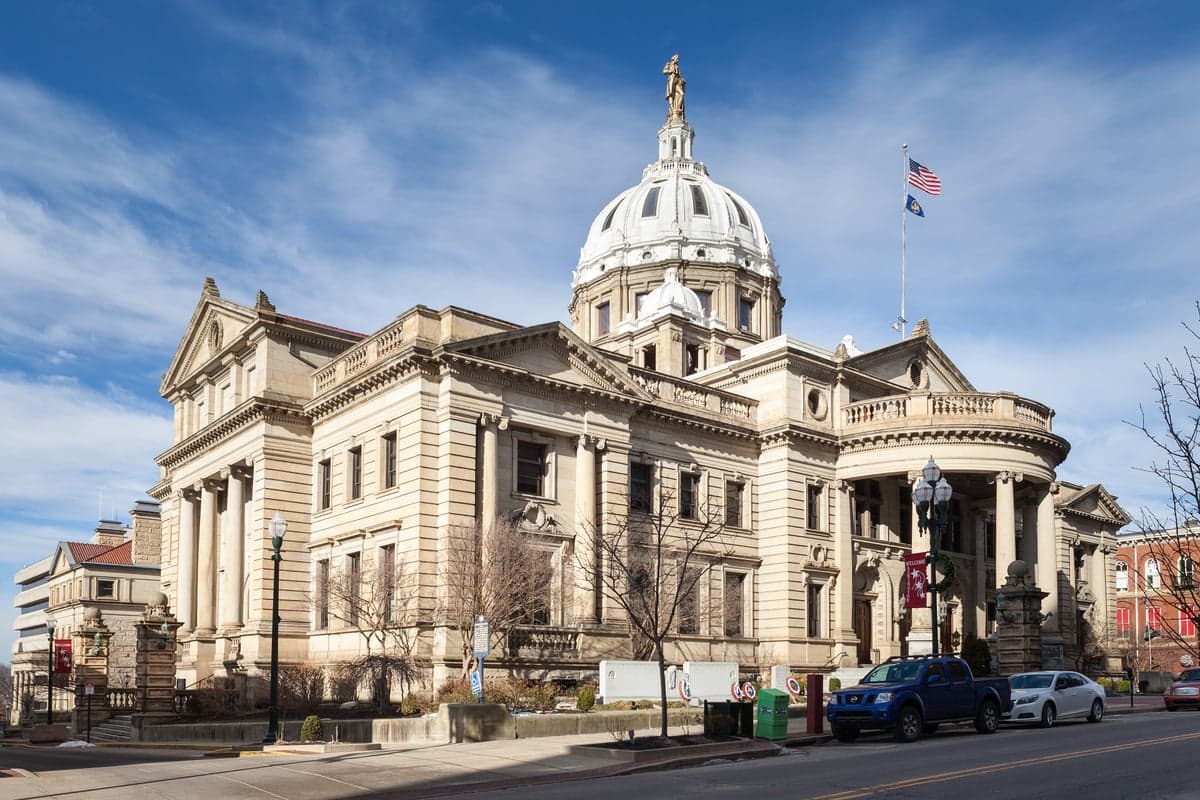
Photo: Wikipedia
Quality of Life in Washington County
A livable area that tracks near national norms for affordability, walkability, and neighborhood health.
What does Quality of Life tell us?
Quality of Life measures an area by evaluating factors like cost of living, nearby amenities, country club access, airport proximity, socioeconomic signals and neighborhood character. For large states, this is a general average — quality of life can vary dramatically between metro areas, suburbs, and rural communities within the same state.
What does this tell us?
Quality of Life measures an area by evaluating factors like cost of living, nearby amenities, country club access, airport proximity, socioeconomic signals and neighborhood character. For large states, this is a general average — quality of life can vary dramatically between metro areas, suburbs, and rural communities within the same state.
Cost of Living
21% below national average
123%
The Real Cost of Living in Washington County for 2026
| Tier | Individual | Family (4) |
|---|---|---|
| Survival | $15k | $28k |
| Comfortable | $43k | $63k |
| Luxury | $140k+ | $217k+ |
| Elite (Top 5%) | $166k+ | $257k+ |
Quality-of-Life Analysis
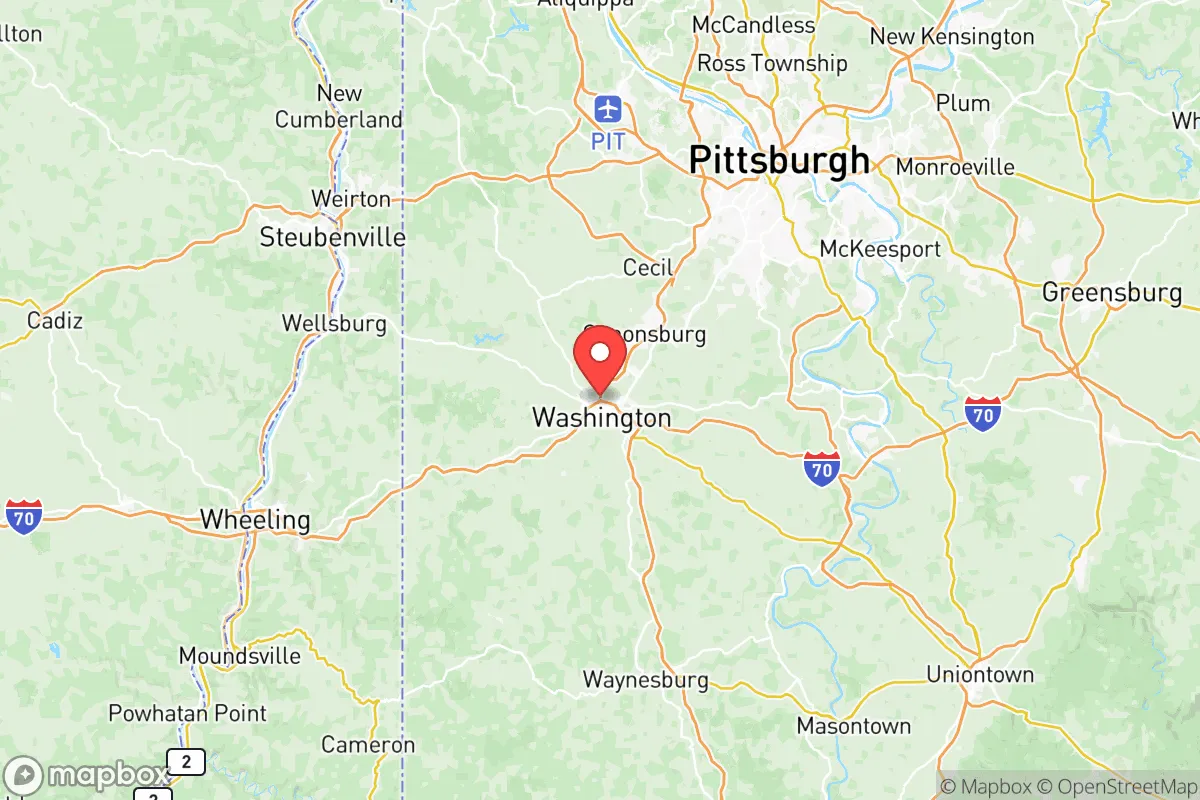
Washington County, PA offers one of the most pronounced quality-of-life spectrums in Southwestern Pennsylvania, anchored by the historic city of Washington and stretching into quiet Appalachian foothill communities. The county’s overall cost of living index sits at 79 (21% below the U.S. average), but that single number masks a wide divide between walkable riverfront boroughs and sprawling rural townships. Residents choose the county for its mix of Pittsburgh proximity, agricultural heritage, and access to outdoor recreation, with each subregion attracting a distinctly different demographic.
Largest town(s) & population centers
The city of Washington (pop. ~13,000) is the county seat and its primary urban hub, centered around the historic Washington & Jefferson College campus and the compact downtown along Main Street. Daily life here is defined by a mix of college-town energy, county government offices, and a growing restaurant scene anchored by spots like the Union Grill. The city offers the most walkable lifestyle in the county, with a median home value of roughly $220,600 and median rent of $922 — figures that are attainable for young professionals and W&J faculty alike. Canonsburg, just to the northeast, functions as a secondary population center with a more suburban feel, known for its Sarris Candies headquarters and a Main Street that has seen steady reinvestment. Both towns sit along the I-79 corridor, making the 26.7-minute average commute to downtown Pittsburgh or the Southpointe office park in neighboring Cecil Township a realistic daily proposition.
Smaller towns & rural pockets
Beyond the two main boroughs, Washington County’s character shifts quickly into small-town Americana and working farmland. Washington, PA’s outer townships — including North Strabane, Peters, and Cecil — have become the county’s fastest-growing residential areas, with newer subdivisions and big-box retail along Route 19. Further south and west, towns like Burgettstown, Claysville, and West Middletown retain a distinctly rural identity, with volunteer fire departments, feed stores, and century-old brick storefronts. The unincorporated village of Meadow Lands, near the old coal patch town of Bentleyville, offers some of the county’s most affordable housing stock, while Prosperity and Taylorstown in the western panhandle are true hamlets surrounded by cornfields and cattle pastures. These areas trade convenience for space, with residents often driving 15-20 minutes to reach a full grocery store or hospital.
Cost & lifestyle range
The cost spread across Washington County is significant even within a low-cost county. At the affordable end, boroughs like Charleroi, Monongahela, and Donora along the Monongahela River offer median home prices well below the county average — often in the $120,000–$160,000 range — but come with older housing stock and fewer local amenities. The middle tier, including Washington city and Canonsburg, delivers the best balance of price and walkability. At the premium end, Peters Township and Upper St. Clair-adjacent areas push home values toward $400,000–$600,000, with top-rated schools, country clubs, and direct access to Southpointe’s office parks. Amenities follow the same gradient: Peters Township has a full-service recreation complex and boutique shopping, while rural western townships may have a single gas station and a volunteer ambulance service. Property taxes vary noticeably by municipality, with the city of Washington levying a higher millage rate than surrounding townships, which can shift the true cost of ownership by several hundred dollars annually.
Washington County rewards residents who know what they want before they arrive. Young professionals and commuters thrive in the I-79 corridor towns of Washington, Canonsburg, and Cecil Township, where the Pittsburgh job market is within reach without city prices. Families seeking top schools and suburban amenities gravitate to Peters and North Strabane townships. Retirees and outdoor enthusiasts find their niche in the quiet western and southern townships, where land is cheap, traffic is minimal, and state game lands and the Montour Trail provide recreation. The county’s greatest strength is its flexibility — few regions in Pennsylvania offer this much variety in lifestyle, cost, and community character within a single 861-square-mile footprint.

Crime in Washington County
WARNING: The crime statistics are unreliable for this jurisdiction. Local authorities have either not reported or under reported their data to the FBI. This could be due to bad intentions, incompetence or technical issues. Regardless, we suggest skepticism.
Higher crime rates than 62% of comparable U.S. locations.
Violent CrimeViolent Crime Analysis
Property CrimeProperty Crime Analysis
Crime Analysis
Washington County, Pennsylvania, presents a moderate safety profile relative to both state and national averages, with a violent crime rate of 223.2 incidents per 100,000 residents and a property crime rate of 1,350.4 per 100,000. These figures place the county in a middle tier for safety, meaning residents in communities like Washington, Canonsburg, and McMurray experience crime levels that are neither exceptionally low nor alarmingly high. The county’s position as a Pittsburgh exurb, with a mix of suburban bedroom communities and post-industrial boroughs, creates a patchwork of safety outcomes that prospective residents should evaluate at the neighborhood level.
Crime in context
Washington County’s violent crime rate of 223.2 per 100,000 sits roughly 25% below the Pennsylvania state average of approximately 300 per 100,000 and about 40% below the national figure of roughly 380 per 100,000. Property crime, however, tells a slightly different story: the county’s 1,350.4 per 100,000 rate is nearly on par with the state average of 1,400 per 100,000, though still below the national benchmark of 1,954 per 100,000. The gap between the county’s relatively low violent crime and its average property crime suggests that theft, burglary, and vehicle-related offenses are the more pressing day-to-day concerns for most residents. These aggregate numbers, however, mask significant internal variation—the county’s eastern townships bordering Allegheny County tend to see lower rates, while the city of Washington and the Mon Valley boroughs of Donora, Monongahela, and Charleroi carry a disproportionate share of reported incidents.
What residents experience
For most residents in the county’s affluent southern and central communities—places like Peters Township, Upper St. Clair-adjacent McMurray, and Cecil Township—crime is a rare and distant concern. These areas report violent crime rates in the low double digits per 100,000, with property crime driven primarily by opportunistic vehicle break-ins and package thefts. In contrast, the city of Washington (the county seat, population ~13,000) experiences a violent crime rate roughly 2.5 times the county average, with aggravated assault and drug-related offenses concentrated along the Main Street corridor and in the East Washington and North Franklin neighborhoods. The Mon Valley boroughs of Donora and Monongahela, legacy steel towns with higher poverty rates, see elevated property crime and opioid-related incidents that strain local police resources. The Washington County District Attorney’s office, currently under the leadership of Jason Walsh, has pursued a conventional prosecution-first approach, but residents in the higher-crime boroughs should be aware that the county’s court system, like much of southwestern Pennsylvania, has seen a gradual shift toward diversionary programs and reduced cash bail for non-violent offenders—a trend that some public safety advocates argue has contributed to repeat property offenders cycling through the system more quickly than in prior decades.
Neighborhood-level variation is pronounced. The safest residential enclaves are the planned communities of Peters Township and the Southpointe business district area in Cecil Township, where violent crime is nearly nonexistent and property crime hovers below 500 per 100,000. The most challenging areas are the city of Washington’s downtown core, the Donora riverfront, and the Charleroi business district, where vacant properties and concentrated poverty create conditions for theft and occasional violent incidents. Middle-ground communities like Canonsburg, Houston, and Bentleyville offer moderate safety with occasional spikes in drug-related property crime. For families and professionals relocating to the county, the practical takeaway is that choosing a township over a borough, and specifically the southern tier of the county over the Mon Valley, reduces crime exposure substantially. Prospective residents should also note that the county’s rural northern and western townships—places like Burgettstown and Avella—have very low crime but also limited police coverage, meaning response times can be longer than in the more densely patrolled eastern suburbs.
* Values derived from national, state, county, city and local statistics and may differ in a specific area. Last updated: 2026-11-01T08:21:32.000Z
Narrative content on this page is AI-generated and may contain mistakes. Verify any details that matter before acting on them.
ReloMaps may earn a commission from affiliate links at no extra cost to you.

