Photo: Wikipedia
Quality of Life in Luzerne County
A livable area that tracks near national norms for affordability, walkability, and neighborhood health.
What does Quality of Life tell us?
Quality of Life measures an area by evaluating factors like cost of living, nearby amenities, country club access, airport proximity, socioeconomic signals and neighborhood character. For large states, this is a general average — quality of life can vary dramatically between metro areas, suburbs, and rural communities within the same state.
What does this tell us?
Quality of Life measures an area by evaluating factors like cost of living, nearby amenities, country club access, airport proximity, socioeconomic signals and neighborhood character. For large states, this is a general average — quality of life can vary dramatically between metro areas, suburbs, and rural communities within the same state.
Cost of Living
27% below national average
133%
The Real Cost of Living in Luzerne County for 2026
| Tier | Individual | Family (4) |
|---|---|---|
| Survival | $15k | $29k |
| Comfortable | $32k | $47k |
| Luxury | $110k+ | $171k+ |
| Elite (Top 5%) | $130k+ | $201k+ |
Quality-of-Life Analysis
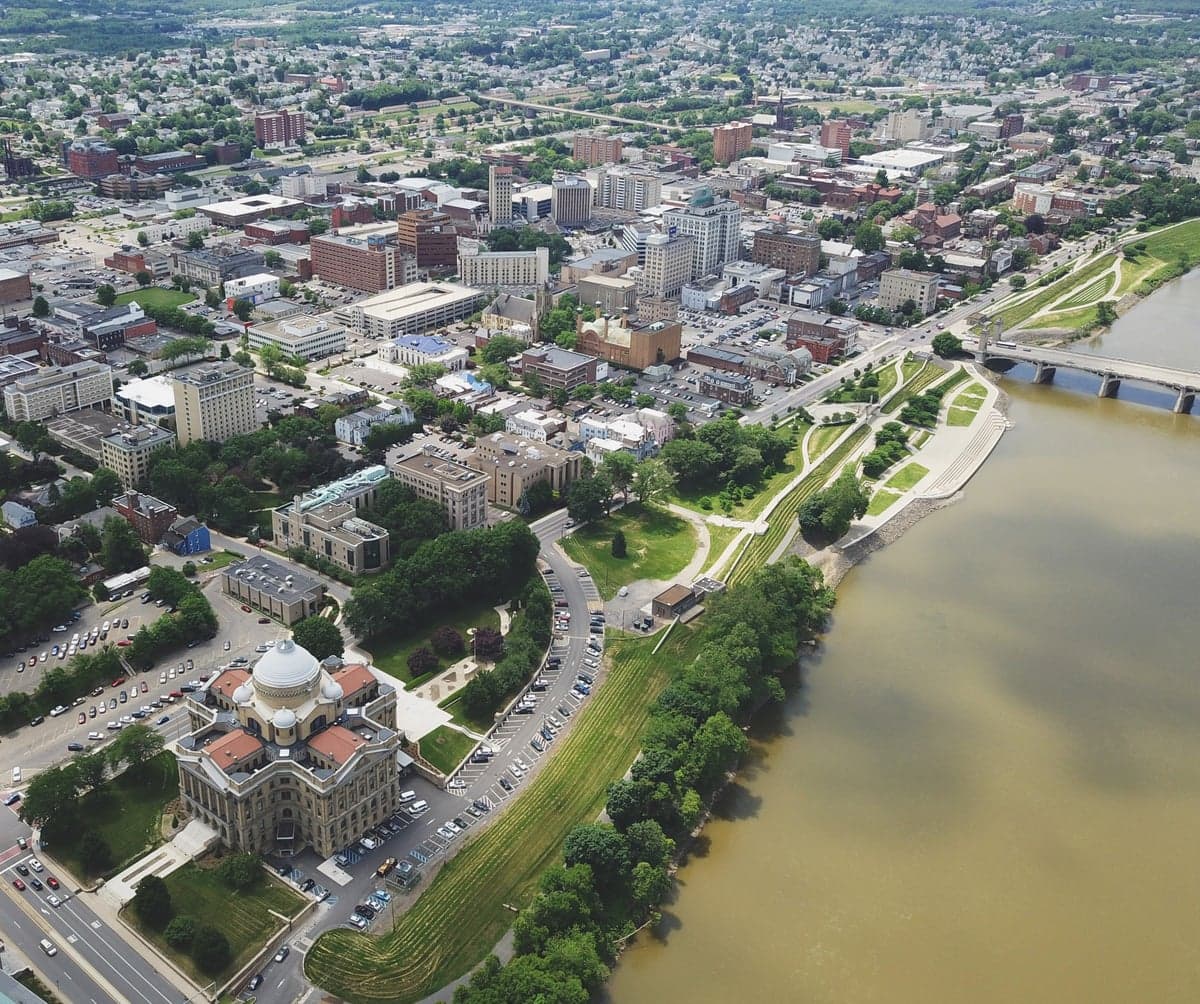
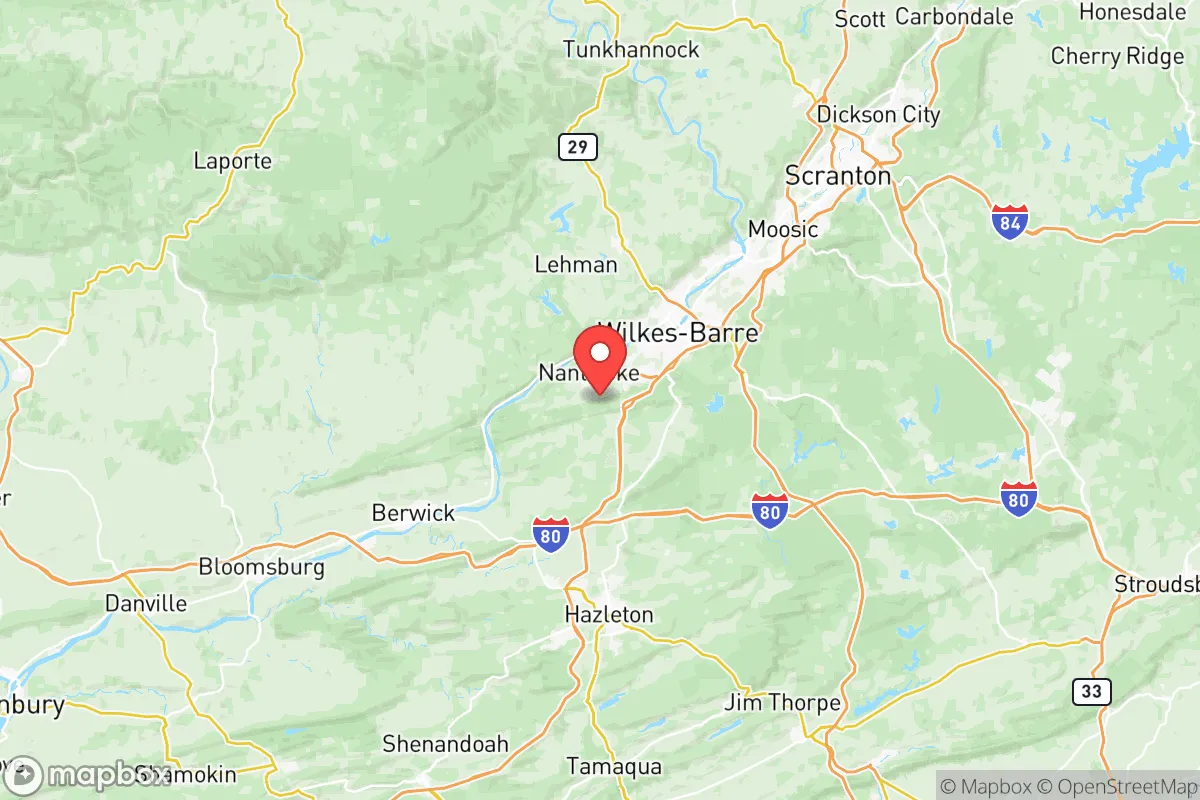
Luzerne County offers a broad spectrum of quality-of-life options, from the dense, walkable streets of its historic coal-era cities to the quiet, wooded hollows of its northern townships. The county’s character shifts dramatically depending on where you are: the Wyoming Valley floor is dominated by the urban centers of Wilkes-Barre and its suburbs, while the northern and western reaches transition into small boroughs and sparsely populated farmland. This diversity means the county attracts a wide range of residents — from young professionals seeking affordable city living near the Susquehanna River to retirees looking for low-cost rural acreage in places like Huntington Township.
Largest town(s) & population centers
The county’s undisputed hub is Wilkes-Barre (pop. ~40,000), a compact city along the Susquehanna River that serves as the region’s commercial and cultural core. Daily life here revolves around a walkable downtown anchored by Wilkes University, the F.M. Kirby Center for the Performing Arts, and a growing number of breweries and farm-to-table restaurants. Just south, Kingston (pop. ~13,000) and Hanover Township (pop. ~11,000) function as the primary suburban bedroom communities, offering strip-mall retail along Route 309 and the sprawling Wyoming Valley Mall. These population centers provide the densest concentration of jobs, healthcare (Geisinger Wyoming Valley Medical Center), and entertainment, but also carry higher traffic and older housing stock. The average commute across the county is a manageable 23.6 minutes, making these hubs practical for workers who live in outlying areas.
Smaller towns & rural pockets
Venture north of the valley, and the landscape opens into a patchwork of small boroughs and unincorporated villages. Dallas (pop. ~2,800) is a well-regarded small town with a strong school district and a classic Main Street, while Harveys Lake (pop. ~2,700) offers a resort-like atmosphere around the largest natural lake in Pennsylvania. Further west, Shickshinny (pop. ~600) and Nanticoke (pop. ~10,000) represent the county’s industrial past, with quiet streets and lower home prices. The truly rural pockets are found in the northern tier: Huntington Township, Ross Township, and Lake Township are characterized by rolling farmland, state game lands, and homes on 2-10 acre lots. These areas lack public water and sewer in many sections, but offer privacy and direct access to hunting, fishing, and ATV trails. Ricketts Glen State Park, a 13,000-acre preserve with 22 named waterfalls, lies just outside the county line and is a major draw for residents in these northern communities.
Cost & lifestyle range
The cost of living in Luzerne County is a standout feature, with a COL index of 73 — 27% below the national average. This low cost is distributed unevenly. At the low end, Wilkes-Barre’s South Side and Plymouth (pop. ~5,700) offer median home values well below the county’s $163,800 average, with many fixer-upper rowhomes selling for under $80,000. Median rent countywide is $958, but in these older neighborhoods, two-bedroom apartments can be found for $600-$750. At the higher end, Dallas and Back Mountain communities (including Shavertown, Trucksville, and Huntsville) push median home values toward $250,000-$350,000, with larger single-family homes on half-acre lots. The lifestyle range is equally wide: a resident in downtown Wilkes-Barre can walk to a coffee shop and a minor-league baseball game, while a resident in Fairmount Township might drive 25 minutes to the nearest grocery store. Amenities like high-speed internet are generally available in the valley and larger boroughs, but can be limited to satellite or fixed wireless in the most remote northern townships.
Luzerne County is best suited for people who value affordability and variety over urban polish. First-time homebuyers priced out of the Philadelphia or New York markets can find a move-in-ready home in Kingston or Forty Fort for under $200,000. Outdoor enthusiasts thrive in the northern townships, where state game lands and the Susquehanna River offer year-round recreation. Retirees on fixed incomes are drawn to the low property taxes (among the lowest in Pennsylvania) and the presence of Geisinger’s medical network. The trade-off is a slower pace of life, limited public transit outside the valley, and a job market still recovering from the decline of coal and manufacturing. For those who can work remotely or commute to Scranton (30 minutes) or Allentown (60 minutes), the county offers a rare combination of low cost and genuine geographic diversity.

Crime in Luzerne County
WARNING: The crime statistics are unreliable for this jurisdiction. Local authorities have either not reported or under reported their data to the FBI. This could be due to bad intentions, incompetence or technical issues. Regardless, we suggest skepticism.
Higher crime rates than 62% of comparable U.S. locations.
Violent CrimeViolent Crime Analysis
Property CrimeProperty Crime Analysis
Crime Analysis
Luzerne County, Pennsylvania, presents a mixed safety profile that falls between the state average and national benchmarks, with property crime rates notably higher than violent crime. The county recorded a violent crime rate of 226.7 per 100,000 residents and a property crime rate of 1,347.3 per 100,000 in the most recent reporting period. While these figures place the county in a moderate risk category overall, significant variation exists between its urban centers like Wilkes-Barre and more suburban or rural communities such as Dallas and Kingston.
Crime in context
Luzerne County's violent crime rate of 226.7 per 100,000 is roughly 30% below the national average of approximately 380 per 100,000, but it sits slightly above the Pennsylvania state average of around 210 per 100,000. The property crime rate of 1,347.3 per 100,000 is about 15% below the national average of 1,954 per 100,000, yet it exceeds the Pennsylvania state average of roughly 1,200 per 100,000. This means residents face a lower risk of violent victimization than the typical American but a somewhat elevated risk of theft, burglary, or motor vehicle theft compared to other Pennsylvanians. The county's crime index places it in the 30th percentile nationally, indicating that 70% of U.S. counties are safer overall. Key drivers of the property crime rate include thefts from vehicles and residential burglaries in the more densely populated areas.
What residents experience
Daily life in Luzerne County varies sharply by location. Wilkes-Barre, the county seat and largest city, experiences the highest concentration of both violent and property crime, with incidents often clustered in downtown and near the Kingston-Forty Fort bridge corridor. The city's police department handles a disproportionate share of the county's reported offenses, including aggravated assaults and drug-related crimes. In contrast, communities like Dallas, Kingston, and Forty Fort report significantly lower crime rates, with violent crime nearly absent in some residential neighborhoods. The county's judicial system, overseen by the Luzerne County District Attorney's Office, has historically taken a mixed approach to prosecution. Under the current administration, there has been a noticeable shift toward progressive policies, including diversion programs and reduced sentencing for non-violent offenders. While intended to reduce incarceration, these policies have raised concerns among residents about repeat offenders cycling back into communities, particularly in Wilkes-Barre and Hazleton, where property crime recidivism is a persistent issue. The presence of liberal-leaning judges in the county's Court of Common Pleas has also led to criticism that the justice system prioritizes offender rehabilitation over public safety, contributing to a perception that crime carries fewer consequences.
Neighborhood-level variation
Neighborhood-level safety in Luzerne County is highly localized. Hazleton, the county's second-largest city, has seen property crime rates climb in recent years, driven by population growth and economic shifts, while its violent crime rate remains below Wilkes-Barre's. Suburban towns like Mountain Top and Nanticoke offer markedly lower crime rates, with many residents reporting they feel safe walking at night. The county's rural areas, particularly in the northern and western townships, experience minimal crime, with most incidents limited to isolated thefts. For prospective residents, the safest bets are the smaller boroughs and townships outside the urban core, while those considering Wilkes-Barre or Hazleton should research specific neighborhoods—such as the South Side or Heights sections of Wilkes-Barre—where crime is more concentrated. The Luzerne County District Attorney's Office publishes annual crime reports that break down incidents by municipality, providing a useful tool for comparing safety across the county's 76 municipalities.
* Values derived from national, state, county, city and local statistics and may differ in a specific area. Last updated: 2026-07-17T04:58:48.000Z
Narrative content on this page is AI-generated and may contain mistakes. Verify any details that matter before acting on them.
ReloMaps may earn a commission from affiliate links at no extra cost to you.

