Photo: Wikipedia
Personal Sovereignty in Luzerne County
Strong independent fundamentals that actively favor personal liberty and low regulation.
What does Personal Sovereignty tell us?
Personal Sovereignty measures your capacity for self-reliance and independence with minimal government friction. Higher scores mean fewer barriers between you and the way you want to live... but it assumes you have the space you need and good neighbors.
What does this tell us?
Personal Sovereignty measures your capacity for self-reliance and independence with minimal government friction. Higher scores mean fewer barriers between you and the way you want to live... but it assumes you have the space you need and good neighbors.
State Policy
Energy independence: Net exporter (150% of energy produced in-state)
Personal Liberty
Homesteading

Personal Liberty Analysis
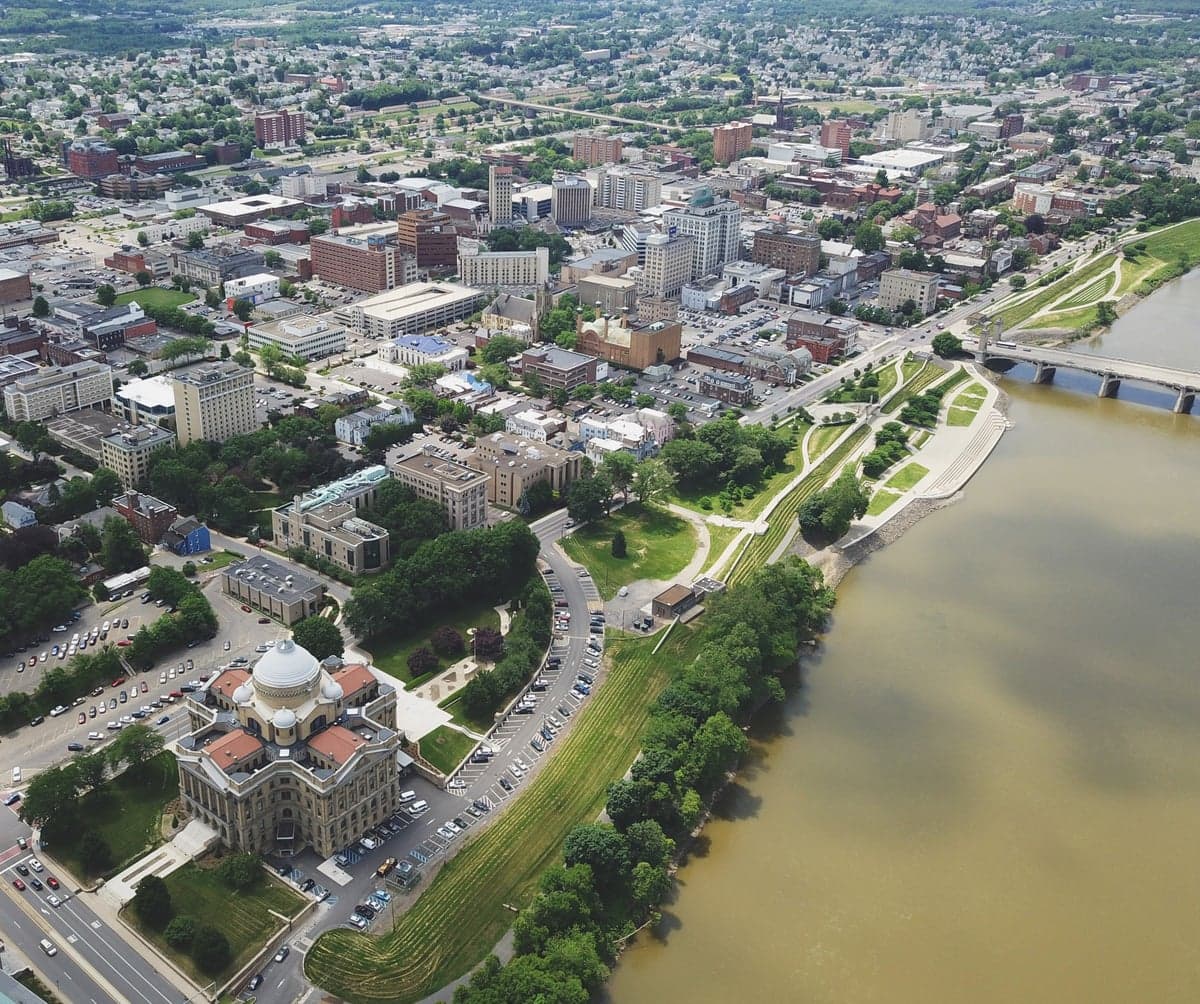
Luzerne County, Pennsylvania, offers a notably high degree of personal sovereignty relative to the urbanized eastern half of the state, with a regulatory environment that leans permissive in key areas like property use, taxation, and self-defense. The county’s mix of post-industrial cities, suburban townships, and rural farmland creates a patchwork of autonomy, where a resident’s experience can vary significantly depending on whether they live in the city of Wilkes-Barre, a borough like Dallas, or a rural township like Fairmount. For individuals and families prioritizing personal freedom, the county’s overall posture is one of light-touch governance, though local zoning and municipal ordinances do impose meaningful constraints in denser areas.
Tax burden and regulatory posture in Luzerne County
Pennsylvania’s state-level framework provides a baseline of fiscal freedom that Luzerne County residents benefit from directly. The state’s flat personal income tax rate of 3.07% is among the lowest in the Northeast, and there is no tax on retirement income, including Social Security, pensions, or 401(k) withdrawals. Luzerne County itself levies a relatively modest county property tax rate, which when combined with local school district and municipal taxes, results in a total effective property tax rate that is below the Pennsylvania average. For example, a home valued at $200,000 in a township like Wright or Jackson will see a combined millage rate roughly 15-20% lower than in neighboring Lackawanna County. The regulatory posture is similarly restrained: there is no state-level property tax on business equipment (the “capital stock and franchise tax” was phased out), and the county has no county-level sales tax beyond the state’s 6% rate. However, municipalities retain significant zoning authority. In the city of Wilkes-Barre and boroughs like Kingston and Nanticoke, zoning is more restrictive, with traditional lot-size minimums and permitted-use lists. In contrast, townships such as Butler, Conyngham, and Fairmount operate with minimal zoning, often allowing agricultural uses, home-based businesses, and accessory dwelling units by right. This means a resident seeking to run a small repair shop or keep livestock on a half-acre lot will find far fewer hurdles in the rural townships than in the boroughs.
Self-defense and gun law specifics in Luzerne County
Pennsylvania is a “shall-issue” state for concealed carry permits, and Luzerne County’s Sheriff’s Office processes applications without discretionary delays or subjective “good cause” requirements. As of 2026, the county’s permit issuance rate remains high, with the sheriff’s office routinely approving applications within 45 days for residents who pass a background check and complete the required training. Open carry is legal without a permit for anyone who can legally possess a firearm, though it is restricted in Philadelphia and during declared states of emergency. Luzerne County has no county-level gun ordinances beyond state law, meaning no additional waiting periods, magazine capacity limits, or firearm registration requirements. The county’s culture is strongly pro-Second Amendment: gun ranges and firearms retailers are common in towns like Dallas and Mountain Top, and the annual “Gun Show” at the Mohegan Sun Arena in Wilkes-Barre Township draws thousands. For residents of rural townships like Fairmount and Ross, discharging a firearm on private property is generally permitted as long as it is done safely and not within 150 yards of an occupied dwelling. This stands in contrast to the more restrictive environment in the city of Wilkes-Barre, where discharging a firearm is prohibited within city limits except at a licensed range. For a family prioritizing self-defense rights, Luzerne County offers a permissive legal environment that is among the most favorable in the Northeast, comparable to counties in central Pennsylvania.
Self-reliance and homesteading viability across Luzerne County
The viability of a self-reliant, homesteading lifestyle varies dramatically across Luzerne County’s 907 square miles. In the rural northern and western townships—Fairmount, Ross, Huntington, and parts of Butler—minimum lot sizes are typically 1 to 2 acres, and many parcels of 5 to 10 acres are available for under $10,000 per acre as of 2026. Zoning in these areas is permissive: raising chickens, goats, or even a small herd of cattle is generally allowed without a special permit, and beekeeping is unrestricted. Off-grid feasibility is moderate: while Pennsylvania’s building code requires a permit for new construction, there is no county-wide ban on composting toilets, rainwater collection, or solar panel installation. However, the county does enforce the Uniform Construction Code (UCC), meaning a dwelling must meet basic structural and sanitation standards. For those seeking true off-grid living, the rural townships of Fairmount and Ross are the most accommodating, with many existing homes already using private wells and septic systems. In contrast, the boroughs and the city of Wilkes-Barre impose stricter rules: keeping livestock is typically prohibited, and accessory dwelling units (ADUs) often require a variance. The borough of Dallas, for example, limits lot coverage and requires a minimum of 10,000 square feet for a single-family home, making intensive homesteading impractical. For a family seeking to grow a significant portion of their own food and reduce reliance on municipal utilities, the rural townships of Luzerne County offer a viable path, while the more densely populated areas do not.
Personal liberties: parental rights, medical autonomy, speech, and property
Pennsylvania’s legal framework provides a strong baseline for personal liberties that Luzerne County residents enjoy. Parental rights are robust: the state’s “Parental Access to Medical Records” law gives parents broad authority over their children’s healthcare decisions, and there is no state-level mandate for comprehensive sex education that overrides parental opt-out. Medical autonomy is similarly protected: Pennsylvania does not have a state-level vaccine mandate for adults, and while school vaccine requirements exist, medical and religious exemptions are available. In Luzerne County, local school districts—such as the Dallas School District and the Lake-Lehman School District—have historically respected parental opt-out requests for specific curriculum materials. Property rights are well-defined: Pennsylvania’s “Right to Farm” law protects agricultural operations from nuisance lawsuits, which is a significant advantage for homesteaders in rural townships. The county’s courts have a reputation for enforcing property rights, with a low rate of eminent domain takings relative to other counties in the state. Free speech is protected under the First Amendment, and Luzerne County has no local ordinances that restrict political signage or public assembly beyond standard time, place, and manner regulations. The county’s political culture is broadly conservative, with a majority of county commissioners and local officials holding pro-liberty positions on these issues. However, residents should note that the city of Wilkes-Barre has a more progressive city council that has occasionally pursued local ordinances on noise and signage that are more restrictive than the county’s default posture.
Overall, Luzerne County offers a level of personal sovereignty that is significantly higher than what is available in Pennsylvania’s major urban centers like Philadelphia or Pittsburgh, and it compares favorably to many counties in the Northeast. The combination of low taxes, permissive gun laws, viable homesteading options in rural townships, and strong protections for parental and property rights creates an environment where self-reliant individuals and families can operate with minimal government interference. The key variable is location: a resident of Fairmount Township enjoys far more autonomy than a resident of Wilkes-Barre city, but even the more restrictive boroughs offer a lighter regulatory touch than what is found in neighboring New Jersey or New York. For a relocation-minded reader who prioritizes personal freedom, Luzerne County represents a solid middle ground—not as libertarian as rural counties in the western part of the state, but markedly freer than the urbanized corridor to the east.

* Values derived from national, state, county, city and local statistics and may differ in a specific area. Last updated: 2026-07-17T04:58:48.000Z
Narrative content on this page is AI-generated and may contain mistakes. Verify any details that matter before acting on them.
ReloMaps may earn a commission from affiliate links at no extra cost to you.

