
Photo: Wikipedia
Strategic Assessment of Lawrence County
Meaningful friction. Expect exposure to either population pressure, blast zones, or natural disaster risk. Consider buying a retreat property.
What does the Strategic Assessment tell us?
Our Strategic Assessment grades tactical survivability of an area. Major population centers, military targets, fallout zones, natural disasters, and border exposure all drive risk — lower exposure means a more defensible position in a crisis.
This is heavily inspired by Joel Skousen's Strategic Relocation book. Highly recommended you checkout the book ($)What does this tell us?
Our Strategic Assessment grades tactical survivability of an area. Major population centers, military targets, fallout zones, natural disasters, and border exposure all drive risk — lower exposure means a more defensible position in a crisis.
This is heavily inspired by Joel Skousen's Strategic Relocation book. Highly recommended you checkout the book ($)Strategic Pillars

Key Distances
Strategic Assessment Analysis
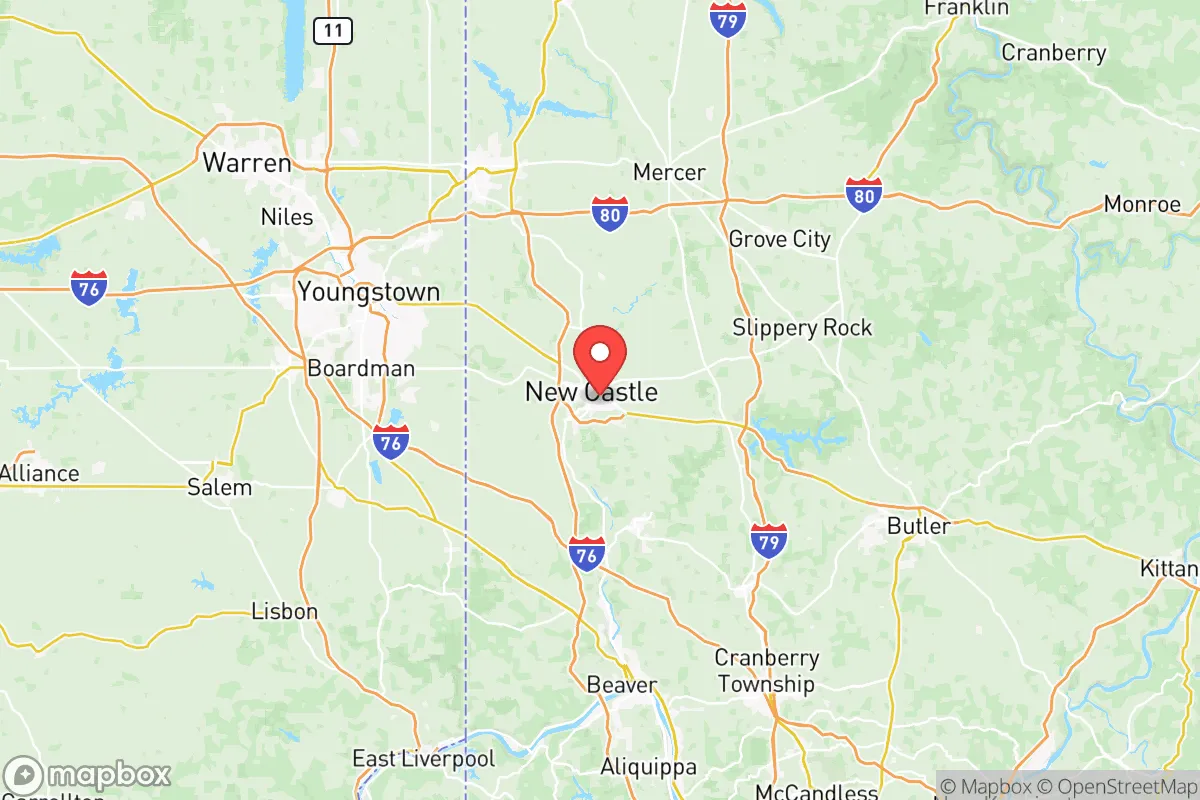
Lawrence County, Pennsylvania, offers a compelling strategic position for relocation-minded individuals and families who prioritize resilience, self-sufficiency, and a buffer from major metropolitan vulnerabilities. Situated along the Ohio border, roughly 50 miles northwest of Pittsburgh and 20 miles east of Youngstown, Ohio, the county combines rural character with access to regional infrastructure, making it a viable option for those assessing long-term security and preparedness. Its location within the rolling hills of western Pennsylvania provides natural advantages that are worth examining closely for anyone serious about disaster readiness and sustainable living.
Geographic position and natural advantages for long-term security
Lawrence County’s geography is defined by its position in the Appalachian Plateau, characterized by moderate elevation, wooded ridges, and fertile valleys. The county seat, New Castle, sits along the Shenango River, while smaller communities like Ellwood City, Bessemer, and Wampum dot the landscape. This terrain offers several strategic benefits. The rolling hills provide natural drainage and reduce flood risk compared to flat river plains, though the Shenango and Beaver River corridors do have localized flood zones. The county’s distance from major coastal targets—over 300 miles from the Atlantic and 150 miles from Lake Erie—reduces exposure to hurricane storm surge and tsunami threats. More importantly, Lawrence County is not within the immediate blast or fallout shadow of any major metropolitan area. Pittsburgh’s urban core is far enough away that a nuclear event there would likely spare Lawrence County from direct blast effects, though prevailing westerly winds could carry fallout eastward. The county’s position also places it outside the high-risk zones for major chemical or industrial accidents tied to the Ohio River Valley’s heavy industry, though some risk remains from facilities along the Ohio River to the south.
Risks, exposures, and proximity to fallout-relevant landmarks
No strategic assessment is complete without a clear-eyed look at vulnerabilities. Lawrence County faces moderate natural risks: tornadoes are possible but less frequent than in the Plains, and winter storms can disrupt power and travel for days. The county’s location in the Ohio Valley means it occasionally experiences minor seismic activity, but damaging earthquakes are rare. Man-made risks are more significant. The county is within 50 miles of the Beaver Valley Nuclear Power Station in Shippingport, Pennsylvania, about 20 miles south of New Castle. While the plant has a strong safety record, a major incident could require evacuation or sheltering in parts of southern Lawrence County. Additionally, the county lies within 100 miles of the Shell Petrochemical Complex in Beaver County, a major industrial facility that processes ethane into plastics. A catastrophic release there could affect air quality and require temporary relocation. On the military front, the Youngstown Air Reserve Station in Vienna, Ohio, about 25 miles west, hosts C-130 aircraft and is a potential target in a conflict scenario, though its strategic value is moderate. The county is also within 150 miles of the Naval Nuclear Laboratory in West Mifflin, Pennsylvania, and the Pittsburgh International Airport, which could be secondary targets. For a relocator, the key takeaway is that Lawrence County is not a zero-risk zone, but its risks are manageable with proper planning—unlike areas directly adjacent to major cities, military bases, or refinery corridors.
Practical resilience for a relocator: food, water, energy, and defensibility
For those serious about self-sufficiency, Lawrence County offers a solid foundation. Agricultural land is abundant and affordable, with farms producing corn, soybeans, hay, and livestock. The county’s soil quality is good for gardening, and the growing season of roughly 150 days supports a wide range of vegetables and fruits. Local food infrastructure includes farmers’ markets in New Castle and Ellwood City, as well as several u-pick orchards and CSAs. Water resources are plentiful: the Shenango River, Beaver River, and numerous creeks provide surface water, while groundwater is generally accessible via wells in rural areas. Municipal water systems in New Castle and surrounding towns are treated and reliable, but a well with a hand pump or a rainwater catchment system offers true independence. Energy resilience is a mixed picture. The county is served by several electric cooperatives and utilities, but grid reliability is average for rural Pennsylvania—winter storms can cause multi-day outages. Solar potential is moderate due to cloud cover, but with battery storage, a household can achieve significant energy independence. Wood heating is common and practical, given the county’s forested areas. Defensibility is a strong point: the county’s rural character means many properties are set back from main roads, with natural tree lines and hills providing cover. The population density is low—about 86 people per square mile—which reduces competition for resources in a crisis. However, New Castle itself is a small city of about 21,000 people, and its downtown area could become a focal point for social unrest or resource scarcity. Relocators should prioritize properties in the outlying townships—like North Beaver Township or Mahoning Township—where land is cheaper and neighbors are farther apart. The county’s proximity to Interstate 376 and State Route 60 provides evacuation routes, but these same roads could become congested during a regional emergency.
Overall, Lawrence County presents a balanced strategic picture for the disaster-conscious relocator. It is not a remote wilderness, nor is it a high-risk urban corridor. Its strengths lie in its moderate distance from major targets, its agricultural capacity, and its affordable land that allows for practical self-sufficiency. The weaknesses—proximity to a nuclear plant, industrial facilities, and a regional airport—are real but manageable with situational awareness and a solid preparedness plan. For a family or individual looking to trade urban vulnerability for rural resilience without moving to the far hinterlands, Lawrence County deserves serious consideration. It offers a realistic middle ground: close enough to regional resources for supply runs and medical care, but far enough from the bullseye to sleep soundly at night.

* Values derived from national, state, county, city and local statistics and may differ in a specific area. Last updated: 2026-07-14T00:57:00.000Z
Narrative content on this page is AI-generated and may contain mistakes. Verify any details that matter before acting on them.
ReloMaps may earn a commission from affiliate links at no extra cost to you.

