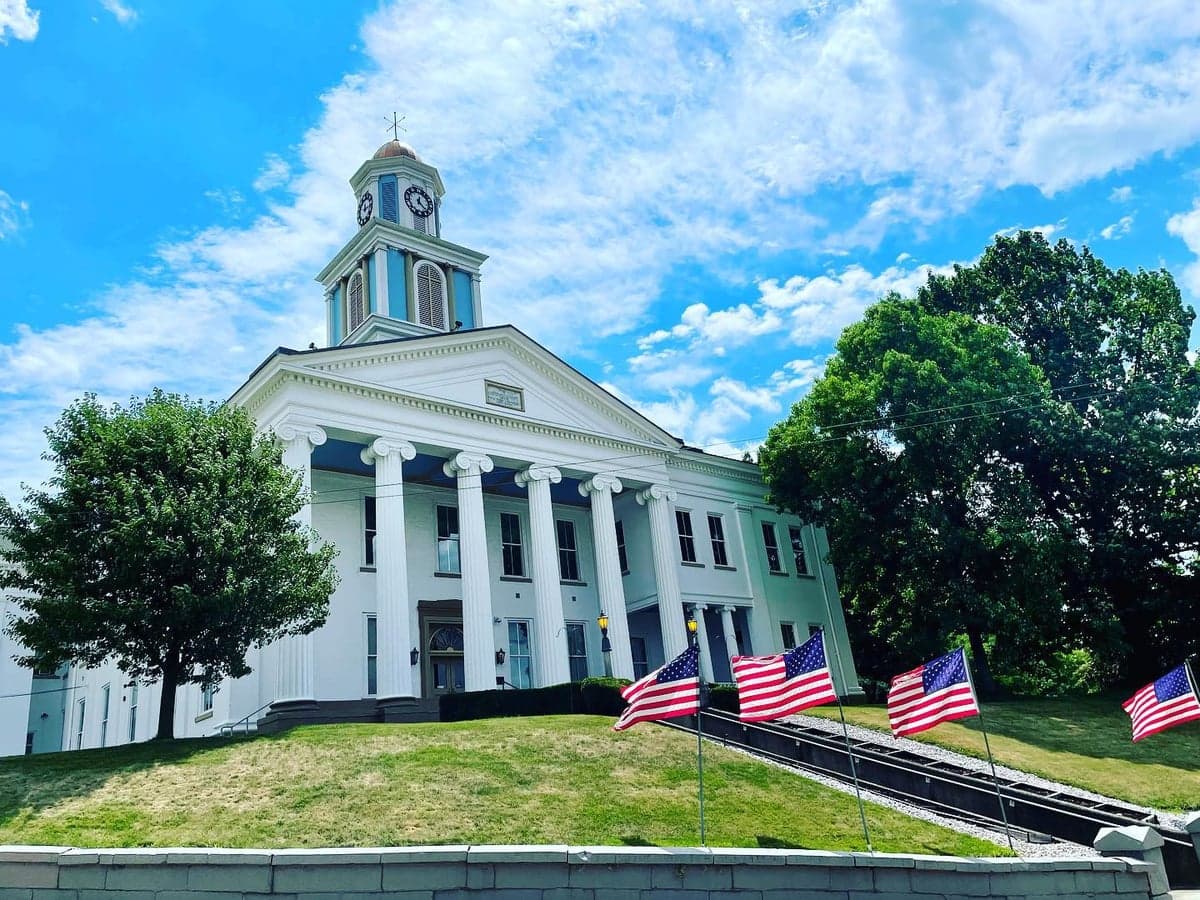
Photo: Wikipedia
Political ClimatePolitical Climate in Lawrence County
Showing district-level results — no local-only data available.
Local Political AnalysisPolitical Analysis of Lawrence County
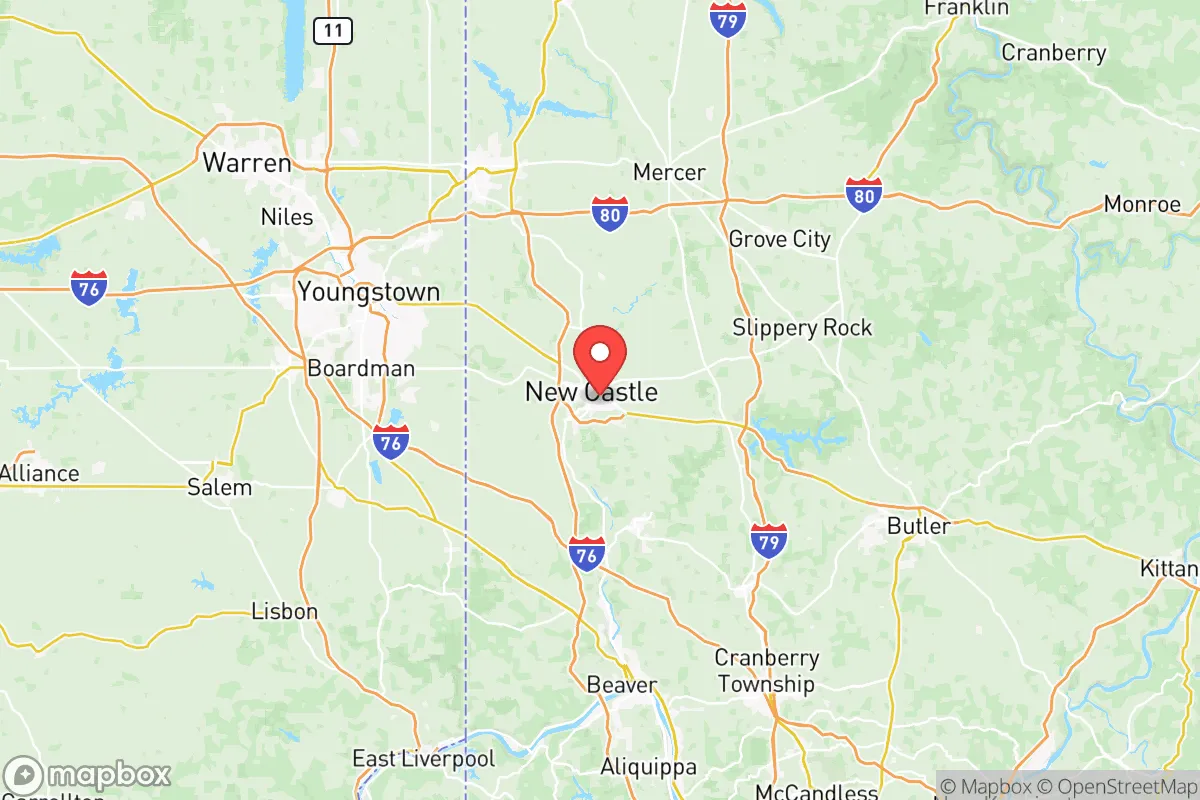
Lawrence County leans solidly Republican, with a Cook Partisan Voting Index (PVI) of R+11, meaning it votes about 11 points more conservative than the national average. This stands in stark contrast to the state of Pennsylvania as a whole, which carries a PVI of EVEN, reflecting its status as a true swing state. Over the past decade, the county has shifted rightward, driven largely by the rural and exurban precincts outside the city of New Castle, while the city itself and the college town of New Wilmington have remained Democratic strongholds.
How it compares
Pennsylvania’s EVEN rating means it is a perennial battleground, with statewide elections often decided by razor-thin margins. Lawrence County’s R+11 rating places it firmly in the red column, a full 11 points more conservative than the state average. This gap is not new, but it has widened since 2016. In the 2020 presidential election, Donald Trump carried Lawrence County by roughly 18 points, while Joe Biden won Pennsylvania statewide by about 1 point. The county’s political geography tells the story: New Castle, the county seat and largest city, leans Democratic, with precincts around the downtown and the South Side reliably blue. New Wilmington, home to Westminster College, also tilts left, driven by faculty and student voters. But the rest of the county—towns like Ellwood City, Shenango Township, and the rural areas around Wampum and Volant—vote overwhelmingly Republican. The swing precincts are few, but they exist in places like Neshannock Township, where moderate suburban voters sometimes split tickets in local races.
What this means for residents
For conservative residents, the county’s lean means their values are reflected in local government, from the county commission to the sheriff’s office. Republican candidates rarely face serious primary challenges, and general elections are often foregone conclusions in most districts. For liberal residents, the reality is different: they are a clear minority, but not an invisible one. In New Castle, Democratic voters can still elect city council members and the mayor, and the county’s Democratic committee remains active, though its influence has waned. The practical effect is that political conversations can be tense, especially around hot-button issues like gun rights or energy policy, but most residents navigate it with a live-and-let-live attitude. The county’s economy—historically rooted in manufacturing and now struggling with population loss—tends to dominate local politics more than national culture wars.
Cultural and policy distinctions
Lawrence County’s political identity is also shaped by its position on the Ohio border. It shares more cultural and economic ties with Youngstown, Ohio, than with Philadelphia or Pittsburgh, which influences its policy priorities. Local debates often center on property taxes, school funding, and infrastructure, with less attention paid to the urban-centric issues that dominate state politics. The county’s Republican leadership tends to be more pragmatic than ideological, focusing on economic development and maintaining services despite a shrinking tax base. Meanwhile, the Democratic minority in New Castle pushes for more investment in public transit and affordable housing. The overall vibe is one of quiet conservatism, with a healthy dose of skepticism toward both Harrisburg and Washington, D.C. If you’re moving here, expect a place where politics matters less in daily life than in the suburbs of Philadelphia or Pittsburgh, but where the local newspaper’s letters page still gets heated over school board decisions and zoning changes.

State Political ClimatePolitical Climate in Pennsylvania
State Political AnalysisPolitical Environment in the State
Pennsylvania is the ultimate swing state, with a Cook PVI of EVEN, meaning it’s a perfect 50-50 toss-up nationally. Over the past 20 years, the state has shifted from a reliably blue-leaning battleground (voting for Democrats in every presidential election from 1992 to 2012) to a dead-even purple state after Donald Trump flipped it in 2016, then Joe Biden narrowly reclaimed it in 2020. The dominant coalitions are a shrinking, union-heavy Democratic base in Philadelphia and Pittsburgh, pitted against a growing, populist-leaning Republican coalition in the rural and exurban "T" that stretches across the center and north. The trajectory is a slow rightward drift in the exurbs and small cities, offset by Democratic gains in the Philadelphia suburbs, making every election a knife-edge fight.
Urban vs. rural divide
The political map of Pennsylvania is a tale of two states. The southeastern corner, anchored by Philadelphia and its inner-ring suburbs like Montgomery County and Bucks County, is the Democratic stronghold, delivering margins of 30-40 points. These suburbs have become increasingly liberal since 2016, driven by college-educated professionals repelled by Trumpism. In contrast, the vast rural "T" — from Erie in the northwest down through Williamsport and State College to York in the south — votes Republican by 20-30 points. The key swing areas are the "collar counties" around Philadelphia (Delaware, Chester, and Montgomery) and the old industrial towns like Scranton and Wilkes-Barre in the northeast, where working-class voters have flipped from blue to red over the past decade. Pittsburgh itself is a blue island in a red sea, but its suburbs in Allegheny County are trending Democratic, while the exurbs like Butler County are solidly Republican. The divide is stark: drive 30 minutes west of Philadelphia, and you go from a deep-blue city to a deep-red farm county.
Policy environment
Pennsylvania’s policy environment is a mixed bag that reflects its purple status. The state has a flat income tax rate of 3.07%, one of the lowest in the nation, which appeals to conservatives. Property taxes are high, averaging around 1.5% of home value, but there is a homestead exemption for primary residences. The state sales tax is 6%, with no tax on clothing or groceries. On regulation, Pennsylvania is moderately business-friendly, with a right-to-work law that was struck down by the state Supreme Court in 2015, but it remains a union stronghold in construction and public services. Education policy is decentralized: school funding is heavily reliant on local property taxes, leading to wide disparities between wealthy suburbs and poor rural districts. The state has no school choice voucher program, though charter schools exist. Healthcare is a mix: the state expanded Medicaid under the Affordable Care Act, but private insurance markets are competitive. Election laws are moderate: no-excuse mail-in voting was enacted in 2019, but voter ID is required for first-time voters only. The state has a closed primary system, meaning only registered Democrats and Republicans can vote in their respective primaries.
Recent policy direction
Recent legislation shows Pennsylvania pulling in both directions. On gun rights, the state is a "shall-issue" for concealed carry permits, and preemption laws prevent local municipalities from enacting their own gun bans. However, in 2023, the Democratic-controlled House passed a bill requiring universal background checks for private sales, though it stalled in the Republican Senate. On parental rights, the state has no "Don't Say Gay" law, but in 2022, the legislature passed a bill requiring schools to notify parents of any changes to a student’s health services, which was vetoed by Governor Josh Shapiro. On abortion, the state remains a relative safe haven in the region: abortion is legal up to 24 weeks, and in 2023, Shapiro signed an executive order protecting out-of-state patients from prosecution. On election integrity, the state has been a flashpoint: the 2020 election saw massive mail-in voting, leading to lawsuits and a partisan audit in 2021 that found no widespread fraud. On property rights, the state has no statewide rent control, but Philadelphia has its own. On taxation, the flat income tax has not changed since 2004, but there is a push from the left for a graduated tax. On privacy, the state has no comprehensive data privacy law, though a bill is pending. The net direction is a slow leftward drift on social issues (abortion, LGBTQ rights) and a stalemate on economic and gun policy.
Civil unrest & political movements
Pennsylvania has seen its share of political flashpoints. The 2020 election aftermath was intense: Trump supporters protested outside the Pennsylvania Convention Center in Philadelphia during the vote count, and there were armed demonstrations at the state capitol in Harrisburg. The "Stop the Steal" movement was particularly active in rural counties like Lancaster and York. On the left, the Black Lives Matter protests in Philadelphia in 2020 were large and occasionally violent, leading to looting and property damage. Immigration politics are less heated than in border states, but Philadelphia is a sanctuary city, refusing to cooperate with ICE detainers, which has drawn criticism from conservatives. There is a small but vocal secessionist movement in northern Pennsylvania, with some counties like Tioga and Bradford passing resolutions to join the "State of Jefferson" or form a new state, though this is purely symbolic. Election integrity remains a live issue: in 2022, a Republican-led investigation into the 2020 election in Lycoming County found no evidence of fraud, but distrust persists. A new resident would notice the political polarization in yard signs, bumper stickers, and local news coverage, but actual civil unrest is rare outside of Philadelphia.
Projection
Over the next 5-10 years, Pennsylvania will remain a toss-up, but the demographic trends favor Democrats in the long run. The Philadelphia suburbs are growing and becoming more diverse, while the rural population is aging and shrinking. In-migration is modest, with most new residents coming from New York and New Jersey, who tend to be more liberal. However, the exurbs around Harrisburg and Allentown are growing faster than the cities, and these areas lean Republican. The state’s electoral college votes will likely stay competitive, but the state legislature will remain Republican-controlled through 2030 due to gerrymandering, while the governorship will flip between parties. A new resident moving in now should expect a decade of gridlock on major issues: no major tax changes, no new gun laws, and continued battles over abortion and education. The state will not become a deep-blue or deep-red state; it will remain a purple battleground where every election feels like a national referendum.
For a new resident, the bottom line is that Pennsylvania offers a balanced political environment where your vote truly matters. Conservatives will find low taxes, strong gun rights, and a rural culture that values independence, but they will have to contend with liberal cities and a Democratic governor who can veto their priorities. Liberals will find sanctuary cities, abortion access, and a strong union presence, but they will face a Republican legislature that blocks most progressive legislation. The practical takeaway: if you want to live in a place where your political voice is heard and the outcome is never certain, Pennsylvania is the state for you. Just be prepared for the constant noise of campaign ads every two years.
* Values derived from national, state, county, city and local statistics and may differ in a specific area. Last updated: 2026-07-14T00:57:00.000Z
Narrative content on this page is AI-generated and may contain mistakes. Verify any details that matter before acting on them.
ReloMaps may earn a commission from affiliate links at no extra cost to you.

