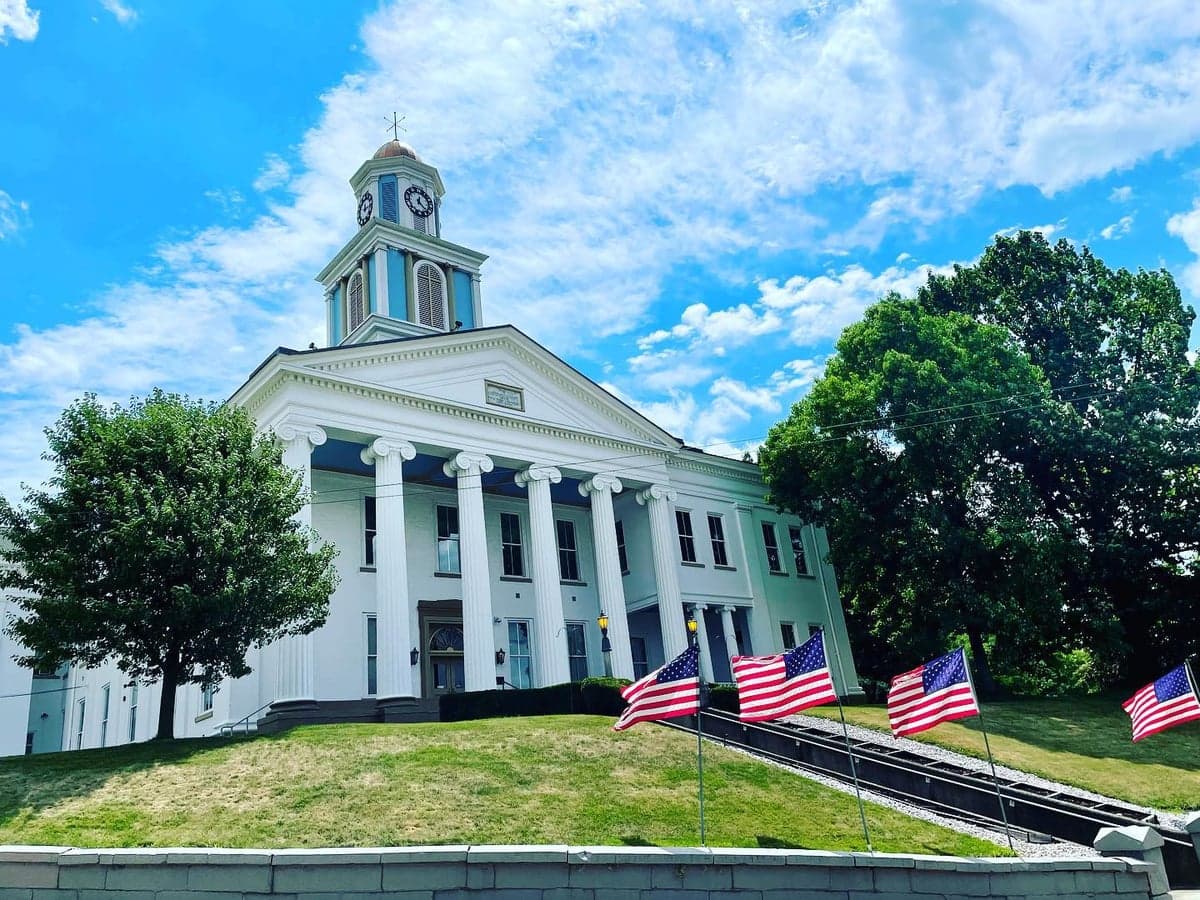
Photo: Wikipedia
Demographics of Lawrence County
Affluence Level in Lawrence County
A middle-class area roughly in line with national averages across income, home values, education, and employment.
People of Lawrence County
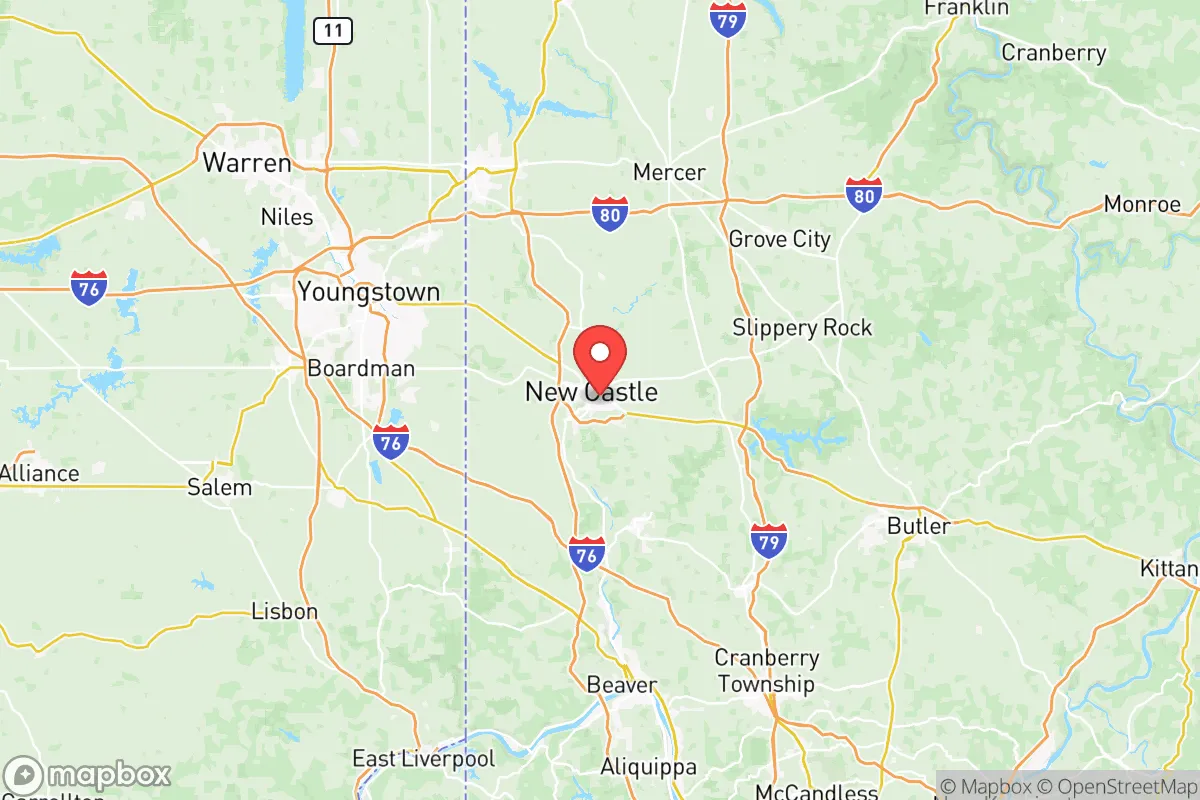
The people of Lawrence County, Pennsylvania today form a predominantly white, working-to-middle-class community of 85,423 residents, concentrated in the county seat of New Castle and the surrounding boroughs of Ellwood City, Shenango Township, and Neshannock Township. The county is notably homogeneous, with 89.7% of residents identifying as white, a foreign-born population of just 0.6%, and a college attainment rate of 22.8% — figures that reflect its industrial heritage and limited recent immigration. Distinctive identity markers include a strong union legacy, a deep-rooted Italian and Eastern European cultural presence, and a population that is older and more settled than the national average, with many families tracing their roots back five or more generations.
Settlement & growth (pre-1960)
Before European settlement, the area now known as Lawrence County was part of the hunting grounds of the Seneca and other Iroquois nations, who used the Beaver River and Shenango River valleys for travel and trade. The region was ceded by the Iroquois to the British in the 1768 Treaty of Fort Stanwix, and the first permanent white settlers — primarily Scots-Irish and German farmers — arrived in the 1790s, pushing up the Shenango Valley from the Ohio River. They founded the earliest communities: New Castle (laid out in 1798, incorporated in 1825) became the county seat and commercial hub, while Hillsville and Wampum grew as agricultural hamlets along the Beaver River.
The county's population exploded after 1850 with the arrival of the railroad and the discovery of rich limestone deposits and coal seams. The Shenango Valley became a center for iron and steel production, and later for the manufacture of tin plate, glass, and pottery. This industrial boom drew a massive wave of immigrants from Southern and Eastern Europe between 1880 and 1920. Italians (especially from Calabria and Sicily) settled heavily in New Castle's South Side and in Ellwood City, where they worked in the steel mills and tin plants. Slovaks, Poles, and Slovenes formed tight-knit neighborhoods in New Castle's West Side and in Pulaski Township, building Catholic churches and fraternal societies that still anchor those communities today. A smaller wave of Greek immigrants arrived around 1900, concentrating in New Castle's downtown and establishing restaurants and confectioneries.
By 1920, Lawrence County's population had peaked at over 100,000, driven by the mills. The Great Depression and the subsequent decline of the steel industry in the 1950s and 1960s triggered a slow, steady outmigration. African Americans, who had come north during the Great Migration (1910-1970) to work in the mills, settled primarily in New Castle's East Side and in Union Township, forming a small but stable community that today makes up 3.6% of the county's population. The post-World War II era saw the rise of suburbs like Neshannock Township and Shenango Township, where white, middle-class families moved out of the aging city cores, a pattern that accelerated after 1960.
Modern era (post-1965)
The 1965 Hart-Cellar Act, which opened immigration to non-European countries, had almost no impact on Lawrence County. The foreign-born population today is just 0.6%, one of the lowest rates in Pennsylvania. Unlike many Rust Belt counties that saw a surge of Hispanic or Asian immigrants to fill labor gaps, Lawrence County's industrial base was already contracting by the 1970s, and there was little draw for new arrivals. The county's Hispanic population (2.1%) is small and largely of Puerto Rican descent, with families concentrated in New Castle and Mahoning Township, often working in healthcare, warehousing, and service jobs. The East/Southeast Asian population (0.2%) is negligible, consisting mostly of a handful of professionals employed at the county's largest remaining employers, such as UPMC Jameson Hospital and the New Castle School District.
The dominant demographic story since 1965 has been domestic outmigration. The county lost population in every decade from 1970 through 2020, as young adults left for college or jobs in Pittsburgh (50 miles south), Cleveland (70 miles west), or the Sun Belt. This "brain drain" has left the county with a college attainment rate of just 22.8%, well below the national average of 34%. The population has also aged significantly: the median age is 44.5, compared to 38.8 nationally. Suburbanization within the county has continued, with Neshannock Township and Shenango Township absorbing most of the new housing construction, while New Castle's city population has fallen from 48,000 in 1950 to roughly 21,000 today. The county's black population has remained stable at around 3-4%, concentrated in the same East Side neighborhoods established during the Great Migration.
The future
Lawrence County's population is projected to continue its slow decline, falling to roughly 80,000 by 2040, according to state estimates. The county is becoming slightly more diverse, but at a glacial pace: the Hispanic share is expected to rise to 3-4% over the next decade, driven by natural increase and limited migration from other parts of Pennsylvania. The East/Southeast Asian and Indian populations are likely to remain below 1% each, as there are no major employers or universities attracting skilled immigrants. The white population will continue to shrink in absolute numbers due to an aging demographic and low birth rates.
New residential development is concentrated in Neshannock Township and Union Township, where new subdivisions are attracting a mix of retirees and commuters who work in Pittsburgh or Youngstown. The city of New Castle is seeing a modest revival of its historic downtown, with some young professionals and artists moving into renovated row houses, but this is a small countertrend. The county's cultural identity remains rooted in its industrial past — Italian festivals, Slovak pierogi dinners, and high school football remain central to community life. For someone moving in now, Lawrence County offers low housing costs, a slower pace of life, and a strong sense of place, but also limited economic opportunity and a population that is unlikely to grow or diversify significantly in the coming decades.
Bottom line: Lawrence County is a stable, shrinking, and culturally homogeneous community where the descendants of 19th- and early 20th-century immigrants still dominate. New residents will find a place that values tradition and neighborliness, but should expect little demographic change and a continued reliance on the Pittsburgh and Youngstown metro areas for jobs and services.

* Values derived from national, state, county, city and local statistics and may differ in a specific area. Last updated: 2026-07-14T00:57:00.000Z
Narrative content on this page is AI-generated and may contain mistakes. Verify any details that matter before acting on them.
ReloMaps may earn a commission from affiliate links at no extra cost to you.

