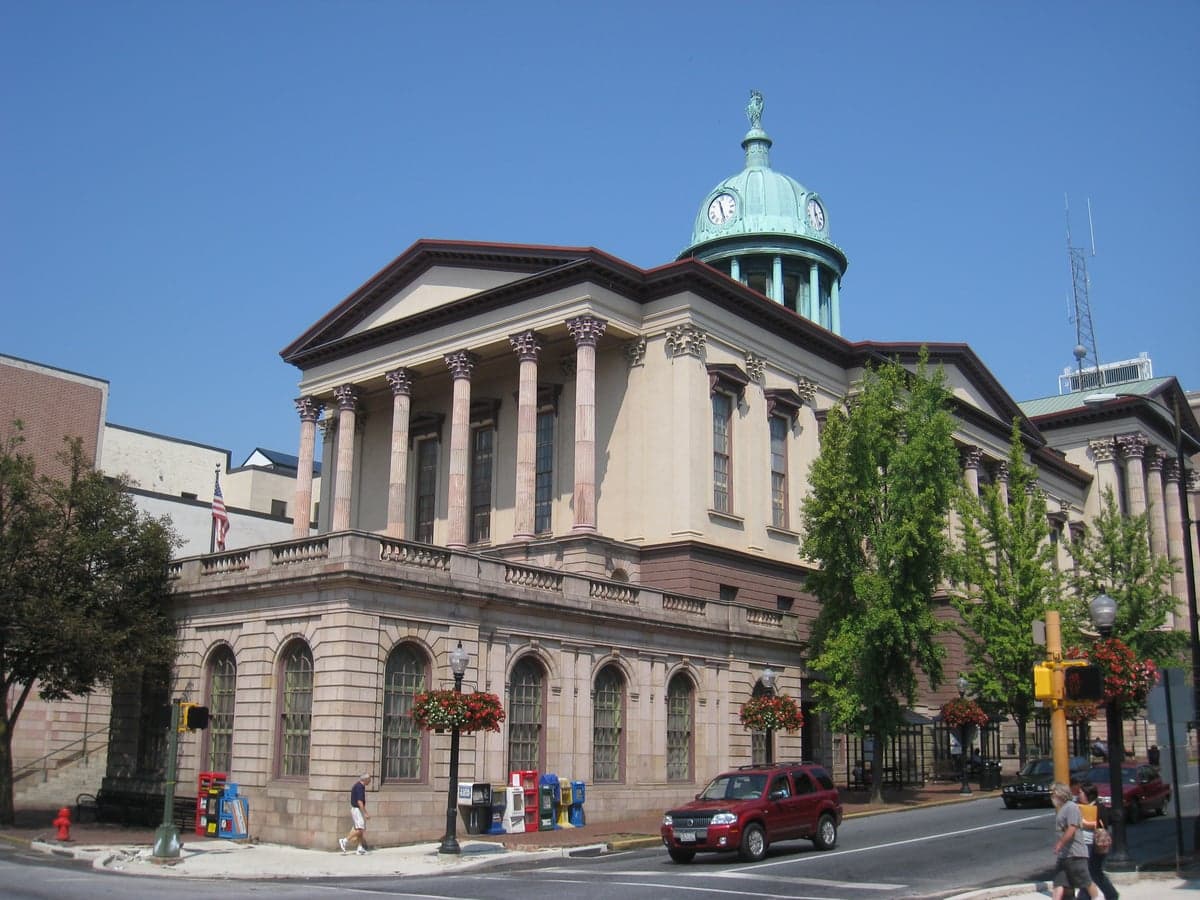
Photo: Wikipedia
Political ClimatePolitical Climate in Lancaster County
Showing district-level results — no local-only data available.
Local Political AnalysisPolitical Analysis of Lancaster County
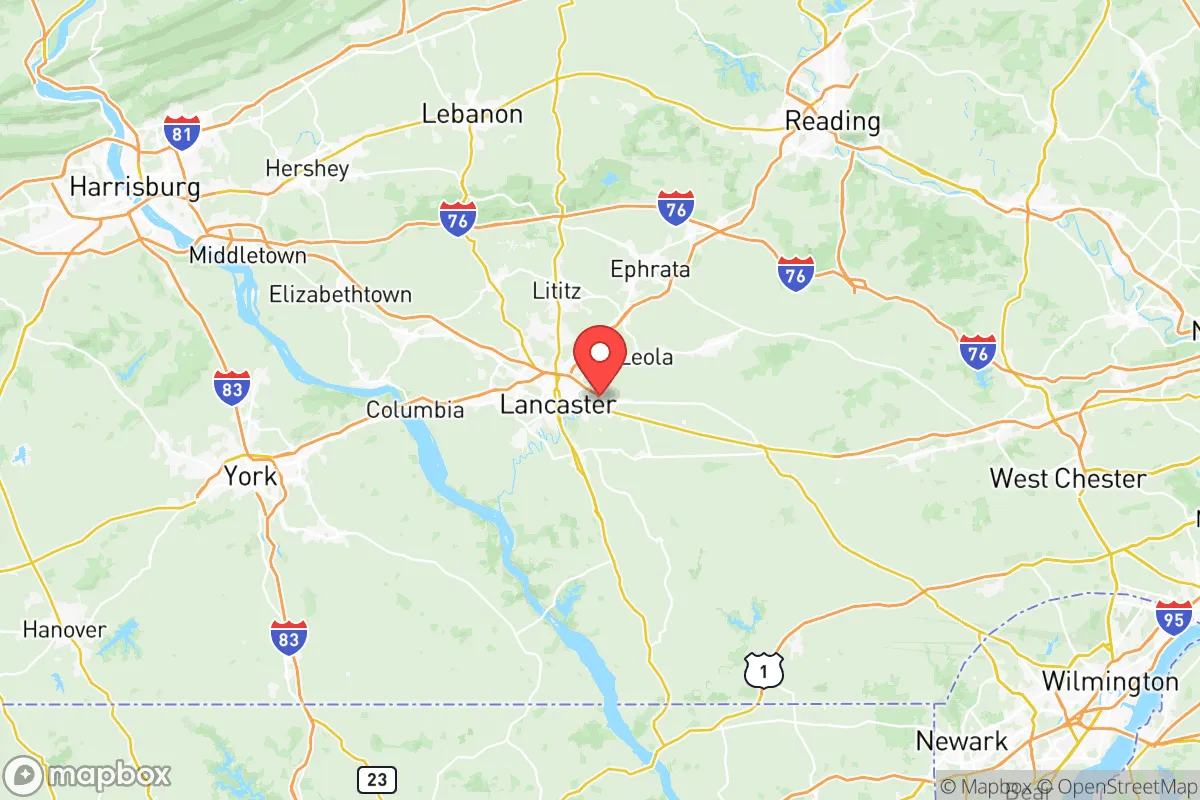
Lancaster County has long been a Republican stronghold in Pennsylvania, with a Cook Partisan Voting Index of R+11, meaning it votes about 11 points more Republican than the nation as a whole. That’s a stark contrast to the state of Pennsylvania, which sits at EVEN on the PVI—a true swing state that flipped from Trump to Biden in 2020 and remains deeply competitive. But if you’ve lived here a while, you know the county’s politics aren’t a monolith; the red is deep in the rural townships, but the city of Lancaster itself and a few surrounding suburbs have been trending blue for years, creating a real urban-rural split that shapes local elections and daily life.
How it compares
Compared to Pennsylvania as a whole, Lancaster County is a reliable Republican anchor in a state that’s often decided by margins of 1-2 points. In the 2024 presidential election, Donald Trump carried the county by roughly 16 points, while statewide the race was a nail-biter. The contrast is most visible when you drive through the county: Lancaster City (population ~58,000) voted for Joe Biden by about 30 points in 2020, with progressive energy concentrated in neighborhoods like the West End and near Franklin & Marshall College. Meanwhile, Lititz and Mount Joy are classic swing towns—historically red but seeing younger families and remote workers shift them toward purple. Head out to Strasburg, New Holland, or Ephrata, and you’re in deep red territory, where Trump signs outnumber Democrats’ by 5-to-1. The Amish and Mennonite communities, concentrated in the eastern and southern parts of the county, tend to vote Republican but at lower turnout rates, which can mute their impact in close races.
What this means for residents
For conservative residents, Lancaster County feels like a safe harbor in a swing state. Local school boards, county commissioners, and the sheriff’s office have been reliably Republican for decades, meaning policies on taxes, land use, and law enforcement tend to align with conservative priorities. You’ll find strong support for Second Amendment rights and limited government, especially in rural townships like East Lampeter and Pequea. For liberal residents, the picture is more nuanced. Lancaster City is a progressive bubble—home to a thriving arts scene, a growing immigrant population, and a vocal LGBTQ+ community—but outside city limits, you can feel the cultural divide. Progressive candidates rarely win countywide races, but they do hold city council seats and influence local zoning and housing policy. The real tension shows up in debates over development: conservatives push for low-density growth and farmland preservation, while liberals advocate for affordable housing and transit-oriented projects in the city.
One cultural distinction that sets Lancaster County apart from the rest of Pennsylvania is the enduring influence of the Plain communities—Amish and Mennonite—who often vote Republican but prioritize religious liberty and non-interventionist government. This creates a unique political dynamic where even some conservative candidates must moderate on issues like land use and environmental stewardship to keep the Plain vote. The county’s trajectory is toward a slow, steady purple shift, driven by in-migration from Philadelphia and New York suburbs, but the R+11 baseline means it will remain a Republican stronghold for the foreseeable future. For both sides, the takeaway is the same: Lancaster County is a place where your vote matters locally, but it’s also a place where the political culture is deeply rooted in tradition, community, and a cautious approach to change.

State Political ClimatePolitical Climate in Pennsylvania
State Political AnalysisPolitical Environment in the State
Pennsylvania is the ultimate swing state, with a Cook PVI of EVEN that perfectly captures its 50/50 split — neither party has won the state by more than two points in a presidential race since 2004. Over the past two decades, the state has drifted leftward in its population centers while hardening into a red fortress everywhere else, creating a political knife-edge that flips control of the state house, Senate, and governorship almost every cycle. For a conservative-leaning relocator, the reality is that Pennsylvania offers Republican governance at the state level only when the rural vote overwhelms the Philadelphia and Pittsburgh metros, and that balance can tip on a dime.
Urban vs. rural divide
Pennsylvania’s political map is a classic donut: a blue center surrounded by a deep red outer ring. Philadelphia and its collar counties — particularly Montgomery, Delaware, and Chester — deliver roughly 40% of the Democratic vote statewide, while Pittsburgh’s Allegheny County adds another 10-12%. These two metros alone can offset the entire rest of the state. The rural north-central and Appalachian counties — places like Tioga, Potter, Bradford, and Bedford — routinely vote 70-80% Republican, but they lack the population density to win statewide elections on their own. The real battleground is the suburban and exurban crescent around Philadelphia, plus the old industrial towns of the Lehigh Valley and northeastern Pennsylvania. Counties like Bucks (suburban Philly), Northampton (Bethlehem), and Lackawanna (Scranton) have been trending blue for a decade, while Lancaster and York remain reliably red but growing fast with conservative transplants from the Northeast corridor. If you’re moving to the Pittsburgh suburbs (Butler, Westmoreland) or the central PA farm country, you’ll find a solidly conservative environment. If you’re eyeing the Philly suburbs, expect a purple-to-blue tilt, especially on social issues.
Policy environment
Pennsylvania’s tax code is relatively moderate. It has a flat personal income tax of 3.07% — one of the lowest flat rates in the country — and a corporate net income tax that has been steadily dropping from 9.99% in 2023 to a planned 4.99% by 2031. There is no state inheritance tax on transfers to a spouse, and the inheritance tax on children and grandchildren is only 4.5%. Property taxes are the real burden, averaging around 1.4% of home value, but there’s a homestead exemption program that can shield up to $45,000 of assessed value. Education policy is largely controlled by the 500+ local school districts, and the state has no statewide school choice program — no vouchers and a relatively weak charter school law. Pennsylvania is one of the few states where the state legislature has not passed a preemption law for firearm regulation, meaning Philadelphia and Pittsburgh can and do enact their own gun restrictions — this is a major point of tension. Election law is county-administered with no universal ID requirement; you need to provide ID only on your first vote, and mail-in ballots are available no-excuse since 2020. Voter registration closes 15 days before an election, and same-day registration is not allowed.
Recent policy direction
The most consequential recent shift came in 2022 when Democrat Josh Shapiro won the governorship, giving Democrats a veto over Republican legislation. Shapiro has already vetoed bills on school vouchers, election integrity measures (including stricter voter ID and signature verification), and permitless carry for firearms. In 2023, the state Supreme Court redrew legislative maps to more closely reflect the popular vote, handing Democrats a narrow state house majority — the first time they’d held both chambers in over a decade, though the Senate remains Republican. Gun law: Pennsylvania passed a “red flag” law in 2022 allowing extreme risk protection orders, and Philadelphia has its own ban on assault weapons and large-capacity magazines (currently litigated), but the rest of the state remains a shall-issue concealed carry state with no permit needed to open carry. Self-defense law follows the Castle Doctrine with no duty to retreat in the home, but there’s no stand-your-ground law outside the home. Abortion remains legal up to 24 weeks, with no waiting period or mandatory ultrasound — a stark contrast to Ohio or West Virginia. There’s no statewide privacy or data protection law beyond a limited breach notification requirement. Property rights are moderately protected: there’s no statewide zoning preemption, meaning localities can impose rent control, but there’s also no statewide property tax cap. Ballot access is expansive: no-excuse mail-in voting, early in-person voting in most counties, and ballot drop boxes are allowed (though counties vary widely in how many they provide).
Civil unrest & political movements
The state has seen its share of election integrity flashpoints. Philadelphia has been the center of repeated Republican claims of voter fraud, particularly during the 2020 presidential race, when GOP poll watchers alleged limited access to counting centers — that controversy led to years of litigation and legislative attempts to tighten election rules, all vetoed by Governor Wolf and later Shapiro. The conservative grassroots is extremely active in the rural counties, with local Republican committees often deeply engaged on school board races and county commissioner elections — these are the front lines of Pennsylvania politics. On the left, Philadelphia saw large BLM protests in 2020 that included some property damage in Center City, and there’s a recurring activist presence around immigrant rights, housing policy, and transit funding. Immigration politics are muted compared to border states — Pennsylvania has no sanctuary city law statewide, though Philadelphia itself is a de facto sanctuary city with policies limiting cooperation with ICE. In 2023, a bus carrying migrants from Texas to Philadelphia sparked a brief political firestorm but little long-term policy change. There’s no serious secession movement, but do hear rumblings from northern-tier counties about joining New York or forming a new state. Election integrity remains the hottest-button issue — you’ll find signs for “Election Integrity Committees” in many Republican county offices, and the state’s decentralized election system (67 counties, all running their own machines and rules) is a perennial source of friction.
Projection
Over the next five to ten years, Pennsylvania is likely to remain the swingiest swing state, but the demographic trends favor Democrats on the margins. The Philadelphia suburbs are growing and diversifying, while the rural counties are shrinking and aging. This means the Democratic base is inflating in the places that already lean blue, while Republican strongholds are losing electoral weight. In-migration from New York and New Jersey — both blue states — is accelerating in the Lehigh Valley, Berks County, and even parts of central Pennsylvania (like Lancaster), bringing moderate-to-liberal voters to historically red areas. At the same time, conservative migration from the Northeast into Pennsylvania’s rural counties is also real, but that tends to replace existing Republicans, not expand the GOP base. The 2024 and 2028 presidential elections will likely be decided in the Philadelphia suburbs and the growing Lancaster-York corridor. The state’s political trajectory is a slow leftward drift, but with enough friction that Republicans can still win trifectas in favorable midterm years. For a relocator, that means you should expect the policy environment to toggle back and forth: if a Republican governor is elected, you may see permitless carry, school vouchers, and voter ID; if a Democrat wins, expect the current status quo to continue with incremental expansion of mail-in voting and abortion access.
For a conservative-leaning individual or family, Pennsylvania offers a lot of what you want — low income taxes, strong property rights in most of the state, a robust gun culture outside of Philly, and active conservative communities in the exurbs and farm counties — but you need to be comfortable with a state government that may flip blue for stretches. If you land in Lancaster, York, or the Pittsburgh exurbs, you’ll live in an environment where your values are the local norm even if the state capital isn’t. If you buy in the Philly suburbs expecting a Republican majority, you’ll be disappointed. Pick your county carefully, and you’ll find a state that lets you live your life largely free of state-level interference, but with the understanding that the political winds shift fast here.
* Values derived from national, state, county, city and local statistics and may differ in a specific area. Last updated: 2026-07-01T23:49:38.000Z
Narrative content on this page is AI-generated and may contain mistakes. Verify any details that matter before acting on them.
ReloMaps may earn a commission from affiliate links at no extra cost to you.

