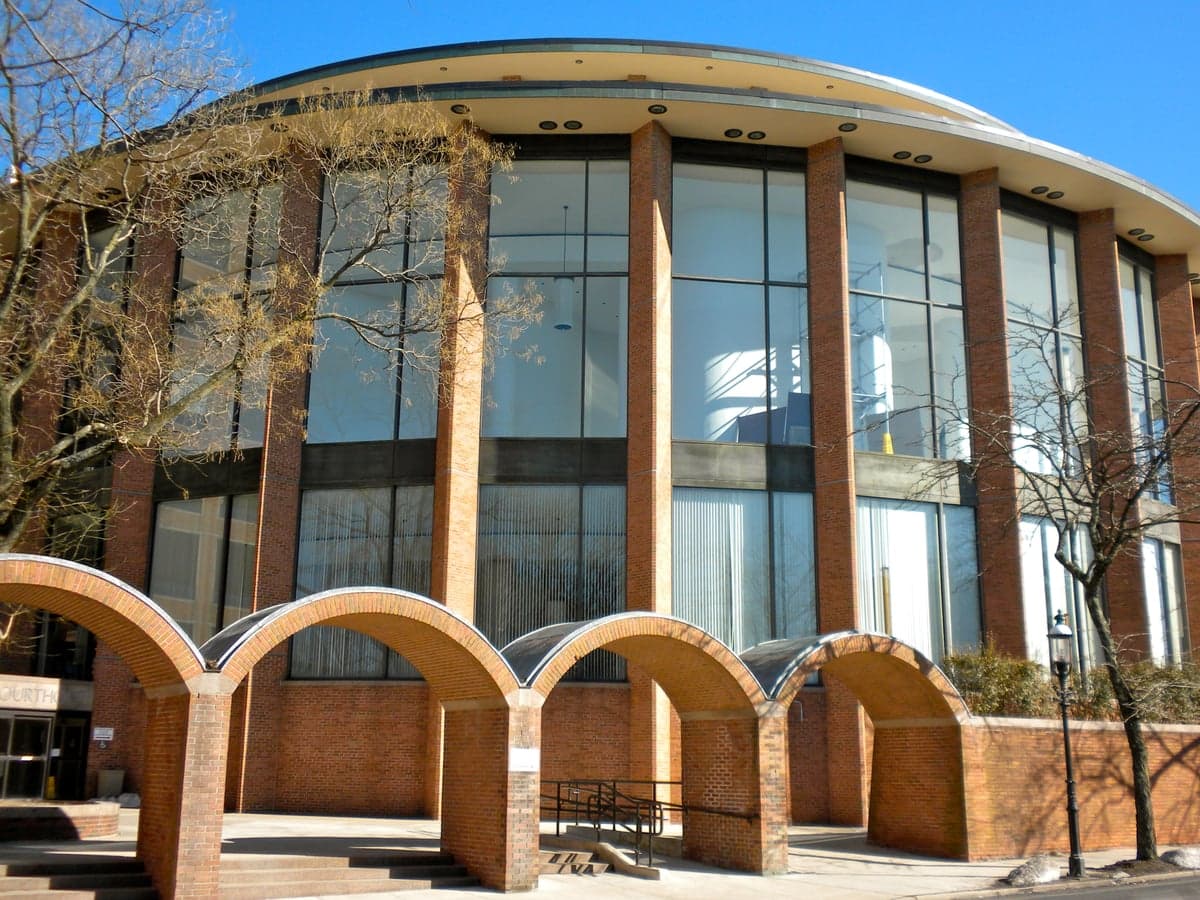
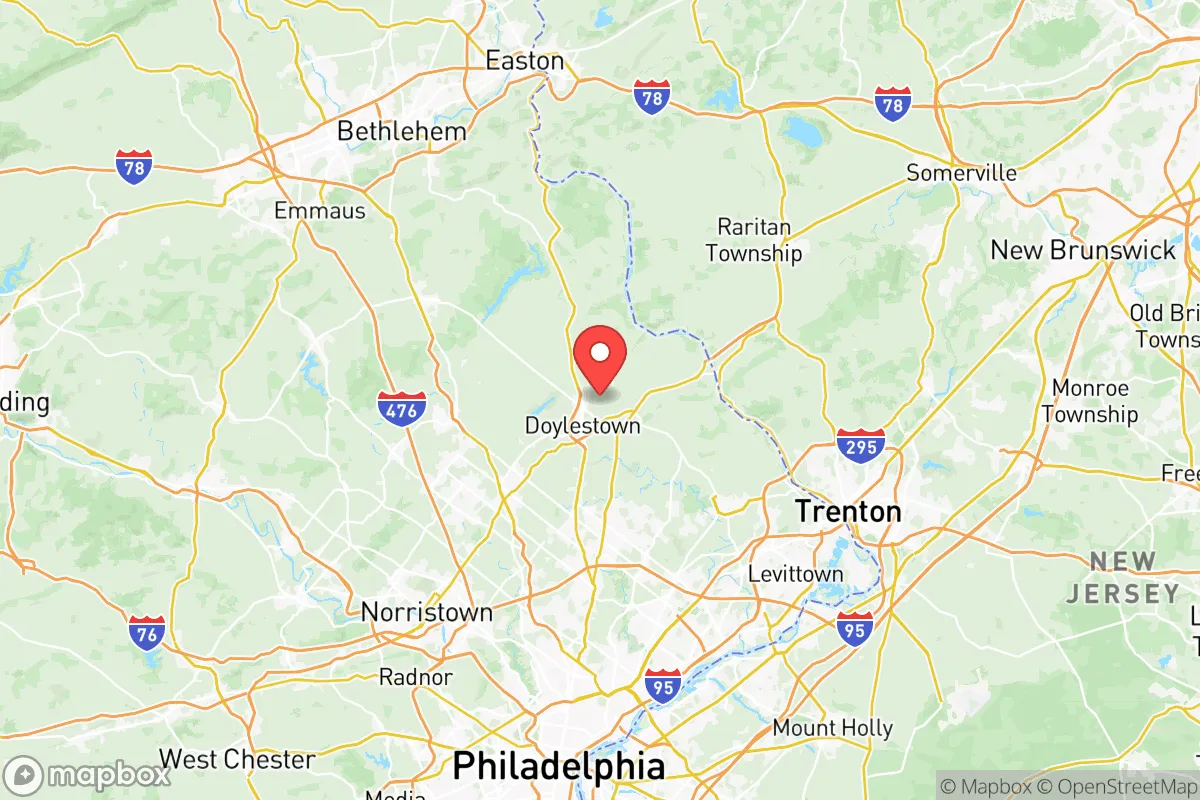
Photo: Wikipedia
Political ClimatePolitical Climate in Bucks County
Showing district-level results — no local-only data available.
Local Political AnalysisPolitical Analysis of Bucks County
Bucks County has shifted from a reliable Republican stronghold to a true battleground, now carrying a Cook PVI of D+1, meaning it leans slightly Democratic compared to the nation as a whole. This is a significant move from just a decade ago when the county was considered a GOP lock, and it now stands in stark contrast to Pennsylvania’s statewide PVI of EVEN. The change is driven largely by the suburban Philadelphia townships, while the northern and central parts of the county have held firm for the GOP, creating a deeply split political landscape.
How it compares
Pennsylvania as a whole is a classic swing state, but Bucks County’s D+1 rating makes it slightly more Democratic-leaning than the state’s EVEN rating. The real story is the internal divide. The southern, more densely populated townships like Lower Makefield, Yardley, and Newtown have become reliably blue, with Democratic margins often exceeding 15 points in recent elections. Meanwhile, the northern and central areas—places like Quakertown, Perkasie, and Doylestown Township—remain solidly red, often voting Republican by similar margins. The true swing precincts are in the middle of the county, particularly in Warminster, Bensalem, and parts of Middletown, where elections are decided by a few hundred votes. This makes Bucks County a microcosm of the national political divide, but with a suburban tilt that has pushed it left of the state average.
What this means for residents
For liberal residents, the shift means their votes now carry real weight in local and national elections. They can expect to see more Democratic candidates winning county-wide offices, and policies like expanded public transit funding and environmental protections are more likely to get a hearing. For conservative residents, it means they are no longer in the majority county-wide, but they still hold strong majorities in their own towns. They can still reliably elect Republican commissioners and state representatives in the northern half of the county, and their voices remain powerful in local school board and zoning decisions. The practical effect is that neither side gets everything they want. County government often requires compromise, and major initiatives—like the redevelopment of the former Willow Grove Naval Air Station or the expansion of the SEPTA rail line—tend to move slowly as both factions negotiate.
Cultural and policy distinctions
The political split has created a distinct cultural divide within the county. Southern Bucks feels increasingly like an extension of Philadelphia’s liberal suburbs, with a focus on walkable downtowns, farmers markets, and progressive social policies. Northern Bucks retains a more rural, small-town character, where gun rights and lower taxes are paramount. This isn’t just a voting pattern—it shapes daily life. For example, school board meetings in Newtown have become flashpoints over curriculum and library books, while in Quakertown, the debates center on school funding and property tax relief. The county’s status as a swing area also means it gets outsized attention from state and national campaigns, so residents can expect a steady stream of political ads and candidate visits every election cycle. It’s a place where your neighbor might have a Biden sign in the front yard and a Trump flag in the back, and everyone just kind of gets used to it.

State Political ClimatePolitical Climate in Pennsylvania
State Political AnalysisPolitical Environment in the State
Pennsylvania is the ultimate swing state, with a Cook PVI of EVEN that perfectly captures its 50/50 split. Over the last 20 years, the state has shifted from a reliably blue-leaning battleground to a true toss-up, driven by the collapse of union Democrats in the southwest and the explosive growth of the Philadelphia suburbs. The old coal-and-steel coalition that delivered the state for decades is gone, replaced by a razor-thin margin where every precinct in Erie, Northampton, and Lackawanna counties decides the presidency.
Urban vs. rural divide
The political map is a textbook study in polarization. Philadelphia and Pittsburgh are deep blue fortresses, with the former delivering 80%+ margins for Democrats in every recent cycle. The collar counties around Philly — Bucks, Montgomery, Delaware, and Chester — have shifted sharply blue since 2016, driven by college-educated suburbanites repelled by Trump. Meanwhile, the vast rural interior is blood-red: Centre County (home to Penn State) is a notable blue island, but places like Tioga, Bradford, and Fulton counties routinely vote 70-80% Republican. The real battleground is the "T" — the stretch of exurban and small-city counties from Erie down through the Lehigh Valley. Erie County flipped from Obama to Trump to Biden, and Northampton County (Bethlehem) is the single most predictive bellwether in the nation. The Lancaster and York areas are reliably red but growing more diverse, while Scranton/Wilkes-Barre (Lackawanna County) remains a Democratic holdout that's trending right on cultural issues.
Policy environment
Pennsylvania's policy landscape is a mixed bag that reflects its split government. The state has a flat income tax of 3.07%, one of the lowest in the nation, and no tax on retirement income — a major draw for conservatives. Sales tax is 6% (8% in Philly). Property taxes are high, averaging 1.5% of home value, but there's a homestead exemption and a property tax/rent rebate program for seniors. The regulatory posture is moderate: Pennsylvania is not a right-to-work state, but it's also not California. Education policy is locally controlled, with school choice limited to charter schools (no vouchers, no ESA programs). Healthcare is dominated by UPMC and Geisinger in the west, Jefferson and Penn Medicine in the east. Election laws are a flashpoint: the state has no-excuse mail-in voting (passed bipartisan in 2019), but voter ID is required for first-time voters only — a perennial source of controversy. The state has a Republican-controlled legislature and a Democratic governor (Josh Shapiro as of 2026), producing constant gridlock on major issues.
Recent policy direction
The last five years have seen Pennsylvania lurch in contradictory directions. On gun rights, the state is a preemption state — cities like Philadelphia cannot pass their own gun laws, though they try. In 2022, the legislature passed a constitutional carry bill, but Governor Shapiro vetoed it. Open carry is legal without a permit; concealed carry requires a license (issued shall-issue). On education and parental rights, the state has seen fierce battles over library books and curriculum, but no major legislation has passed. The 2023 budget included a $100 million increase for school safety and mental health. On medical freedom, Pennsylvania has no vaccine mandate for adults, but COVID-era school mandates were controversial. Abortion remains legal up to 24 weeks, with a 24-hour waiting period and parental consent for minors — a moderate position that's unlikely to change given the governor's veto power. On property rights, the state has strong eminent domain protections, but fracking is a major issue: Pennsylvania is the second-largest natural gas producer in the US, and local zoning fights over drilling are constant. On voting access, the 2020 election saw massive mail-in ballot usage; since then, the legislature has pushed for stricter voter ID and signature verification, but Shapiro vetoed a 2024 bill requiring ID for all voters. The state's Supreme Court, with a 5-2 Democratic majority, has generally upheld expanded access.
Civil unrest & political movements
Pennsylvania has been a flashpoint for political activism on both sides. The 2020 election saw massive protests in Philadelphia over police reform, and the city's ballot-counting process became a national spectacle. The January 6th investigation had deep Pennsylvania roots, with several state legislators subpoenaed. On the right, the Pennsylvania Freedom Caucus in the state House has been a vocal force, pushing election integrity audits and school choice. The Lancaster County area has seen a surge in "constitutional sheriff" movements and Second Amendment sanctuary resolutions. Immigration politics are less heated than in border states, but Philadelphia's sanctuary city policy (limiting cooperation with ICE) is a constant source of tension with the legislature. The Pittsburgh area has seen organized labor activism, with the United Steelworkers and UAW still influential. The 2024 election saw record turnout and no major unrest, but the state's election machinery remains under a microscope — expect continued litigation over mail-in ballots and drop boxes.
Projection
Over the next 5-10 years, Pennsylvania is likely to remain a toss-up, but the demographic trends favor Democrats in the long run. The Philadelphia suburbs are getting bluer, and the Lehigh Valley is diversifying with Hispanic and Asian populations. However, the rural exodus is slowing, and the northern tier counties are actually gaining population from New York and New Jersey refugees. The wild card is Erie and Scranton: if these blue-collar areas continue trending right on cultural issues, the state could become a lean-Republican state by 2032. The state's electoral votes (19) will remain critical. For a new resident, expect continued gridlock on major issues — no income tax hike, no new gun laws, no abortion ban. The practical reality is that your experience depends entirely on where you live: a conservative in Philadelphia will feel politically isolated, while a liberal in rural Tioga County will face the same. The state's political culture is one of constant, low-grade conflict, but also of pragmatic deal-making on things like infrastructure and energy.
Bottom line for a new resident: If you're conservative, you'll find a welcoming environment in the rural and exurban areas, with low taxes and strong gun rights, but you'll need to accept that the state as a whole will never be a red fortress. If you're liberal, the cities and inner suburbs offer a progressive haven, but you'll be frustrated by the legislature's refusal to raise taxes or expand social programs. The key is to pick your county wisely — Chester County is purple trending blue, York County is solid red, and Centre County is a blue island in a red sea. Pennsylvania rewards those who understand its localism: your vote matters more here than almost anywhere else in America, and your neighbors will never let you forget it.
* Values derived from national, state, county, city and local statistics and may differ in a specific area. Last updated: 2026-08-14T08:27:42.000Z
Narrative content on this page is AI-generated and may contain mistakes. Verify any details that matter before acting on them.
ReloMaps may earn a commission from affiliate links at no extra cost to you.

