Photo: Wikipedia
Personal Sovereignty in Berks County
Strong independent fundamentals that actively favor personal liberty and low regulation.
What does Personal Sovereignty tell us?
Personal Sovereignty measures your capacity for self-reliance and independence with minimal government friction. Higher scores mean fewer barriers between you and the way you want to live... but it assumes you have the space you need and good neighbors.
What does this tell us?
Personal Sovereignty measures your capacity for self-reliance and independence with minimal government friction. Higher scores mean fewer barriers between you and the way you want to live... but it assumes you have the space you need and good neighbors.
State Policy
Energy independence: Net exporter (150% of energy produced in-state)
Personal Liberty
Homesteading

Personal Liberty Analysis
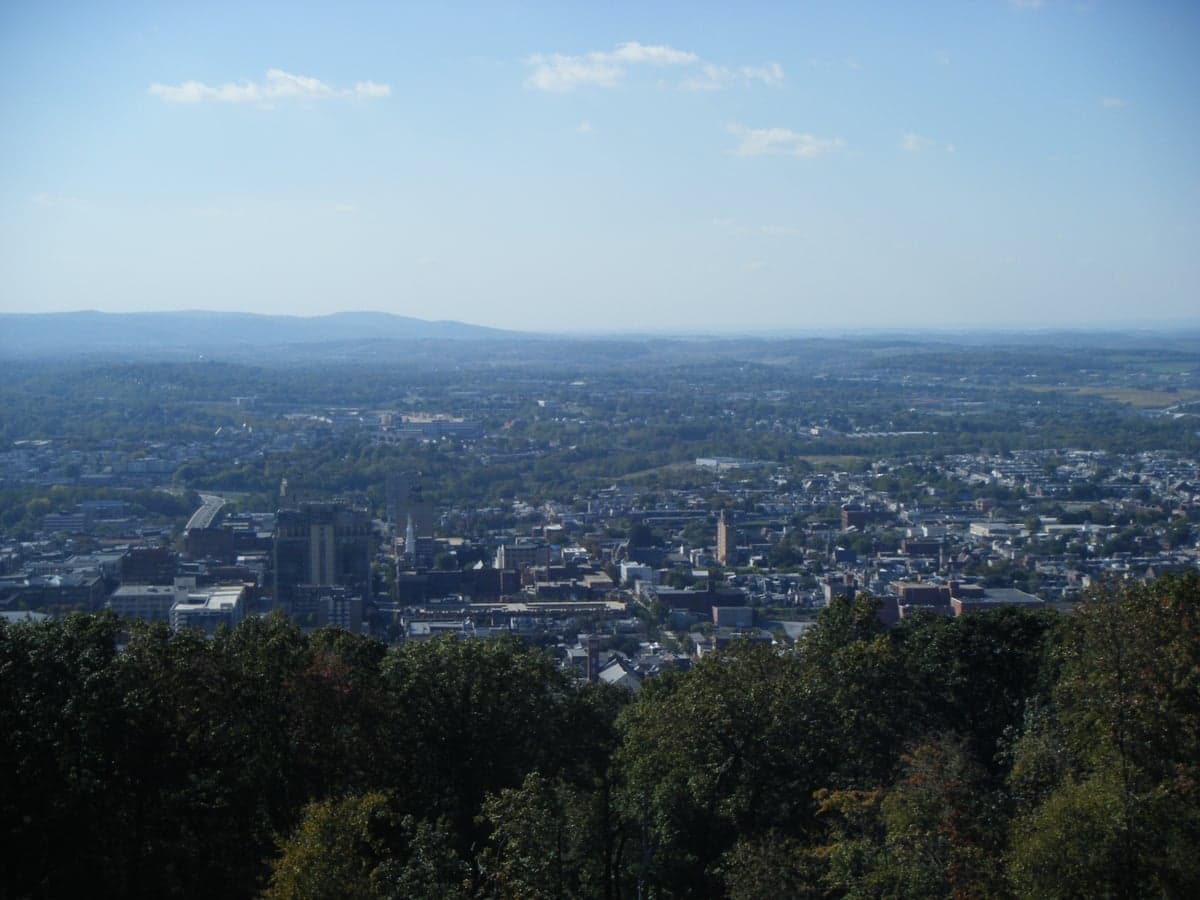
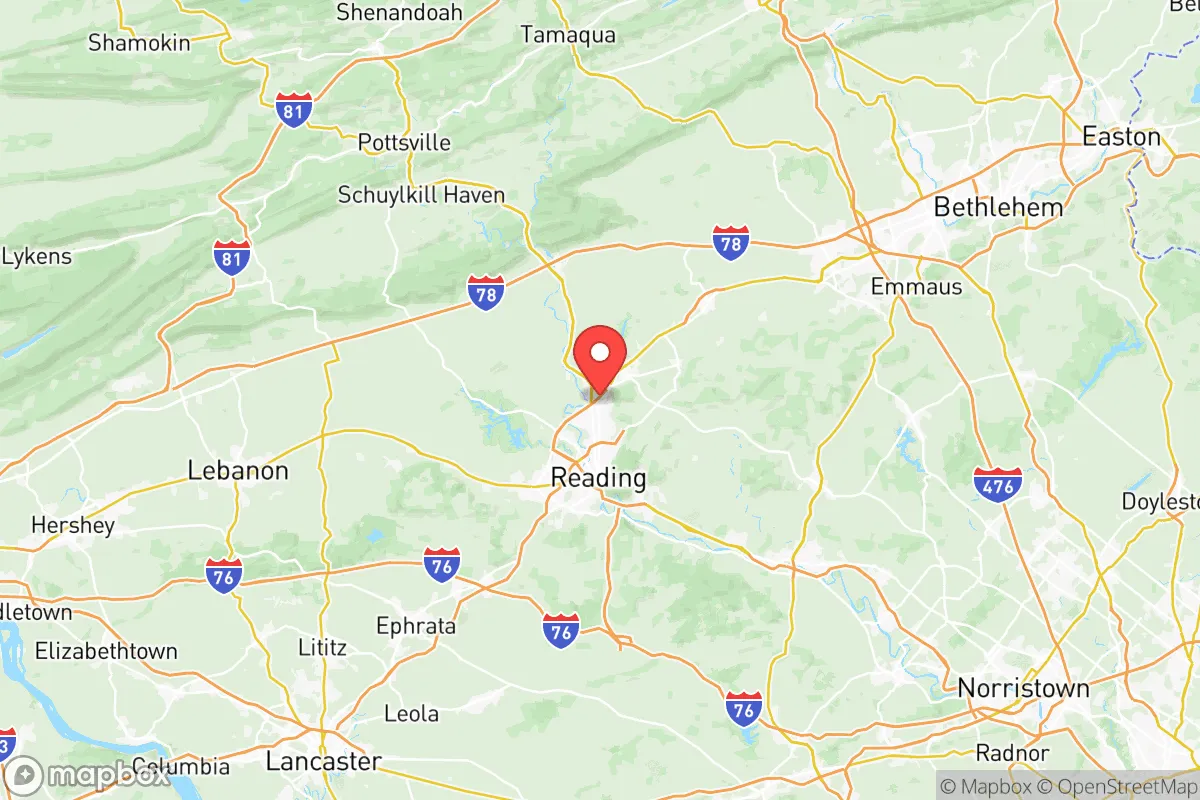
Berks County, Pennsylvania, offers a notably high degree of personal sovereignty relative to the Philadelphia suburbs to its east, blending a strong rural and small-town ethos with a regulatory environment that generally favors individual autonomy. The county’s political culture, shaped by a mix of conservative-leaning townships and a more moderate urban core in Reading, creates a patchwork where personal freedoms—from tax burden to self-defense to homesteading—vary significantly by municipality. For single individuals and families prioritizing independence, Berks County presents a compelling middle ground: it avoids the heavy-handed regulation of larger cities while maintaining access to modern infrastructure and services.
Tax burden and regulatory posture across Berks County municipalities
Berks County’s overall tax burden is moderate by Pennsylvania standards, but the real story lies in the differences between its 72 municipalities. The county’s combined local income tax rate (earned income tax) ranges from 0.5% to 1.0%, with most townships and boroughs opting for the lower end. Property taxes are driven by the school district—the largest component—and vary widely: the Reading School District levies among the highest millage rates in the county (over 30 mills), while districts like Oley Valley and Brandywine Heights are significantly lower, often under 20 mills. Regulatory posture is similarly decentralized. Townships like Robeson and Caernarvon maintain a light-touch approach to land use and business licensing, with minimal zoning overlay beyond basic agricultural and residential designations. In contrast, Wyomissing and West Reading have more structured commercial zoning and stricter building codes, reflecting their suburban character. For a freedom-minded individual, the choice of municipality is critical: a home-based business or small workshop faces far fewer hurdles in rural Alsace Township than in the borough of Kutztown, which has a more formalized permitting process. The county’s lack of a local sales tax (Pennsylvania’s 6% state rate applies uniformly) and no county-level income tax keeps the overall burden manageable, but the real sovereignty gain comes from selecting a township with a pro-autonomy regulatory culture.
Self-defense and gun law specifics in Berks County
Pennsylvania is a shall-issue state for concealed carry permits, and Berks County’s Sheriff’s Office processes applications efficiently, typically within 30 days. The county is home to a robust gun culture, with numerous shooting ranges and gun shops concentrated along the Route 222 corridor, particularly in Muhlenberg Township and Spring Township. Open carry is legal without a permit for anyone who can legally possess a firearm, and the county’s rural areas—such as Albany Township and Greenwich Township—see regular open carry without incident. Stand-your-ground laws apply statewide, with no duty to retreat in any place where the individual is lawfully present. Berks County’s courts have historically been supportive of Second Amendment rights; the county’s district attorney, John Adams, has publicly stated that his office will not prosecute lawful self-defense cases. However, the city of Reading itself has a more restrictive atmosphere: the city council passed a resolution in 2021 supporting universal background checks (non-binding), and local police are more likely to stop individuals openly carrying in the urban core. For families, the practical takeaway is that Berks County offers some of the strongest gun rights in the Northeast, but the experience differs markedly between the rural townships and the city limits. The county’s gun-friendly culture is reinforced by the presence of the Berks County Pistol Club and numerous private ranges, making it easy to train and practice.
Self-reliance and homesteading viability: lot sizes, zoning, and off-grid feasibility
Berks County is a strong candidate for homesteading and self-reliance, particularly in its northern and western townships. Minimum lot sizes in agricultural zones are typically 2 to 5 acres in townships like Heidelberg, Jefferson, and Tulpehocken, allowing for substantial gardens, small livestock, and even hobby farms. Zoning ordinances in these areas are generally permissive: raising chickens, goats, or bees is allowed by right on parcels of one acre or more in most rural townships, and many allow for the keeping of horses on smaller lots. Off-grid feasibility is mixed. Pennsylvania’s Uniform Construction Code applies statewide, but enforcement is local. In Berne Township and Upper Bern Township, building inspectors are known to be pragmatic about alternative energy systems—solar panels, rainwater collection, and composting toilets—as long as basic safety standards are met. However, full off-grid living (no utility connection) is difficult because most townships require a minimum of one utility connection (typically electric) for a habitable dwelling. The county’s agricultural preservation program, which has permanently protected over 50,000 acres of farmland, also limits subdivision and development in rural areas, preserving the open space that homesteaders value. For those seeking a more independent lifestyle, the Oley Valley region is particularly attractive, with its deep soils, strong Amish and Mennonite presence, and a culture of self-sufficiency that predates modern zoning. The key constraint is water: while most rural lots have access to groundwater, well yields vary significantly, and some areas near the Schuylkill River have higher mineral content that requires filtration.
Personal liberties: parental rights, medical autonomy, speech, and property
Berks County’s personal liberties environment is shaped by its conservative-leaning electorate and a legal culture that respects traditional freedoms. Parental rights are strong: the county’s school boards, particularly in Conrad Weiser Area and Daniel Boone Area school districts, have resisted state-level mandates on curriculum and health policies, with active parent advisory committees. Medical autonomy is a mixed picture. While Pennsylvania does not have a religious or philosophical exemption for vaccine mandates, Berks County’s healthcare providers—including the Reading Hospital system—generally respect patient choice in treatment decisions, and the county has a growing network of direct-primary-care physicians who operate outside insurance constraints. Free speech protections are robust, with the county’s public spaces—such as the Berks County Courthouse steps and City Park in Reading—regularly hosting political rallies and protests without significant restrictions. Property rights are well-protected under Pennsylvania’s constitution, which prohibits the taking of private property for economic development (a stronger standard than the federal Kelo decision). The county’s zoning hearing boards, particularly in Exeter Township and Amity Township, have a reputation for granting variances when property owners demonstrate a reasonable use of their land. The one area where personal liberty is more constrained is in the city of Reading itself, where noise ordinances, rental inspection requirements, and parking regulations are more stringent than in the surrounding townships.
Overall, Berks County offers a level of personal sovereignty that is rare in the densely populated Northeast corridor. The county’s decentralized governance structure—with 72 municipalities each setting their own zoning, tax, and enforcement policies—allows individuals to choose a community that aligns with their values, from the near-libertarian atmosphere of rural Albany Township to the more structured but still freedom-respecting suburbs of Spring Township. Compared to counties closer to Philadelphia, such as Montgomery or Chester, Berks is notably lighter in regulatory touch and more supportive of self-defense rights. For the freedom-minded individual or family, the key is to research the specific township or borough, as the difference between a 2-acre lot in Heidelberg Township and a half-acre lot in Wyomissing is not just size—it’s a fundamentally different relationship with government. Berks County delivers a strong foundation for personal autonomy, provided the resident chooses their municipality wisely.

* Values derived from national, state, county, city and local statistics and may differ in a specific area. Last updated: 2026-07-27T09:00:14.000Z
Narrative content on this page is AI-generated and may contain mistakes. Verify any details that matter before acting on them.
ReloMaps may earn a commission from affiliate links at no extra cost to you.

