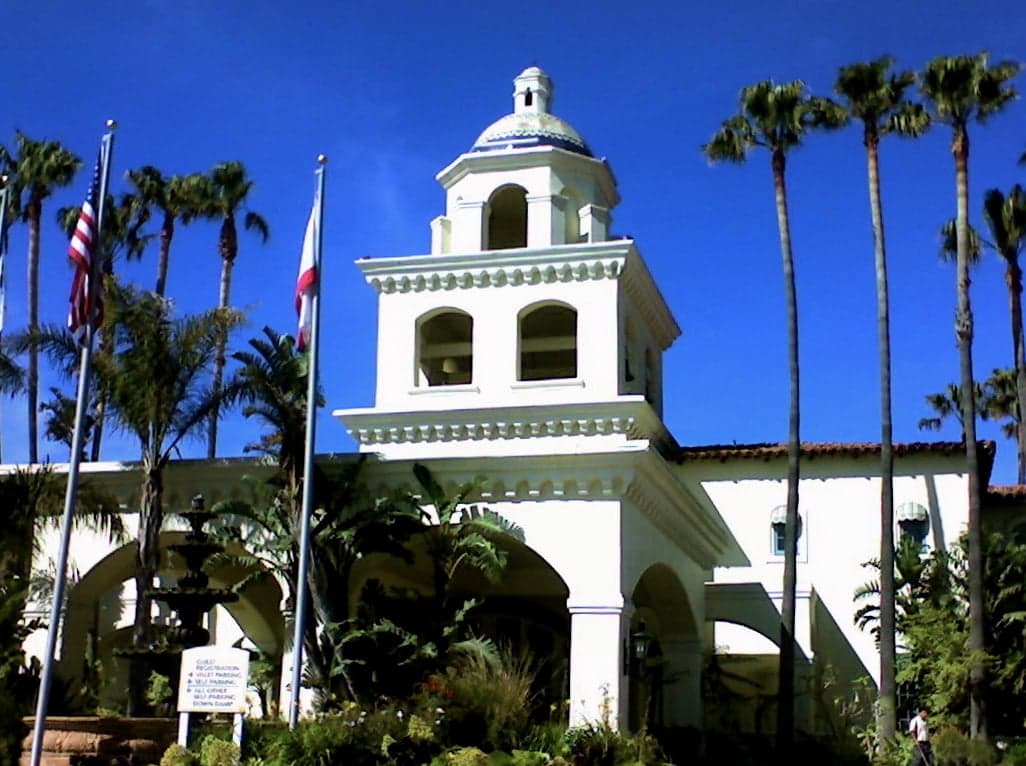
Photo: Wikipedia
Political ClimatePolitical Climate in Oxnard, CA
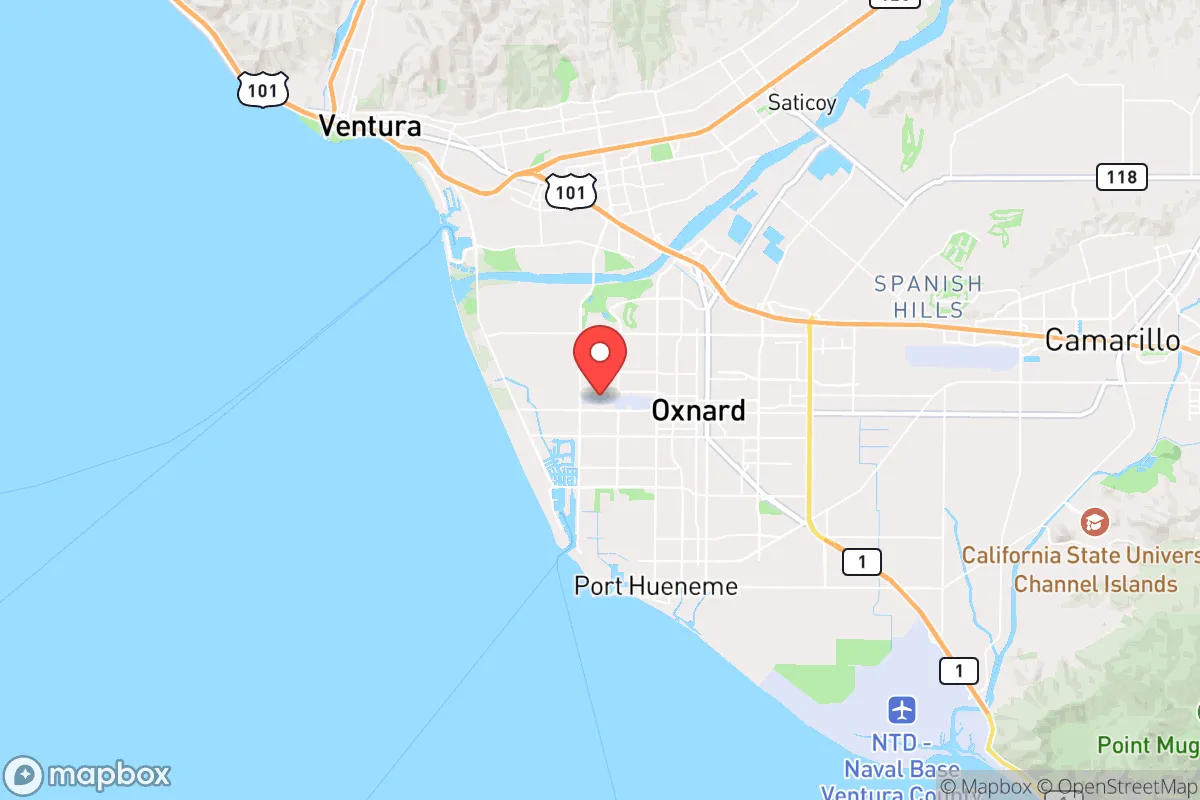
District shown is the primary district for this city’s centroid. Cities may span multiple districts.
Local Political AnalysisPolitical Analysis of Oxnard, CA
Oxnard’s political climate has shifted noticeably leftward over the past decade, and if you’ve lived here as long as I have, you’ve felt it. The city now sits at a Cook PVI of D+8, meaning it leans Democratic by a solid eight points compared to the national average. That wasn’t always the case—Oxnard used to be a more balanced, working-class town where folks didn’t wear their party on their sleeve. Today, the local government and many of the loudest voices in the community have embraced progressive policies that, frankly, feel like they’re creeping into your backyard. The trajectory is clear: more regulations, more taxes, and less room for the kind of personal freedom that made this area a great place to raise a family.
How it compares
Drive just a few miles in almost any direction, and you’ll see a different world. To the north, Ventura leans left too, but it’s a more moderate, “coastal liberal” vibe—still plenty of folks who value property rights and local control. Head east toward Camarillo or Thousand Oaks, and you’re in solidly conservative territory, where the PVI flips to R+4 or R+6. Those communities have pushed back harder on things like mask mandates, business closures, and high-density housing projects that Oxnard’s city council has embraced. Even nearby Santa Paula, just up the 126, feels more like the Oxnard of the 1990s—independent, skeptical of Sacramento’s reach, and protective of its agricultural roots. The contrast is stark: Oxnard’s leaders seem eager to follow the state’s progressive playbook, while surrounding towns are fighting to keep government out of their daily lives.
What this means for residents
For the average family or small business owner, the shift means more than just election results. You’re seeing it in higher water bills tied to environmental mandates, in zoning changes that make it harder to run a home-based business, and in school board decisions that prioritize ideological training over reading and math. Property taxes here are already among the highest in Ventura County, and new “affordable housing” mandates are pushing up costs for everyone—not just renters. If you value the right to make your own choices about your property, your kids’ education, or your business hours, Oxnard is becoming a tougher place to do that. The local government has a habit of stepping in where it doesn’t belong, and that’s not going to change unless the voting base wakes up.
On the cultural side, Oxnard still has its charms—the beach, the strawberry fields, the genuine community feel in neighborhoods like Southwinds or Oxnard Shores. But the policy direction is concerning. The city council has pushed for “sanctuary city” policies that strain local law enforcement and make it harder to hold anyone accountable for illegal activity. There’s also been a steady push to remove police funding for school resource officers, which feels like a gift to the troublemakers. Long-term, if these trends hold, Oxnard risks becoming a place where personal freedoms are secondary to government agendas. The best advice I can give: keep an eye on local elections, show up to city council meetings, and don’t assume your vote doesn’t matter. The next few years will decide whether this town stays a decent place to live or slides further into the kind of overreach that’s already chasing families out of California.

State Political ClimatePolitical Climate in California
State Political AnalysisPolitical Environment in the State
California has been a one-party Democratic state for over a decade, with Democrats holding supermajorities in both legislative chambers and every statewide office since 2011. The state’s overall partisan lean is roughly D+25 in presidential elections, but this masks a dramatic and accelerating divergence: the coastal metros of Los Angeles, San Francisco, and San Jose drive the blue wave, while the Central Valley, Inland Empire, and far northern counties have shifted red. Over the past 20 years, the state has moved from a purple-ish blue to a deep blue fortress, but the cracks are showing—population loss, business exodus, and a growing rural rebellion are reshaping the political landscape.
Urban vs. rural divide
The political map of California is a tale of two states. The coastal urban crescent—from San Diego up through Los Angeles, the Bay Area, and Sacramento—is overwhelmingly Democratic. San Francisco County voted 85% for Biden in 2020, while Los Angeles County gave him 71%. These metros are the engine of the state’s progressive agenda, powered by tech wealth, entertainment industry money, and dense, diverse populations. In contrast, the Central Valley—places like Bakersfield, Fresno, and Modesto—is solidly Republican, with Trump winning Kern County by 20 points in 2020. The far north, including Shasta County (Redding) and Siskiyou County, is deeply red, with some precincts voting 80%+ Republican. The Inland Empire (Riverside and San Bernardino counties) is a battleground—once reliably red, it’s now trending blue as LA spillover changes the demographics, but still has strong conservative pockets in places like Temecula and Murrieta. The most dramatic flip in recent years is Orange County, once a GOP stronghold, which went blue in 2016 and has stayed there, driven by Asian-American and Latino voters shifting left. Meanwhile, rural counties like Tulare and Merced are getting redder as the urban-rural cultural divide widens.
Policy environment
California’s policy environment is a laboratory for progressive governance, and it shows in the numbers. The state has the highest personal income tax rate in the nation (13.3% top bracket) and the highest sales tax (up to 10.25% in some cities). Property taxes are capped by Prop 13, but commercial property taxes are being re-assessed under Prop 15 (defeated in 2020, but the fight continues). The regulatory posture is aggressive: California has its own environmental agency (CARB) that sets emissions standards stricter than federal, and its own labor laws (like AB 5) that classify many gig workers as employees. Education policy is dominated by the teachers’ unions, with per-pupil spending around $16,000 but low test scores—the state ranks 40th in reading and 45th in math on the NAEP. Healthcare is heavily regulated, with a state-run exchange (Covered California) and a push toward single-payer that hasn’t passed yet. Election laws are among the most liberal: universal mail-in voting, same-day registration, and no voter ID requirement. The state also has a “sanctuary state” law (SB 54) that limits local law enforcement cooperation with federal immigration authorities. For a conservative, the policy environment feels like a slow-motion takeover of personal freedom—higher taxes, more mandates, and less local control.
Trajectory & freedom
California is becoming less free by nearly any measure, and recent legislation has accelerated that trend. On gun rights, the state has some of the strictest laws in the nation: an “assault weapons” ban, a 10-day waiting period, and a “may-issue” concealed carry system that was effectively a ban until the Supreme Court’s Bruen decision in 2022 forced a shift to “shall-issue.” Even then, the state passed SB 2 in 2023, which created “sensitive places” where guns are banned (including parks, hospitals, and public transit) and required a “good cause” statement—a direct defiance of Bruen. On parental rights, the state passed AB 1955 in 2024, which prohibits school districts from requiring parental notification when a child changes their gender identity—a major flashpoint for conservative families. On speech, the state has a law (AB 587) that requires social media platforms to report their content moderation policies, which critics say is a backdoor to censorship. Medical autonomy took a hit with the state’s COVID-19 vaccine mandates for healthcare workers and schoolchildren (though the school mandate was paused). Property rights are under constant pressure from rent control (AB 1482) and the California Environmental Quality Act (CEQA), which can be weaponized by NIMBY groups to block new housing. The trajectory is clear: more state control, less individual liberty. The only counter-trend is the growing “secession” movement (Calexit) and the “State of Jefferson” push in the far north, but neither has real political traction.
Civil unrest & political movements
California has been a hotspot for civil unrest and political movements, both left and right. The 2020 George Floyd protests in Los Angeles and San Francisco were among the largest and most destructive in the nation, with looting and arson that led to billions in damages. The state’s progressive DA’s—like George Gascón in LA and Chesa Boudin in SF (recalled in 2022)—were seen as soft on crime, leading to a backlash that saw Boudin recalled and Gascón facing a recall effort in 2024. On the right, the “Recall Newsom” movement in 2021 gathered 1.7 million signatures, though the governor survived by a 62-38 margin. Immigration politics are a constant flashpoint: the state’s sanctuary law (SB 54) has led to conflicts with ICE, and the border crisis has overwhelmed cities like San Diego and El Centro. The “State of Jefferson” movement in the far north has been pushing for secession since the 1940s, but it remains a fringe idea. Election integrity is a hot topic—the state’s universal mail-in voting system, implemented permanently after 2020, has led to concerns about ballot harvesting and signature verification, though no major fraud has been proven. Visible flashpoints for a new resident include homeless encampments in every major city, frequent protests (both pro-Palestine and pro-Israel, abortion rights, and LGBTQ+ rights), and a general sense of political tension that’s hard to escape.
Projection
Over the next 5-10 years, California’s political trajectory is likely to continue its leftward drift, but with growing internal friction. Demographic shifts are the key driver: the state’s population has declined for three consecutive years (2020-2023), with net out-migration of over 500,000 people, mostly to Texas, Arizona, and Nevada. Those leaving tend to be middle-class families and conservatives, while the state continues to attract high-skilled immigrants and young progressives. This self-selection will likely make the state even bluer in the long run, but it also creates a hollowing-out effect—fewer taxpayers to support the state’s massive budget (over $300 billion). The housing crisis, driven by NIMBYism and high construction costs, will continue to push people out, and the state’s tax burden will only increase as the population ages. The wild card is the growing “parental rights” movement, which could flip some suburban districts (like Temecula and Orange County) back toward the center if Democrats overreach on issues like gender identity and school curriculum. But realistically, someone moving in now should expect to find a state that is more expensive, more regulated, and more politically polarized in a decade. The only hope for conservatives is local control—cities like Bakersfield, Redding, and Temecula will remain conservative enclaves, but the state-level levers will be firmly in progressive hands.
For a new resident, the bottom line is this: California offers unmatched natural beauty, economic opportunity, and cultural diversity, but it comes at a steep price in terms of personal freedom and financial burden. If you’re a conservative, you’ll find like-minded communities in the Central Valley, the far north, and parts of the Inland Empire, but you’ll be fighting an uphill battle against a state government that is increasingly hostile to your values. The practical takeaway is to choose your city carefully—avoid the coastal metros if you value low taxes and gun rights, and look at places like Bakersfield, Redding, or Temecula for a more balanced lifestyle. But be prepared for the state’s long arm to reach you no matter where you live, whether through higher taxes, stricter regulations, or progressive policies that affect your family. California is a beautiful place to visit, but living here requires a thick skin and a willingness to fight for your freedoms.
* Values derived from national, state, county, city and local statistics and may differ in a specific area. Last updated: 2026-04-29T18:50:17.000Z
Narrative content on this page is AI-generated and may contain mistakes. Verify any details that matter before acting on them.
ReloMaps may earn a commission from affiliate links at no extra cost to you.

