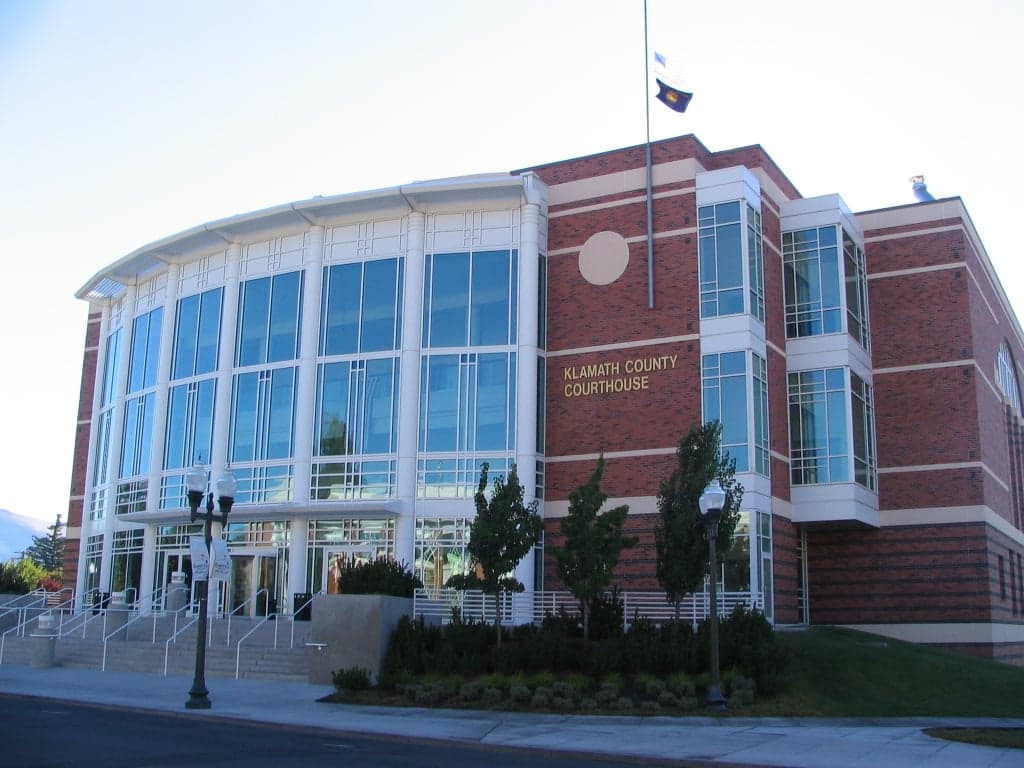
Photo: Wikipedia
Political ClimatePolitical Climate in Klamath County
Showing district-level results — no local-only data available.
Local Political AnalysisPolitical Analysis of Klamath County
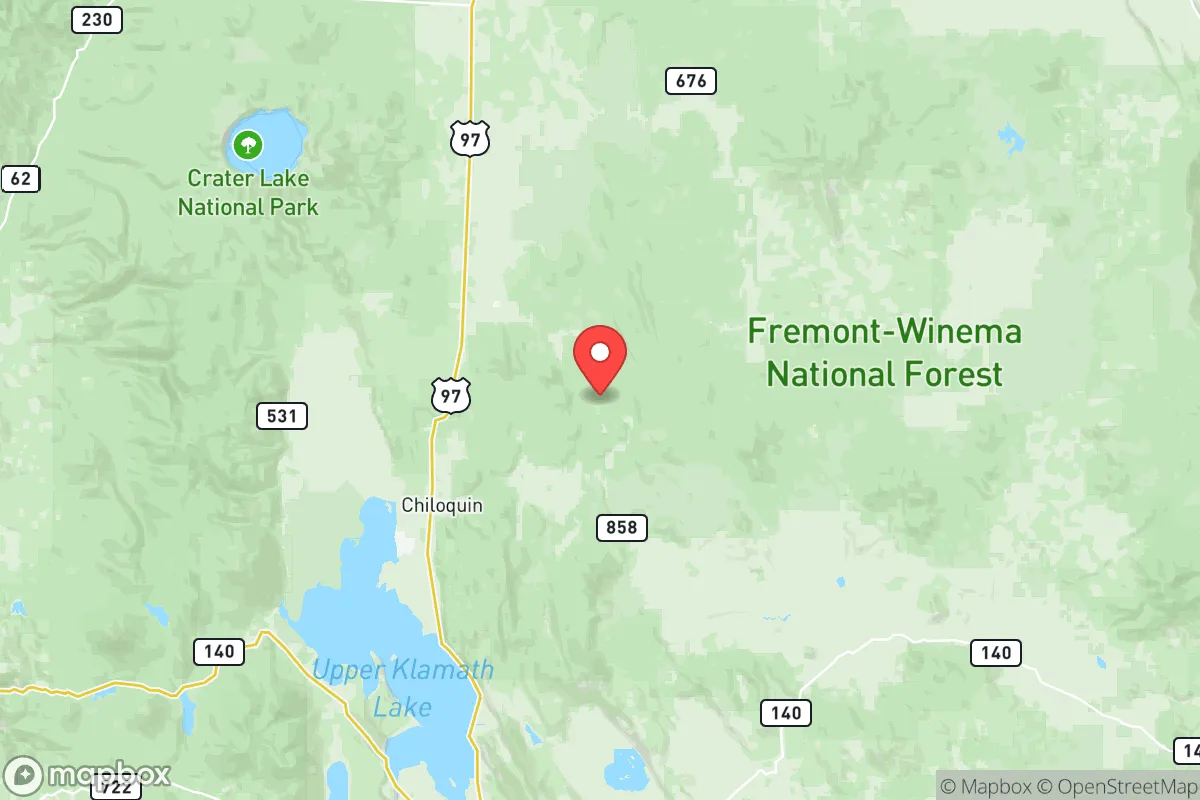
Klamath County is one of the most reliably Republican areas in Oregon, carrying a Cook Partisan Voting Index of R+14, which puts it a full 22 points to the right of the state as a whole (D+8). The county hasn't voted for a Democratic presidential candidate since Lyndon Johnson in 1964, and in 2024, Donald Trump carried it by roughly 30 points. That said, the political picture isn't monolithic — the city of Klamath Falls itself has a noticeable blue streak, especially around the Oregon Institute of Technology campus and the downtown core, while the rural outposts like Chiloquin, Bonanza, and Malin are deep red. The swing precincts tend to be the suburban fringe of Klamath Falls, where newer arrivals from California and the Willamette Valley have nudged things a few points leftward over the past decade, though not enough to flip any seats.
How it compares
Compared to Oregon's D+8 statewide lean, Klamath County is an outlier — more conservative than even most of the rest of eastern Oregon. While Deschutes County (Bend) has been trending purple and even blue in some races, Klamath has held steady. The county's Republican representatives in Salem, like Rep. E. Werner Reschke (R-Klamath Falls), consistently vote against the majority party's agenda on land use, gun control, and environmental regulation. On ballot measures, Klamath County routinely votes 15–20 points more conservative than the state average, particularly on tax and property rights issues.
What this means for residents
For conservative residents, Klamath County feels like a refuge — local government, law enforcement, and school boards generally reflect their values, and it's easy to find like-minded neighbors. For liberal residents, it can feel isolating, but not hostile; the county's politics are more libertarian than authoritarian, and most people keep their views to themselves in mixed company. The practical effect is that local policy tends to favor low taxes, minimal regulation, and Second Amendment rights, while progressive priorities like climate action or public transit expansion rarely gain traction.
Culturally, Klamath County is defined by its rural independence and resource-economy roots — timber, agriculture, and the Klamath Basin water wars shape local politics more than national culture wars. The county's strong opposition to federal land management (the area is surrounded by national forest and the Klamath Tribes' reservation) creates a distinct political identity that's more about local control than party loyalty. That independence means even conservative residents will occasionally buck their party on issues like water rights or tribal sovereignty, keeping local politics unpredictable despite the red tint.

State Political ClimatePolitical Climate in Oregon
State Political AnalysisPolitical Environment in the State
Oregon has a solid Democratic lean at the state level, with a Cook PVI of D+8, but that number masks one of the most dramatic urban-rural splits in the country. Over the past 20 years, the Portland metro area has pulled the state steadily leftward, while vast stretches of eastern and southern Oregon have grown more conservative and increasingly frustrated with Salem. The result is a state where statewide Democrats win by comfortable margins, but Republicans hold supermajorities in many rural counties and occasionally flip seats in the Willamette Valley.
Urban vs. rural divide
The political map of Oregon is essentially a battle between the Portland metroplex and everything else. Multnomah County alone delivers roughly 20% of the state's vote and votes about 75% Democratic. Washington and Clackamas counties, the other two Portland suburbs, have trended bluer over the last decade, though Clackamas still has some competitive pockets. Bend, in Deschutes County, has been a major swing area — it voted for Trump in 2016, then flipped to Biden in 2020, and local races there are now genuinely competitive. Eugene and Corvallis are reliably progressive, driven by the University of Oregon and Oregon State University. Meanwhile, counties like Lake, Harney, Grant, and Malheur routinely vote 75-80% Republican. The I-5 corridor is the Democratic spine; everything east of the Cascades is deeply red, and the southern Oregon coast has some purple tendencies, with Coos and Curry counties leaning right but not as overwhelmingly as the interior.
Policy environment
Oregon has no state sales tax, which is a major draw for many relocators, but it has high income and property taxes to compensate. The corporate income tax is also relatively high, and the state has a progressive income tax structure with top marginal rates over 9%. Land use policy is uniquely restrictive — Oregon's urban growth boundaries, established in the 1970s, tightly control development around cities, which drives up housing costs in desirable areas. The state has a strong regulatory posture on environmental issues, including a cap-and-trade program and strict emissions standards. Education funding is a perennial issue; Oregon ranks near the bottom nationally in high school graduation rates and has some of the largest class sizes in the West. Election law is vote-by-mail, which is popular across the political spectrum, and the state has automatic voter registration at the DMV. Ballot initiatives are a major feature of Oregon politics, allowing voters to directly enact laws on taxes, drugs, and criminal justice.
Recent policy direction
Oregon has moved aggressively on several fronts in the last five years. In 2020, it became the first state to decriminalize possession of small amounts of all drugs via Measure 110, though the policy has been widely criticized and partially walked back in 2024 due to overdose spikes. The state has also passed some of the nation's strongest abortion access laws, including a 2023 law protecting providers and patients from out-of-state legal action. On gun policy, Oregon passed a voter-approved measure in 2022 requiring permits to purchase firearms and banning magazines over 10 rounds, though it is currently tied up in court challenges. On property rights, the state has expanded tenant protections, including statewide rent control caps and just-cause eviction requirements. Parental rights have been a flashpoint: Oregon passed a law in 2023 requiring schools to notify parents if a child changes gender identity or pronouns, but it was vetoed by the governor. On taxation, voters rejected a gross receipts tax in 2022, but the state's tax burden remains high by Western standards. Voting access remains broad, with same-day registration and no-excuse absentee voting.
Civil unrest & political movements
Portland became a national symbol of political unrest in 2020, with months of protests following George Floyd's death, including the occupation of the federal courthouse and nightly clashes with federal agents. That period left a lasting impression on both local politics and national perception, though the city has calmed significantly since 2022. On the right, rural Oregon has a long history of separatist sentiment — the Greater Idaho movement, which proposes moving 13 eastern Oregon counties into Idaho, has gained real traction, with several counties voting in favor of exploring the idea. Immigration politics are less heated than in border states, but Portland and Multnomah County are sanctuary jurisdictions that limit cooperation with federal immigration enforcement. Election integrity has been a recurring issue in rural counties, with some Republican county clerks expressing skepticism about vote-by-mail, though no major fraud has been documented. The state also saw a high-profile standoff at the Malheur National Wildlife Refuge in 2016, which remains a touchstone for anti-government sentiment in the interior.
Projection
Over the next 5-10 years, Oregon is likely to remain a Democratic-leaning state, but the margin could narrow. In-migration from California has slowed, and many new arrivals are actually conservative-leaning people moving to Bend, Medford, or the Portland exurbs for lower housing costs. The Portland metro area is growing more slowly than the rest of the state, which reduces its political dominance. The Greater Idaho movement is unlikely to succeed in the near term — it would require approval from both state legislatures and Congress — but it will continue to be a rallying cry for rural conservatives. The Democratic Party's hold on the governorship and legislature is secure for now, but the margin in the state House has been as narrow as a single seat in recent cycles. A relocator moving to Oregon in 2026 should expect a state that remains blue statewide but where local politics vary enormously — a move to Bend or Salem is a very different experience from a move to Portland or Eugene.
For a conservative-leaning relocator, the bottom line is that Oregon offers a mixed bag. You get no sales tax, beautiful landscapes, and a relatively high degree of local autonomy in rural areas, but you also get high income taxes, restrictive gun laws, and a state government that is reliably progressive on social and environmental issues. If you're moving to eastern Oregon or the southern interior, you'll find a community that shares your values, but you'll still be voting in a state where your ballot is largely symbolic in statewide races. If you're moving to the Portland area, you'll be in a deeply blue environment, though the suburbs have more ideological diversity than the city core. The key is to pick your county carefully — Oregon's political reality is not one thing, but many.
* Values derived from national, state, county, city and local statistics and may differ in a specific area. Last updated: 2026-07-19T08:10:37.000Z
Narrative content on this page is AI-generated and may contain mistakes. Verify any details that matter before acting on them.
ReloMaps may earn a commission from affiliate links at no extra cost to you.

