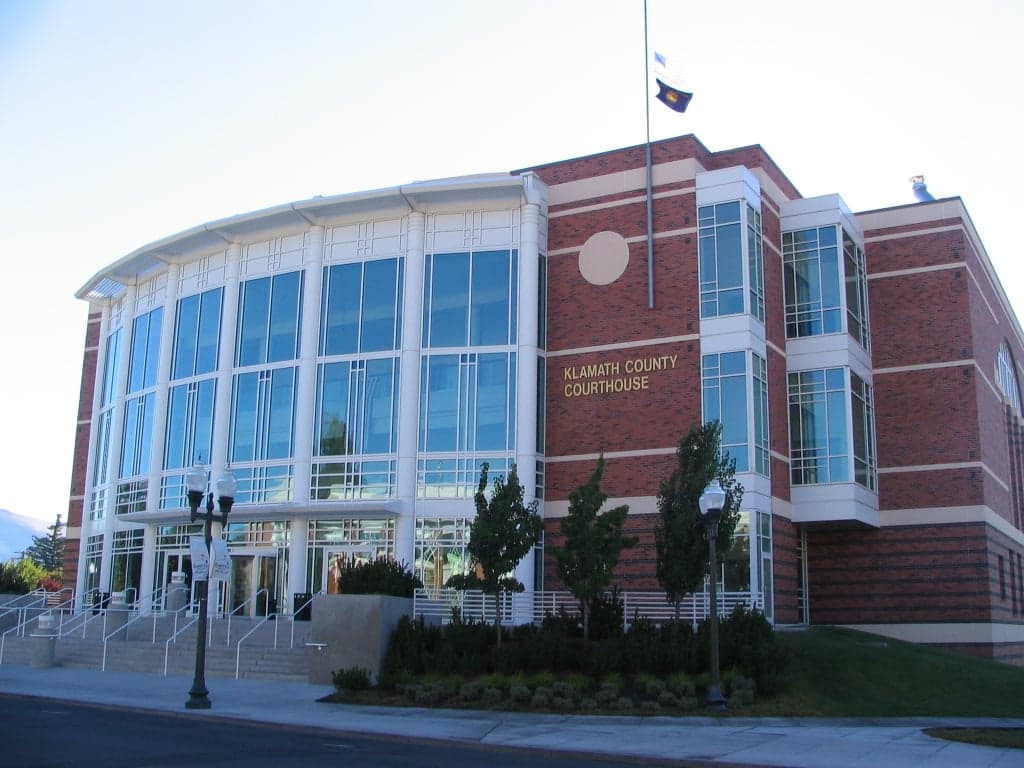
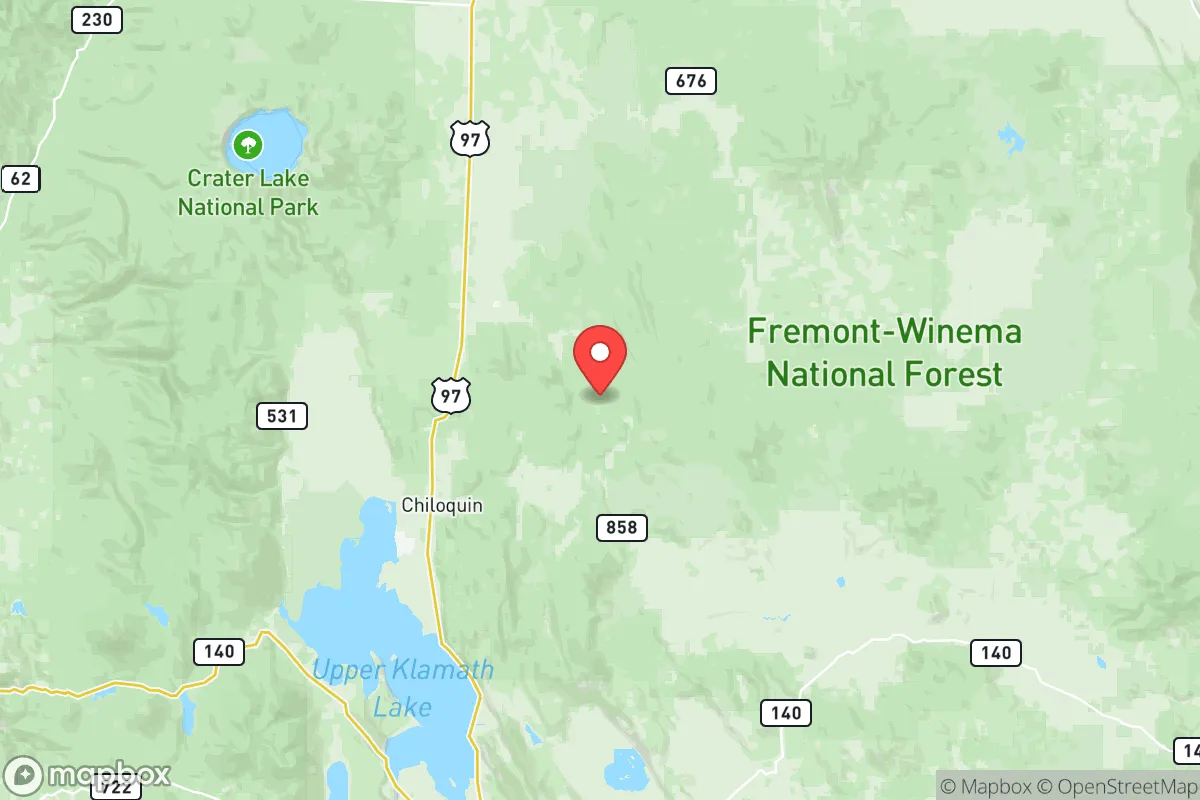
Photo: Wikipedia
Demographics of Klamath County
Affluence Level in Klamath County
A below-average socioeconomic profile. Incomes, home values, and educational attainment trail the U.S., with higher poverty and unemployment.
People of Klamath County
Today, the people of Klamath County, Oregon number roughly 69,800, making it one of the more sparsely populated counties in the state. The population is predominantly white (75.4%) with a significant and growing Hispanic minority (13.4%), while foreign-born residents make up just 2.4% of the total. The county’s identity is rooted in its rural, resource-extraction history—timber, agriculture, and the railroad—and its population is concentrated in the city of Klamath Falls, with smaller clusters in Chiloquin, Merrill, Malin, and Bonanza. Compared to Oregon’s urbanized Willamette Valley, Klamath County is notably less diverse, older, and less college-educated (21.5%), with a cultural character shaped by generations of Euro-American settlement and a small but enduring Native American presence.
Settlement & growth (pre-1960)
The original inhabitants of the Klamath Basin were the Klamath, Modoc, and Yahooskin bands of Native peoples, who lived in the region for thousands of years before Euro-American contact. Their subsistence centered on the region’s abundant lakes, rivers, and marshes—particularly around Upper Klamath Lake and the Lost River—and they maintained a complex trade network across the Cascade Range. The first sustained contact with outsiders came in the 1820s and 1830s, when Hudson’s Bay Company fur trappers, led by Peter Skene Ogden, passed through the basin. However, permanent Euro-American settlement did not begin in earnest until after the 1846 Oregon Treaty and the subsequent discovery of gold in California and southern Oregon.
The first major wave of American settlers arrived in the 1850s and 1860s, drawn by the promise of farmland and the establishment of the Klamath Indian Reservation in 1864, which opened adjacent lands to white homesteaders. These early settlers were overwhelmingly of Northern European stock—primarily English, Scots-Irish, and German—and they established the county’s first permanent communities. The city of Klamath Falls (originally called Linkville) was founded in 1867 by George Nurse, a miner and trader, and quickly became the commercial hub for the basin. Smaller agricultural towns like Merrill (founded 1872) and Malin (founded 1909) were settled by farmers who drained the marshy lands of the Lost River Valley for potato and grain cultivation. The completion of the Oregon and California Railroad through Klamath Falls in 1909 triggered a second wave of growth, bringing laborers from the Midwest and Great Plains, as well as a small number of Italian and Portuguese immigrants who worked on the railroad and in the region’s burgeoning timber industry.
The timber boom of the 1920s through the 1950s defined Klamath County’s modern character. The arrival of large lumber companies—including Weyerhaeuser and J. Neils Lumber Company—pulled in workers from the Dust Bowl states of Oklahoma, Arkansas, and Texas, as well as from the Upper Midwest. These new residents settled primarily in Klamath Falls and the unincorporated mill towns of Gilchrist and Chemult, where company housing and sawmill jobs anchored family life. The Native American population, meanwhile, was largely confined to the Klamath Reservation near Chiloquin, where the Klamath Tribes were terminated as a federally recognized tribe in 1954—a devastating policy that led to the loss of most tribal land and a sharp decline in the tribal population’s economic standing. By 1960, Klamath County’s population had reached roughly 47,000, and it was overwhelmingly white, rural, and dependent on natural resources.
Modern era (post-1965)
The post-1965 period brought significant demographic change, though Klamath County’s transformation was slower and less dramatic than in Oregon’s urban centers. The 1965 Hart-Cellar Act had a limited direct impact here—the county’s foreign-born population remains just 2.4%—but the broader national shift toward immigration from Latin America and Asia reshaped the county’s Hispanic population. Beginning in the 1970s and accelerating through the 1990s, Mexican and Central American immigrants arrived to work in the region’s agricultural sector, particularly in the potato, onion, and mint fields around Merrill, Malin, and Tulelake (just across the California border). These workers and their families established a growing Hispanic community that today makes up 13.4% of the county’s population, with the highest concentrations in the southern agricultural towns and in Klamath Falls’ south side.
Domestic migration also reshaped the county after 1965, though in a more modest way than in Oregon’s fast-growing metro areas. The decline of the timber industry in the 1980s and 1990s triggered an out-migration of working-age families, particularly from Gilchrist and Chemult, where mill closures devastated local economies. At the same time, Klamath County began attracting a small but steady stream of retirees and second-home buyers from California and the Pacific Northwest, drawn by lower housing costs and the region’s outdoor recreation opportunities around Upper Klamath Lake and Crater Lake National Park. These newcomers tended to settle in Klamath Falls and around the lakefront communities of Rocky Point and Fort Klamath. The county’s East/Southeast Asian population remains very small (0.7%), concentrated almost entirely in Klamath Falls, where a handful of families are connected to Oregon Institute of Technology and the local healthcare sector. The Indian-subcontinent population is negligible (0.1%).
The Klamath Tribes regained federal recognition in 1986, and today the tribal community is centered in Chiloquin, where the Klamath Tribes operate a casino and government offices. The Black population remains tiny (0.7%), with no distinct enclave, reflecting the county’s historical lack of industrial or military pull factors that drew African Americans to other parts of Oregon.
The future
Klamath County’s population is projected to grow slowly, if at all, over the next decade. The county’s age structure is older than the state average, and out-migration of young adults seeking education and employment in Portland, Bend, or out of state will likely continue. The Hispanic share of the population is expected to rise gradually, driven by higher birth rates and continued agricultural labor demand, but the county will remain predominantly white and rural. New residential development is concentrated in Klamath Falls and along the Highway 97 corridor, while the smaller towns of Merrill, Malin, and Bonanza are likely to see stable or declining populations. The region’s cultural identity—rooted in timber, farming, and outdoor recreation—will persist, though tensions over water rights, tribal sovereignty, and land use (particularly around the Klamath Basin water crisis) will continue to shape local politics and community life.
For someone moving to Klamath County now, the region offers a low-cost, slow-paced lifestyle with strong community ties and access to some of the most dramatic natural landscapes in the Pacific Northwest. It is not a place of rapid demographic change or urban energy; it is a place where the population is stable, culturally conservative, and deeply connected to the land. Newcomers will find a population that is welcoming but insular, and a local economy that is slowly diversifying beyond its resource-extraction roots into healthcare, education, and tourism.

* Values derived from national, state, county, city and local statistics and may differ in a specific area. Last updated: 2026-07-19T08:10:37.000Z
Narrative content on this page is AI-generated and may contain mistakes. Verify any details that matter before acting on them.
ReloMaps may earn a commission from affiliate links at no extra cost to you.

