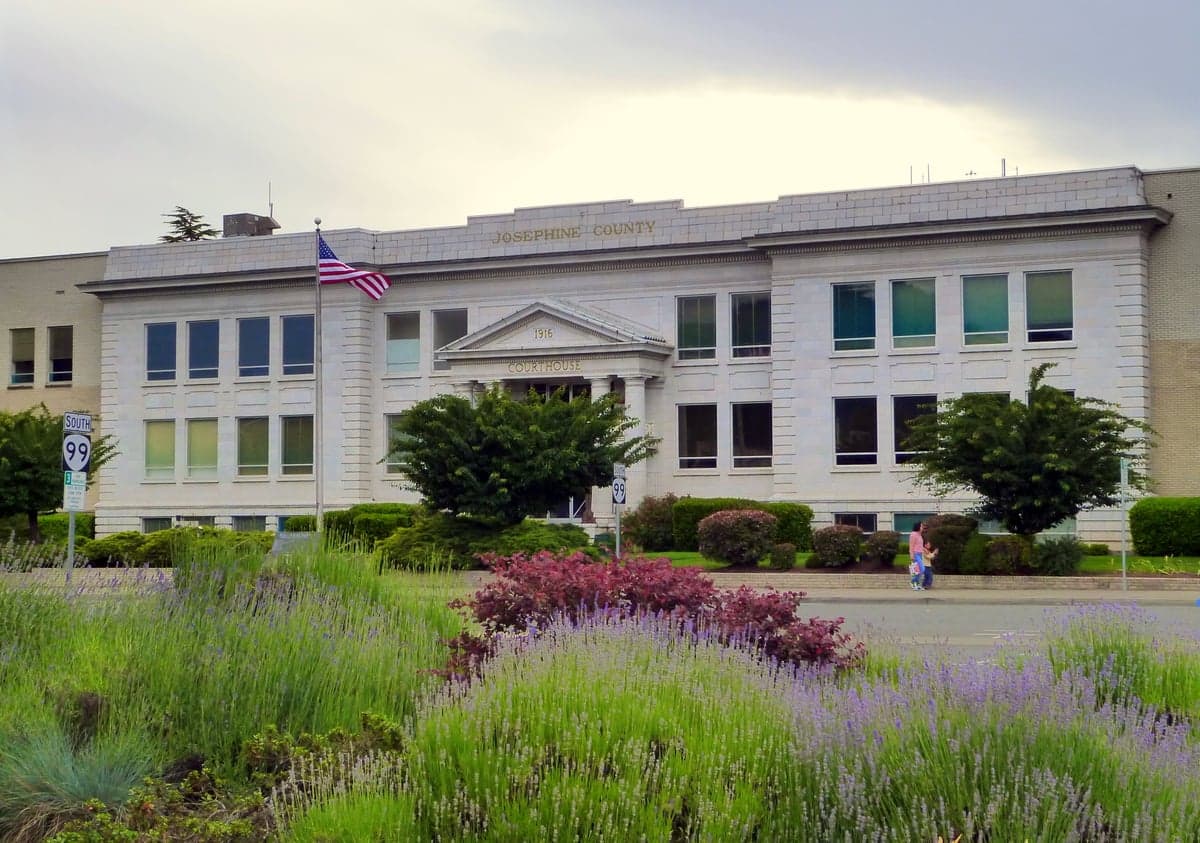
Photo: Wikipedia
Quality of Life in Josephine County
A livable area that tracks near national norms for affordability, walkability, and neighborhood health.
What does Quality of Life tell us?
Quality of Life measures an area by evaluating factors like cost of living, nearby amenities, country club access, airport proximity, socioeconomic signals and neighborhood character. For large states, this is a general average — quality of life can vary dramatically between metro areas, suburbs, and rural communities within the same state.
What does this tell us?
Quality of Life measures an area by evaluating factors like cost of living, nearby amenities, country club access, airport proximity, socioeconomic signals and neighborhood character. For large states, this is a general average — quality of life can vary dramatically between metro areas, suburbs, and rural communities within the same state.
Cost of Living
14% above national average
54%
The Real Cost of Living in Josephine County for 2026
| Tier | Individual | Family (4) |
|---|---|---|
| Survival | $18k | $35k |
| Comfortable | $74k | $109k |
| Luxury | $107k+ | $165k+ |
| Elite (Top 5%) | $137k+ | $212k+ |
Quality-of-Life Analysis
Josephine County, Oregon, offers a spectrum of living environments that range from the commercial hub of Grants Pass to the remote, off-grid homesteads in the Illinois Valley, attracting everyone from suburban commuters to self-sufficient homesteaders. The county’s character shifts dramatically depending on location: the Rogue River corridor supports denser, amenity-rich communities, while the southern and eastern reaches are defined by national forest land, small crossroads settlements, and a deeply rural, libertarian-leaning culture. This diversity means a resident’s daily experience—commute time, access to healthcare, and even internet reliability—can vary more within Josephine County than between it and neighboring Jackson County.
Largest town(s) & population centers
Grants Pass is the county seat and by far the largest population center, home to roughly 40,000 residents and the primary location for retail, healthcare, and employment. Daily life here centers on the historic downtown along the Rogue River, with a walkable core of restaurants, breweries, and the Rogue Theatre, plus big-box retail along NE Terry Lane and Redwood Highway. The city’s median home value of $383,100 and median rent of $1,157 are the highest in the county, reflecting demand for proximity to services and the riverfront lifestyle. Commute times average just under 21 minutes countywide, but within Grants Pass many residents can reach work, schools, and grocery stores in under 15 minutes. The city draws families and professionals who want small-town amenities without sacrificing access to outdoor recreation—rafting on the Rogue, hiking in the nearby Siskiyou National Forest—and who accept a trade-off of limited nightlife and a slower economic pace compared to Medford, 30 minutes east.
Smaller towns & rural pockets
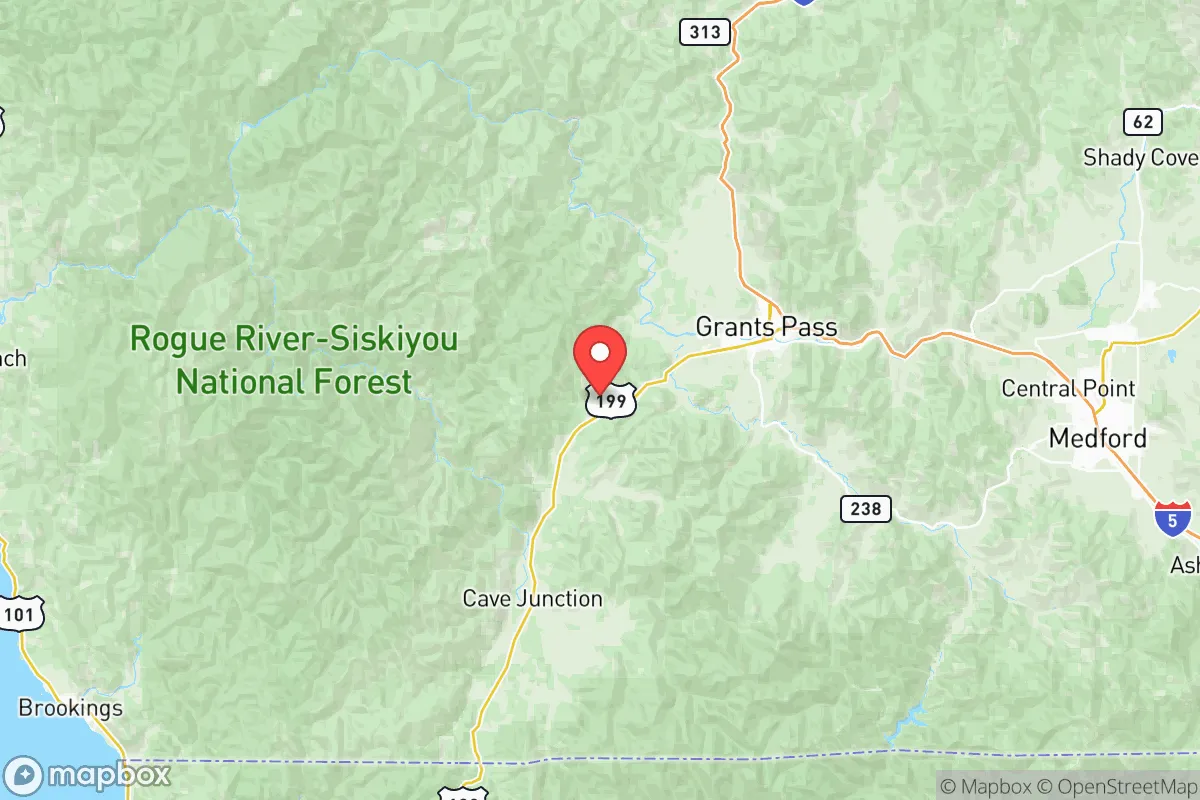
South of Grants Pass, the communities of Rogue River (pop. ~2,200) and Merlin (unincorporated) offer a quieter, more rural feel while still being within a 15-minute drive of the county’s major services. Rogue River has a small historic downtown, a popular annual Rooster Crow festival, and a strong sense of local identity, while Merlin is a gateway to the Rogue River-Siskiyou National Forest and the popular Hellgate Canyon rafting stretch. Further south, the Illinois Valley—including the unincorporated communities of Cave Junction, O’Brien, and Selma—represents the county’s most remote and affordable living. Cave Junction, the valley’s largest settlement with about 2,000 residents, is a former timber and mining hub now known for the Oregon Caves National Monument, a growing cannabis industry, and a high proportion of residents living on well water, septic systems, and often off-grid solar. Homes here can be found for under $250,000, significantly below the county median, but residents face longer drives for groceries, healthcare, and employment—typically 30–45 minutes to Grants Pass.
Cost & lifestyle range
The county’s overall cost of living index of 114 (14% above the national average) masks a wide internal spread. At the high end, Grants Pass and the riverfront neighborhoods along the Rogue command premium prices, with newer subdivisions near the Grants Pass High School area pushing home values above $450,000. At the low end, the Illinois Valley and rural areas east of Grants Pass near Williams and Murphy offer the most affordable land and housing, with many properties lacking natural gas hookups and relying on propane or wood heat. Lifestyle differences are stark: a Grants Pass resident can walk to a farmers market and a hospital; a Cave Junction resident might drive 20 minutes to the nearest gas station and rely on a volunteer fire department. The average commute of 20.8 minutes is pulled down by the many residents who work within their own rural community or remotely, but those commuting to Medford or Ashland face 40–50 minute drives each way.
Josephine County is best suited for people who value personal space, outdoor access, and a slower pace over urban convenience. Families and professionals who need reliable schools, healthcare, and jobs will gravitate toward Grants Pass, while homesteaders, retirees on fixed incomes, and those seeking a low-regulation lifestyle often choose the Illinois Valley or the remote forest-edge properties near Williams and Murphy. The county’s political culture—strongly conservative and skeptical of government oversight—permeates all areas, but manifests differently: in town it means low taxes and minimal zoning enforcement; in the rural pockets it means a live-and-let-live ethos that attracts both libertarians and back-to-the-land types. Anyone moving here should visit both the riverfront and the valley to understand which Josephine County fits their daily reality.

Crime in Josephine County
Crime rates similar to the national median for U.S. locations.
Violent CrimeViolent Crime Analysis
Property CrimeProperty Crime Analysis
Crime Analysis
Josephine County, Oregon, presents a mixed safety picture that demands close attention from potential residents. The county’s overall violent crime rate of 309.1 per 100,000 residents sits notably above the national average, while its property crime rate of 2,123.5 per 100,000 is significantly higher than both state and national benchmarks. These figures, drawn from the most recent FBI Uniform Crime Reporting data, reflect a rural county grappling with the spillover effects of drug trafficking along the I-5 corridor and a justice system whose progressive policies have drawn criticism for prioritizing offender rehabilitation over public safety.
Crime in context
To understand Josephine County’s crime landscape, it helps to compare it directly to Oregon’s statewide averages and national norms. The county’s violent crime rate of 309.1 per 100K is roughly 20% higher than the U.S. average of approximately 260 per 100K, and well above Oregon’s statewide rate of about 280 per 100K. Property crime is the more glaring concern: at 2,123.5 per 100K, it exceeds the national average of roughly 1,950 per 100K and is nearly 40% higher than Oregon’s statewide property crime rate of about 1,520 per 100K. Much of this property crime is concentrated in the county’s largest city, Grants Pass, which serves as the commercial hub and sees higher rates of theft, vehicle break-ins, and burglary. Smaller communities like Cave Junction and Williams report lower overall crime numbers but are not immune to property offenses, particularly theft from vehicles parked at trailheads and rural outbuildings.
What residents experience
The lived reality for Josephine County residents is shaped by a justice system that many locals describe as lenient. The county’s District Attorney’s office, along with judges in the Josephine County Circuit Court, have adopted progressive charging and sentencing policies that prioritize diversion programs and reduced incarceration for non-violent offenders. While intended to reduce recidivism, critics argue these policies have a direct, negative impact on public safety: repeat property offenders cycle through the system quickly, often receiving probation or short jail terms, and return to the same neighborhoods to commit new crimes. Residents in Grants Pass’s Redwood and Fruitdale neighborhoods report frequent car prowls and package thefts, with many feeling that reporting crime yields little follow-through. The situation is compounded by the county’s proximity to the Oregon-California border, which makes it a transit point for methamphetamine and fentanyl trafficking. Drug-related property crime—thefts to fund addiction—is a daily concern, and the progressive approach to prosecution has not stemmed the tide. For victims, the experience is often one of frustration: stolen property is rarely recovered, and offenders face minimal consequences, eroding trust in the justice system.
Neighborhood-level variation
Safety in Josephine County varies significantly by location. Grants Pass, the county seat and largest city, concentrates the majority of crime, particularly in its downtown core and along the NE 6th Street corridor, where vagrancy and drug activity are visible. The city’s homeless population, estimated at several hundred, contributes to property crime rates in adjacent residential areas. In contrast, the unincorporated community of Murphy and the rural areas around Selma report far fewer incidents, though residents there face longer emergency response times. Rogue River, a small city in the county’s northern reaches, offers a middle ground: lower violent crime than Grants Pass but still elevated property crime compared to the state average. For those considering a move, the safest bets are the outlying rural subdivisions and the Williams area, where community watch programs are active and the justice system’s shortcomings are less acutely felt. However, no part of Josephine County is entirely insulated from the broader trends of drug-related crime and a justice system that many believe prioritizes offender outcomes over victim justice.
* Values derived from national, state, county, city and local statistics and may differ in a specific area. Last updated: 2026-06-01T12:03:19.000Z
Narrative content on this page is AI-generated and may contain mistakes. Verify any details that matter before acting on them.
ReloMaps may earn a commission from affiliate links at no extra cost to you.

