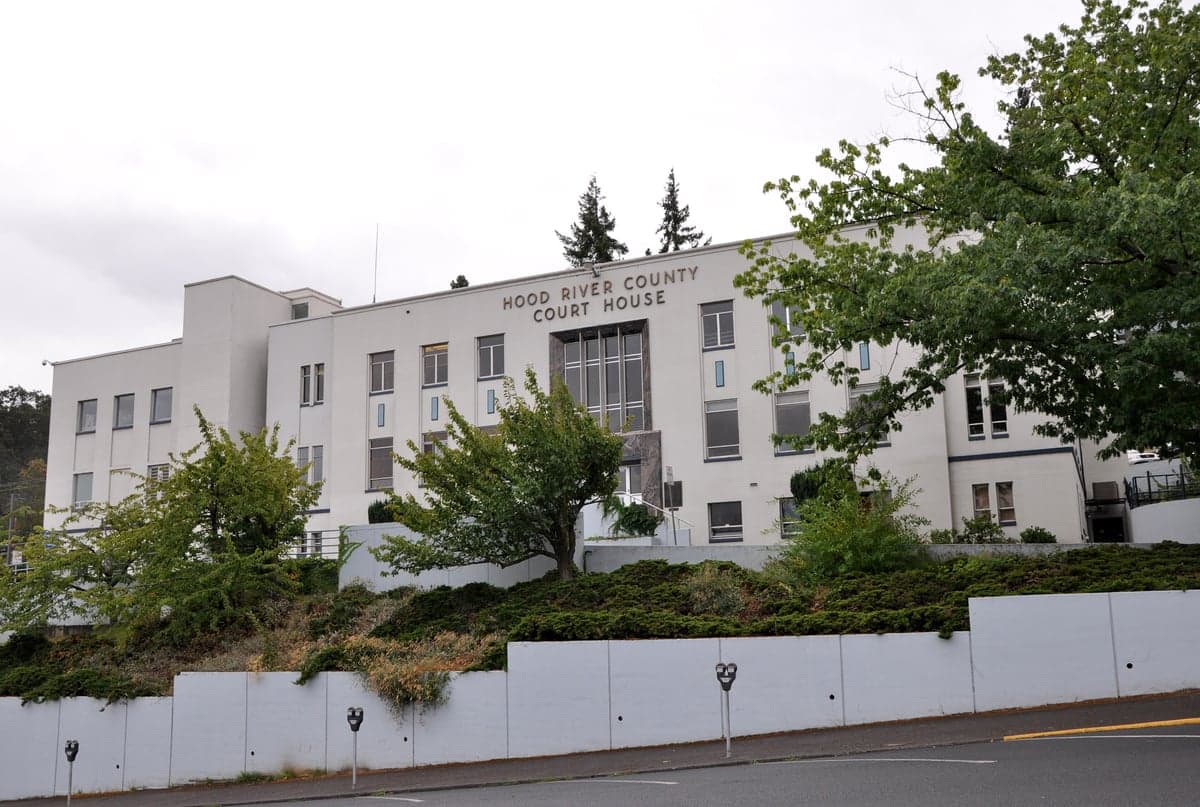
Photo: Wikipedia
Political ClimatePolitical Climate in Hood River County
Showing district-level results — no local-only data available.
Local Political AnalysisPolitical Analysis of Hood River County
Hood River County is a deep-blue stronghold in Oregon, with a Cook PVI of D+24 that makes it significantly more Democratic than the state as a whole (D+8). This isn't a recent shift—the county has voted Democratic in every presidential election since 1988, but the margin has widened considerably over the past two decades. In 2024, Kamala Harris carried the county by roughly 35 points, reflecting a steady leftward drift driven by an influx of Portland-area transplants and a growing Latino population that leans heavily Democratic. The political center of gravity is firmly in Hood River city, where progressive politics dominate, but the county's geography tells a more nuanced story.
How it compares
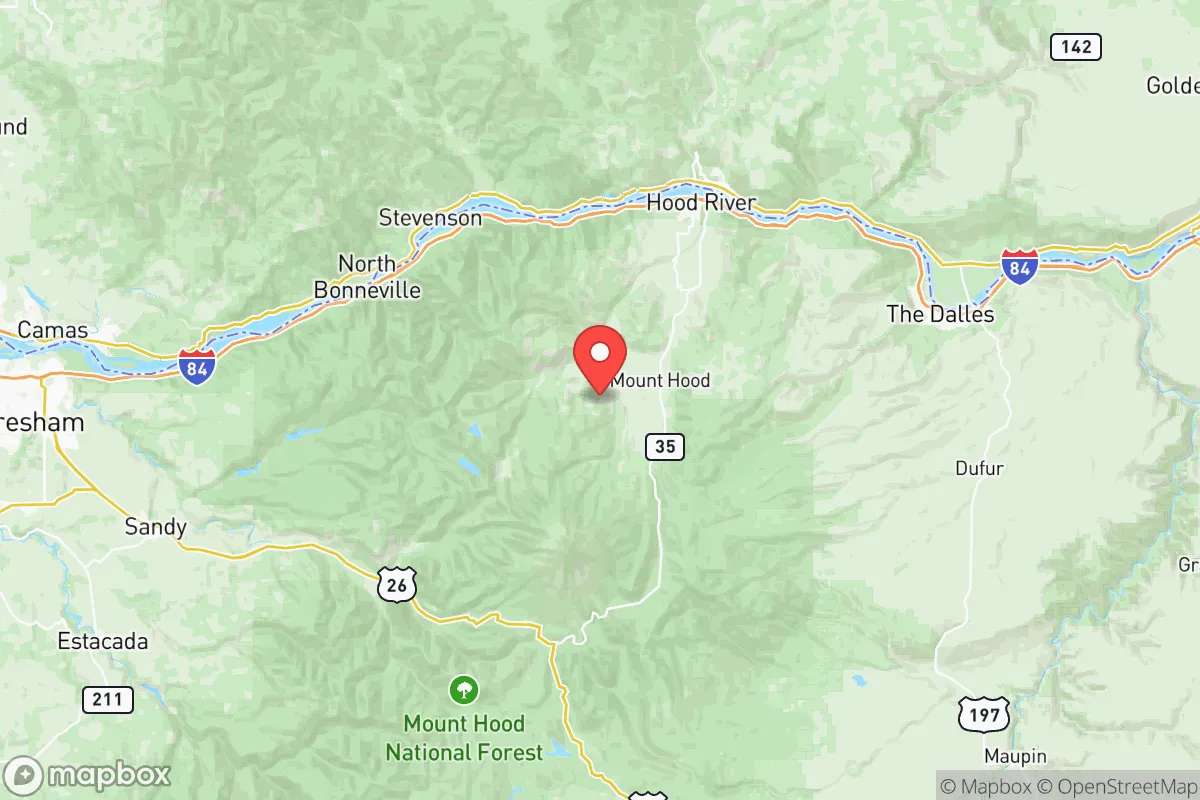
Hood River County's D+24 rating places it among Oregon's most liberal counties, alongside Multnomah (Portland) and Benton (Corvallis). The state's D+8 overall PVI masks a deep urban-rural divide: while Hood River city and the unincorporated communities of Odell and Pine Grove vote reliably blue, the eastern half of the county—particularly the towns of Parkdale and Mount Hood—leans noticeably redder. In the 2022 gubernatorial race, Democrat Tina Kotek won Hood River County with 62% of the vote, but in Parkdale precincts, Republican Christine Drazan pulled 55%. These swing precincts are concentrated in the agricultural and timber-dependent areas east of the Hood River Valley, where voters are more skeptical of land-use regulations and environmental policies that dominate county commission debates. Compared to neighboring Wasco County (D+5) or Skamania County, WA (R+4), Hood River County is an outlier—its liberal tilt is amplified by the county's role as a windsurfing and tourism hub, which attracts a younger, wealthier, and more progressive demographic than the surrounding Columbia Gorge region.
What this means for residents
For liberal residents, the D+24 lean means their values are reflected in local governance: the county commission has a Democratic majority, the school board is progressive-leaning, and policies like the county's 2023 climate action plan and strict short-term rental regulations pass easily. Conservative residents, however, aren't voiceless—they hold sway in the county's rural precincts and have successfully blocked some zoning changes in the Fruit Loop area. The practical effect is a constant tension at county commission meetings, where debates over housing density, farmworker housing, and forest management often split along geographic lines. Property taxes remain moderate (around $11 per $1,000 of assessed value), but liberal residents push for higher spending on public transit and conservation, while conservative residents prioritize road maintenance and fire protection. The county's Democratic lean also means federal and state grants flow more readily for environmental projects, like the 2024 Hood River Watershed restoration, but it can feel isolating for conservatives who see their state and local representatives as out of step with their values.
Culturally, the political divide manifests in everyday life. Hood River city's downtown is a hub of organic grocery stores, craft breweries, and Tesla charging stations, while Parkdale's main street feels like a working-class timber town. The county's policy distinctions are most visible in land use: Hood River County has some of Oregon's strictest regulations on vacation rentals and farmworker housing, a direct result of its progressive majority. For newcomers, the political climate means you'll find strong community support for environmental causes and social services, but you'll also encounter a vocal minority pushing back against what they see as overreach. The trajectory is clear—the county will likely stay D+24 or move further left as Portland-area migration continues—but the internal friction between the valley's liberal core and its rural conservative edges keeps local politics lively and unpredictable.

State Political ClimatePolitical Climate in Oregon
State Political AnalysisPolitical Environment in the State
Oregon is a solidly Democratic state with a Cook PVI of D+8, but that number hides a deeply fractured political landscape. The state has shifted leftward over the past 20 years, driven by explosive growth in the Portland metro area and the Willamette Valley, while rural and eastern counties have become more Republican and more alienated. A relocator should understand that Oregon is not a monolith—it’s a state where a Portland progressive and a Burns rancher live under the same flag but in vastly different political realities.
Urban vs. rural divide
The political map of Oregon is a story of two worlds. The Portland metro area—Multnomah, Washington, and Clackamas counties—generates roughly half the state’s population and votes overwhelmingly Democratic. Multnomah County alone gave Joe Biden 80% of the vote in 2020. The Willamette Valley cities of Eugene and Salem are also reliably blue, with Eugene’s Lane County trending left as the University of Oregon expands. Meanwhile, the rest of the state is a sea of red. Central Oregon’s Deschutes County (Bend) has been a notable swing area, flipping from red to purple as Californians and out-of-staters move in, but it still leans slightly Republican in local races. Eastern Oregon—places like Baker City, Pendleton, and Ontario—votes 70-80% Republican. The Rogue Valley (Medford, Ashland) is split: Ashland is a liberal college town, while Medford and Grants Pass are conservative strongholds. The coastal counties, like Lincoln County (Newport), are more mixed, often voting Democratic but with a libertarian streak on land-use and fishing issues.
Policy environment
Oregon’s policy environment is shaped by its Democratic trifecta (governor, House, Senate) and a strong initiative system that lets voters bypass the legislature. The state has no sales tax, which conservatives appreciate, but it has high personal income taxes (top rate 9.9%) and property taxes that vary widely by county. The regulatory posture is among the most aggressive in the West: strict land-use laws (Urban Growth Boundaries), a tight rental market with statewide rent control (capped at 7%+CPI annually), and a ban on self-serve gas (though that’s slowly changing). Education policy is progressive: Oregon has a “sanctuary” law for undocumented students, and Portland Public Schools has been a battleground over curriculum and parental rights. Healthcare is heavily regulated, with a state-run insurance exchange and a Medicaid expansion that covers about 1 in 4 Oregonians. Election laws are among the most accessible in the nation: automatic voter registration, same-day registration, and universal vote-by-mail (since 1998). Ballot drop boxes are everywhere, and turnout routinely tops 75% in presidential years.
Recent policy direction
Over the past five years, Oregon has moved decisively left on several fronts, but with notable pushback. On gun and self-defense law, Measure 114 (passed in 2022, but tied up in court) would require permits and ban magazines over 10 rounds—a major flashpoint for conservatives. On parental and education rights, the 2023 “Parents’ Bill of Rights” (SB 3) was watered down after opposition from teachers’ unions, leaving many conservative families frustrated. On speech and privacy, Oregon has a strong shield law for journalists and a new data privacy act (SB 619, 2023) that gives residents control over their personal data. On medical and bodily autonomy, Oregon is a leader: it was the first state to legalize physician-assisted suicide (1994), has no parental consent requirement for abortion, and in 2023 passed a law protecting gender-affirming care for minors. On property rights, the state’s land-use system remains a sore point for rural landowners, who face strict limits on development. On taxation, a 2023 corporate tax hike (Measure 118) was defeated, but the state’s top marginal income tax rate remains high. On voting and ballot access, Oregon has no voter ID law, which conservatives see as a vulnerability, but the system is widely trusted by both parties.
Civil unrest & political movements
Oregon has a long history of political activism, from the 2020 Portland protests (which saw nightly clashes between left-wing demonstrators and federal agents) to the 2016 Malheur National Wildlife Refuge occupation by armed anti-government activists. The Portland protests of 2020 were a national flashpoint, with the city becoming a symbol of left-wing militancy and police reform debates. Since then, the energy has cooled but not vanished: antifa and far-right groups like the Proud Boys still clash occasionally. Immigration politics are tense: Oregon is a “sanctuary state” (since 1987), and Portland has a “safe harbor” policy that limits cooperation with ICE. In rural areas, there’s a strong secessionist movement—the “Greater Idaho” proposal, which would move 13 eastern Oregon counties into Idaho. It’s mostly symbolic, but it reflects deep alienation. Election integrity controversies are muted compared to swing states, but some rural counties have passed resolutions calling for hand-counting ballots. A new resident in Portland will see frequent protests downtown; in rural Oregon, you’ll see “Trump 2024” flags and “Don’t California My Oregon” bumper stickers.
Projection
Over the next 5-10 years, Oregon will likely continue its leftward drift in the metro areas while rural counties become more Republican and more vocal. In-migration from California and other blue states—which slowed after 2020 but hasn’t stopped—will keep Portland, Bend, and the Willamette Valley growing and voting Democratic. The “Greater Idaho” movement will gain more traction as a protest vote but won’t succeed without a constitutional amendment. The biggest wildcard is housing: if the state can’t build enough homes, the cost of living will push out moderate and conservative families, accelerating the partisan sorting. A relocator moving in now should expect a state where the political center is hollowing out, where Portland and rural Oregon speak different languages, and where the initiative system will continue to produce high-stakes ballot measures on taxes, guns, and education every two years.
Bottom line for a new resident: If you’re conservative, you’ll find like-minded communities in eastern Oregon, the Rogue Valley, and parts of central Oregon, but you’ll be living under a state government that is increasingly hostile to your values on guns, taxes, and education. If you’re liberal, you’ll feel at home in Portland, Eugene, or Ashland, but you’ll pay high taxes and deal with a housing crisis. The key is to pick your county carefully—Oregon is a state of islands, not a single political ocean.
* Values derived from national, state, county, city and local statistics and may differ in a specific area. Last updated: 2026-08-18T17:19:45.000Z
Narrative content on this page is AI-generated and may contain mistakes. Verify any details that matter before acting on them.
ReloMaps may earn a commission from affiliate links at no extra cost to you.

