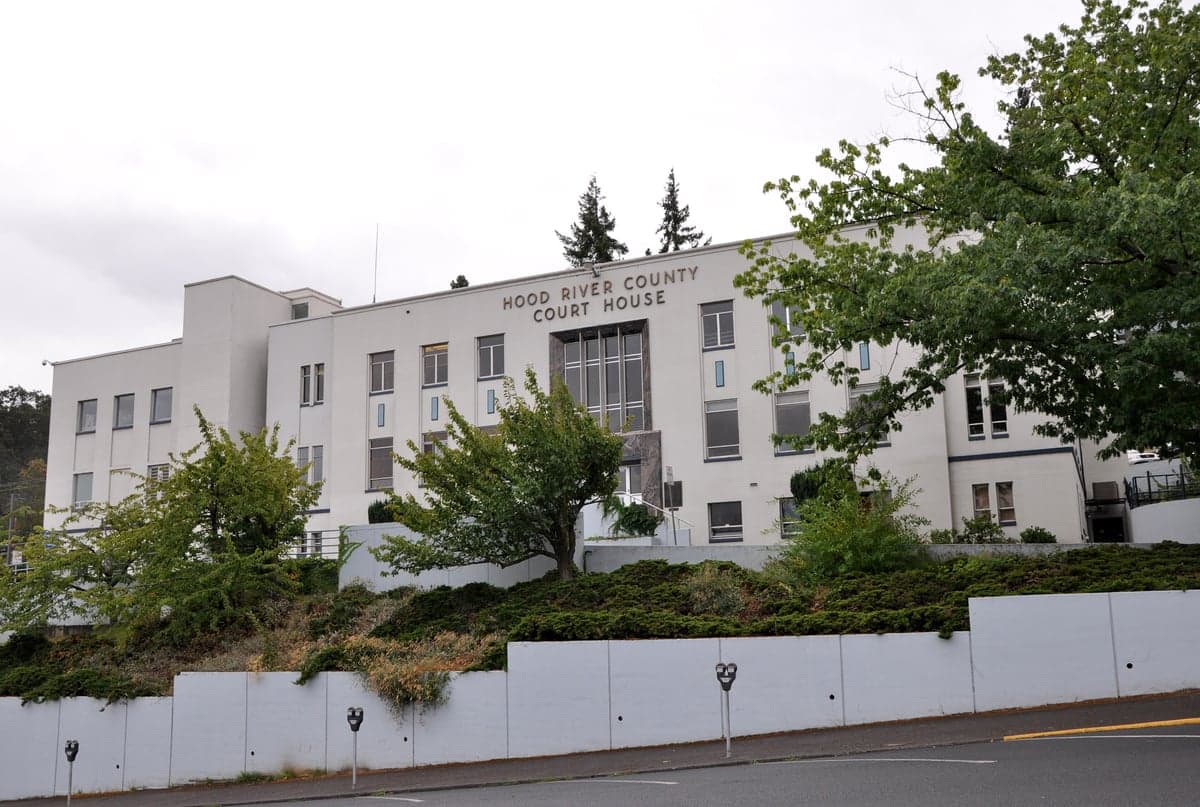
Photo: Wikipedia
Personal Sovereignty in Hood River County
Viable for self-reliance. Generally workable, though some barriers may limit total independence.
What does Personal Sovereignty tell us?
Personal Sovereignty measures your capacity for self-reliance and independence with minimal government friction. Higher scores mean fewer barriers between you and the way you want to live... but it assumes you have the space you need and good neighbors.
What does this tell us?
Personal Sovereignty measures your capacity for self-reliance and independence with minimal government friction. Higher scores mean fewer barriers between you and the way you want to live... but it assumes you have the space you need and good neighbors.
State Policy
Energy independence: Importer (35% of energy produced in-state)
Personal Liberty
Homesteading

Personal Liberty Analysis
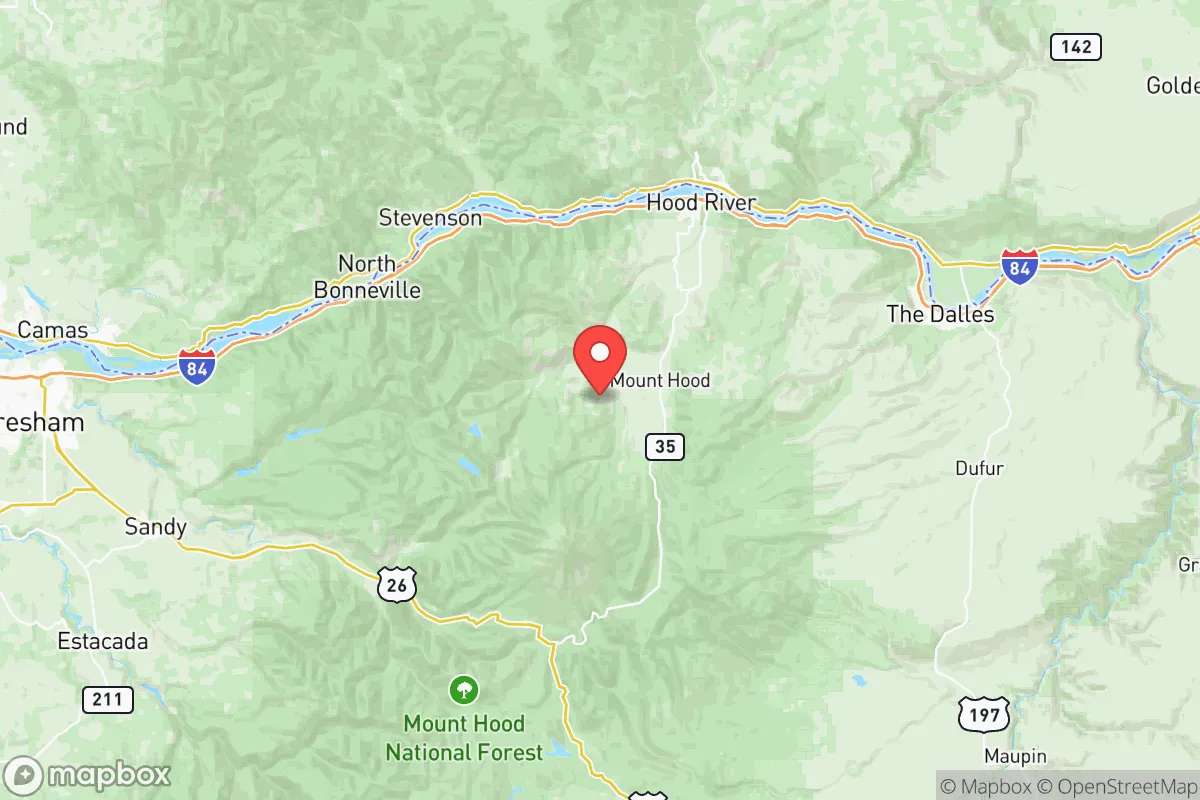
Hood River County presents a nuanced personal sovereignty environment where Oregon’s progressive state-level policies intersect with a rural, resource-based local culture, creating a landscape that demands careful navigation for those prioritizing autonomy. The county’s 22,000 residents are spread across the Columbia River Gorge, from the liberal-leaning tourist hub of Hood River city to the more conservative, agricultural communities of Odell, Parkdale, and the remote reaches of the Upper Hood River Valley. While the state imposes significant constraints on self-defense, property rights, and tax flexibility, the county itself offers pockets of genuine self-reliance opportunity, particularly for those willing to live outside the city limits and engage with the region’s farming and timber heritage.
Tax burden and regulatory posture in Hood River County
Oregon’s lack of a state sales tax is a clear benefit for personal financial autonomy, but the trade-off is a high state income tax—top marginal rates reach 9.9%—and property taxes that are among the highest in the nation relative to home values. Hood River County’s effective property tax rate hovers around 1.1% of assessed value, which on a $600,000 median home translates to roughly $6,600 annually. The regulatory posture is decidedly heavy-handed at the state level: Oregon’s land-use laws, particularly the Urban Growth Boundary (UGB) system, strictly limit where and how you can build. In Hood River County, this means that building a new home on rural land often requires a lengthy, expensive conditional use permit process, especially in the scenic Columbia River Gorge National Scenic Area, which covers much of the county. The city of Hood River itself is the most regulated, with strict short-term rental caps and a tight housing market driven by tourism and second-home demand. In contrast, the unincorporated areas around Odell and Pine Grove offer slightly more flexibility for agricultural and residential uses, though state-level environmental and land-use rules still apply. The county’s regulatory environment is best described as moderate-to-high, with the state and scenic area overlays adding layers that a freedom-minded individual must account for before purchasing land.
Self-defense and gun law specifics in Hood River County
Oregon’s gun laws are among the most restrictive in the Western U.S., and Hood River County is not exempt. The state requires a permit to purchase a handgun, universal background checks on all firearm transfers (including private sales), and a 10-day waiting period for handgun purchases. In 2022, voters passed Measure 114, which would have required a permit to purchase any firearm and banned magazines over 10 rounds, though it is currently blocked by court injunction. Open carry is legal without a permit in most of the county, but it is effectively restricted in the city of Hood River, which has local ordinances prohibiting firearms in city parks and public buildings. Concealed carry requires a license, and Hood River County’s sheriff’s office processes these applications with a typical turnaround of 30-45 days. The county is not a “Second Amendment sanctuary,” but the sheriff’s office has publicly stated it will not enforce any state gun law it deems unconstitutional, a stance that provides some local buffer. For self-defense-minded individuals, the practical reality is that carrying a firearm for personal protection is legal but heavily regulated, and the political climate in the city of Hood River is distinctly anti-gun. The more rural areas around Mount Hood and Parkdale have a stronger gun culture, with fewer restrictions on shooting on private land, but state law still applies. Anyone moving here should budget for the permit process and be prepared for ongoing legal uncertainty around magazine capacity and permit-to-purchase requirements.
Self-reliance and homesteading viability in Hood River County
Hood River County offers genuine homesteading potential, but it is constrained by Oregon’s land-use laws and the high cost of land. Minimum lot sizes in the county’s Exclusive Farm Use (EFU) zones are typically 80 acres, though smaller parcels exist in Rural Residential zones with minimums of 5 to 10 acres. The Upper Valley around Parkdale and Dee is the most viable for off-grid living, with larger parcels, fewer neighbors, and a more permissive attitude toward alternative structures like yurts and tiny homes, provided they meet building codes. Off-grid feasibility is mixed: the county has no restrictions on rainwater catchment, and solar potential is good (though winter cloud cover reduces output), but connecting to the grid is often required for new construction under state building codes. Septic systems are mandatory, and well drilling is expensive—$15,000 to $30,000 for a deep well in the volcanic basalt. The city of Hood River and its urban growth boundary are essentially closed to homesteading; you will pay a premium for a small lot with no room for livestock or gardens. In contrast, the Hood River Valley floor near Odell and Pine Grove offers a middle ground: 1-5 acre parcels with agricultural zoning that allows chickens, goats, and small-scale farming, but with higher property taxes and closer neighbors. The county’s zoning code explicitly allows accessory dwelling units (ADUs) on residential lots, which can be used for rental income or multigenerational living. For the serious homesteader, the best bet is to look at properties outside the scenic area boundary, where building permits are less onerous, and to budget for the legal and permitting costs that Oregon’s system demands.
Personal liberties in Hood River County: parental rights, medical autonomy, speech, and property
Oregon’s state-level policies significantly shape personal liberties in Hood River County. Parental rights are a contentious issue: Oregon has some of the strongest “shield” laws for minors seeking gender-affirming care without parental consent, and the state’s compulsory vaccination laws for school attendance are strict, with no personal belief exemption. This creates a tension for families who prioritize medical autonomy, though the county’s school districts—Hood River County School District and the smaller Parkdale-based district—have not adopted local policies that go beyond state mandates. Medical autonomy more broadly is limited: Oregon has legalized assisted suicide and recreational marijuana, but it also has a state-run health insurance exchange and mandates that all residents have health coverage. Free speech is protected under the Oregon Constitution, which has stronger protections than the U.S. Constitution, but the city of Hood River has enacted “hate speech” resolutions that, while largely symbolic, signal a local political culture that can be hostile to conservative viewpoints. Property rights are the most constrained liberty: Oregon’s land-use system, upheld by the state Supreme Court, gives the government broad authority to regulate how land is used, including limiting subdivision, restricting building on farmland, and requiring public access to certain private lands. The Columbia River Gorge National Scenic Area adds another layer, with federal oversight of development, signage, and even paint colors on buildings in some zones. For the individual who values maximum personal sovereignty, these constraints are significant, and the county’s political climate in the city of Hood River is decidedly progressive, while the rural areas are more libertarian-leaning but still subject to state law.
Overall, Hood River County offers a mixed sovereignty environment: strong state-level constraints on self-defense, property use, and medical autonomy, but genuine opportunities for self-reliance in the rural Upper Valley and agricultural zones. Compared to areas like rural Idaho or eastern Washington, the regulatory burden is higher and the gun laws are more restrictive. However, for someone who values the natural beauty, agricultural lifestyle, and community of the Gorge, and is willing to navigate Oregon’s legal framework, the county provides a viable, if not maximally free, place to live. The key is to choose your location carefully—Parkdale and Dee offer the most autonomy, while Hood River city and the scenic area zones demand the most compromise. For the freedom-minded individual, Hood River County is a place where you can carve out a self-reliant life, but only if you are prepared to work within—and occasionally push against—a system that prioritizes collective regulation over individual liberty.

* Values derived from national, state, county, city and local statistics and may differ in a specific area. Last updated: 2026-08-18T17:19:45.000Z
Narrative content on this page is AI-generated and may contain mistakes. Verify any details that matter before acting on them.
ReloMaps may earn a commission from affiliate links at no extra cost to you.

