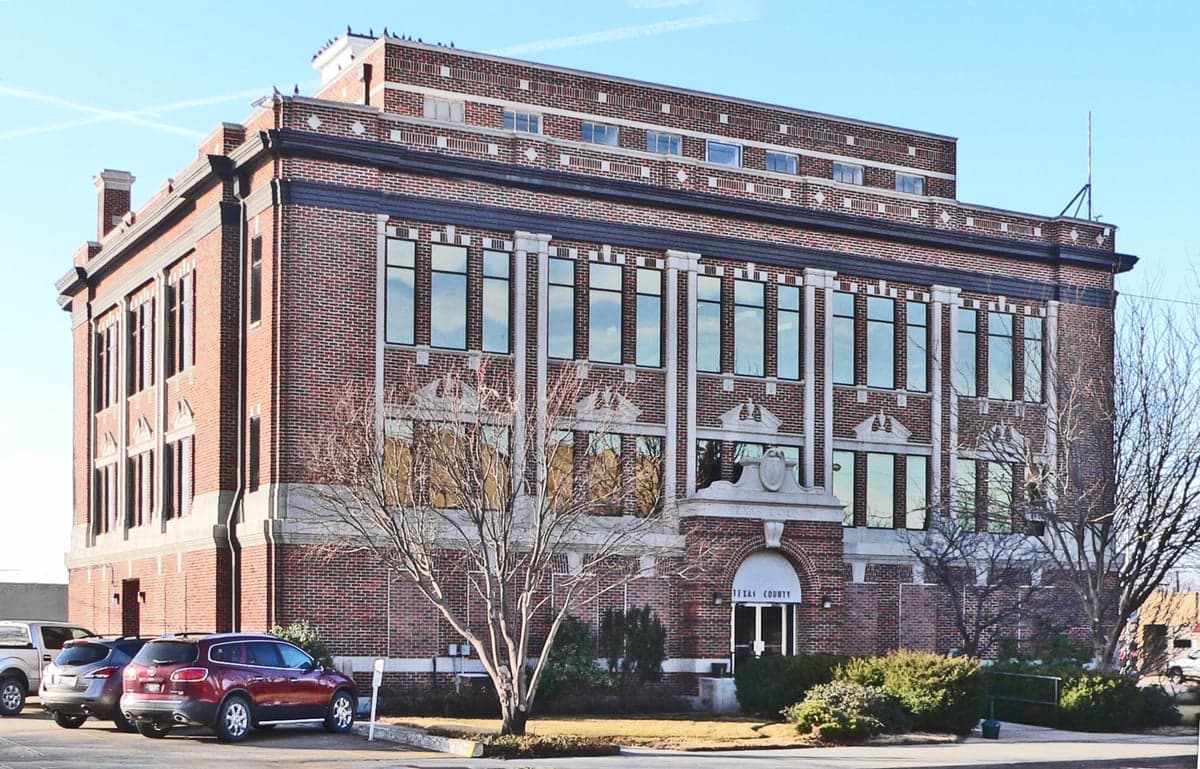
Photo: Wikipedia
Personal Sovereignty in Texas County
Viable for self-reliance. Generally workable, though some barriers may limit total independence.
What does Personal Sovereignty tell us?
Personal Sovereignty measures your capacity for self-reliance and independence with minimal government friction. Higher scores mean fewer barriers between you and the way you want to live... but it assumes you have the space you need and good neighbors.
What does this tell us?
Personal Sovereignty measures your capacity for self-reliance and independence with minimal government friction. Higher scores mean fewer barriers between you and the way you want to live... but it assumes you have the space you need and good neighbors.
State Policy
Energy independence: Net exporter (180% of energy produced in-state)
Personal Liberty
Homesteading

Personal Liberty Analysis
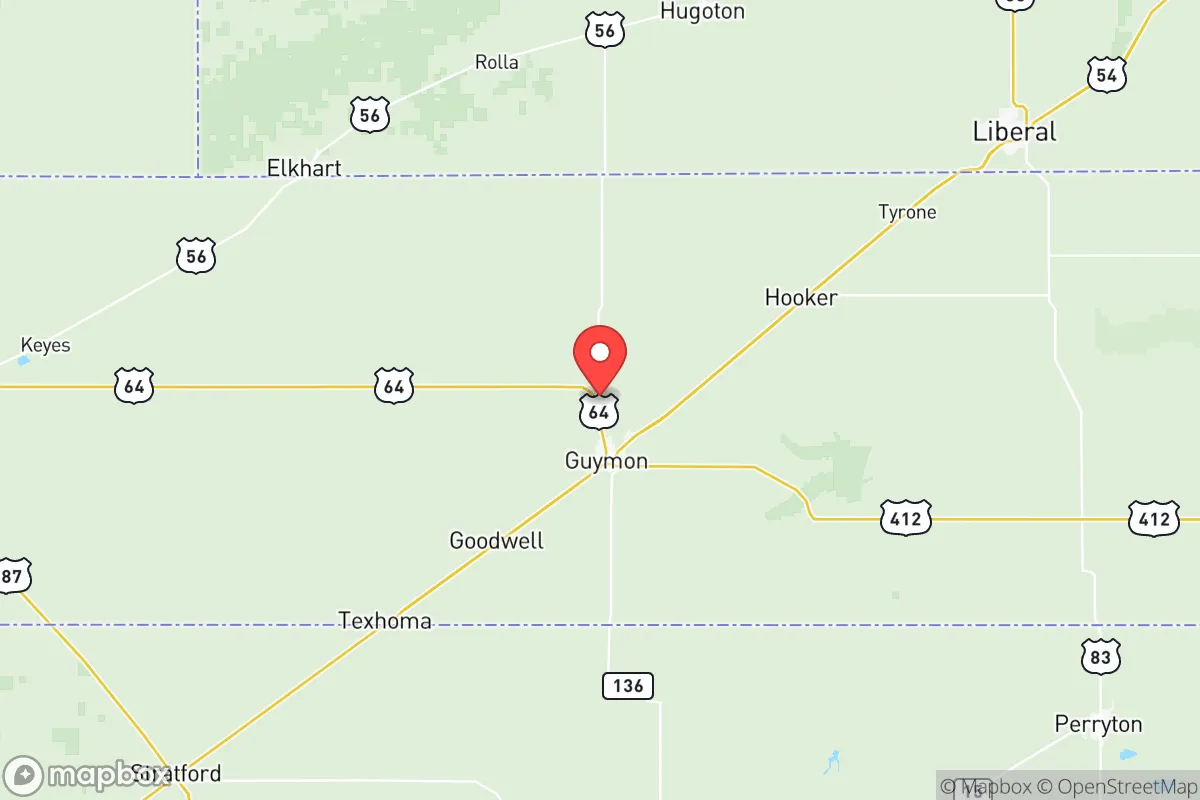
Texas County, Oklahoma, offers a personal sovereignty environment that is among the most permissive in the region, driven by a state-level commitment to limited government, strong self-defense protections, and minimal land-use restrictions. The county's rural character—with its county seat of Guymon and smaller communities like Hooker, Goodwell, and Tyrone—means that residents experience a regulatory posture that is far lighter than in urban or suburban Oklahoma, let alone neighboring states like Colorado or Kansas. For individuals and families prioritizing autonomy, Texas County presents a landscape where the default answer from local government is typically "yes," with few zoning hurdles, no income tax, and a legal framework that explicitly protects personal choice in areas from firearms to medical decisions.
Tax burden and regulatory posture: How Texas County compares to surrounding areas
Oklahoma's state-level tax structure is a major draw for sovereignty-minded relocators, and Texas County benefits directly. There is no state income tax in Oklahoma, a fact that immediately distinguishes it from Kansas (which taxes wages) and Colorado (which has a flat income tax). The state sales tax is 4.5%, and Texas County adds a local rate of roughly 3.5% to 4.5%, depending on the municipality—Guymon's combined rate is about 8.5%, while Hooker and Goodwell are slightly lower. Property taxes are among the lowest in the nation, with an effective rate around 0.85% of assessed value, meaning a $200,000 home carries an annual tax bill of roughly $1,700. Regulatory posture is equally light: Texas County has no county-wide zoning, and most incorporated towns have only basic land-use ordinances. Guymon has a modest zoning code for commercial areas, but residential building permits are straightforward and inexpensive. For comparison, a resident in Tyrone or Hardesty can build a workshop, park an RV, or keep livestock on a standard residential lot without the permitting delays common in more regulated counties. The state's "right-to-farm" law further shields agricultural operations from nuisance lawsuits, reinforcing a hands-off approach that favors individual property use over collective aesthetic standards.
Self-defense and gun law specifics: What the Second Amendment looks like in practice
Oklahoma is a constitutional carry state, meaning that no permit is required to carry a concealed or openly carried firearm for any law-abiding adult 21 or older. Texas County law enforcement, including the Texas County Sheriff's Office in Guymon and the Hooker Police Department, is known for a pro-Second Amendment stance; there are no local ordinances restricting magazine capacity, firearm types, or storage requirements. The state's "Stand Your Ground" law eliminates any duty to retreat before using deadly force in self-defense, and the "Castle Doctrine" extends that protection to vehicles and workplaces. In practice, this means a resident in Goodwell or Tyrone can carry a sidearm while walking down Main Street or while working on their property without fear of legal ambiguity. The county's gun culture is deeply embedded—Guymon hosts regular shooting events at the local range, and firearm sales at shops like Guymon Pawn & Gun are routine. For families, the legal environment is straightforward: there are no red-flag laws, no waiting periods for purchase, and no state-level firearm registry. The only notable restriction is that carrying a firearm into a federal building or a school (without a licensed handgun permit) is prohibited, but this is consistent with national norms.
Self-reliance and homesteading viability: Lot sizes, zoning, and off-grid feasibility
Texas County is one of the most homestead-friendly areas in the Great Plains, thanks to its combination of cheap land, minimal zoning, and a dry climate that reduces regulatory complexity. Unincorporated areas of the county have no building codes, no permit requirements for structures under 200 square feet, and no restrictions on rainwater collection or composting toilets. A typical 5-acre parcel near Hardesty or Eva can be purchased for $15,000 to $30,000, while a 1-acre lot in the Guymon city limits might run $10,000 to $20,000. In Guymon proper, the city requires a building permit for new homes and major additions, but inspections are limited to electrical and plumbing safety—there are no design review boards or homeowner association covenants. Off-grid living is entirely feasible: solar panels are common, and the county's high plains sun provides ample generation potential. Well water is accessible at depths of 100-300 feet, and septic systems are permitted with a simple county health department approval. The town of Hooker allows chickens and goats on residential lots under 1 acre, while Tyrone has no livestock restrictions at all. For families seeking to raise food, the growing season is short (about 160 frost-free days), but the soil in the Cimarron River valley near Guymon is fertile for dryland farming. The main limitation is water rights—Oklahoma follows a "reasonable use" doctrine for groundwater, but large-scale irrigation requires a permit from the Oklahoma Water Resources Board. For a small homestead, however, a domestic well is unrestricted.
Personal liberties: Parental rights, medical autonomy, speech, and property
Oklahoma has been a national leader in codifying parental rights, with a 2024 law that requires school districts to notify parents of any curriculum changes involving sexuality or gender identity and grants parents the right to opt their children out of any instruction they find objectionable. Texas County schools, including Guymon Public Schools and Hooker Public Schools, have adopted these policies, and local school boards are generally responsive to parental concerns. Medical autonomy is similarly protected: Oklahoma has no vaccine mandate for adults, and the state's "Right to Try" law allows terminally ill patients to access experimental treatments without FDA approval. The state also has a broad medical conscience clause that protects healthcare providers who refuse to participate in procedures they find morally objectionable. Free speech is robust, with no state-level hate speech laws and a strong tradition of open public comment at county commission meetings. Property rights are reinforced by Oklahoma's "Private Property Protection Act," which requires the government to pay just compensation for any regulatory taking that reduces property value by more than 20%. In Texas County, this means that a landowner in Goodwell or Tyrone can build a fence, erect a sign, or subdivide their land without fear of retroactive zoning changes. The only notable limitation is that the county enforces state setback requirements for oil and gas wells, but these are standard and predictable.
Overall, Texas County ranks among the most sovereignty-friendly areas in the central United States, offering a combination of low taxes, permissive gun laws, minimal land-use regulation, and strong personal liberty protections that is rare even within Oklahoma. For a family moving from a high-regulation state like California or Colorado, the adjustment is dramatic: no income tax, no permit for concealed carry, no zoning board for a backyard chicken coop, and no school curriculum surprises. The trade-off is that this autonomy comes with limited services—the county's population of roughly 21,000 means fewer healthcare specialists, longer drives to major airports, and a slower pace of life. But for those who value self-reliance over convenience, Texas County delivers a legal and cultural environment where the government's role is deliberately small, and the individual's freedom to make their own choices is the default assumption.

* Values derived from national, state, county, city and local statistics and may differ in a specific area. Last updated: 2026-07-10T06:30:27.000Z
Narrative content on this page is AI-generated and may contain mistakes. Verify any details that matter before acting on them.
ReloMaps may earn a commission from affiliate links at no extra cost to you.

