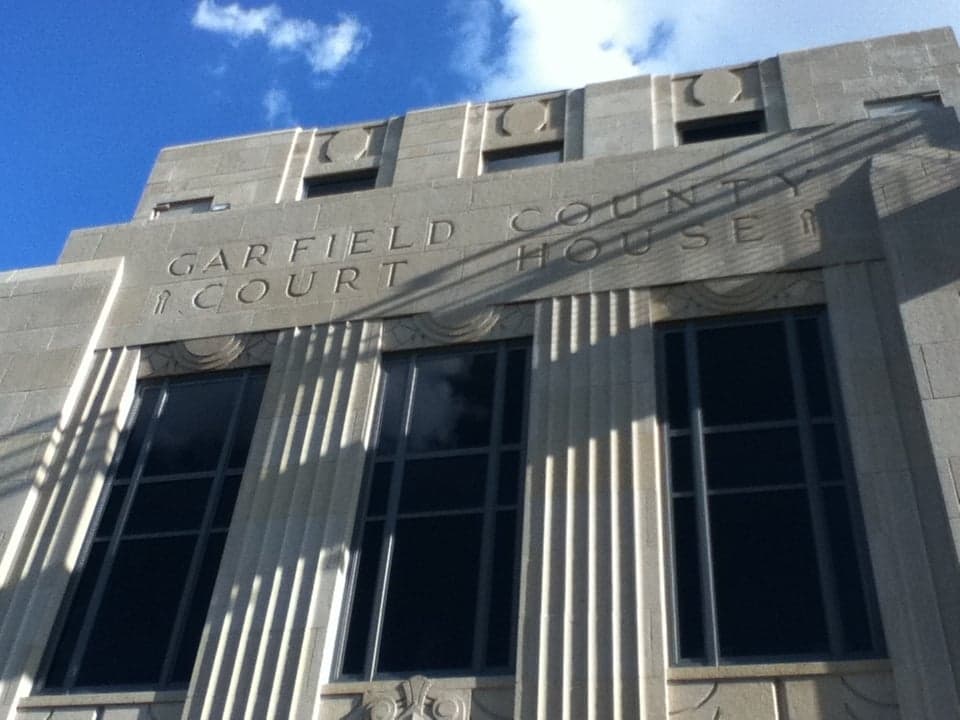
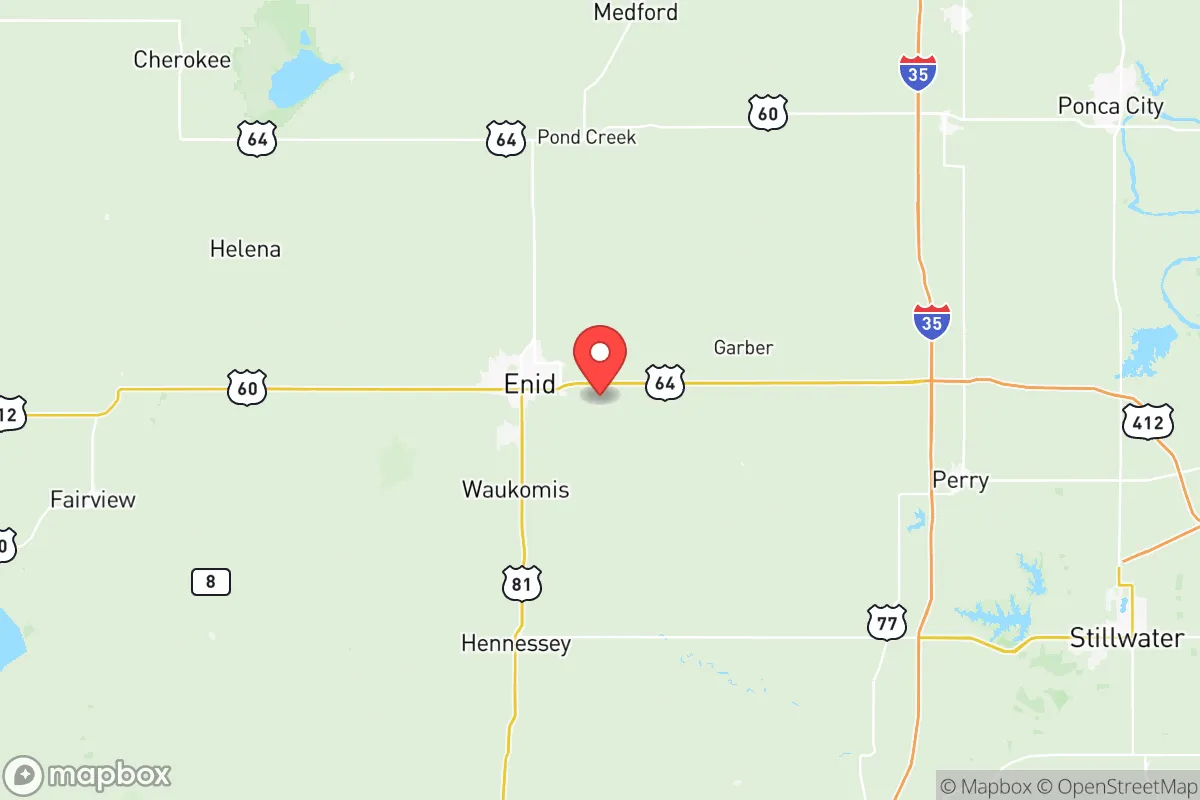
Photo: Wikipedia
Political ClimatePolitical Climate in Garfield County
Showing district-level results — no local-only data available.
Local Political AnalysisPolitical Analysis of Garfield County
Garfield County, Oklahoma, is a deeply conservative stronghold, carrying a Cook Partisan Voting Index (PVI) of R+23, which is five points more Republican than the state of Oklahoma as a whole (R+18). This isn't a recent shift; the county has been reliably red for decades, with the GOP's grip tightening in every presidential election since 2000. The real story here isn't about a partisan flip, but about the subtle internal variations between the county's small towns and the growing influence of its largest city, Enid.
How it compares
While Garfield County is more Republican than the state average, the comparison reveals a fascinating internal geography. The county's deep-red reputation is largely driven by the rural precincts and smaller towns like Waukomis, Drummond, and Covington, where Republican candidates routinely pull 80% or more of the vote. In contrast, the city of Enid itself is a bit more moderate, though still solidly red. The precincts around the university and the downtown core, particularly near the Vance Air Force Base, show a slightly more competitive mix, occasionally swinging toward the Democratic candidate in local races. The key difference from the state level is that Oklahoma's R+18 PVI is buoyed by the deep-blue strongholds of Oklahoma City and Tulsa. Garfield County lacks those urban counterweights, making its conservatism more uniform and less subject to the urban-rural split that defines state politics. In practice, a Republican candidate in Garfield County can expect a 5-8 point higher margin than they would statewide.
What this means for residents
For conservative residents, this political climate means their values are the default in local governance. The county commission, school boards, and city councils in most towns are overwhelmingly Republican, and policy debates tend to focus on how to implement conservative principles, not whether to. For liberal or moderate residents, the reality is more nuanced. While they are a clear minority, they are not invisible. The presence of Vance Air Force Base brings in a transient population from across the country, creating pockets of more diverse political thought, particularly in Enid's newer subdivisions and near the base. However, running for local office as a Democrat is an uphill battle, and social issues often dominate local discourse in ways that can feel isolating for non-conservatives. The practical effect is that political conversations are often assumed to share a common starting point, which can make dissent feel like a breach of social norms rather than a simple difference of opinion.
One cultural distinction that sets Garfield County apart from the rest of Oklahoma is its strong, almost singular, economic and social anchor in Enid. Unlike many rural counties that are losing population, Enid's status as a regional hub for agriculture, energy, and the military keeps the county stable and growing. This creates a political culture that is less about rural decline and more about managing growth and maintaining a conservative way of life. The local GOP is less focused on national culture wars and more on practical issues like keeping property taxes low, supporting the base, and ensuring the local school system (Enid Public Schools) remains strong enough to attract families. The trajectory is clear: Garfield County will remain a Republican bastion, but expect the internal debates to shift from "red vs. blue" to "which kind of red" as Enid continues to grow and diversify its economy.

State Political ClimatePolitical Climate in Oklahoma
State Political AnalysisPolitical Environment in the State
Oklahoma is one of the most reliably Republican states in the country, with a Cook PVI of R+18 that has only deepened over the past two decades. The state hasn't voted for a Democratic presidential candidate since 1964, and since 2000, the GOP has built a supermajority in both chambers of the legislature. What was once a competitive, populist-leaning state—where Democrats held the governor's office as recently as 2010—has shifted decisively rightward, driven by the exodus of rural Democrats to the GOP and the cultural alignment of the state's evangelical and oil-and-gas base with national Republicanism. For a relocator, this means you're moving into a place where conservative governance is the default, not the exception.
Urban vs. rural divide
The political map of Oklahoma is a study in contrasts. Oklahoma City and Tulsa are the two major metros, and both are more moderate than the rest of the state, but they still lean Republican overall. Oklahoma County (Oklahoma City) voted for Trump by about 8 points in 2024, while Tulsa County went for him by roughly 12 points. The real action is in the suburbs and exurbs: Edmond, Norman, and Broken Arrow are reliably red, with Edmond and Broken Arrow often voting 20+ points to the right. Norman, home to the University of Oklahoma, is the most liberal pocket in the state—it's the only city of significant size where Democrats regularly win local races. The rural areas, especially in the Panhandle and the southwest around Lawton and Altus, are deep red, often voting 70-80% Republican. The southeastern corner, around Hugo and Idabel, was historically Democratic but has flipped hard; these counties now vote +30 to +40 R. The only reliably blue counties are Osage County (home to the Osage Nation, which leans Democratic) and Adair County (Cherokee Nation stronghold), but even those are trending redder.
Policy environment
Oklahoma's policy environment is built on low taxes, limited regulation, and a strong cultural conservatism. The state has a flat income tax of 4.75% (down from 5% in 2022), and the legislature is actively debating further cuts to 3.99%. Property taxes are among the lowest in the nation, averaging about 0.9% of home value. Sales taxes are high—state rate is 4.5%, but local add-ons push it to 8-10% in most cities. There is no estate tax. Education policy is a major flashpoint: the state passed the nation's first publicly funded private school voucher program in 2023 (the Oklahoma Parental Choice Tax Credit Act), which provides up to $7,500 per student for private school tuition. Charter schools are plentiful, and homeschooling is lightly regulated. On healthcare, Oklahoma has not expanded Medicaid under the Affordable Care Act (though voters approved a ballot measure in 2020 that forced expansion, which took effect in 2021). Abortion is effectively banned after a 2022 trigger law took effect, with no exceptions for rape or incest. Election laws are moderately restrictive: voter ID is required, and the state purged over 200,000 inactive voters in 2021. Early voting is available for three days, but no-excuse absentee voting was tightened in 2023.
Recent policy direction
The last three years have seen a burst of legislation that signals where the state is headed. Gun and self-defense law: Oklahoma became a permitless carry state in 2019, and in 2023, the legislature passed a bill allowing teachers to carry firearms on campus with minimal training. Parental and education rights: The 2023 "Parents' Bill of Rights" (HB 1440) requires schools to notify parents of any curriculum involving sexuality or gender identity, and the state banned the teaching of "critical race theory" in public schools. Speech and privacy: In 2022, the state passed a law requiring social media platforms to verify the age of users under 18, and in 2024, it banned TikTok on state-owned devices. Medical and bodily autonomy: The abortion ban is total, with no exceptions for rape or incest; the only exception is to save the mother's life. Medical marijuana is legal (since 2018), but recreational use remains illegal, and the legislature has tightened dispensary regulations. Property rights: The state has strong eminent domain protections for landowners, and in 2023, it passed a law prohibiting foreign ownership of agricultural land. Taxation: The flat income tax is being phased down, and the legislature is considering eliminating it entirely by 2030. Voting and ballot access: In 2023, the state banned ranked-choice voting and limited ballot drop boxes to one per county, a move that drew criticism from voting rights groups.
Civil unrest & political movements
Oklahoma has seen its share of political flashpoints, but they tend to be localized rather than widespread. The most visible recent movement was the 2023 teacher walkout, which drew thousands to the state capitol demanding higher pay and more school funding—it was the largest labor protest in state history. On the right, the "Oklahoma Freedom Caucus" has been a vocal force, pushing for further tax cuts, school choice expansion, and restrictions on transgender rights. Immigration politics are less heated than in border states, but in 2024, the legislature passed a bill requiring law enforcement to check the immigration status of anyone arrested for a felony, and the governor sent National Guard troops to the Texas border. There is no sanctuary city movement; Oklahoma City and Tulsa both cooperate with federal immigration enforcement. Election integrity remains a live issue: the 2020 election saw no major fraud cases in Oklahoma, but the legislature has passed multiple bills tightening voter ID and absentee ballot rules. Secession and nullification rhetoric is minimal—Oklahoma is solidly within the national GOP coalition and has no serious separatist movement.
Projection
Over the next 5-10 years, Oklahoma is likely to become even more conservative, but with a growing urban-rural tension. In-migration is modest but steady, with most newcomers coming from California, Texas, and Colorado—many of them retirees or remote workers drawn by low housing costs and low taxes. These newcomers tend to be more moderate than the native population, especially in Oklahoma City and Tulsa, where the tech and energy sectors are growing. However, the rural areas are depopulating, which amplifies the political weight of the suburbs. The flat income tax will likely be eliminated by 2030, and school choice will expand further. The abortion ban is unlikely to be loosened unless the federal landscape changes. Expect continued battles over transgender rights, book bans in schools, and the role of the state in regulating social media. The Democratic Party will remain a non-factor in statewide races, but could win a few legislative seats in Norman and Oklahoma City if the urban vote consolidates.
For a new resident, the bottom line is this: Oklahoma is a place where conservative governance is the norm, and it's getting more conservative every year. If you're a conservative, you'll find a state that aligns with your values on taxes, guns, education, and abortion. If you're a liberal, you'll be in a clear minority, but you'll find like-minded communities in Norman, parts of Oklahoma City's Plaza District, and Tulsa's Kendall-Whittier neighborhood. The practical takeaway is that your vote will have little impact on statewide elections, but local races—especially school board and city council—are where the real action is. The state is stable, affordable, and politically predictable, which is exactly what many relocators are looking for.
* Values derived from national, state, county, city and local statistics and may differ in a specific area. Last updated: 2026-07-15T04:45:26.000Z
Narrative content on this page is AI-generated and may contain mistakes. Verify any details that matter before acting on them.
ReloMaps may earn a commission from affiliate links at no extra cost to you.

