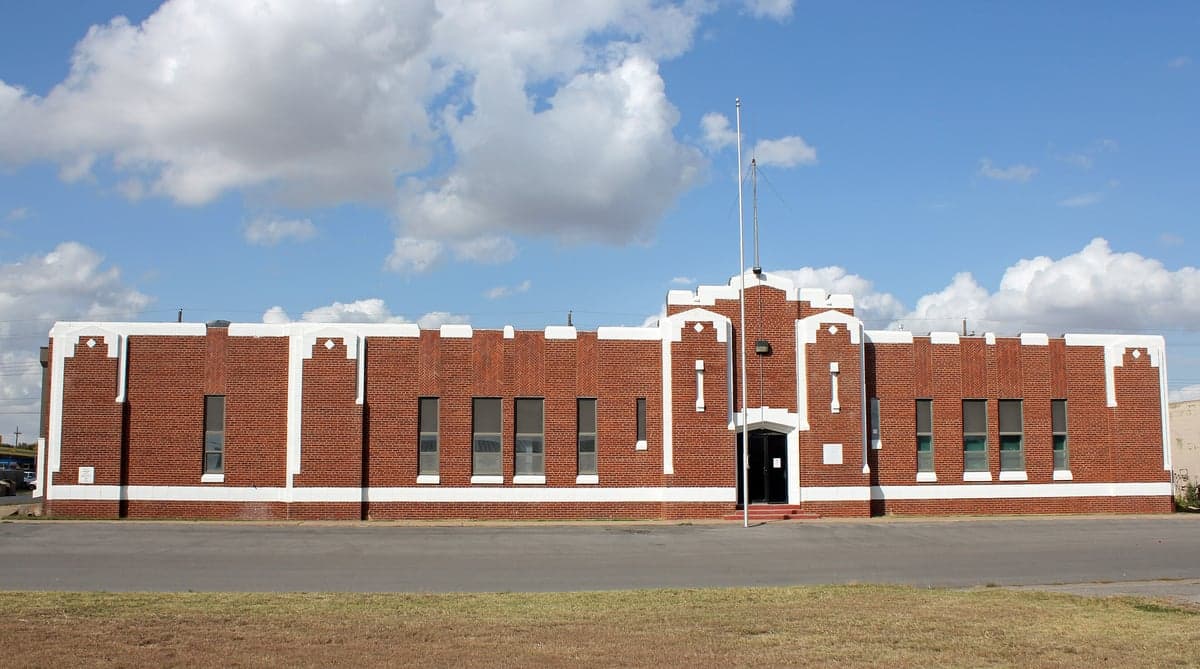
Photo: Wikipedia
Quality of Life in Custer County
A livable area that tracks near national norms for affordability, walkability, and neighborhood health.
What does Quality of Life tell us?
Quality of Life measures an area by evaluating factors like cost of living, nearby amenities, country club access, airport proximity, socioeconomic signals and neighborhood character. For large states, this is a general average — quality of life can vary dramatically between metro areas, suburbs, and rural communities within the same state.
What does this tell us?
Quality of Life measures an area by evaluating factors like cost of living, nearby amenities, country club access, airport proximity, socioeconomic signals and neighborhood character. For large states, this is a general average — quality of life can vary dramatically between metro areas, suburbs, and rural communities within the same state.
Cost of Living
35% below national average
114%
The Real Cost of Living in Custer County for 2026
| Tier | Individual | Family (4) |
|---|---|---|
| Survival | $12k | $23k |
| Comfortable | $34k | $51k |
| Luxury | $104k+ | $161k+ |
| Elite (Top 5%) | $137k+ | $213k+ |
Quality-of-Life Analysis
Custer County, Oklahoma, offers a broad spectrum of quality-of-life options, from the college-town energy of Weatherford to the quiet, agricultural rhythms of its smaller communities and open rural spaces. The county’s character is defined by this mix, drawing professionals and students to its largest hub, while families and retirees often seek the lower costs and slower pace found in its outlying towns and countryside. With a cost of living index of 65—well below the national average of 100—the county provides distinct lifestyle choices that vary primarily in access to amenities and commute times.
Largest town(s) & population centers
Weatherford is the county’s primary population and economic center, home to Southwestern Oklahoma State University (SWOSU) and a population of roughly 12,000. Daily life here revolves around the university calendar, with a walkable downtown featuring local restaurants, coffee shops, and seasonal events like the annual Stafford Air & Space Museum festival. The town offers the most comprehensive set of amenities in the county, including a Walmart Supercenter, a regional hospital (Great Plains Regional Medical Center), and multiple grocery and retail options. Commute times are minimal, with the county average sitting at just over 18 minutes, and many residents live within a short drive of work, school, and shopping. Clinton, straddling the Washita River on the county’s western edge, is the second-largest population center with about 8,500 residents. It serves as a regional trade hub with a historic Route 66 corridor, a strong industrial base (including manufacturing and food processing), and its own hospital and school system. Life in Clinton is more blue-collar and self-contained than in Weatherford, with a focus on local jobs and community events like the annual Route 66 Festival.
Smaller towns & rural pockets
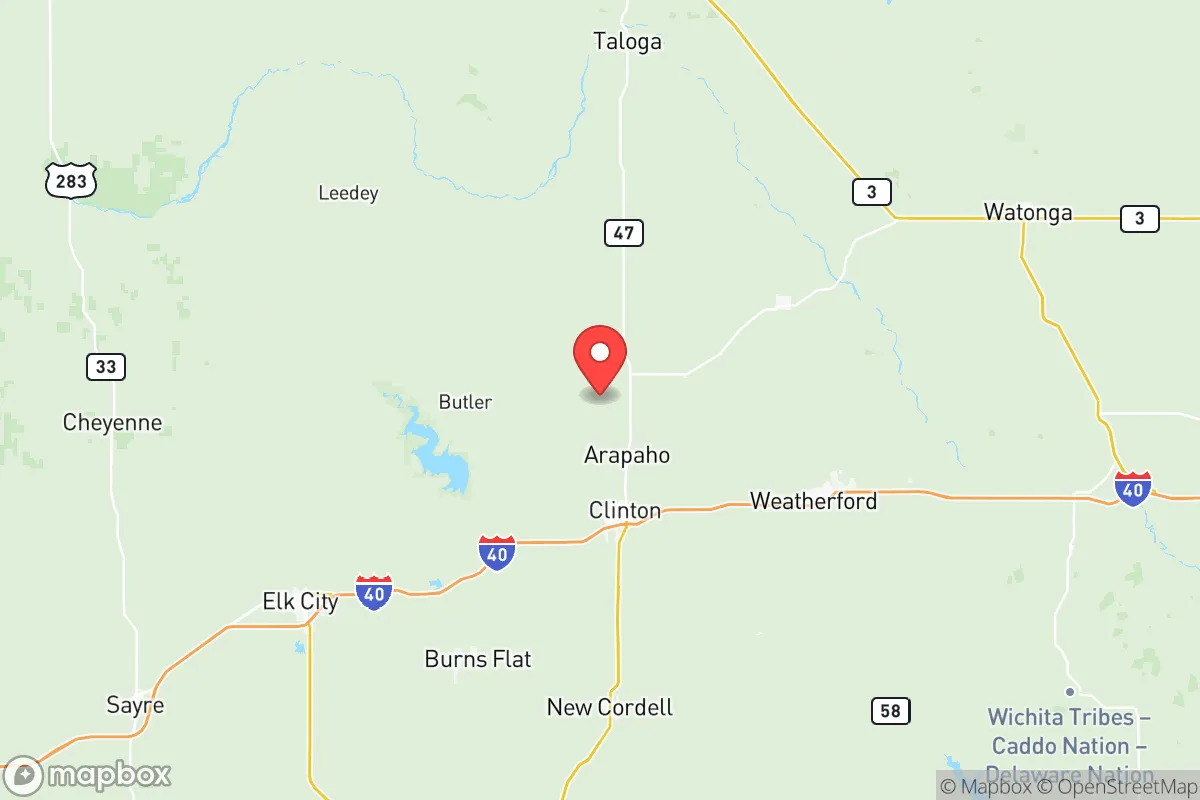
Beyond the two main towns, Custer County contains several smaller communities that offer a quieter, more affordable lifestyle. Arapaho, the county seat, is a town of roughly 700 people with a historic courthouse square and a strong sense of local governance. Life here is slow-paced, with basic services (a grocery store, a bank, a post office) and a strong agricultural identity. Butler and Thomas are even smaller, each with populations under 500, offering little more than a gas station and a grain elevator. These towns are primarily bedroom communities for workers commuting to Weatherford or Clinton, or home to families tied to farming and ranching. The rural pockets between these towns consist of open ranchland and scattered farmsteads, where residents often live on acreage and rely on well water and septic systems. The trade-off for lower home prices and more land is a longer drive for groceries, healthcare, and entertainment—typically 15 to 25 minutes to reach a full-service town.
Cost & lifestyle range
The cost of living across Custer County is uniformly low, but the trade-offs between town and country are clear. In Weatherford and Clinton, the median home value of $177,000 buys a well-maintained three-bedroom home in a neighborhood with sidewalks and utilities, while median rent of $779 covers a modest apartment or rental house near campus or downtown. In Arapaho or Butler, the same price can secure a larger home on a half-acre lot, or a fixer-upper with acreage. At the low end of the cost spectrum, rural properties outside of any town can be found for under $100,000, though buyers should budget for well maintenance and septic repairs. At the higher end, newer subdivisions on the outskirts of Weatherford (e.g., near the SWOSU campus or along Highway 54) feature homes in the $250,000–$350,000 range, offering modern finishes and shorter commutes. The county’s average commute of 18 minutes reflects the ease of getting around, but rural residents may face 25–30 minute drives to reach a grocery store or doctor’s office, while town dwellers can walk or bike to many destinations.
This county is best suited for people who value affordability and space over urban density. College students and university staff thrive in Weatherford’s walkable, amenity-rich environment. Families and retirees who want a low cost of living and a slower pace will find comfort in Arapaho or the rural areas, provided they are comfortable with a longer drive for shopping and healthcare. Blue-collar workers in manufacturing, agriculture, or energy will find Clinton’s industrial base and Route 66 character a natural fit. For anyone seeking a low-stress, low-cost life in western Oklahoma, Custer County offers a clear choice between small-town convenience and genuine rural solitude.

Crime in Custer County
Crime rates similar to the national median for U.S. locations.
Violent CrimeViolent Crime Analysis
Property CrimeProperty Crime Analysis
Crime Analysis
Custer County, Oklahoma, presents a mixed safety profile that demands careful attention from potential residents. With a violent crime rate of 410.4 per 100,000 residents and a property crime rate of 1,835 per 100,000, the county's overall risk is significantly elevated compared to national averages. The most substantial safety concerns are concentrated in the county's largest population centers, particularly Weatherford and Clinton, while smaller communities like Arapaho and Butler generally report fewer incidents.
Crime in context
Custer County's violent crime rate of 410.4 per 100,000 is roughly 15% higher than the national average of approximately 366 per 100,000, and notably above the Oklahoma state average of around 440 per 100,000. The property crime rate of 1,835 per 100,000 is also elevated, exceeding the national average of roughly 1,950 per 100,000 but falling below the Oklahoma state average of approximately 2,400 per 100,000. These figures place Custer County in a moderate-to-high risk category for a rural Oklahoma county. The county falls under the jurisdiction of the Oklahoma District 2 Judicial District, which covers Custer, Beckham, and Washita counties. The district attorney's office, based in Clinton, is responsible for prosecuting all felony crimes in the area. The political leanings of the local judiciary and prosecutorial offices are a critical factor for residents concerned about public safety. In Oklahoma, district attorneys are elected officials, and the current DA for District 2 has a reputation for a conservative, law-and-order approach to prosecution, which is a positive indicator for those prioritizing victim's rights and offender accountability. However, the proximity to larger, more liberal-leaning jurisdictions in Oklahoma City (about 90 miles east) can sometimes influence local legal discourse and sentencing trends, a dynamic that residents should monitor.
What residents experience
The lived experience of safety in Custer County varies dramatically by location. Weatherford, home to Southwestern Oklahoma State University, sees a concentration of property crimes such as theft and vehicle break-ins, particularly near the campus and student housing areas. The city's police department is proactive, but the transient student population creates opportunities for crime. Clinton, the county's other major city, has historically struggled with higher rates of both violent and property crime, driven in part by its location along Interstate 40, which facilitates drug trafficking and transient criminal activity. Residents in Clinton report concerns about burglary and drug-related offenses. In contrast, the smaller towns of Arapaho (the county seat) and Butler offer a markedly different experience. These communities have very low crime rates, where most incidents are minor and often resolved informally. The strong sense of community and neighborhood watch programs in these areas contribute to a much safer daily environment. For families and retirees seeking a quieter, lower-risk lifestyle, these smaller towns are the preferred choice within the county.
Neighborhood-level variation is most pronounced in Weatherford and Clinton. In Weatherford, the areas immediately surrounding the university and the commercial corridors along Main Street see the most police activity. The newer residential subdivisions on the west side of town are generally safer. In Clinton, the older neighborhoods near the downtown core and the areas directly adjacent to the I-40 exits have higher crime concentrations, while the newer developments on the eastern edge of town are considered safer. The county sheriff's office provides law enforcement for the unincorporated areas, which are generally very safe but offer slower response times due to their rural nature. Prospective residents are strongly advised to consult local police department crime maps and speak with a local real estate agent familiar with neighborhood safety trends before committing to a specific area.
* Values derived from national, state, county, city and local statistics and may differ in a specific area. Last updated: 2026-07-26T06:22:10.000Z
Narrative content on this page is AI-generated and may contain mistakes. Verify any details that matter before acting on them.
ReloMaps may earn a commission from affiliate links at no extra cost to you.

