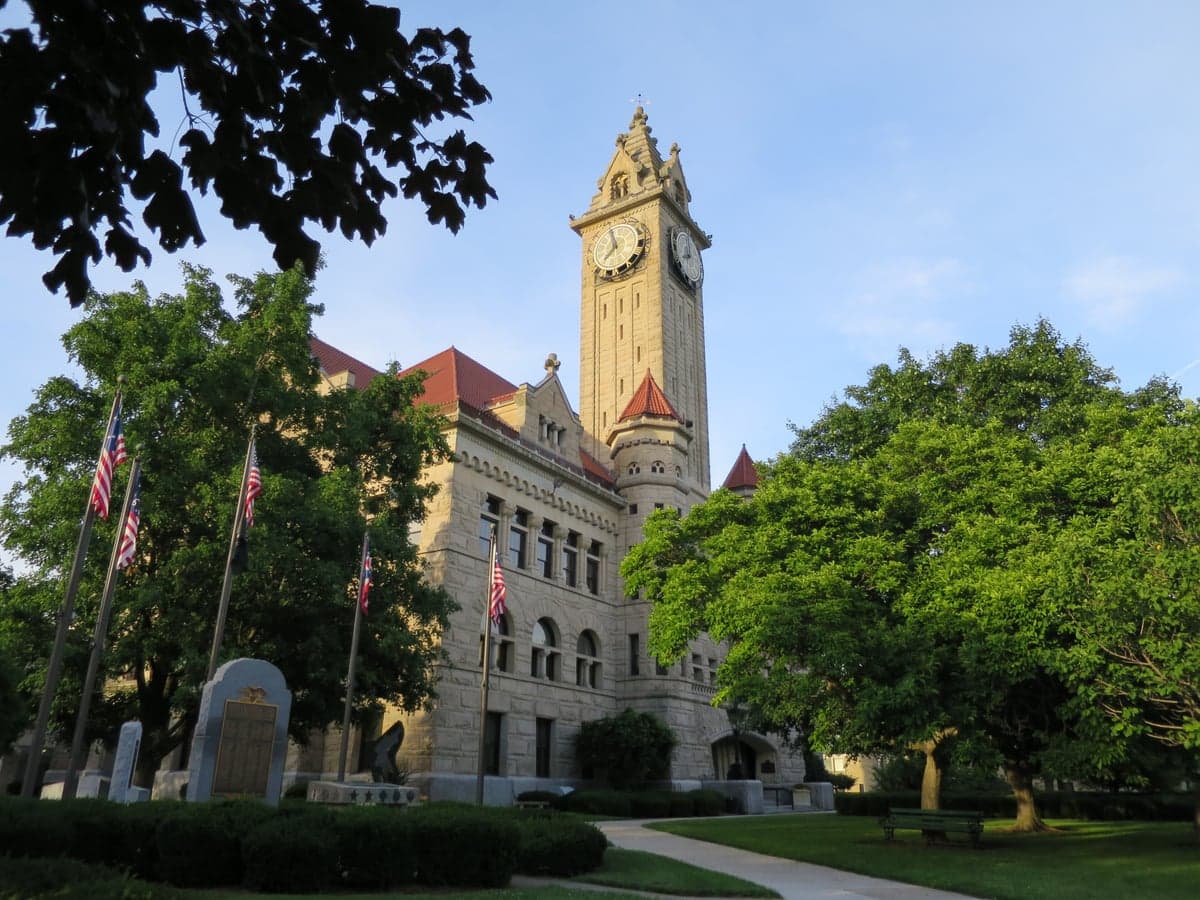
Photo: Wikipedia
Quality of Life in Wood County
A livable area that tracks near national norms for affordability, walkability, and neighborhood health.
What does Quality of Life tell us?
Quality of Life measures an area by evaluating factors like cost of living, nearby amenities, country club access, airport proximity, socioeconomic signals and neighborhood character. For large states, this is a general average — quality of life can vary dramatically between metro areas, suburbs, and rural communities within the same state.
What does this tell us?
Quality of Life measures an area by evaluating factors like cost of living, nearby amenities, country club access, airport proximity, socioeconomic signals and neighborhood character. For large states, this is a general average — quality of life can vary dramatically between metro areas, suburbs, and rural communities within the same state.
Cost of Living
21% below national average
119%
The Real Cost of Living in Wood County for 2026
| Tier | Individual | Family (4) |
|---|---|---|
| Survival | $15k | $29k |
| Comfortable | $42k | $61k |
| Luxury | $132k+ | $205k+ |
| Elite (Top 5%) | $163k+ | $252k+ |
Quality-of-Life Analysis
Wood County, Ohio offers a broad quality-of-life spectrum that spans from the college-town energy of Bowling Green and the suburban convenience of Perrysburg to the quiet, agricultural rhythms of communities like Pemberville and Weston. This diversity attracts a wide range of residents: young professionals and academics drawn to the university corridor, families seeking top-rated schools and commuter-friendly suburbs, and retirees or agricultural workers looking for low-cost, low-density living. The county’s overall cost of living index sits at 79 (21% below the national average), with a median home value of $214,400 and median rent of $950, but these figures mask significant variation between its urbanized north and its more rural southern and eastern townships.
Largest town(s) & population centers
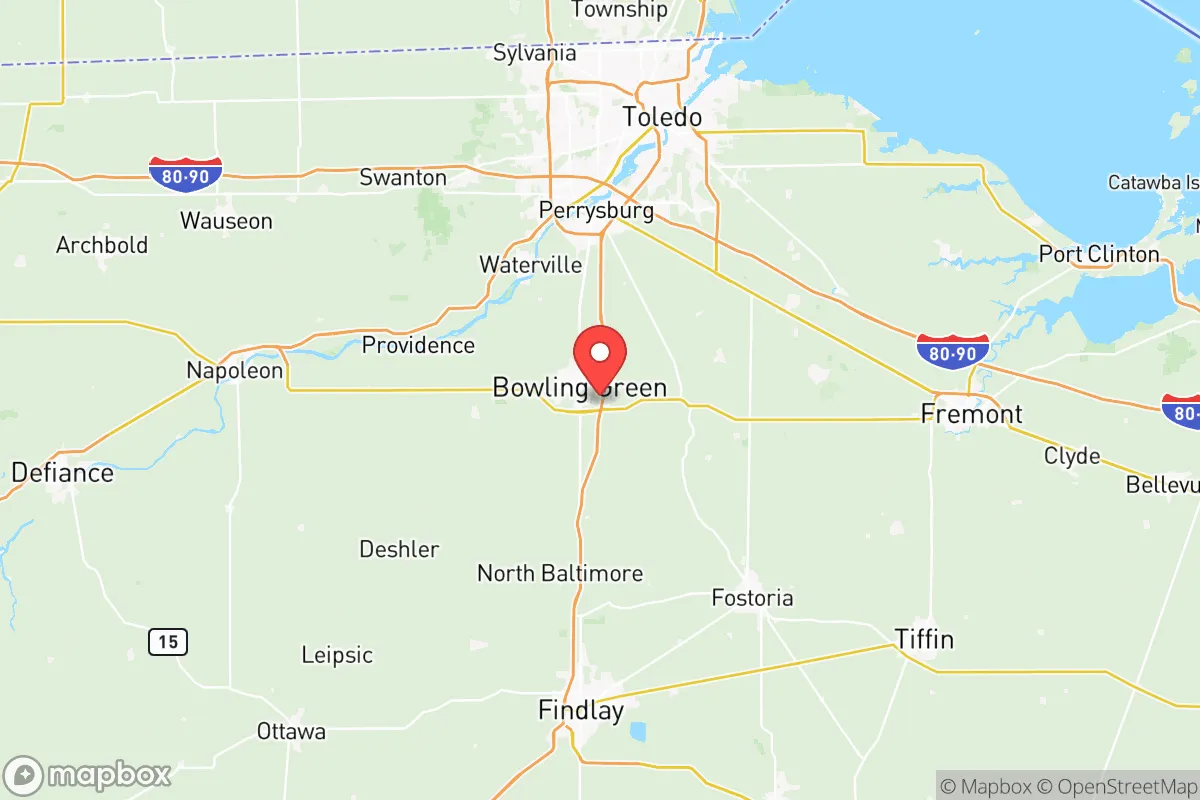
The county’s two primary population anchors are Bowling Green (pop. ~31,000) and Perrysburg (pop. ~21,000). Bowling Green is dominated by Bowling Green State University, giving the town a distinct college-town character with a walkable downtown, a lively bar and restaurant scene along Main Street, and a calendar packed with university events. Daily life here is shaped by the academic calendar, with a younger median age and a rental-heavy housing market. Perrysburg, by contrast, functions as a high-end suburb of Toledo, with a historic riverfront district, the upscale Levis Commons shopping center, and some of the county’s highest home values — often exceeding $350,000 in neighborhoods like Belmont and the Perrysburg Heights area. Its schools are consistently ranked among Ohio’s best, attracting families willing to pay a premium. A third notable center is Rossford, a smaller but growing community along the Maumee River that blends industrial history with new residential developments and easy access to I-75.
Smaller towns & rural pockets
Beyond the population centers, Wood County contains a network of smaller towns that each offer a distinct flavor. Pemberville (pop. ~1,300) is a classic small-town agricultural hub with a preserved 19th-century downtown and an annual Pemberville Fair that draws the entire county. Weston (pop. ~1,500) sits in the county’s rural southwest, offering little more than a grain elevator, a few churches, and a post office — but with home prices often below $150,000. North Baltimore (pop. ~3,000) and Bloomdale (pop. ~700) anchor the county’s southern tier, where soybean and corn fields dominate the landscape and residents often commute 20–30 minutes to jobs in Bowling Green or Findlay. The unincorporated area of Tontogany is a true rural pocket, with no commercial core and a population density of roughly 50 people per square mile. These smaller communities share a common thread: low property taxes, minimal traffic, and a pace of life dictated by agricultural seasons rather than office hours.
Cost & lifestyle range
The cost-of-living spread across Wood County is substantial. At the high end, Perrysburg’s Levis Commons area and the riverfront historic district see median home values approaching $400,000, with rents for a two-bedroom apartment often exceeding $1,200. These areas offer walkable access to boutique shopping, fine dining, and the Maumee River waterfront, with an average commute of about 18 minutes to downtown Toledo. At the low end, rural townships like Milton Township (near Weston) and Freedom Township (near Pemberville) have median home values around $140,000–$160,000, with rents for single-family homes often below $800. The county-wide average commute of 20.5 minutes is notably short, reflecting the fact that most employment — whether at BGSU, the Toledo metro area, or regional manufacturing plants like Owens-Illinois in Perrysburg — is within a 25-minute drive. The trade-off is clear: Perrysburg and Bowling Green offer amenities, density, and premium schools, while the rural townships offer space, quiet, and the lowest housing costs in northwest Ohio.
Wood County is best suited for residents who value choice and are willing to trade off between convenience and cost. Young professionals and academics will find Bowling Green’s rental market and social scene ideal; families with school-age children consistently gravitate toward Perrysburg’s high-performing district; and retirees or remote workers seeking maximum affordability can find excellent value in the county’s southern and eastern townships. The county’s short average commute and low overall cost of living make it a practical base for workers in Toledo, Findlay, or even Maumee, while its distinct communities ensure that nearly any lifestyle preference — from urban college town to deep rural — is available within a 30-minute drive.

Crime in Wood County
Crime rates similar to the national median for U.S. locations.
Violent CrimeViolent Crime Analysis
Property CrimeProperty Crime Analysis
Crime Analysis
Wood County, Ohio, presents a mixed safety profile for prospective residents. The county’s violent crime rate of 266.6 per 100,000 residents is slightly below the national average, while its property crime rate of 1,364.5 per 100,000 is notably higher than both state and national benchmarks. This data, however, masks significant variation between the county’s urbanized core around Bowling Green and its more rural townships, where crime is far less frequent.
Crime in context
When compared to Ohio’s statewide violent crime rate of approximately 300 per 100,000, Wood County’s figure of 266.6 per 100,000 is a modest improvement. The national violent crime rate in 2024 was roughly 380 per 100,000, placing Wood County in a relatively safer bracket. The property crime picture is less reassuring. At 1,364.5 per 100,000, Wood County’s rate exceeds the Ohio average of about 1,200 per 100,000 and the national average of roughly 1,100 per 100,000. This is driven largely by larceny and vehicle theft in the county’s busier commercial corridors, particularly around the I-75 and I-80/90 interchange near Bowling Green and Perrysburg. The presence of a major university (Bowling Green State University) also contributes to a higher incidence of theft and minor property offenses in the immediate campus area.
What residents experience
For most residents, the day-to-day reality of crime in Wood County is shaped by where they live. The city of Bowling Green accounts for a disproportionate share of the county’s reported incidents, driven by its student population and denser commercial districts. Property crimes such as unlocked-car thefts, package thefts, and bicycle thefts are common complaints. Violent crime in Bowling Green is typically isolated to specific incidents, often alcohol-related altercations near the downtown bar district. In contrast, the village of Perrysburg consistently reports the lowest crime rates in the county, with violent crime nearly absent and property crime rates well below the county average. Rossford, Northwood, and Walbridge fall in the middle, with property crime rates that mirror the county average but violent crime rates that are lower. The rural townships—such as Middleton Township and Lake Township—see very little crime of any kind, with most calls involving traffic incidents or minor disputes.
A key concern for residents is the influence of the local judicial system on public safety. Wood County’s courts, including the Wood County Court of Common Pleas and the Bowling Green Municipal Court, are part of Ohio’s general jurisdiction system. While the county has not adopted the progressive prosecutor model seen in larger urban counties like Cuyahoga (Cleveland) or Franklin (Columbus), there is growing unease among residents about the direction of sentencing in property crime cases. Repeat offenders convicted of theft or burglary often receive probation or short jail terms, a pattern that frustrates victims and contributes to a perception that the system is lenient. This is especially relevant in Bowling Green, where a revolving door of low-level property offenders is a common complaint. In contrast, the Perrysburg Municipal Court district is viewed as more conservative in its sentencing, which aligns with that city’s lower crime rates.
Neighborhood-level variation
Neighborhood-level data within Wood County is limited, but available reports show clear patterns. The area immediately surrounding the BGSU campus—particularly along East Wooster Street and North Main Street in Bowling Green—sees the highest concentration of property crime. The Levis Commons district in Perrysburg, a high-traffic retail and dining hub, experiences occasional theft but is well-policed and generally safe. Residential subdivisions in Haskins, Pemberville, and Luckey report crime rates near zero. For families and retirees seeking the safest environment, the villages and townships west of the Maumee River offer the strongest security, while those living in or near Bowling Green should take standard urban precautions—locking vehicles, securing packages, and being aware of surroundings after dark.
* Values derived from national, state, county, city and local statistics and may differ in a specific area. Last updated: 2026-06-16T00:06:46.000Z
Narrative content on this page is AI-generated and may contain mistakes. Verify any details that matter before acting on them.
ReloMaps may earn a commission from affiliate links at no extra cost to you.

