
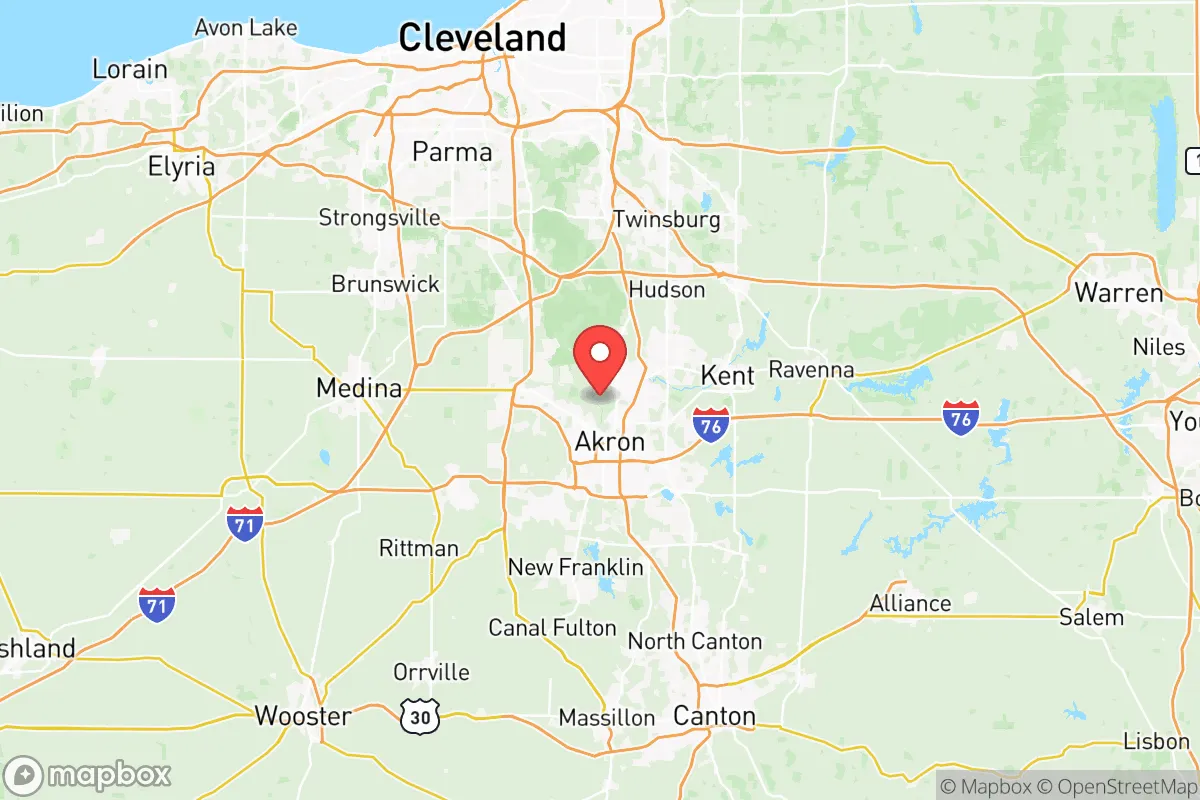
Photo: Wikipedia
Quality of Life in Summit County
A livable area that tracks near national norms for affordability, walkability, and neighborhood health.
What does Quality of Life tell us?
Quality of Life measures an area by evaluating factors like cost of living, nearby amenities, country club access, airport proximity, socioeconomic signals and neighborhood character. For large states, this is a general average — quality of life can vary dramatically between metro areas, suburbs, and rural communities within the same state.
What does this tell us?
Quality of Life measures an area by evaluating factors like cost of living, nearby amenities, country club access, airport proximity, socioeconomic signals and neighborhood character. For large states, this is a general average — quality of life can vary dramatically between metro areas, suburbs, and rural communities within the same state.
Cost of Living
21% below national average
127%
The Real Cost of Living in Summit County for 2026
| Tier | Individual | Family (4) |
|---|---|---|
| Survival | $16k | $30k |
| Comfortable | $38k | $56k |
| Luxury | $128k+ | $199k+ |
| Elite (Top 5%) | $165k+ | $255k+ |
Quality-of-Life Analysis
Summit County, Ohio, offers a broad quality-of-life spectrum that ranges from the dense, walkable urban core of Akron to quiet, unincorporated rural pockets near the county’s borders, attracting everyone from young professionals and university students to families seeking suburban school districts and retirees looking for low-cost acreage. With a cost of living index of 79 (well below the national average of 100), a median home value of $195,700, and a median rent of $998, the county provides tangible financial breathing room compared to national benchmarks. The average commute of roughly 23 minutes is manageable across most of the county, though it can stretch longer for residents commuting from the far eastern or western townships into Akron or Cleveland. The county’s character shifts noticeably as one moves outward from the Cuyahoga River valley into the farmlands and woodlands of places like Bath Township or Boston Township, making Summit a county where lifestyle choice is often a direct function of how much space and solitude a resident wants.
Largest town(s) & population centers
Akron is the county’s dominant population center and economic engine, home to roughly 190,000 residents and anchored by employers such as FirstEnergy, Summa Health, and the University of Akron. Daily life in Akron is distinctly urban-suburban hybrid: neighborhoods like Highland Square offer walkable bars and historic homes, while the Wallhaven and Merriman Valley areas attract younger renters and students with apartment complexes and direct access to the Cuyahoga Valley National Park. The city’s downtown has seen steady reinvestment, including the conversion of former tire factories into office and residential space, but residents should note that Akron’s property crime rate is higher than the county average, particularly in central and eastern wards. Just south of Akron, the city of Barberton (population ~26,000) offers a more industrial, working-class feel with lower home prices—often $50,000–$80,000 below the county median—and a strong sense of local identity around its historic downtown and canal-era architecture. Cuyahoga Falls, the county’s third-largest city with about 50,000 residents, sits directly north of Akron and provides a more suburban, family-oriented atmosphere with well-regarded public schools, the expansive Water Works Park, and a walkable Front Street dining district that draws visitors from across the region.
Smaller towns & rural pockets
Outside the main population centers, Summit County contains several smaller communities and genuinely rural areas that feel far removed from Akron’s bustle. The village of Peninsula (population ~600) sits inside the Cuyahoga Valley National Park and offers a quiet, historic hamlet lifestyle with no chain stores, a single traffic light, and direct access to the Ohio & Erie Canal Towpath Trail—ideal for cyclists and hikers who want to live inside a national park. Further west, the township of Bath (unincorporated, roughly 9,000 residents) is one of the county’s wealthiest and most rural areas, characterized by large-lot zoning, horse farms, and the prestigious Revere Local School District, which consistently ranks among Ohio’s top public school systems. On the county’s eastern edge, Springfield Township and the village of Lakemore offer a mix of older homes on wooded lots and access to Springfield Lake, a popular spot for fishing and boating that gives the area a distinct lake-community feel. The far northern reaches, including Boston Township and the tiny village of Boston Heights, are almost entirely rural, with large tracts of parkland, few commercial services, and a population density that makes them feel more like adjacent Portage County than suburban Akron.
Cost & lifestyle range
The cost of living in Summit County varies dramatically by location, with the most affordable options concentrated in Akron’s older neighborhoods and the highest prices found in the outer-ring townships. At the low end, neighborhoods in Akron’s Kenmore and Ellet sections frequently list homes below $100,000, and two-bedroom apartments in central Akron can rent for $700–$850 per month, well under the county median of $998. At the high end, Bath Township and the Silver Lake village area (within Stow) routinely see median home values above $350,000, with some properties exceeding $600,000 on large wooded lots. The lifestyle trade-off is clear: living in Akron or Barberton means shorter commutes, more rental options, and access to public transit (METRO RTA), but often with older housing stock and higher crime rates in certain blocks. Living in Bath, Peninsula, or Boston Township means longer drives to grocery stores and services, higher property taxes (often 1.8–2.2% of assessed value), and limited rental inventory, but offers privacy, top-tier schools, and direct access to the Cuyahoga Valley National Park’s 125 miles of trails.
Summit County works best for people who want a genuine range of lifestyle choices within a single county—someone who values urban walkability and low rent can live in Akron’s Highland Square, while a family seeking rural acreage and a nationally ranked school district can settle in Bath Township, all within a 25-minute drive of each other. The county’s below-average cost of living, combined with its mix of urban, suburban, and park-protected rural environments, makes it especially attractive to Ohioans relocating from higher-cost areas like Columbus or Cleveland who still want proximity to a major metro. Retirees on fixed incomes often gravitate toward the smaller lake communities like Lakemore or the quiet villages along the Cuyahoga River, while remote workers and outdoor enthusiasts find the national park access and low home prices a compelling alternative to pricier mountain-town markets out west.

Crime in Summit County
Crime rates similar to the national median for U.S. locations.
Violent CrimeViolent Crime Analysis
Property CrimeProperty Crime Analysis
Crime Analysis
Summit County, Ohio, presents a mixed safety picture where violent crime rates remain below national averages but property crime exceeds state benchmarks, creating distinct risk profiles across its 31 communities. With a violent crime rate of 266.6 incidents per 100,000 residents and a property crime rate of 1,364.5 per 100,000, the county's overall statistics mask significant variation between its urban core and suburban townships. Residents considering relocation should weigh neighborhood-level data carefully, as safety outcomes differ sharply between Akron's central districts and communities like Hudson, Bath Township, and Cuyahoga Falls.
Crime in context
Summit County's violent crime rate of 266.6 per 100,000 sits 24% below the national average of 380 per 100,000, placing it among safer Ohio counties for serious offenses like homicide, robbery, and aggravated assault. However, the property crime rate of 1,364.5 per 100,000 exceeds the national average of 1,954 but remains below Ohio's statewide rate of approximately 1,800 per 100,000. This divergence means residents face lower odds of violent victimization than in comparable Midwestern metros, but theft, burglary, and motor vehicle theft occur at frequencies that demand vigilance. Akron, the county seat and largest city, drives a disproportionate share of both violent and property offenses, while suburban communities like Stow, Tallmadge, and Green report rates 40-60% lower than the county average. The Summit County Sheriff's Office and municipal police departments in Fairlawn and Macedonia maintain proactive patrol strategies, though resource constraints in Akron have led to slower response times in high-call-volume precincts.
What residents experience
Daily life in Summit County involves navigating a justice system shaped by progressive prosecutorial policies in Akron, where the elected Summit County Prosecutor and Akron Municipal Court judges have adopted diversion programs, reduced cash bail requirements, and expanded expungement eligibility for nonviolent offenders. While these measures aim to reduce incarceration rates and address racial disparities, critics argue they contribute to repeat property crime cycles in neighborhoods like Akron's Kenmore, Goodyear Heights, and Ellet, where residents report frequent car break-ins and package thefts. In contrast, communities with conservative-leaning judicial districts—including Hudson, Bath Township, and Richfield—maintain stricter sentencing norms and lower recidivism rates. Residents in these areas experience property crime at roughly half the county average, with violent crime virtually absent. The contrast is stark: a Hudson resident's annual risk of property crime is about 1 in 80, while an Akron resident in the Summit Lake or Middlebury neighborhoods faces odds closer to 1 in 25. The Akron Police Department's 2025 data shows that over 60% of property crimes in the city go unsolved, a clearance rate that undermines deterrence and frustrates victims.
Neighborhood-level variation in Summit County is extreme and directly tied to municipal boundaries and judicial philosophy. The safest enclaves—Hudson (violent crime rate under 50 per 100,000), Bath Township (under 30 per 100,000), and Cuyahoga Falls (under 150 per 100,000)—benefit from well-funded police departments, active neighborhood watch programs, and conservative judicial oversight that prioritizes victim restitution and incarceration for repeat offenders. Conversely, Akron's central and southern wards, along with parts of Barberton and Springfield Township, experience violent crime rates exceeding 500 per 100,000, driven by drug trafficking networks and gang activity. The Summit County Drug Task Force has made significant seizures in 2025, but fentanyl and methamphetamine distribution continues to fuel property crime as users steal to fund addictions. For prospective residents, the choice between a Summit County community is less about the county as a whole and more about which specific jurisdiction's policing and judicial approach aligns with their safety expectations.
* Values derived from national, state, county, city and local statistics and may differ in a specific area. Last updated: 2026-07-15T10:39:59.000Z
Narrative content on this page is AI-generated and may contain mistakes. Verify any details that matter before acting on them.
ReloMaps may earn a commission from affiliate links at no extra cost to you.

