
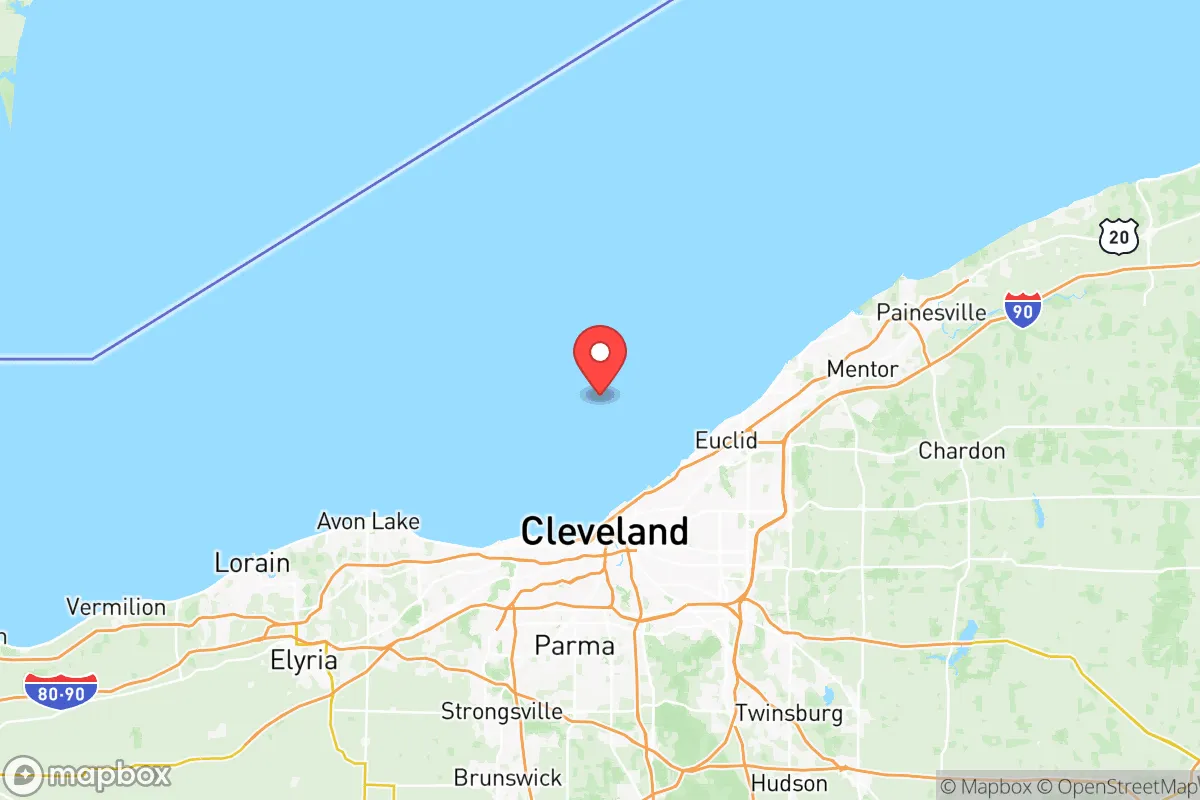
Photo: Wikipedia
Personal Sovereignty in Cuyahoga County
Viable for self-reliance. Generally workable, though some barriers may limit total independence.
What does Personal Sovereignty tell us?
Personal Sovereignty measures your capacity for self-reliance and independence with minimal government friction. Higher scores mean fewer barriers between you and the way you want to live... but it assumes you have the space you need and good neighbors.
What does this tell us?
Personal Sovereignty measures your capacity for self-reliance and independence with minimal government friction. Higher scores mean fewer barriers between you and the way you want to live... but it assumes you have the space you need and good neighbors.
State Policy
Energy independence: Importer (40% of energy produced in-state)
Personal Liberty
Homesteading

Personal Liberty Analysis
Cuyahoga County presents a complex environment for personal sovereignty, where the autonomy of individuals and families is shaped by a dense patchwork of municipal regulations, state-level preemptions, and a historically active local government culture. While Ohio’s state constitution and statutes provide a baseline of personal liberties—including a robust castle doctrine and preemption of local gun laws—the county’s 59 distinct cities and villages each layer their own zoning codes, tax policies, and enforcement priorities, creating a landscape where freedom can feel either expansive or constrained depending on the specific street address. For a relocation-minded reader prioritizing self-reliance, the key is understanding that sovereignty in Cuyahoga County is not a single experience but a spectrum that varies dramatically from the urban core of Cleveland to the semi-rural exurbs like Olmsted Falls and Chagrin Falls.
Tax burden and regulatory posture: how local rules shape daily autonomy
The tax and regulatory environment in Cuyahoga County is among the heavier in Ohio, driven by a combination of state income tax (a flat 3.5% bracket for most earners) and local municipal income taxes that typically range from 1.5% to 2.5% for residents. Cleveland itself imposes a 2.5% resident income tax, while suburbs like Lakewood and Parma charge 1.5% to 2.0%, meaning a household earning $80,000 can lose $1,200 to $2,000 annually to local income tax alone. Property taxes are also notably high: the effective rate in Cuyahoga County averages around 2.1% of assessed value, roughly double the national average, driven by school district levies and county-wide services. This fiscal posture directly reduces discretionary income and, by extension, the capital available for self-directed investments like land improvements or home businesses. On the regulatory side, the county enforces strict building codes, health department permits for any food-related home enterprise, and municipal zoning that often prohibits accessory dwelling units (ADUs) or home-based automotive repair in residential districts. For a reader accustomed to low-tax, low-regulation environments, cities like Strongsville and Westlake are comparatively business-friendly, with streamlined permit processes and more permissive commercial zoning, while Cleveland Heights and Shaker Heights maintain more prescriptive land-use rules that can frustrate attempts at self-reliant modifications.
Self-defense and gun law specifics: what the castle doctrine means in practice
Ohio’s state-level preemption of firearm laws provides a strong foundation for self-defense rights in Cuyahoga County, but local enforcement culture and municipal ordinances create meaningful friction. The state’s castle doctrine, codified in Ohio Revised Code 2901.09, establishes a legal presumption that a homeowner who uses deadly force against an intruder acted in reasonable fear of death or great bodily harm, with no duty to retreat. This applies uniformly across the county, including in Cleveland. However, the practical exercise of this right is complicated by local firearm regulations that, while technically preempted, persist in enforcement. Cleveland, for instance, maintains a city ordinance requiring gun owners to report lost or stolen firearms within 48 hours—a rule that state courts have upheld as a lawful exercise of police power, not a direct regulation of firearms. More significantly, the county’s concealed carry permitting process is administered by the sheriff’s office, which in Cuyahoga County has historically processed applications with average wait times of 45-60 days, longer than in more rural counties like Geauga or Medina. For a reader prioritizing self-defense, the practical advice is to live in a suburb like Broadview Heights or North Royalton, where local law enforcement is known for a more permissive attitude toward gun ownership and where sheriff’s deputies are more likely to respond quickly to property crime calls. In contrast, residents of Cleveland’s inner-city neighborhoods report that police response times for burglary alarms can exceed 30 minutes, making personal preparedness more critical but also more legally fraught.
Self-reliance and homesteading viability: lot sizes, zoning, and off-grid feasibility
Homesteading and off-grid living in Cuyahoga County are severely constrained by the county’s dense suburban development pattern and restrictive zoning codes, but viable pockets exist for those willing to look beyond the inner ring. Minimum lot sizes in most residential zones range from 5,000 to 10,000 square feet, making large-scale food production or livestock keeping impractical in the vast majority of suburbs. Cleveland’s urban agriculture zoning overlay, adopted in 2011, permits community gardens and small-scale chicken keeping (up to six hens, no roosters) on residential lots, but prohibits goats, pigs, or any slaughtering on site. For a more serious homesteading lifestyle, the best options are the county’s southeastern and southwestern exurbs. Olmsted Falls and Berea have agricultural-residential zones that allow up to two acres of market gardening, beekeeping, and limited livestock (typically up to four sheep or goats per acre). Chagrin Falls township, in the county’s far east, offers the most permissive environment, with some parcels zoned for 2.5-acre minimums that permit small-scale farming, rainwater collection (though Ohio law restricts this to 2,500 gallons per property without a permit), and even limited off-grid solar installations, provided they meet building code electrical standards. Off-grid feasibility is further limited by the county’s universal requirement for connection to municipal water and sewer in any developed zone; true off-grid living—with a well, septic, and no utility hookups—is effectively impossible within the county’s incorporated areas. The closest approximation is in the unincorporated portions of Olmsted Township, where a handful of properties on 5+ acre lots still operate on private wells and septic systems, though even these must comply with county health department inspections.
Personal liberties: parental rights, medical autonomy, speech, and property
Ohio’s legal framework provides a moderately protective environment for personal liberties, with Cuyahoga County’s local governance adding both protections and restrictions. Parental rights are broadly recognized under state law, including the right to direct a child’s education, medical care, and religious upbringing. The county’s school districts, however, vary widely in their accommodation of homeschooling and alternative education: Strongsville City Schools and Brecksville-Broadview Heights are known for cooperative relationships with homeschool families, offering part-time enrollment in extracurriculars and access to library resources, while Cleveland Metropolitan School District has a more adversarial history, including a 2022 policy requiring homeschool families to submit detailed curriculum plans for approval. Medical autonomy is shaped by Ohio’s vaccine mandate laws and the county’s public health orders; during the 2020-2021 period, Cuyahoga County Board of Health issued some of the state’s most aggressive mask and gathering restrictions, a pattern that suggests a local government willing to assert public health authority over individual choice. Speech and assembly rights are protected by the First Amendment, but the county’s public spaces—particularly in Cleveland’s University Circle and downtown—have seen frequent permit requirements and time-place-manner restrictions on protests, a point of tension for those who view unfettered expression as a core liberty. Property rights are the most uneven: while Ohio’s eminent domain laws require just compensation, Cuyahoga County’s active land bank (the Cuyahoga Land Bank) has a track record of aggressive acquisition of tax-delinquent properties, sometimes leaving owners with little recourse if they fall behind on payments. For a reader prioritizing property sovereignty, the safest bet is a suburb like Westlake, where property taxes are stable, zoning is predictable, and the land bank’s reach is minimal.
Overall, personal sovereignty in Cuyahoga County is a trade-off: the state provides a solid legal foundation for self-defense, parental rights, and property ownership, but the county’s dense municipal structure, high taxes, and active regulatory posture create a more constrained environment than in Ohio’s rural or exurban counties. Compared to a place like Medina County (immediately south) or Geauga County (east), where lot sizes are larger, taxes are lower, and local government is less interventionist, Cuyahoga County feels distinctly more managed. For a reader who values maximum autonomy, the county’s best options are its outer-ring suburbs—Strongsville, Broadview Heights, Olmsted Falls—where the regulatory touch is lighter and the community culture leans more toward self-reliance. For those who prioritize urban amenities and are willing to navigate a more bureaucratic environment, the county’s core offers a different kind of freedom: the liberty of anonymity and the ability to live without a car, but with the trade-off of constant interaction with municipal codes and enforcement. The strategic choice is not whether to live in Cuyahoga County, but which specific municipality within it aligns with your personal definition of sovereignty.

* Values derived from national, state, county, city and local statistics and may differ in a specific area. Last updated: 2026-07-27T02:20:11.000Z
Narrative content on this page is AI-generated and may contain mistakes. Verify any details that matter before acting on them.
ReloMaps may earn a commission from affiliate links at no extra cost to you.

