Photo: Wikipedia
Demographics of Ocean Shores, WA
Affluence Level in Ocean Shores, WA
A middle-class area roughly in line with national averages across income, home values, education, and employment.
People of Ocean Shores, WA
Ocean Shores, Washington, is a small coastal city of 7,076 residents that feels more like a retirement and vacation community than a working port. The population is overwhelmingly white (87.1%) and older, with a notably low foreign-born share of just 1.4% and a college attainment rate of 22.2%. Its identity is shaped by a mix of second-home owners, retirees from the Pacific Northwest, and a small but visible East/Southeast Asian community (3.0%), while the city lacks any Black or Indian subcontinent population. This is a place where the human story is one of deliberate, mid-century planning followed by slow, steady domestic in-migration.
How the city was settled and grew
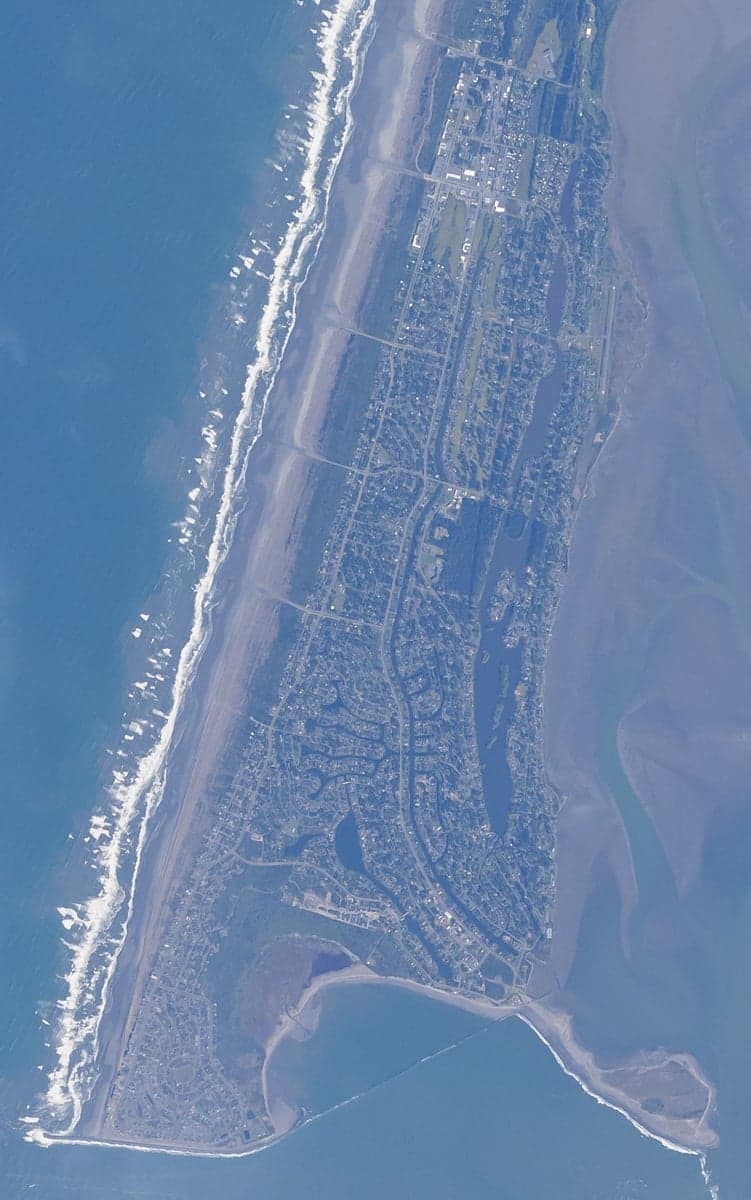
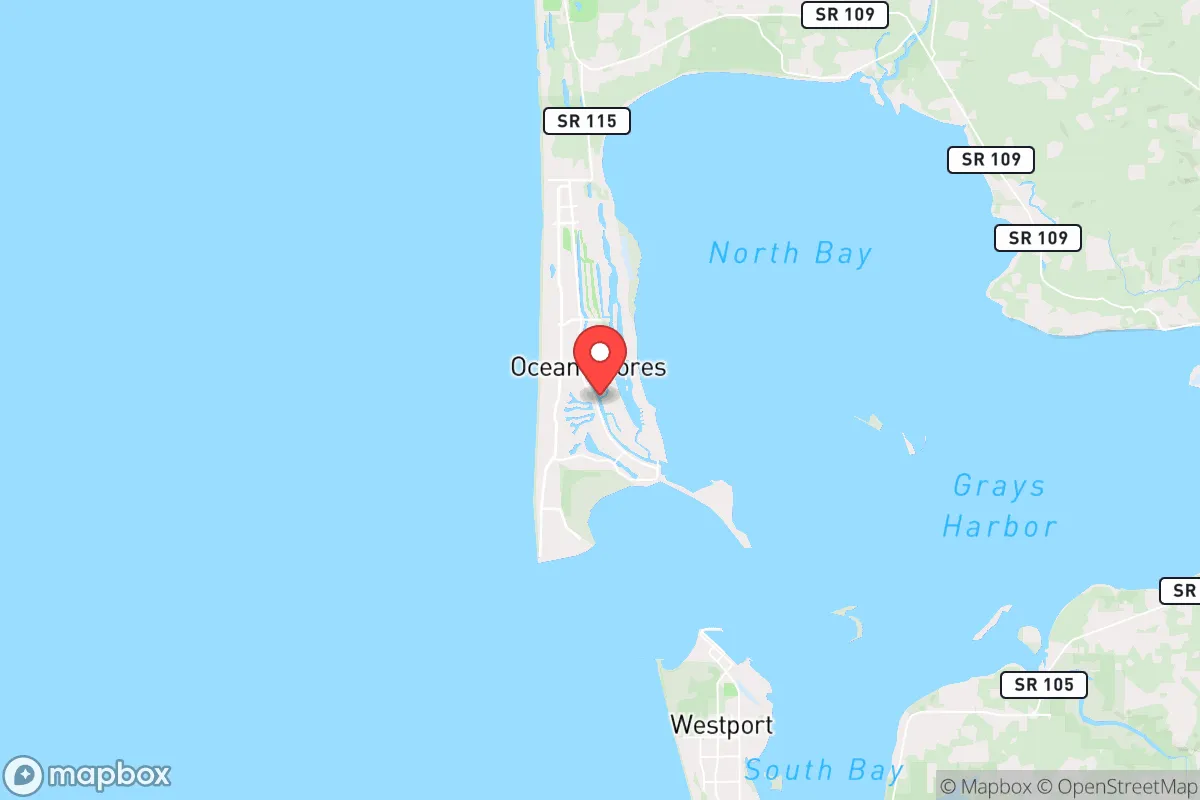
Ocean Shores has no pioneer or indigenous settlement history as a town; it was literally built from scratch on a coastal peninsula. The area was originally inhabited by the Quinault and Chehalis peoples, but the modern city was conceived in the 1950s as a planned resort community. The first wave of settlers arrived after 1960, when developers began selling lots in the Ocean Shores Estates neighborhood, a grid of canals and beachfront plots marketed to middle-class families from Seattle and Portland. These early buyers were overwhelmingly white, drawn by the promise of affordable oceanfront property and a quiet, recreational lifestyle. The North Bay area, with its views of the Grays Harbor estuary, attracted a slightly wealthier cohort of retirees and second-home owners. By the 1970s, the city’s population had reached roughly 2,000, almost entirely white and domestic-born, with a smattering of seasonal workers in hospitality.
Modern era (post-1965)
After the 1965 Hart-Cellar Act reshaped U.S. immigration, Ocean Shores saw virtually no impact—its foreign-born share remains at 1.4%, far below the national average. Instead, the city’s growth through the 1980s and 1990s came from domestic migration: retirees from the Pacific Northwest and California, plus a smaller number of remote workers and artists seeking a low-cost coastal lifestyle. The Damon Point neighborhood, a quiet residential strip near the state park, became a hub for these newer arrivals, many of whom built custom homes. The Ocean Shores Golf Course area attracted a golf-oriented retiree community, while the Marine View Drive corridor saw a concentration of second homes owned by Seattle-area families. The East/Southeast Asian community (3.0%) is a notable but small presence, concentrated in the Pacific Shores subdivision, where a handful of Vietnamese-American and Filipino-American families settled in the 2000s, often working in local hospitality or running small businesses. The Hispanic population (3.7%) is dispersed, with no single ethnic enclave, and is largely employed in construction and service roles. The city’s Black population is zero, and there is no Indian subcontinent community.
The future
Ocean Shores is likely to remain a predominantly white, older, and domestic-born community for the next 10–20 years. The population has grown slowly—from about 5,500 in 2000 to 7,076 today—and projections suggest modest continued growth driven by retirees from the I-5 corridor and a trickle of remote workers. The city’s low college attainment rate (22.2%) and limited job base outside tourism and retail mean it will not attract the diverse, educated workforce seen in larger Washington cities. The East/Southeast Asian and Hispanic shares may inch upward slightly as service-sector workers move in, but the city lacks the economic drivers—major employers, universities, or transit links—to spur rapid diversification. New development is concentrated in the Ocean Shores Canal District, where infill homes are being built on vacant lots, but these are mostly marketed to the same retiree and second-home buyer demographic. The cultural identity will likely remain that of a quiet, affordable coastal retreat—not a melting pot, but a stable, low-density community for those seeking solitude.
For someone moving in now, Ocean Shores offers a homogeneous, slow-paced environment where the population is aging in place and new arrivals are largely domestic retirees or remote workers. The city is not becoming more diverse or youthful; it is solidifying its character as a white, older, and insular coastal town. If you value quiet, affordability, and a lack of urban diversity, this may fit. If you seek a dynamic, multicultural community, look elsewhere.

* Values derived from national, state, county, city and local statistics and may differ in a specific area. Last updated: 2026-08-27T20:00:48.000Z
Narrative content on this page is AI-generated and may contain mistakes. Verify any details that matter before acting on them.
ReloMaps may earn a commission from affiliate links at no extra cost to you.

