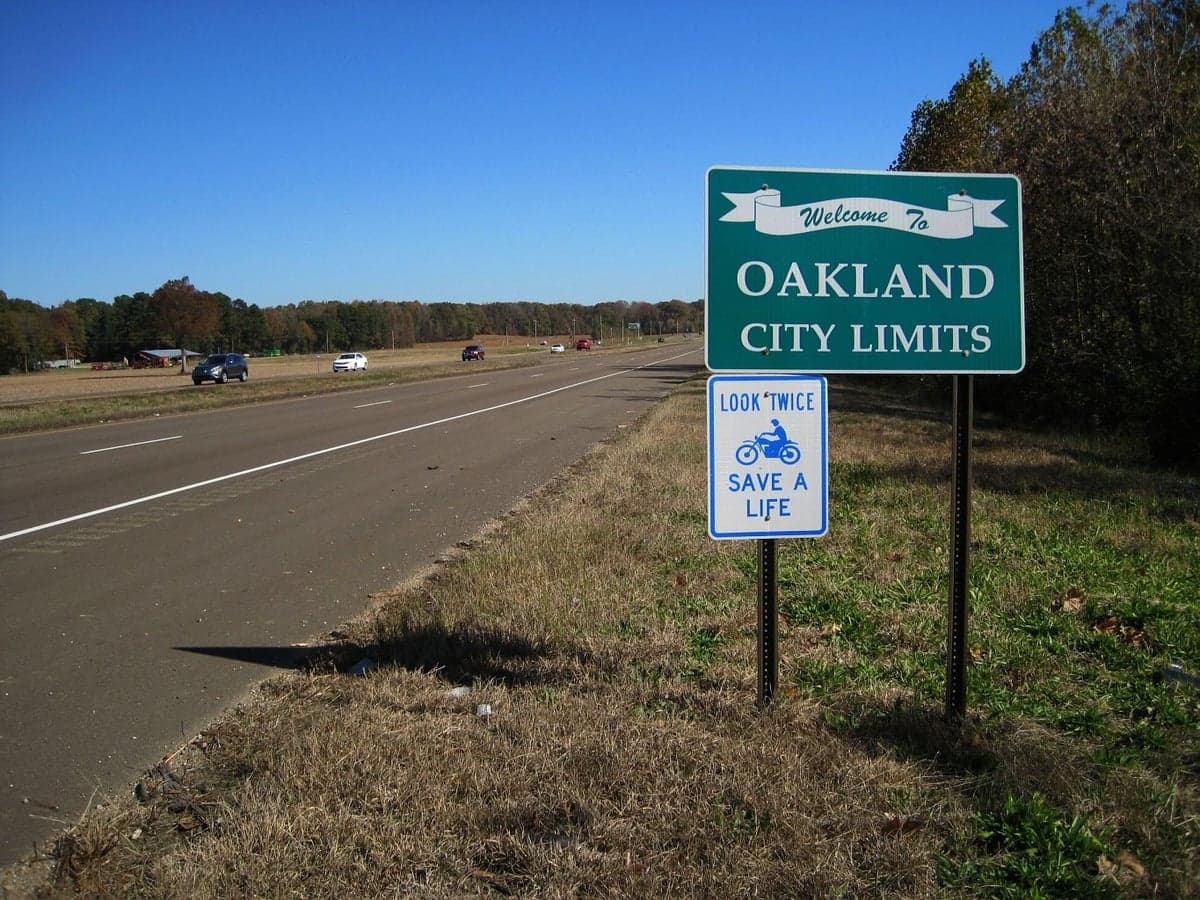
Photo: Wikipedia
Strategic Assessment of Oakland, TN
Meaningful friction. Expect exposure to either population pressure, blast zones, or natural disaster risk. Consider buying a retreat property.
What does the Strategic Assessment tell us?
Our Strategic Assessment grades tactical survivability of an area. Major population centers, military targets, fallout zones, natural disasters, and border exposure all drive risk — lower exposure means a more defensible position in a crisis.
This is heavily inspired by Joel Skousen's Strategic Relocation book. Highly recommended you checkout the book ($)What does this tell us?
Our Strategic Assessment grades tactical survivability of an area. Major population centers, military targets, fallout zones, natural disasters, and border exposure all drive risk — lower exposure means a more defensible position in a crisis.
This is heavily inspired by Joel Skousen's Strategic Relocation book. Highly recommended you checkout the book ($)Strategic Pillars

Key Distances
Regional Safe Places
Below is our recommended "safe zones" in Tennessee and the surrounding area based on our strategic heuristics. For most people, it's unrealistic to live in a “safe zone” full-time due to work, family or other personal reasons. They tend to be more rural. However, many of these areas are perfect for second homes and retreat properties that double as a vacation home or even a short-term rental.
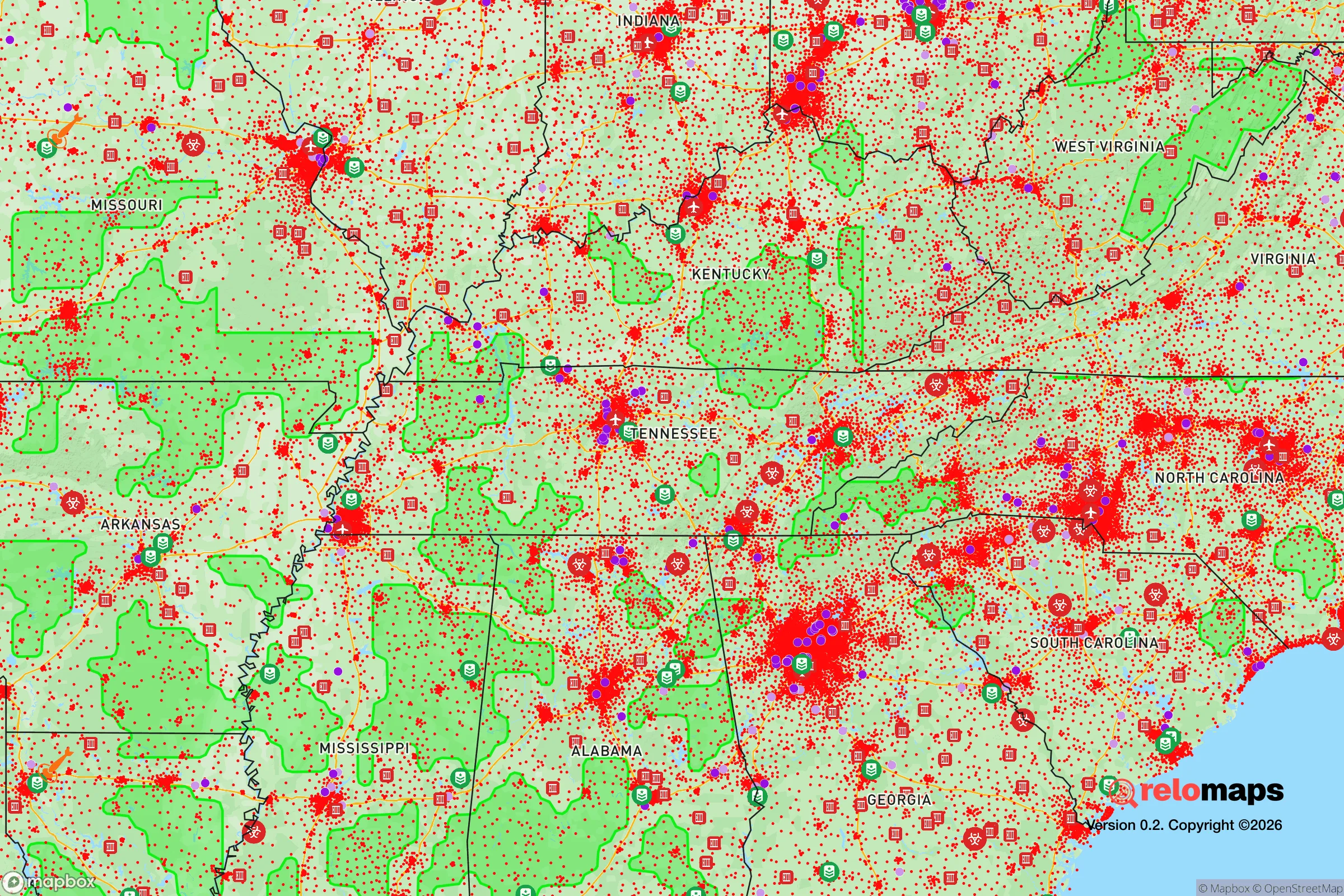
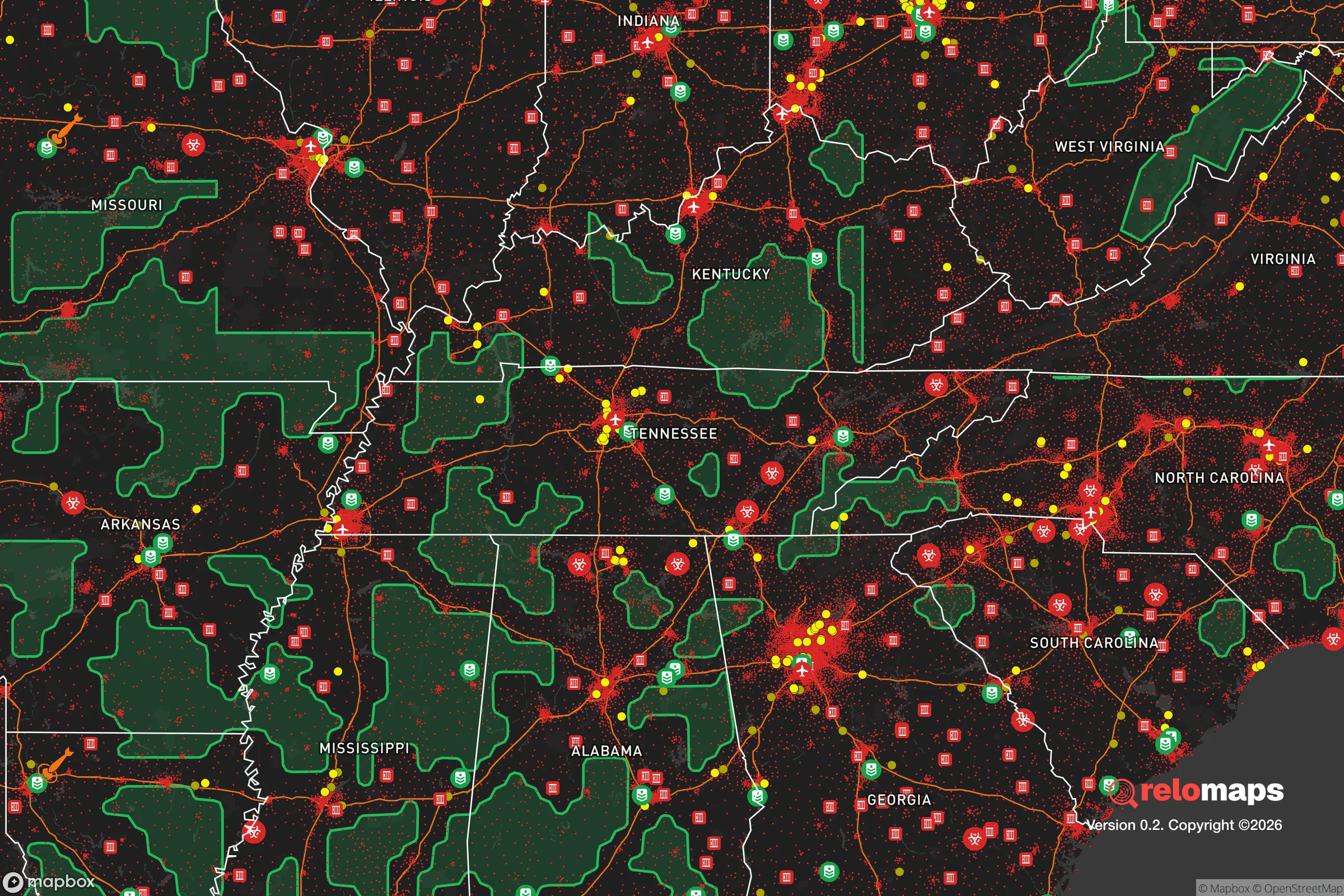


Important Note: For informational purposes only. This does not mean nothing bad ever happens in the green zones. Please use common sense. This is based on public data and modeled with AI. We tried to take a conservative approach but mistakes happen. We update this regularly as new information becomes available.
Solar Generator Recommendations
Backup power matters more here than in safer locations. We've picked three solar generators across budgets and capacity tiers — start with the budget unit if you only need a few essentials, or step up if you want to run a fridge and HVAC for days at a time.

Jackery Portable Power Station Explorer 300
Budget OptionPower on the Go: Weighing only 11 lbs, it's convenient to set up and store with book-sized foldable solar panels

BLUETTI Portable Power Station AC180
Designed for both indoor and outdoor scenarios, AC180 is highly capable as it has a robost capacity and continuous output power.

EF ECOFLOW DELTA Pro Ultra Power Station
Upgraded PickEcoFlow DELTA Pro Ultra is a whole-home energy system designed to grow with your family. Integrated with the Smart Home Panel 2, it scales to meet your evolving energy needs — keeping your home powered, intelligent, and secure through every stage of life.
We earn a commission, at no additional cost to you.
Strategic Assessment Analysis
Oakland, Tennessee, presents a mixed strategic picture for the relocation-minded reader focused on resilience and self-sufficiency. While its location in Fayette County offers genuine advantages in terms of lower population density and access to agricultural land, its proximity to Memphis and the I-40 corridor introduces significant vulnerabilities that a serious preparedness-minded individual must weigh carefully. The town’s small size—roughly 8,000 residents as of the 2020 census—and its position in a county that remains largely rural provide a foundation for a more self-reliant lifestyle, but the area’s exposure to both natural hazards and man-made risks demands a clear-eyed assessment before making a move.
Geographic position and natural advantages for self-sufficiency
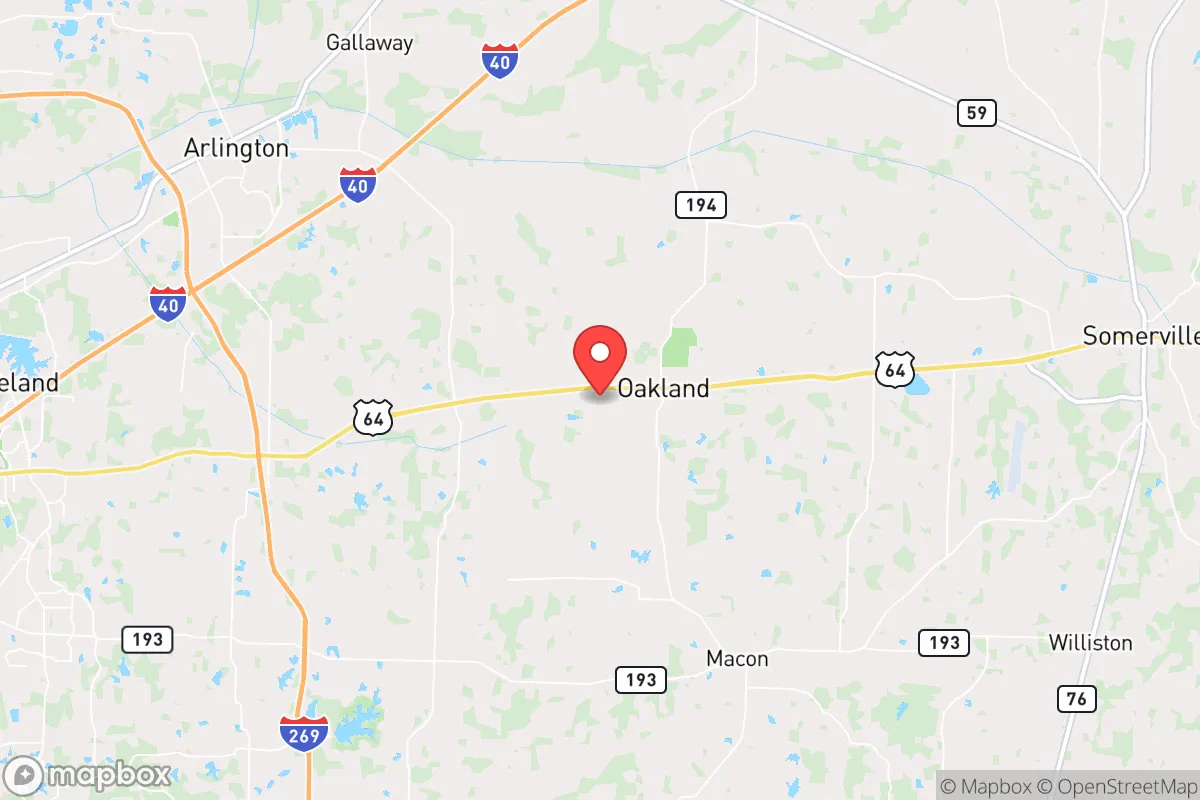
Oakland sits in the rolling hills of southwestern Tennessee, roughly 40 miles east of Memphis and about 15 miles north of the Mississippi state line. This location offers a meaningful buffer from the immediate urban core of Memphis while still providing access to its resources—a double-edged sword in resilience terms. The area’s topography is gently undulating, with elevations ranging from about 300 to 400 feet above sea level, which provides decent drainage and reduces flood risk compared to the Mississippi River floodplain to the west. The Loosahatchie River runs just south of town, and several smaller creeks and tributaries crisscross the county, offering potential water sources for those with the means to treat or store it. The region’s climate is humid subtropical, with hot summers and mild winters, supporting a growing season of roughly 200 days per year—long enough for serious gardening, small-scale farming, or orchard establishment. The soils in Fayette County are predominantly silt loams, well-suited for row crops and pasture, which is why the area has a strong agricultural heritage. For a relocator looking to establish food independence, Oakland’s surrounding countryside offers affordable land—typically $4,000 to $8,000 per acre as of 2025—and a rural zoning environment that generally permits livestock, poultry, and outbuildings without excessive red tape. The town itself is small enough that most daily needs can be met locally, but the real draw for the self-sufficiency-minded is the ability to buy a few acres within a 10- to 20-minute drive of a grocery store and hardware outlet.
Risks, exposures, and proximity to fallout-relevant landmarks
The most significant risk factor for Oakland is its proximity to Memphis, a major metropolitan area of roughly 630,000 people within the city limits and over 1.3 million in the metro area. In any widespread disaster scenario—whether natural or man-made—Memphis would likely become a source of outbound traffic, resource competition, and potential civil unrest. The I-40 corridor, which runs directly through Oakland, is the primary east-west artery connecting Memphis to Nashville, and in a crisis, this road could become clogged with evacuees or, worse, a vector for looting parties moving outward from the city. Oakland is also within 50 miles of the Memphis International Airport, a FedEx SuperHub, and several rail yards, all of which are potential targets in a conflict scenario. For the reader concerned about nuclear fallout, the area’s position relative to potential targets is sobering: Memphis is a major logistics and transportation hub, and the nearby Naval Support Activity Mid-South in Millington (about 35 miles northwest) is a strategic asset. While Fayette County itself is not a high-priority target, fallout from a strike on Memphis or the naval base could reach Oakland depending on wind patterns. The region also faces natural threats: tornadoes are a recurring hazard, with Fayette County averaging 12 to 15 tornado warnings per year, and the area lies in the New Madrid Seismic Zone, which has the potential for a major earthquake (magnitude 7.0 or greater) that could damage infrastructure across the Mid-South. Flooding is less of a concern in Oakland proper, but low-lying areas near the Loosahatchie River and its tributaries can experience flash flooding during heavy rain events. The overall risk profile is moderate to high, with the man-made threats from Memphis proximity being the primary concern for a strategic relocator.
Practical resilience for a relocator: food, water, energy, and defensibility
On the practical side, Oakland offers several advantages for building a resilient homestead. The agricultural land base means that local food production is viable, with several farms in Fayette County selling produce, eggs, and meat directly to consumers. The Fayette County Farmers Market in nearby Somerville (about 10 miles north) operates seasonally, and there are multiple feed stores and agricultural supply outlets within a 20-minute drive. Water access is a mixed picture: municipal water is available in town and in some subdivisions, but rural properties typically rely on wells, which average 150 to 300 feet deep in this area and produce water of generally good quality, though testing for iron and manganese is recommended. For off-grid energy, the region’s solar potential is decent, with an average of 4.5 to 5.0 peak sun hours per day, making rooftop solar a viable option for supplementing grid power. Wood heating is also practical, given the abundance of hardwood forests in the area—oak, hickory, and maple are common—and most rural properties have space for a woodpile. Defensibility is a more nuanced consideration. Oakland itself is a small town with a low crime rate—Fayette County’s violent crime rate is roughly half the national average—but the surrounding rural areas offer better options for a secure homestead. Properties with good road access, clear sightlines, and natural barriers (creeks, tree lines, or elevation changes) are available, and the county’s zoning is generally permissive for fencing, gates, and security measures. However, the proximity to Memphis means that a determined group could reach Oakland in under an hour, so a relocator should prioritize properties that are set back from main roads and not easily visible from the highway. The local community is predominantly conservative and rural, with a strong church presence and a culture of neighborly assistance, which can be a resilience asset in a crisis—but it also means that newcomers should invest time in building relationships before expecting support.
Overall, Oakland, Tennessee, offers a workable but not ideal strategic position for the disaster-ready relocator. The area’s agricultural potential, affordable land, and low baseline crime rate are genuine draws, and the ability to establish a self-sufficient homestead within a reasonable commute of Memphis jobs is a practical advantage for those who need to maintain employment while building resilience. However, the risks from Memphis proximity—both in terms of fallout exposure and the potential for post-disaster population movement—cannot be dismissed. A serious relocator would be wise to look at properties on the eastern side of Fayette County, farther from the I-40 corridor and closer to the Hardeman County line, where population density drops further and the buffer from Memphis increases to 50 miles or more. For those willing to accept the trade-offs, Oakland provides a solid foundation for a resilient lifestyle, but it is not a remote retreat—it is a strategic compromise that requires active preparation, good neighbors, and a clear plan for dealing with the risks that come with living within striking distance of a major city.

* Values derived from national, state, county, city and local statistics and may differ in a specific area. Last updated: 2026-10-07T00:56:12.000Z
Narrative content on this page is AI-generated and may contain mistakes. Verify any details that matter before acting on them.
ReloMaps may earn a commission from affiliate links at no extra cost to you.

