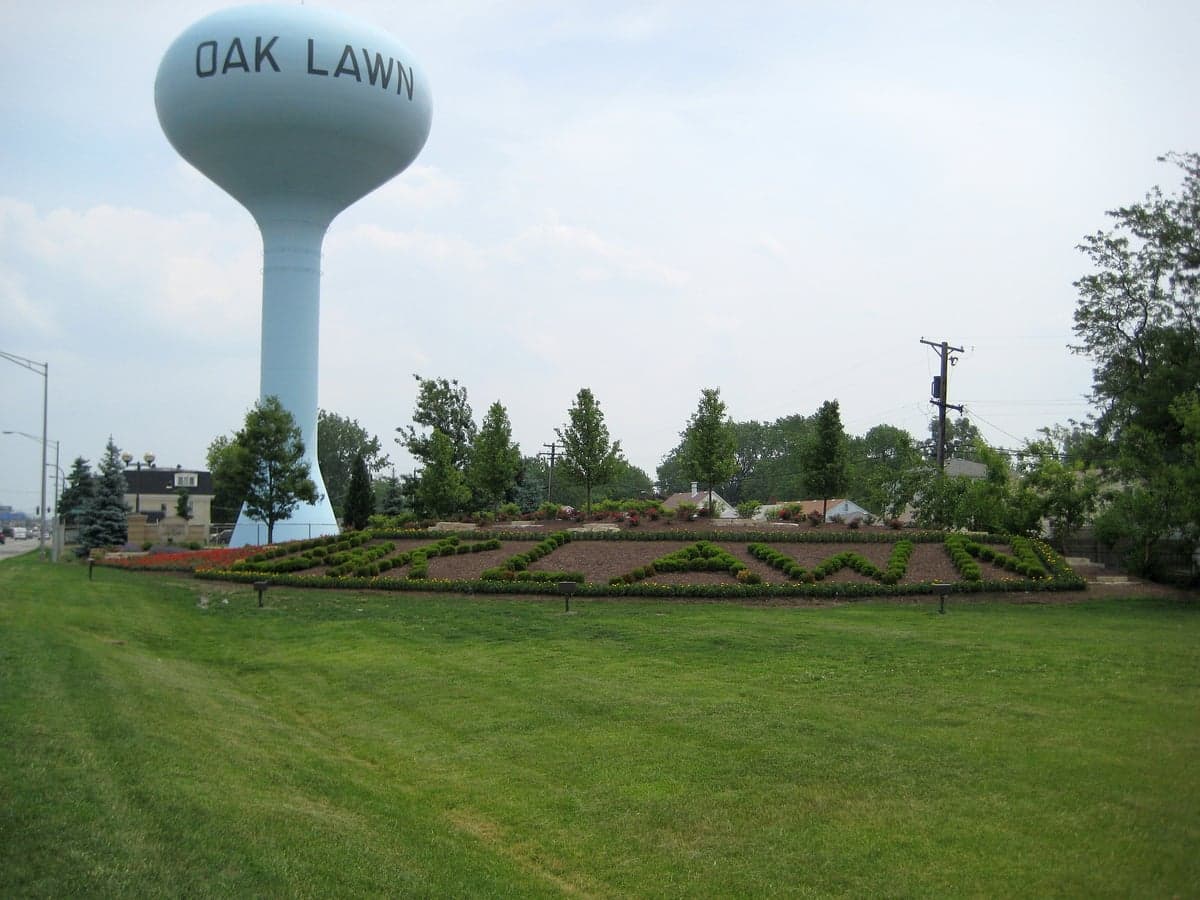
Photo: Wikipedia
Strategic Assessment of Oak Lawn, IL
Multiple tactical vulnerabilities. Population density, target proximity, or disaster risk are likely compounding. A retreat property and exit planning is required.
What does the Strategic Assessment tell us?
Our Strategic Assessment grades tactical survivability of an area. Major population centers, military targets, fallout zones, natural disasters, and border exposure all drive risk — lower exposure means a more defensible position in a crisis.
This is heavily inspired by Joel Skousen's Strategic Relocation book. Highly recommended you checkout the book ($)What does this tell us?
Our Strategic Assessment grades tactical survivability of an area. Major population centers, military targets, fallout zones, natural disasters, and border exposure all drive risk — lower exposure means a more defensible position in a crisis.
This is heavily inspired by Joel Skousen's Strategic Relocation book. Highly recommended you checkout the book ($)Strategic Pillars

Key Distances
Regional Safe Places
Below is our recommended "safe zones" in Illinois and the surrounding area based on our strategic heuristics. For most people, it's unrealistic to live in a “safe zone” full-time due to work, family or other personal reasons. They tend to be more rural. However, many of these areas are perfect for second homes and retreat properties that double as a vacation home or even a short-term rental.
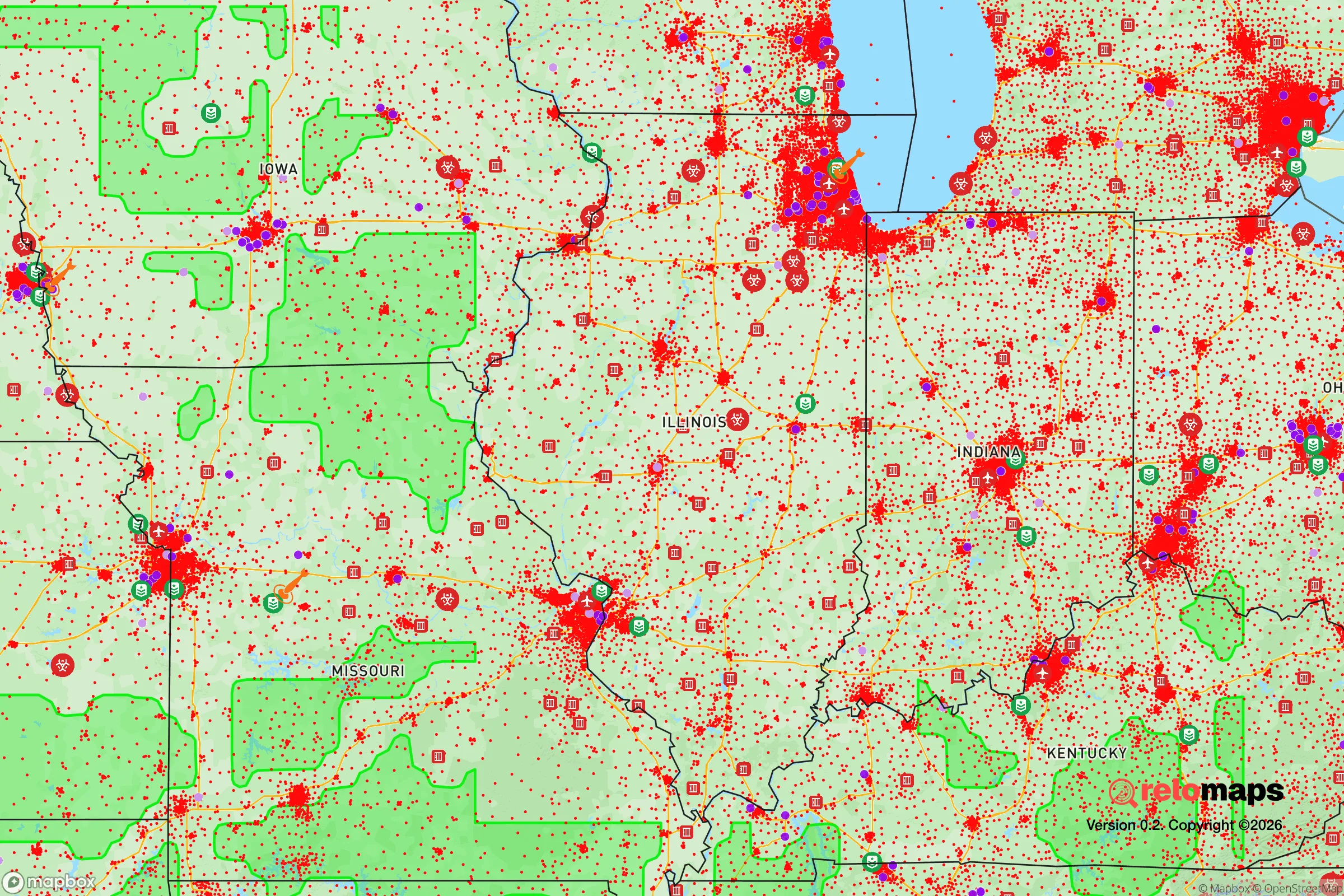
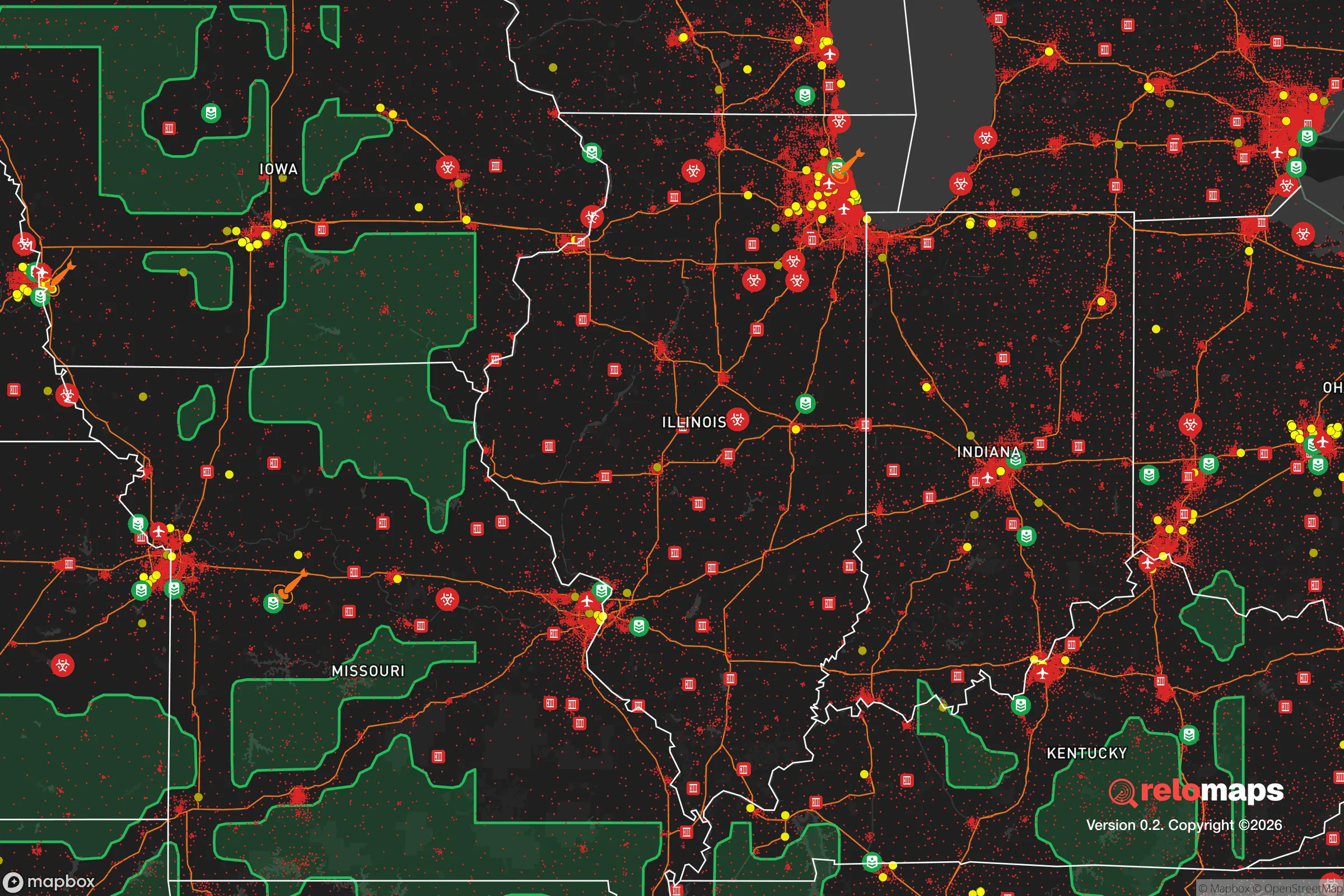


Important Note: For informational purposes only. This does not mean nothing bad ever happens in the green zones. Please use common sense. This is based on public data and modeled with AI. We tried to take a conservative approach but mistakes happen. We update this regularly as new information becomes available.
Solar Generator Recommendations
Backup power matters more here than in safer locations. We've picked three solar generators across budgets and capacity tiers — start with the budget unit if you only need a few essentials, or step up if you want to run a fridge and HVAC for days at a time.

Jackery Portable Power Station Explorer 300
Budget OptionPower on the Go: Weighing only 11 lbs, it's convenient to set up and store with book-sized foldable solar panels

BLUETTI Portable Power Station AC180
Designed for both indoor and outdoor scenarios, AC180 is highly capable as it has a robost capacity and continuous output power.

EF ECOFLOW DELTA Pro Ultra Power Station
Upgraded PickEcoFlow DELTA Pro Ultra is a whole-home energy system designed to grow with your family. Integrated with the Smart Home Panel 2, it scales to meet your evolving energy needs — keeping your home powered, intelligent, and secure through every stage of life.
We earn a commission, at no additional cost to you.
Strategic Assessment Analysis
Oak Lawn, Illinois, presents a complex strategic picture for the conservative prepper or survivalist. Its primary resilience lies in its dense suburban infrastructure and proximity to Chicago’s resources, but this same proximity introduces severe vulnerabilities. For a relocator prioritizing self-sufficiency and security in a degraded scenario, Oak Lawn offers a mixed bag: solid local services and a community-oriented layout, but a high dependency on fragile regional supply chains and a location that places it squarely in the path of any major urban disruption.
Geographic position and natural advantages for a prepper household
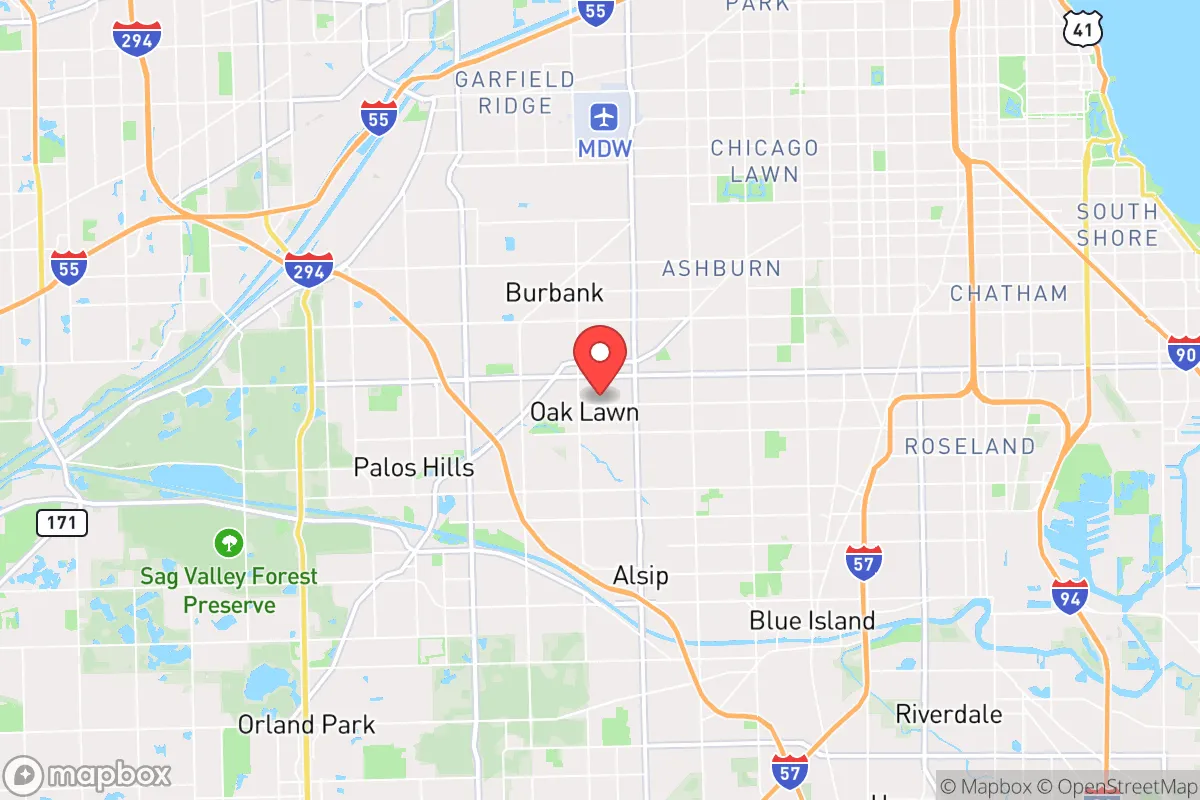
Oak Lawn sits roughly 14 miles southwest of downtown Chicago, placing it in the suburban ring that benefits from Cook County’s infrastructure without being in the immediate blast radius of a major urban event. The area is relatively flat, part of the Chicago Lake Plain, which means no natural barriers to movement—good for evacuation routes but bad for defensible terrain. The Cal-Sag Channel lies just south, offering a potential water source and a navigable corridor, though it’s heavily industrialized and not a pristine resource. The village’s grid-like street pattern, with major arteries like 95th Street and Cicero Avenue, provides multiple egress points, but these same roads become choke points during any mass evacuation. The presence of several large parks—like Wolfe Wildlife Refuge and the Oak Lawn Park District’s 50+ acres of green space—offers limited foraging and water catchment potential, but these are not wilderness areas; they are manicured, monitored, and would be quickly overrun in a crisis. The natural advantage here is not isolation or rugged terrain, but rather the ability to leverage a dense, walkable suburban layout for neighborhood-level mutual aid—if you can build trust with your neighbors before things go sideways.
Risks, exposures, and proximity to fallout-relevant landmarks
The single greatest risk for Oak Lawn is its proximity to Chicago. In any scenario involving civil unrest, mass casualty events, or a major disaster, the city’s population of 2.7 million would push outward along the very highways that feed Oak Lawn. The village is directly adjacent to the Chicago Midway International Airport (about 4 miles north), a high-value target for any coordinated attack or a natural chokepoint for air traffic disruptions. Additionally, Oak Lawn lies within the fallout zone of several potential targets: the Argonne National Laboratory (about 12 miles southwest) and the multiple oil refineries along the Cal-Sag Channel and Lake Michigan (e.g., the ExxonMobil Joliet Refinery, about 20 miles southwest). A conventional or radiological incident at any of these could render large swaths of the southwest suburbs uninhabitable or subject to contamination. The village itself is a dense, built-up environment with limited natural cover—row houses, strip malls, and wide streets that offer little concealment. The presence of Advocate Christ Medical Center, a Level I trauma center, is a double-edged sword: it’s a critical resource for medical emergencies, but it will also be a magnet for the injured and desperate, potentially drawing chaos to the area. For the prepper, the key takeaway is that Oak Lawn is not a retreat; it is a forward operating base with a high risk of being overrun by urban spillover.
Practical resilience for a relocator: food, water, energy, and defensibility
For a relocator looking to establish a resilient household in Oak Lawn, the practical challenges are significant but not insurmountable. Water is the most immediate concern. The village draws from Lake Michigan via the Chicago water system, which is vulnerable to both cyberattack and physical disruption. A prolonged outage would leave residents dependent on bottled supplies or the Cal-Sag Channel, which is industrial and polluted. A prepper should plan for at least two weeks of stored water and a high-quality filtration system (e.g., Berkey or MSR) capable of treating non-potable sources. Food security is equally fragile. Oak Lawn has a high density of grocery stores (Jewel-Osco, Mariano’s, Aldi), but these are just-in-time operations that would empty within 48 hours of a crisis. A serious prepper would need a minimum of three months of shelf-stable food, plus the ability to garden in a small suburban lot—raised beds and container gardening are viable, but the soil in many parts of Oak Lawn is clay-heavy and may require amendment. Energy is a weak point. The grid is reliable day-to-day but is part of the PJM Interconnection, which has faced capacity warnings in recent years. A natural gas generator or a solar setup with battery storage (e.g., Tesla Powerwall) is essential, as is a manual backup for heating (e.g., a wood stove, though local ordinances may restrict installation). Defensibility is the hardest variable. Oak Lawn’s housing stock is predominantly single-family homes on small lots (typically 50x125 feet), with attached garages and open backyards. This layout offers limited standoff distance and multiple points of entry. A layered security plan—reinforced doors, window film, motion-sensor lighting, and a neighborhood watch network—is more practical than trying to fortify a single structure. The village’s police department is well-funded and responsive, but in a widespread collapse, response times would stretch to hours or days. The best defense is a low profile: don’t advertise supplies, keep vehicles nondescript, and build relationships with immediate neighbors before a crisis hits.
The overall strategic picture for Oak Lawn is one of calculated risk. It is not a survivalist’s paradise—no remote acreage, no natural water source, no defensible terrain. But for the conservative relocator who must remain within commuting distance of Chicago for work or family, it offers a workable compromise. The key is to treat Oak Lawn as a base of operations, not a final redoubt. Stockpile aggressively, harden your home within legal limits, and have a pre-planned bug-out route to more rural areas in central or southern Illinois (e.g., the Shawnee National Forest region, about 5 hours south). The village’s greatest strength is its community fabric—if you can find like-minded neighbors, the dense suburban layout actually facilitates mutual aid and shared security. But never forget: Oak Lawn is in the shadow of a major city, and in a crisis, that shadow will lengthen fast. Prepare accordingly, and keep your options open.

* Values derived from national, state, county, city and local statistics and may differ in a specific area. Last updated: 2026-04-30T05:50:42.000Z
Narrative content on this page is AI-generated and may contain mistakes. Verify any details that matter before acting on them.
ReloMaps may earn a commission from affiliate links at no extra cost to you.

