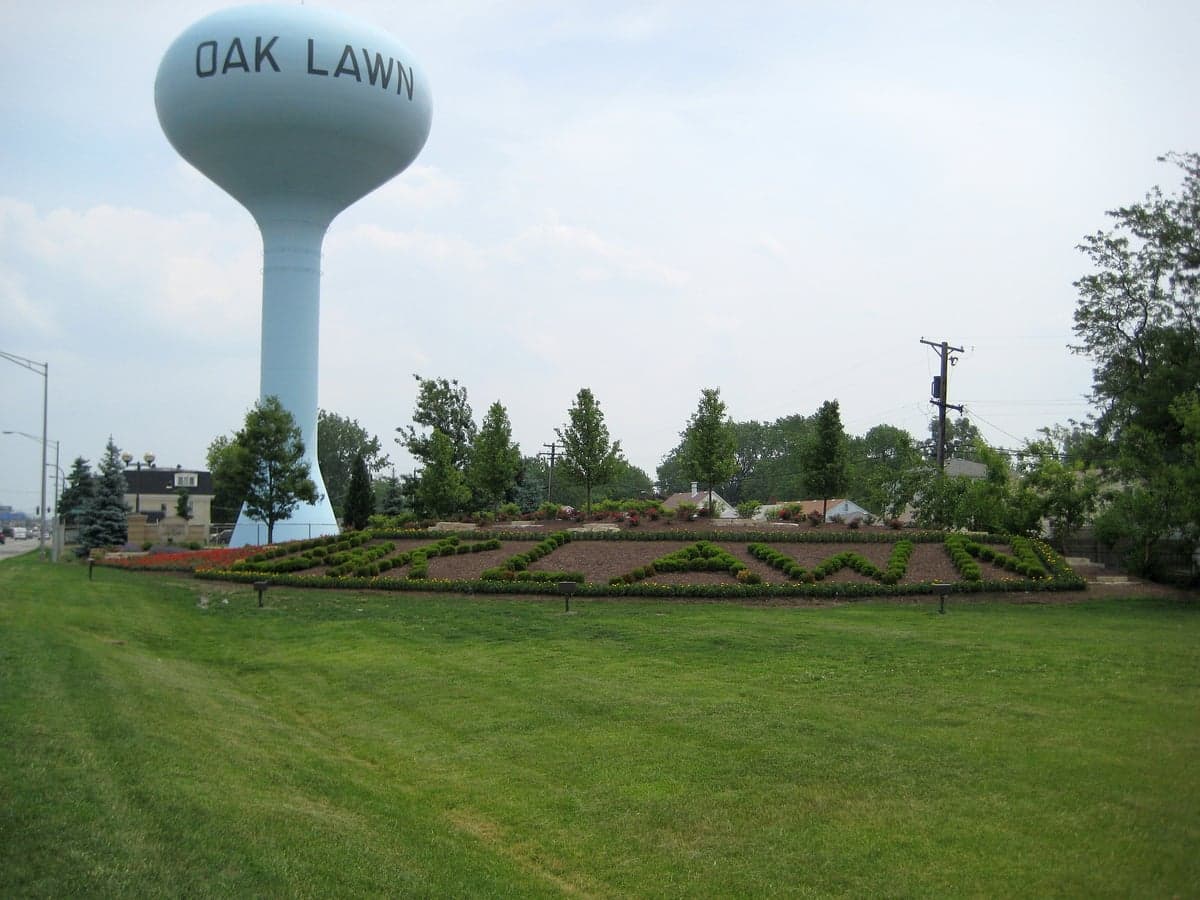
Photo: Wikipedia
Political ClimatePolitical Climate in Oak Lawn, IL
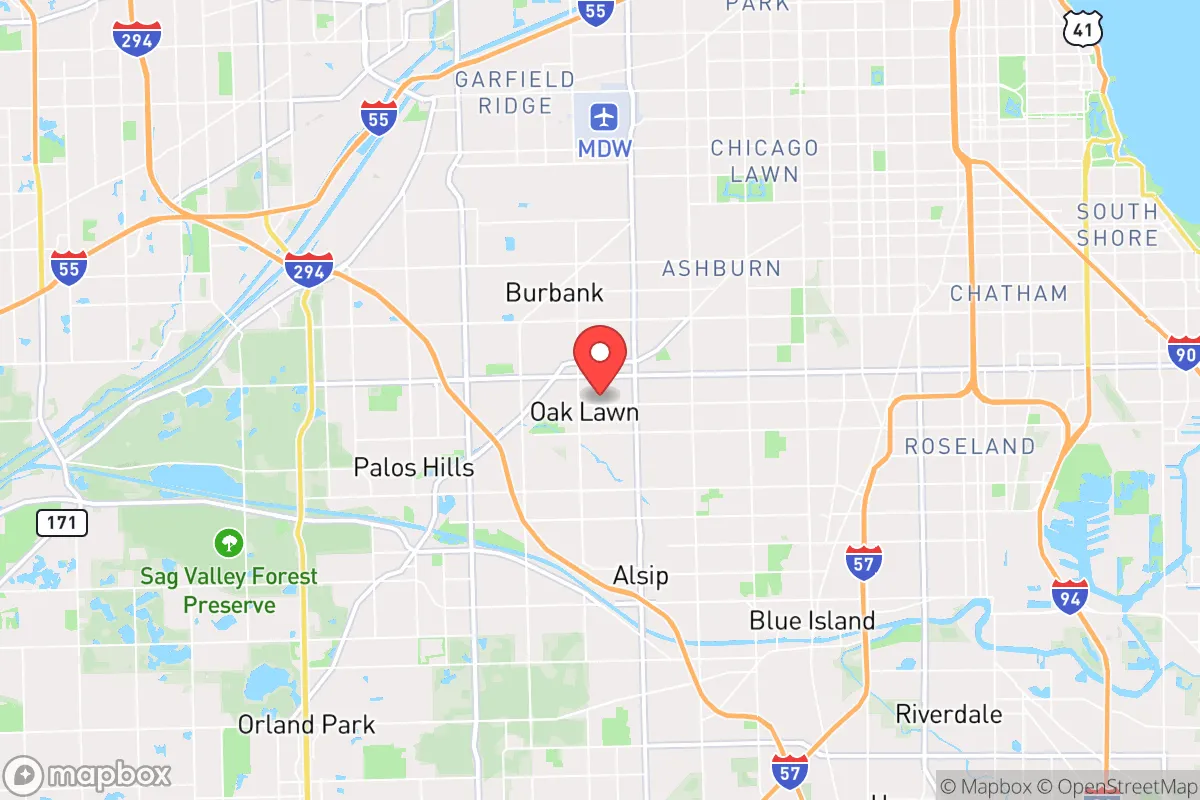
District shown is the primary district for this city’s centroid. Cities may span multiple districts.
Local Political AnalysisPolitical Analysis of Oak Lawn, IL
Oak Lawn, Illinois, has long been a solidly Democratic stronghold, with a Cook PVI of D+3, but if you’ve lived here as long as I have, you know that label doesn’t tell the whole story. This village used to be a quiet, middle-class haven where folks kept to themselves, paid their taxes, and expected the government to stay out of their backyards. Over the last decade or so, though, you’ve seen a slow but steady shift—more progressive policies creeping in from Cook County and Springfield, and a local government that’s increasingly comfortable telling you how to live. The voting patterns still lean blue, but the real story is the growing tension between the old-school, live-and-let-live crowd and the newer wave of activists pushing for things like stricter zoning, higher property taxes, and more social engineering from the village hall.
How it compares
If you drive ten minutes west to Palos Hills or Orland Park, you’ll find a completely different political vibe—those towns are still reliably conservative, with lower taxes and a “we’ll handle it ourselves” attitude. Head east to Chicago’s 19th Ward, and you’re in the heart of the machine, where every block is a precinct and every election is a foregone conclusion. Oak Lawn sits right in the middle, but it’s getting squeezed. The surrounding suburbs like Burbank and Bridgeview are still more traditional, but Oak Lawn’s leadership has been flirting with progressive policies—like the push for more affordable housing mandates and the quiet acceptance of Cook County’s ever-expanding gun restrictions. It’s a far cry from the days when the village board would tell the county to take a hike on anything that felt like overreach.
What this means for residents
For the average Oak Lawn homeowner, the biggest red flag is the slow erosion of personal freedoms. You’re seeing it in the property tax bills that keep climbing—up nearly 15% over the last five years—to fund programs you never voted for. The village council has been more willing to adopt county-level mandates on everything from business licensing to mask requirements, and there’s a growing sense that your voice at the town hall meetings doesn’t carry the weight it used to. If you’re the type who values the right to make your own choices—whether it’s about how you use your land, what you do with your weekends, or how you protect your home—you’re starting to feel like the government is inching into your living room. The long-term trajectory isn’t great: more regulations, higher costs, and a local culture that’s slowly trading common sense for political correctness.
One thing that still sets Oak Lawn apart is its stubborn, blue-collar backbone. You’ll still find plenty of folks at the VFW post or the local diner who remember when this was a place where you could leave your doors unlocked and the biggest political debate was whether to repave 95th Street. But the cultural shift is real—there’s a push for more bike lanes, more “equity” initiatives in the schools, and a general feeling that the village is trying to be something it’s not. If you’re looking for a place where the government respects your privacy and your wallet, Oak Lawn is still a decent bet for now, but keep an eye on the next few elections. The old guard is fading, and the new one has a very different idea of what “community” means.

State Political ClimatePolitical Climate in Illinois
State Political AnalysisPolitical Environment in the State
Illinois is a solidly blue state in federal elections, having voted Democratic in every presidential contest since 1992, but its political reality is far more complicated than that label suggests. The state is dominated by the Chicago metropolitan area, which accounts for roughly 65% of the population and drives the statewide Democratic majority, while the rest of Illinois—particularly downstate and the collar counties—has shifted sharply red over the past two decades. For a conservative considering a move here, the key takeaway is that Illinois is a state of stark political contrasts, where your experience will depend almost entirely on which county you choose to call home.
Urban vs. rural divide
The political map of Illinois is a textbook example of the urban-rural split. Chicago and its inner suburbs (Cook County) are overwhelmingly Democratic, with the city itself delivering margins of 80% or more for Democratic candidates. The surrounding collar counties—DuPage, Lake, Kane, McHenry, and Will—were once Republican strongholds but have trended purple or blue in recent cycles, driven by suburban professional-class voters and demographic shifts. For instance, DuPage County, which voted for George W. Bush by 15 points in 2004, voted for Joe Biden by 10 points in 2020. Meanwhile, downstate Illinois—places like Effingham, Quincy, and the Metro East area near St. Louis—is deeply Republican. The southern tip of the state, often called "Little Egypt," votes red by margins of 60-70% in most races. The divide is so pronounced that some downstate counties have seen their Republican margins increase even as the state overall becomes bluer. A conservative moving to Illinois would find a natural political home in places like Peoria, Springfield, or the rural counties along the Mississippi River, but would feel increasingly isolated in Chicago or its inner suburbs.
Policy environment
Illinois’s policy environment is heavily shaped by its Democratic supermajority in the state legislature and a governor (JB Pritzker) who has pushed a progressive agenda. The state has a flat income tax rate of 4.95%, but a 2020 ballot measure to replace it with a graduated rate—which would have raised taxes on high earners—failed, a rare victory for fiscal conservatives. Property taxes are among the highest in the nation, averaging around 2.1% of home value, which is a major burden for homeowners. The state also has a sanctuary state law (the Illinois Trust Act) that limits cooperation between local law enforcement and federal immigration authorities. On education, Illinois has a robust public school system in wealthier suburbs, but Chicago Public Schools have struggled with funding and performance. The state also mandates comprehensive sex education and has expanded Medicaid under the Affordable Care Act. For conservatives, the regulatory environment is generally unfriendly: gun laws are among the strictest in the country, with a 2023 ban on assault weapons and high-capacity magazines, and the state has a strong labor union presence that influences everything from construction costs to public sector pensions.
Trajectory & freedom
Over the past decade, Illinois has moved decisively toward greater government control in several areas, which is concerning for those who value personal liberty. The 2023 Protect Illinois Communities Act banned the sale and possession of many semi-automatic firearms and magazines over 10 rounds, a significant expansion of gun control that was challenged in court but upheld by the state supreme court. On medical freedom, Illinois was an early adopter of COVID-19 vaccine mandates for healthcare workers and state employees, and it has maintained some of the strictest public health powers in the Midwest. Parental rights have been a flashpoint: the state’s 2021 law requiring schools to allow students to use bathrooms and locker rooms matching their gender identity, without parental notification, has sparked backlash in conservative areas. On the other hand, Illinois has legalized recreational marijuana (2019) and expanded telehealth access, which some see as freedom-enhancing. The state’s pension crisis—with over $140 billion in unfunded liabilities—means that future tax increases or service cuts are almost certain, limiting fiscal freedom for residents. For a conservative, the trajectory is clear: more regulation, higher taxes, and less local control, especially in blue areas.
Civil unrest & political movements
Illinois has seen significant civil unrest and political activism in recent years. The 2020 George Floyd protests in Chicago were among the largest in the country, with widespread property damage and looting in the Loop and along the Magnificent Mile. The city’s response—including a curfew and National Guard deployment—was criticized by both left and right. On the right, the Illinois Family Institute and local conservative groups have been active in school board elections, particularly in suburbs like Naperville and Downers Grove, where parents have protested curriculum content and mask mandates. The state’s sanctuary policies have also been a flashpoint: in 2022, Republican gubernatorial candidate Darren Bailey campaigned heavily on ending the Trust Act, but lost by 12 points. Election integrity has been a concern for conservatives, with Illinois having no voter ID requirement and allowing same-day voter registration, though no major fraud scandals have emerged. The most visible flashpoint for a new resident might be the ongoing debate over Chicago’s crime rates and the state’s cash bail reform, which eliminated cash bail in 2023—a move that has been blamed for an increase in repeat offenders.
Projection
Over the next 5-10 years, Illinois is likely to continue its current trajectory: Chicago and its suburbs will remain solidly Democratic, while downstate will become even more Republican. Demographic trends favor the blue areas: Chicago is gaining young, college-educated residents, while many rural counties are losing population. The state’s fiscal situation is unsustainable, with pension costs consuming a growing share of the budget, which will likely lead to either higher taxes or service cuts. For a conservative moving in now, the realistic expectation is that state-level politics will remain hostile to their values, but local control in red counties offers some buffer. The best bet for a conservative is to choose a county like McLean (Bloomington-Normal) or Sangamon (Springfield), where Republican majorities still hold sway, and to be prepared for continued battles over gun rights, school curriculum, and taxes.
For a new resident, the bottom line is that Illinois offers a mixed bag: world-class amenities and job opportunities in Chicago, but at the cost of high taxes, restrictive gun laws, and a progressive state government that shows no signs of moderating. If you can afford the property taxes and are willing to live in a red county where your vote matters locally, Illinois can still be a good place to raise a family. But if you’re looking for a state that aligns with your values at every level, you’ll likely be frustrated by the direction of Springfield and Chicago.
* Values derived from national, state, county, city and local statistics and may differ in a specific area. Last updated: 2026-04-30T05:50:42.000Z
Narrative content on this page is AI-generated and may contain mistakes. Verify any details that matter before acting on them.
ReloMaps may earn a commission from affiliate links at no extra cost to you.

