Photo: Wikipedia
Demographics of Oak Lawn, IL
Affluence Level in Oak Lawn, IL
A middle-class area roughly in line with national averages across income, home values, education, and employment.
People of Oak Lawn, IL
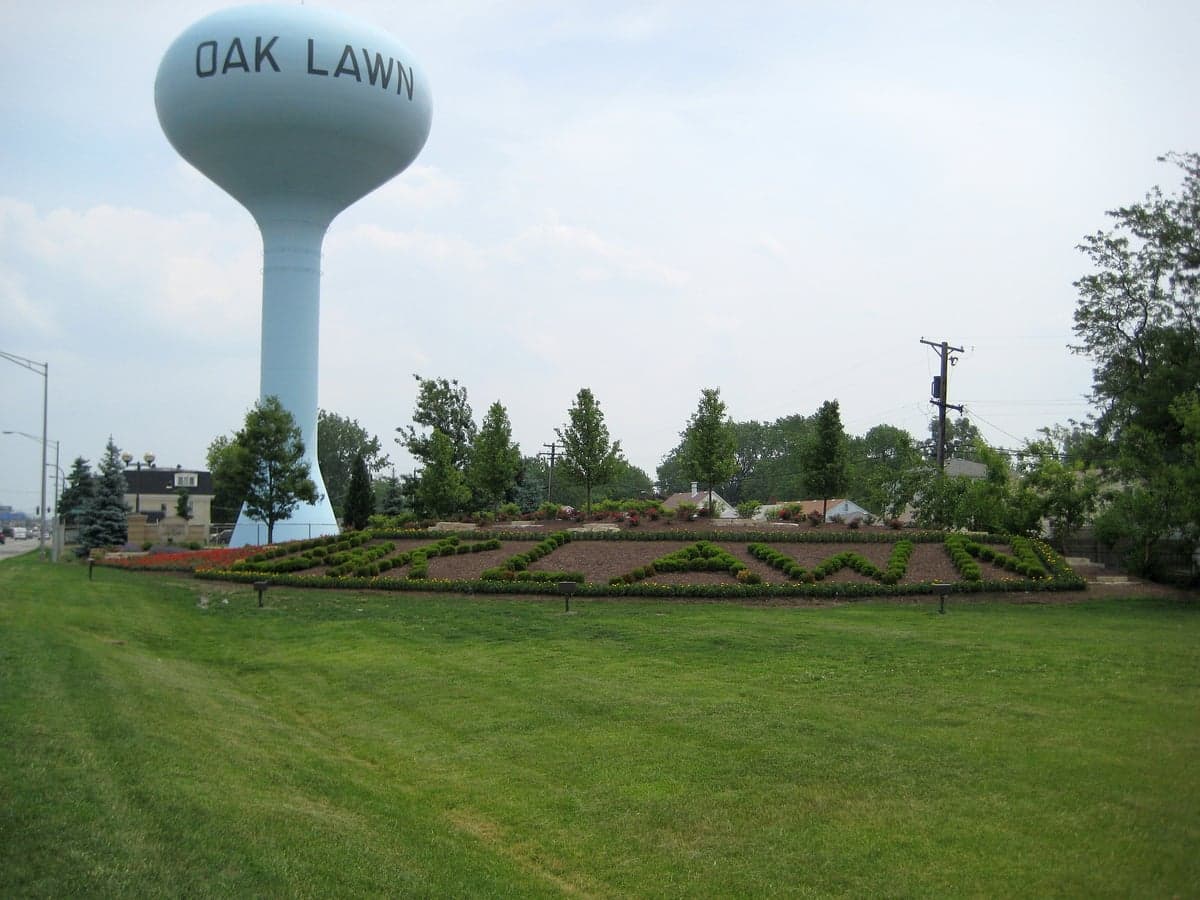
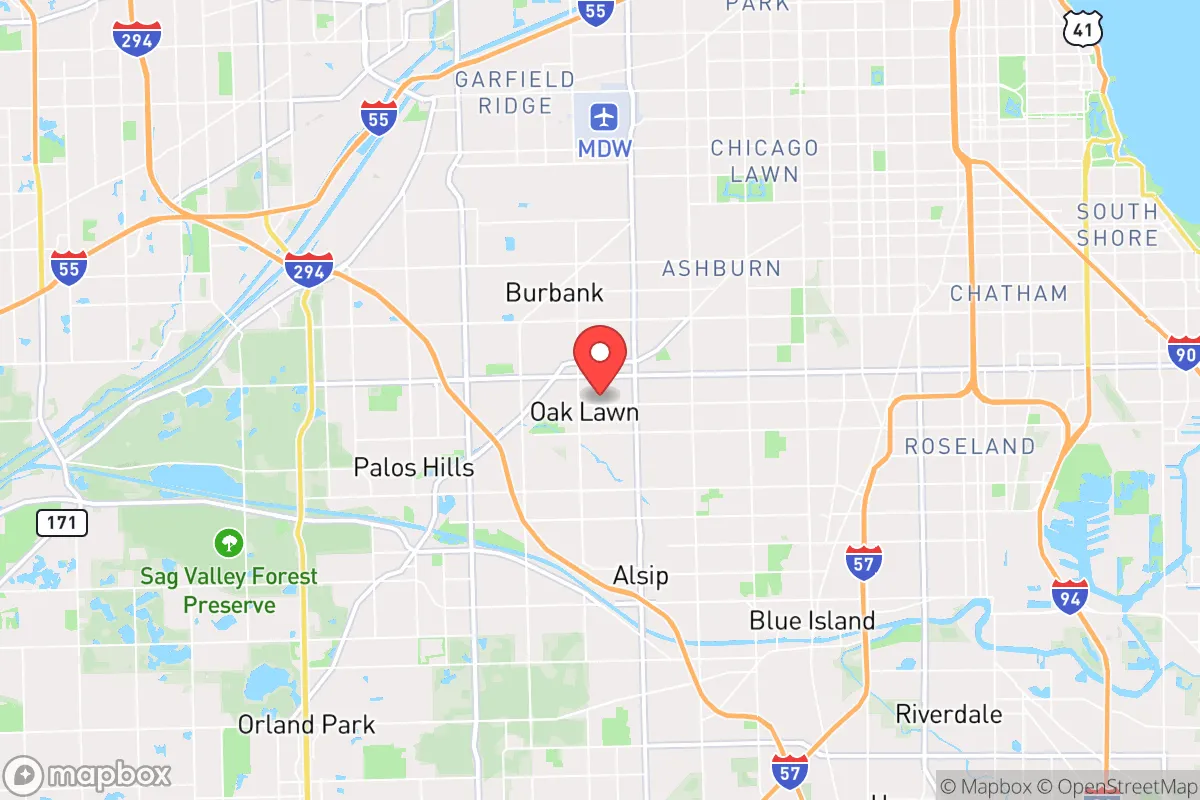
Oak Lawn, Illinois, is a dense, middle-class suburb of 57,098 residents that feels distinctly like a small city within the Chicago metropolitan area. Its population is predominantly white (64.4%) but has become notably more diverse over the past two decades, with a substantial and growing Hispanic community (23.7%) and smaller but established Black (7.5%) and East/Southeast Asian (1.7%) populations. The city’s identity is rooted in its blue-collar and lower-middle-class character, with a strong presence of municipal workers, tradespeople, and healthcare employees, and a 30.2% college-educated rate that trails the national average for suburbs. Oak Lawn is a place where ethnic succession has played out in distinct neighborhoods, and where the next generation of residents is increasingly Hispanic and younger than the aging white base.
How the city was settled and grew
Oak Lawn’s population history begins not with farming but with the railroad. The area was originally part of the Potawatomi hunting grounds until the 1833 Treaty of Chicago opened it to Yankee and German settlers. The real growth catalyst came in the 1880s when the Wabash, St. Louis and Pacific Railroad laid tracks through the area, creating a station at what is now 95th Street and Central Avenue. The village was incorporated in 1909 with fewer than 500 residents, mostly of German and Irish stock who worked in local brickyards, truck farms, and the nearby Chicago stockyards. The first major wave of homebuilding occurred in the 1920s in the Oak Park Addition neighborhood, a grid of bungalows and two-flats that attracted second-generation Polish and Czech families leaving Chicago’s Back of the Yards and Pilsen neighborhoods. These groups built the area’s Catholic parish network, including St. Germaine and St. Catherine of Alexandria, which remain community anchors. The post-World War II boom transformed Oak Lawn from a village into a city: between 1950 and 1960, the population exploded from 8,751 to 55,932 as returning GIs and their families bought affordable new ranch homes in subdivisions like Ridgewood and Westgate. This wave was overwhelmingly white, Catholic, and ethnically European—Polish, Italian, Irish, and German—and they established the conservative, family-oriented, union-friendly culture that still defines the city’s political character.
Modern era (post-1965)
The 1965 Hart-Cellar Act had a delayed but real effect on Oak Lawn. Unlike Chicago neighborhoods that saw rapid ethnic turnover in the 1970s, Oak Lawn remained heavily white through the 1980s—the 1990 Census still showed the city as 96% white. The first significant non-white influx came in the 1990s and 2000s, driven by Hispanic families moving south from Chicago’s Brighton Park and Archer Heights neighborhoods. They settled primarily in the St. Linus area (around 105th and Central) and the Southwest Highway corridor, where older, smaller homes and two-flats offered affordable entry points. Today, the Hispanic population of 23.7% is concentrated in these southern and western blocks, and the community has established several Spanish-language churches and taquerias along 95th Street. The Black population (7.5%) grew more slowly, largely from middle-class families leaving Chicago’s Englewood and Auburn Gresham neighborhoods in the 2000s and 2010s, settling in the Oak Lawn East section near 95th and Pulaski. East/Southeast Asian residents (1.7%) are a smaller but visible presence, primarily Filipino and Vietnamese families drawn by the area’s affordability and proximity to Advocate Christ Medical Center, a major employer. The Indian-subcontinent population (0.3%) remains negligible, a fact that distinguishes Oak Lawn from nearby suburbs like Burr Ridge or Naperville.
The future
Oak Lawn’s demographic trajectory points toward continued diversification, but not rapid wholesale change. The white population is aging—the median age for white residents is 44, compared to 31 for Hispanic residents—and younger white families are increasingly choosing newer exurbs like Mokena or New Lenox. The Hispanic share is likely to rise from 23.7% toward 30-35% over the next decade, driven by both natural increase and continued inflow from Chicago. This growth is concentrated in the St. Linus and Southwest Highway neighborhoods, which are becoming de facto Hispanic enclaves rather than fully integrated blocks. The Black population has plateaued in recent years, as Oak Lawn’s housing stock (mostly older bungalows and ranches) competes with newer subdivisions in south-suburban Matteson and Richton Park. East/Southeast Asian growth is steady but slow, limited by the lack of an established ethnic infrastructure like the Asian grocery stores and community centers found in nearby Chinatown or Westmont. The city is not tribalizing into hostile camps—civic life remains integrated at schools and parks—but it is developing distinct ethnic corridors rather than a fully blended population.
For a conservative-leaning family or individual considering a move, Oak Lawn offers a stable, affordable, and increasingly diverse community where the old European-ethnic, union-heavy culture is gradually giving way to a more Hispanic-influenced, younger demographic. The city is not becoming a high-income, highly educated enclave—its college attainment rate remains below 31%—but it is not declining either. It is a middle-class suburb in demographic transition, where the next generation of homeowners will likely be Hispanic, and where the schools and local economy are adapting to that reality. For those who value ethnic succession as a sign of vitality, Oak Lawn is a solid choice; for those seeking a static, homogeneous community, the window is closing.

* Values derived from national, state, county, city and local statistics and may differ in a specific area. Last updated: 2026-04-30T05:50:42.000Z
Narrative content on this page is AI-generated and may contain mistakes. Verify any details that matter before acting on them.
ReloMaps may earn a commission from affiliate links at no extra cost to you.

