
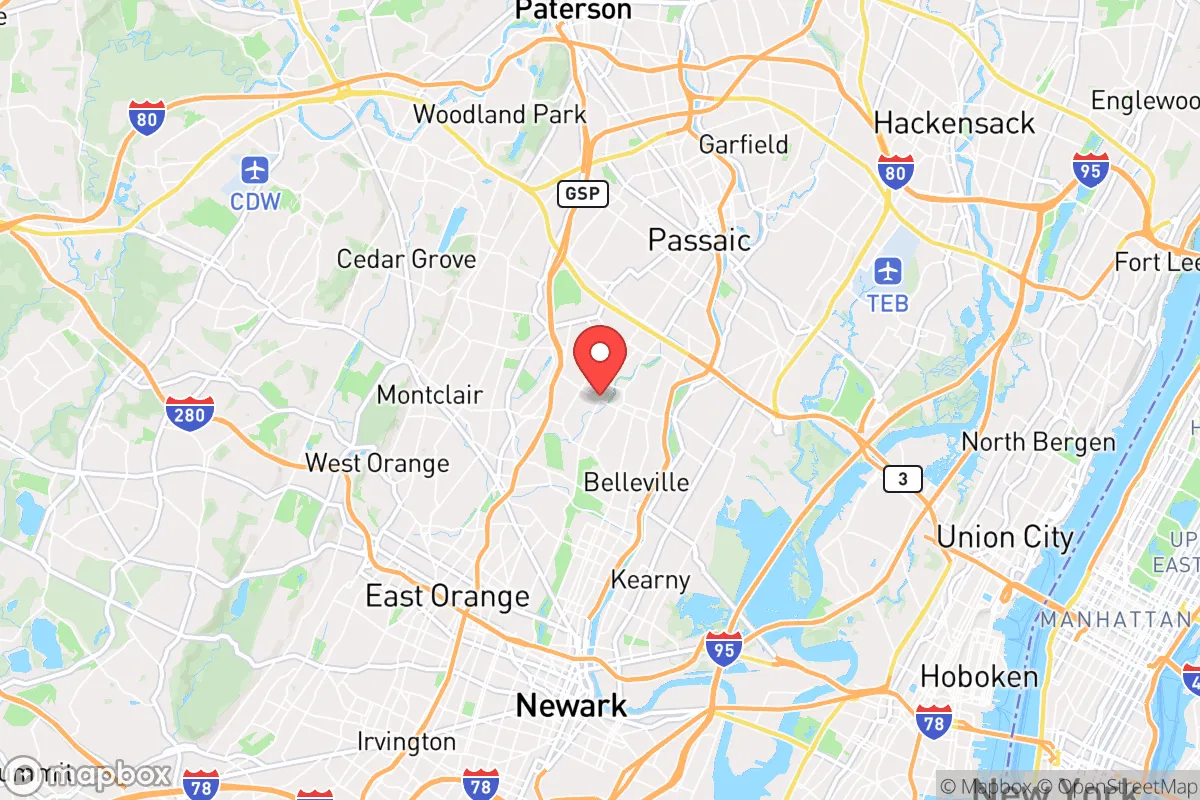
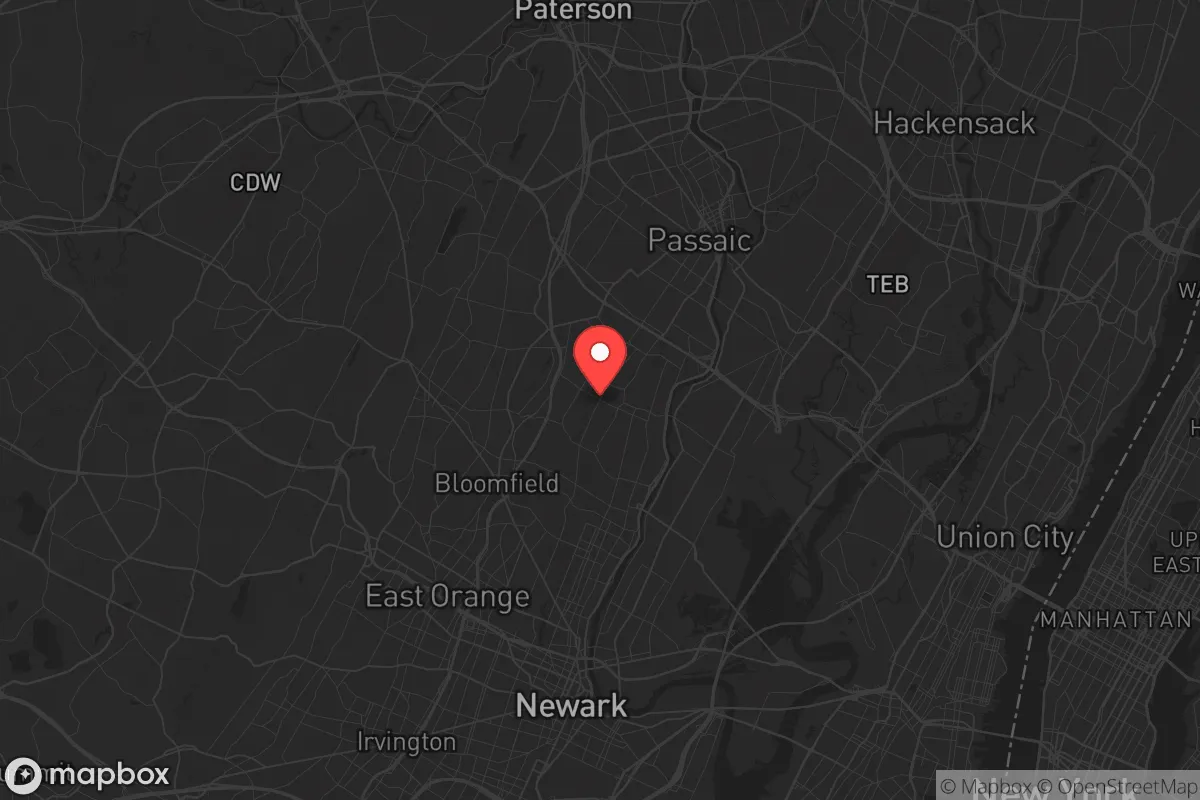
Photo: Wikipedia
Political ClimatePolitical Climate in Nutley, NJ
District shown is the primary district for this city’s centroid. Cities may span multiple districts.
Local Political AnalysisPolitical Analysis of Nutley, NJ
Nutley, New Jersey, sits solidly in the blue column, with a Cook Partisan Voting Index (PVI) of D+5, meaning it leans about five points more Democratic than the national average. That puts it right in line with the state of New Jersey as a whole, which also carries a D+5 PVI. But if you’ve lived here a while, you know the story isn’t quite that simple—Nutley’s politics have a distinct local flavor, shaped by its dense suburban character, strong union presence, and a history of moderate, machine-style governance that can surprise newcomers.
How it compares
On paper, Nutley and New Jersey are political twins, both D+5. In practice, Nutley feels a bit more moderate than the state’s bluest corners—like neighboring Newark (D+25) or Jersey City (D+20)—where progressive activism is louder and more visible. Instead, Nutley’s Democratic lean is more of a quiet, institutional thing. The township has a long tradition of Democratic control in local offices, but those Democrats often run on platforms of fiscal caution and public safety, not sweeping social change. Compare that to nearby Bloomfield or Belleville, which also lean Democratic but have seen more internal party friction in recent years. On the flip side, head west a few miles to towns like Caldwell or Verona, and you’ll find a more competitive mix, with Republican candidates regularly pulling 40-45% of the vote in local races. Nutley’s Republican minority is smaller but not invisible—you’ll see yard signs for GOP candidates in state and federal elections, especially in the more affluent sections near the Passaic River. The real contrast, though, is with the deep-red rural counties of Sussex and Warren, about an hour west, where the PVI swings to R+15 or worse. That’s a different world entirely.
What this means for residents
For liberal residents, Nutley is a comfortable place to live politically. You’ll find local officials who support public education funding, affordable housing initiatives, and environmental protections—things that align with the broader Democratic platform. The township’s Democratic club is active, and turnout in presidential years is high, often topping 70%. For conservative residents, life is more about finding your niche. You won’t feel ostracized, but you’ll notice that local government leans left, and your vote in primaries carries less weight. That said, Nutley’s moderate streak means conservatives aren’t facing aggressive progressive policies—no defund-the-police movements here, and zoning debates tend to favor single-family home stability over dense development. Property taxes, a perennial issue across New Jersey, are high in Nutley (around $12,000 annually for the average home), and both parties grumble about them, though Democrats generally favor more state aid to offset costs while Republicans push for spending caps.
Culturally, Nutley’s political climate reflects its Italian-American and Irish-American roots, with a strong emphasis on community events, parades, and local sports. You won’t see the kind of street-level activism you’d find in Montclair or Maplewood. Instead, politics here is more about who you know at the diner or the local barbershop. The township’s recent push for a new municipal complex and park upgrades has been bipartisan in practice, even if the votes break along party lines. Looking ahead, Nutley’s trajectory seems stable—D+5 isn’t going anywhere fast, but as younger, more diverse families move in from Newark and New York City, the lean could deepen slightly. For now, it’s a place where your vote matters, but your neighbor’s vote probably looks a lot like yours.

State Political ClimatePolitical Climate in New Jersey
State Political AnalysisPolitical Environment in the State
New Jersey has a solid Democratic lean, with a Cook PVI of D+5, but that number doesn't tell the full story of a state that's been shifting rightward in recent cycles. For decades, the state was reliably blue at the presidential level, but the margins have tightened: in 2020, Joe Biden won by about 16 points, down from Hillary Clinton's 14-point win in 2016, and in 2024, Kamala Harris carried it by roughly 10 points. The real story is the suburban and exurban drift—places like Ocean County and Sussex County have become reliably red, while the urban cores of Newark, Jersey City, and Paterson remain deep blue. For a conservative-leaning relocator, the state offers a mixed bag: high taxes and progressive policies in the cities, but growing conservative strongholds in the suburbs and rural areas.
Urban vs. rural divide
The political map of New Jersey is a tale of three regions. The northeast corridor—from Hoboken and Jersey City up through Newark and Paterson—is the Democratic engine, fueled by dense urban populations, union households, and a large immigrant base. These areas vote 70-80% Democratic and drive the state's overall blue lean. In contrast, the south and west—places like Ocean County (Toms River, Lakewood) and Hunterdon County—are reliably Republican, often voting 55-65% for GOP candidates. The suburban ring around New York City, including Bergen County and Essex County's wealthier towns, has been a battleground: these areas voted for Biden but have shown signs of drift, with some towns like Wyckoff and Franklin Lakes flipping red in local races. The rural Sussex County and Warren County are solidly red, driven by gun rights, lower taxes, and a more agrarian lifestyle. The divide isn't just geographic—it's cultural, with urban areas focused on transit, diversity, and progressive social policies, while rural and exurban areas prioritize property rights, school choice, and fiscal conservatism.
Policy environment
New Jersey's policy environment is a study in contrasts. On taxes, it's one of the highest-taxed states in the nation: the top income tax rate is 10.75% (for income over $1 million), and property taxes average $9,500 per year, the highest in the country. The state has a progressive tax structure, with a 2.5% corporate business tax surcharge. On regulation, New Jersey is heavily regulated, particularly in environmental and land-use areas—the Department of Environmental Protection (DEP) has broad authority over development, and the state's Mount Laurel Doctrine mandates affordable housing quotas in every municipality. Education policy is centralized: the state funds schools through a formula that heavily favors urban districts, and the New Jersey Education Association (NJEA) is one of the most powerful teachers' unions in the country. Healthcare is largely regulated through the Affordable Care Act state exchange, and the state has expanded Medicaid. Election laws are relatively accessible: no-excuse mail-in voting was made permanent in 2021, and automatic voter registration is in place. For a conservative, the policy environment feels like a heavy hand—high taxes, strong unions, and a regulatory thicket—but there are pockets of relief, like the School Choice program and the Opportunity Scholarship Act for low-income students.
Recent policy direction
Recent legislation points in a progressive direction, but with some notable exceptions. In 2022, the state passed a gun safety package that included a ban on .50 caliber rifles, a requirement for microstamping on handguns, and a limit on magazine capacity to 10 rounds. The New Jersey Self-Defense Law is restrictive: it's a "justifiable use of force" state with a duty to retreat in public, and concealed carry permits are issued on a "justifiable need" standard that was tightened after the Supreme Court's Bruen decision. On education, the state passed a parental notification law in 2023 requiring schools to inform parents of changes in a student's health or well-being, but it was watered down from original proposals. On medical and bodily autonomy, the state codified abortion rights in the Freedom of Reproductive Choice Act (2022), and it's a sanctuary state for transgender individuals, with laws protecting access to gender-affirming care. On property rights, the state has a strong eminent domain framework, but the New Jersey Supreme Court has been protective of property owners in recent cases. On voting, the state expanded mail-in voting and early voting, but it also passed a voter ID law in 2023 that requires identification for in-person voting—a compromise that both parties accepted. For a conservative, the direction is mixed: gun rights are restricted, but parental rights and school choice have seen modest gains.
Civil unrest & political movements
New Jersey has a history of organized political activism on both sides. The Black Lives Matter protests in 2020 were large in cities like Newark and Trenton, but they were mostly peaceful. The state's sanctuary policy is strong: the Immigrant Trust Directive (2018) limits local law enforcement cooperation with federal immigration authorities, and the state has a Driver's License for All law (2019) for undocumented residents. On the right, the New Jersey Second Amendment Society is active, organizing protests against gun laws and holding rallies at the statehouse. The election integrity debate has been muted compared to other states, but there were controversies in 2020 over mail-in ballot counting in Paterson and Newark, leading to a 2021 law requiring signature verification. The secession rhetoric is minimal, but there's a small New Jersey Republic movement that advocates for state sovereignty. A flashpoint for new residents is the property tax revolt: groups like NJ Taxpayers Association hold regular protests at the statehouse, and the 2.5% property tax cap (2010) is a constant source of tension. For a conservative, the visible activism is more on the left in urban areas, but the right is organized in the suburbs and rural areas.
Projection
Over the next 5-10 years, New Jersey is likely to continue its slow rightward drift, but it won't become a swing state. The key demographic shift is out-migration: the state lost population in 2022 and 2023, with many residents moving to Florida, Texas, and North Carolina. Those leaving tend to be higher-income and more conservative, which could actually make the state bluer in the short term. However, the remaining population is aging, and younger voters are more progressive. The suburban drift in places like Morris County and Somerset County could flip some districts red in local races, but the state's gerrymandered legislative map (drawn by a bipartisan commission) will keep the Assembly and Senate Democratic. The in-migration from New York City is mostly liberal, but there's a growing number of remote workers from the city moving to Hunterdon County and Sussex County, which could boost the GOP. The wildcard is the property tax crisis: if the state doesn't reform its school funding formula, more residents will leave, accelerating the rightward shift. For a conservative moving in now, expect the state to remain blue at the top but with growing red pockets in the suburbs and rural areas.
For a new resident, the bottom line is that New Jersey offers a high-tax, high-regulation environment with strong progressive policies in the cities, but there are conservative-friendly enclaves in the suburbs and rural areas. If you're a conservative, you'll find your people in Ocean County or Sussex County, but you'll pay high property taxes and deal with restrictive gun laws. If you're a liberal, the urban areas offer a progressive haven with strong social services and union protections. The state's trajectory is a slow rightward drift, but it's still a blue state—so expect the policy environment to remain progressive for the foreseeable future. The practical takeaway: choose your town carefully, because the political climate varies more by municipality than by state.
* Values derived from national, state, county, city and local statistics and may differ in a specific area. Last updated: 2026-11-06T16:52:06.000Z
Narrative content on this page is AI-generated and may contain mistakes. Verify any details that matter before acting on them.
ReloMaps may earn a commission from affiliate links at no extra cost to you.

