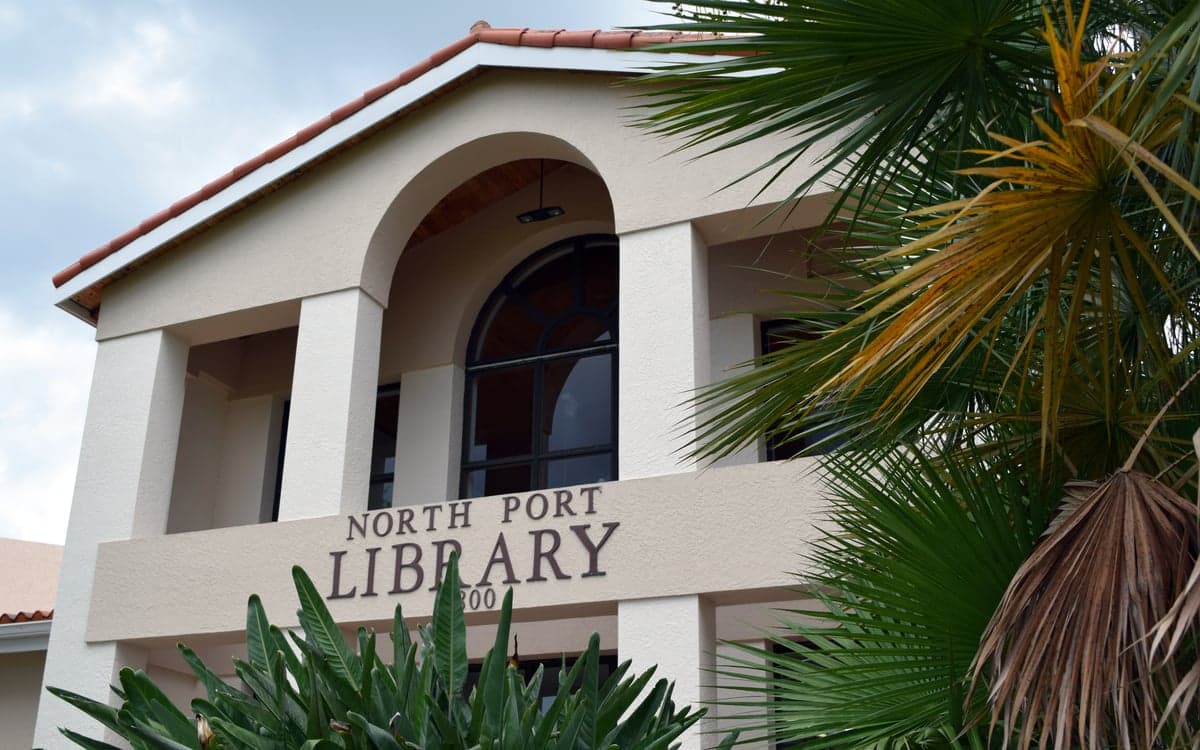
Photo: Wikipedia
Strategic Assessment of North Port, FL
Meaningful friction. Expect exposure to either population pressure, blast zones, or natural disaster risk. Consider buying a retreat property.
What does the Strategic Assessment tell us?
Our Strategic Assessment grades tactical survivability of an area. Major population centers, military targets, fallout zones, natural disasters, and border exposure all drive risk — lower exposure means a more defensible position in a crisis.
This is heavily inspired by Joel Skousen's Strategic Relocation book. Highly recommended you checkout the book ($)What does this tell us?
Our Strategic Assessment grades tactical survivability of an area. Major population centers, military targets, fallout zones, natural disasters, and border exposure all drive risk — lower exposure means a more defensible position in a crisis.
This is heavily inspired by Joel Skousen's Strategic Relocation book. Highly recommended you checkout the book ($)Strategic Pillars

Key Distances
Regional Safe Places
Below is our recommended "safe zones" in Florida and the surrounding area based on our strategic heuristics. For most people, it's unrealistic to live in a “safe zone” full-time due to work, family or other personal reasons. They tend to be more rural. However, many of these areas are perfect for second homes and retreat properties that double as a vacation home or even a short-term rental.

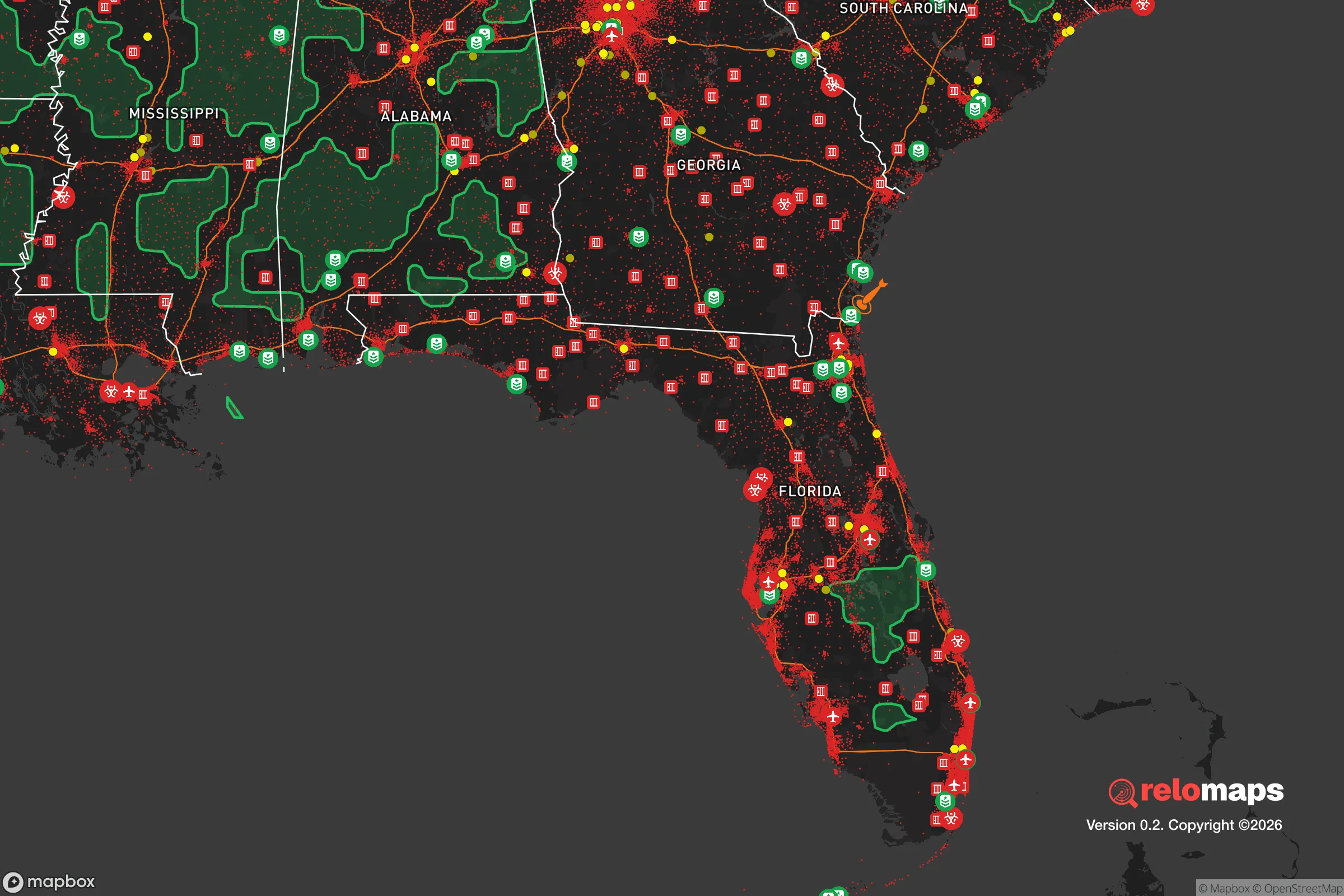


Important Note: For informational purposes only. This does not mean nothing bad ever happens in the green zones. Please use common sense. This is based on public data and modeled with AI. We tried to take a conservative approach but mistakes happen. We update this regularly as new information becomes available.
Solar Generator Recommendations
Backup power matters more here than in safer locations. We've picked three solar generators across budgets and capacity tiers — start with the budget unit if you only need a few essentials, or step up if you want to run a fridge and HVAC for days at a time.

Jackery Portable Power Station Explorer 300
Budget OptionPower on the Go: Weighing only 11 lbs, it's convenient to set up and store with book-sized foldable solar panels

BLUETTI Portable Power Station AC180
Designed for both indoor and outdoor scenarios, AC180 is highly capable as it has a robost capacity and continuous output power.

EF ECOFLOW DELTA Pro Ultra Power Station
Upgraded PickEcoFlow DELTA Pro Ultra is a whole-home energy system designed to grow with your family. Integrated with the Smart Home Panel 2, it scales to meet your evolving energy needs — keeping your home powered, intelligent, and secure through every stage of life.
We earn a commission, at no additional cost to you.
Strategic Assessment Analysis
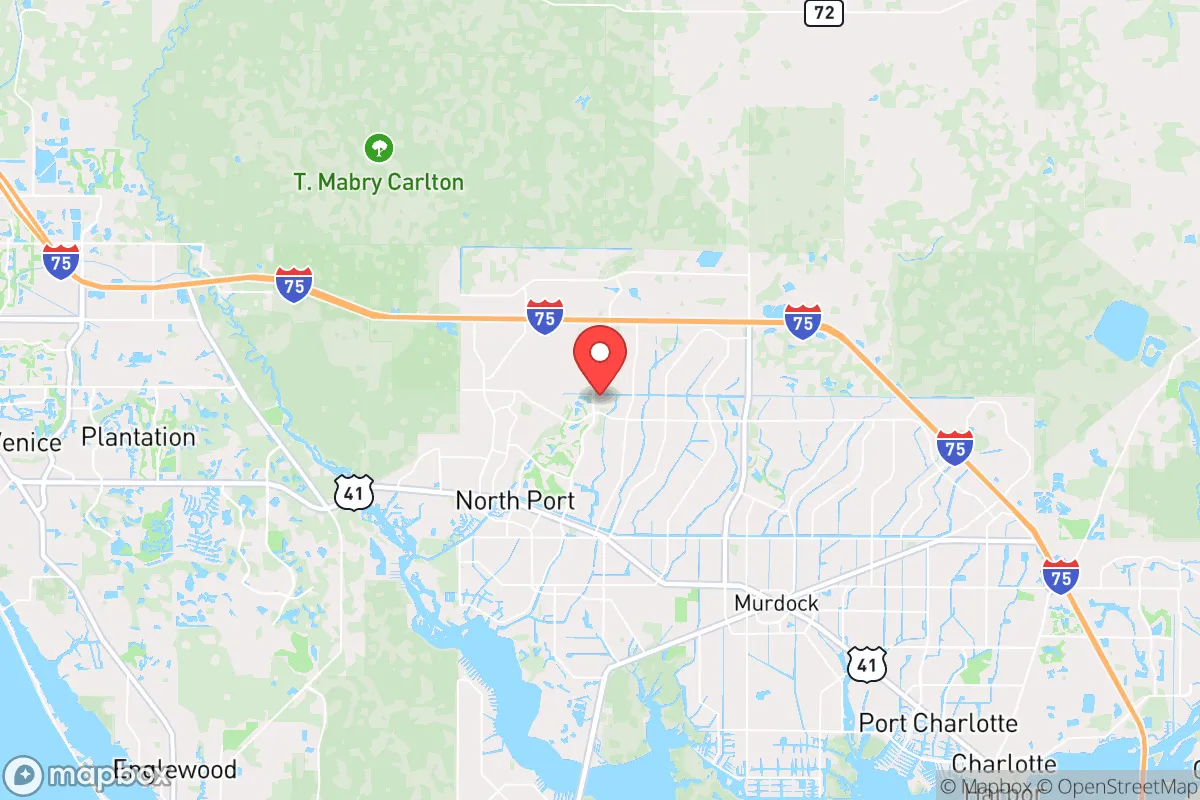
North Port, Florida, offers a surprisingly resilient strategic position for those prioritizing long-term preparedness, combining affordable land with a location that balances access to resources against the risks of major metropolitan collapse. Situated in Sarasota County along the I-75 corridor, this city of roughly 80,000 sits roughly 30 miles south of Sarasota proper and 35 miles north of Fort Myers, placing it within a zone that is close enough to tap into critical infrastructure but far enough from the densest population centers to avoid the worst of a cascading urban failure. The area’s rapid growth—population nearly doubled between 2010 and 2020—reflects an influx of people seeking space and lower costs, but for the prepper, the key advantage is the undeveloped interior, much of it still ranchland and scrub forest, which provides buffer and options for self-sufficiency that dense coastal suburbs cannot match.
Geographic position and natural advantages for long-term security
North Port’s geography is defined by its position on the Myakka River and its proximity to the vast, sparsely populated Myakka River State Park, a 37,000-acre wilderness that serves as both a natural resource and a potential fallback zone. The city’s layout is unusually spread out—over 100 square miles of mostly low-density residential lots, many of which are still vacant—meaning a relocator can secure acreage without the premium prices of Sarasota or Venice. The flat, sandy terrain is not ideal for agriculture without amendment, but the high water table and numerous canals (part of the failed General Development Corporation’s 1950s master plan) provide surface water access that can be filtered or treated. For the survivalist, the ability to dig a well is critical: the Floridan aquifer lies roughly 200–300 feet deep here, and many existing homes already have private wells, reducing dependency on municipal systems during grid-down scenarios. The area’s subtropical climate allows for year-round growing of staples like sweet potatoes, cassava, and citrus, though the summer heat and humidity demand careful storage and pest management. The lack of significant elevation (the highest point is about 30 feet above sea level) means flooding is the primary natural threat, but the city’s drainage canals and the Myakka River’s floodplain are well-mapped, allowing a savvy buyer to avoid the worst zones.
Risks, exposures, and proximity to fallout-relevant landmarks
The most significant strategic liability for North Port is its exposure to hurricane storm surge and the cascading effects of a major storm on the broader region. While the city itself is roughly 10–15 miles inland, the barrier islands and coastal communities to the west—Sarasota, Venice, Siesta Key—are densely populated and vulnerable to catastrophic surge, which would send evacuees flooding inland along I-75 and US-41, potentially overwhelming North Port’s resources and creating a humanitarian choke point. For the prepper, this means that a major hurricane could bring tens of thousands of displaced people into the area within hours, straining food, fuel, and medical supplies. Additionally, the city lies within 50 miles of the MacDill Air Force Base in Tampa, a high-value military installation that could become a target during a major conflict or civil unrest, drawing secondary effects like airspace restrictions or troop movements. The proximity to the Piney Point phosphate plant (about 40 miles north, near Bradenton) and the numerous fertilizer and chemical storage facilities along the Manatee River corridor introduces a low-probability but high-consequence risk of toxic release or groundwater contamination. On the positive side, North Port is far from any known nuclear power plant—the closest is St. Lucie, over 100 miles away—and the lack of major military or industrial targets within the immediate area reduces the likelihood of direct kinetic or radiological fallout.
Practical resilience for a relocator: food, water, energy, and defensibility
For the individual or family looking to establish a resilient homestead, North Port offers a mixed but workable baseline. Water is the strongest asset: the shallow aquifer and high rainfall (averaging 54 inches per year) mean that a properly sited well with a hand pump or solar-powered pump can provide a reliable off-grid supply, and the Myakka River can serve as a secondary source with appropriate filtration. The city’s building codes are relatively lax compared to coastal zones—no impact-resistant windows required inland—so a relocator can retrofit a home with hurricane shutters, metal roofing, and reinforced doors without excessive cost. Energy independence is feasible: the abundant sunshine (over 260 sunny days per year) makes solar panels a natural fit, and the lack of tree cover on many lots means unobstructed sun exposure. Battery storage is essential, as grid outages are common during summer thunderstorms and hurricane season. For food, the sandy soil requires raised beds or container gardening, but the long growing season allows for multiple harvests; local farmers’ markets and the nearby Amish communities in Arcadia (30 miles east) provide a source of heirloom seeds and livestock. Defensibility is a concern: North Port’s sprawling, low-density layout means that a single property can be isolated, but the lack of natural barriers (no hills, dense forests, or rivers that can’t be forded) makes it difficult to create a true hardpoint. The best strategy is to choose a lot at the end of a dead-end road or with a long driveway, and to invest in perimeter fencing and a good security camera system. The local sheriff’s office (Sarasota County) is well-funded and responsive, but during a regional crisis, response times will stretch to hours or days, so self-reliance is non-negotiable.
The overall strategic picture for North Port is that of a moderately resilient secondary zone—not a remote bunker, but a viable base of operations for those who accept the trade-offs of Florida living. The city’s growth trajectory and proximity to I-75 mean that it will not remain quiet forever; as Tampa and Sarasota expand, North Port will absorb more population and infrastructure, increasing both risk and opportunity. For the conservative prepper who values space, water access, and a climate that supports year-round food production, North Port offers a solid foundation, provided you plan for hurricane evacuation surges, invest in off-grid utilities, and secure your perimeter. It is not a retreat for those seeking total isolation, but it is a defensible, resource-rich location that can sustain a prepared family through most scenarios short of a direct hit from a Category 5 storm or a regional economic collapse. The key is to act now, while land prices remain reasonable and the area’s character is still defined by open space rather than strip malls.

* Values derived from national, state, county, city and local statistics and may differ in a specific area. Last updated: 2026-04-19T07:30:57.000Z
Narrative content on this page is AI-generated and may contain mistakes. Verify any details that matter before acting on them.
ReloMaps may earn a commission from affiliate links at no extra cost to you.

