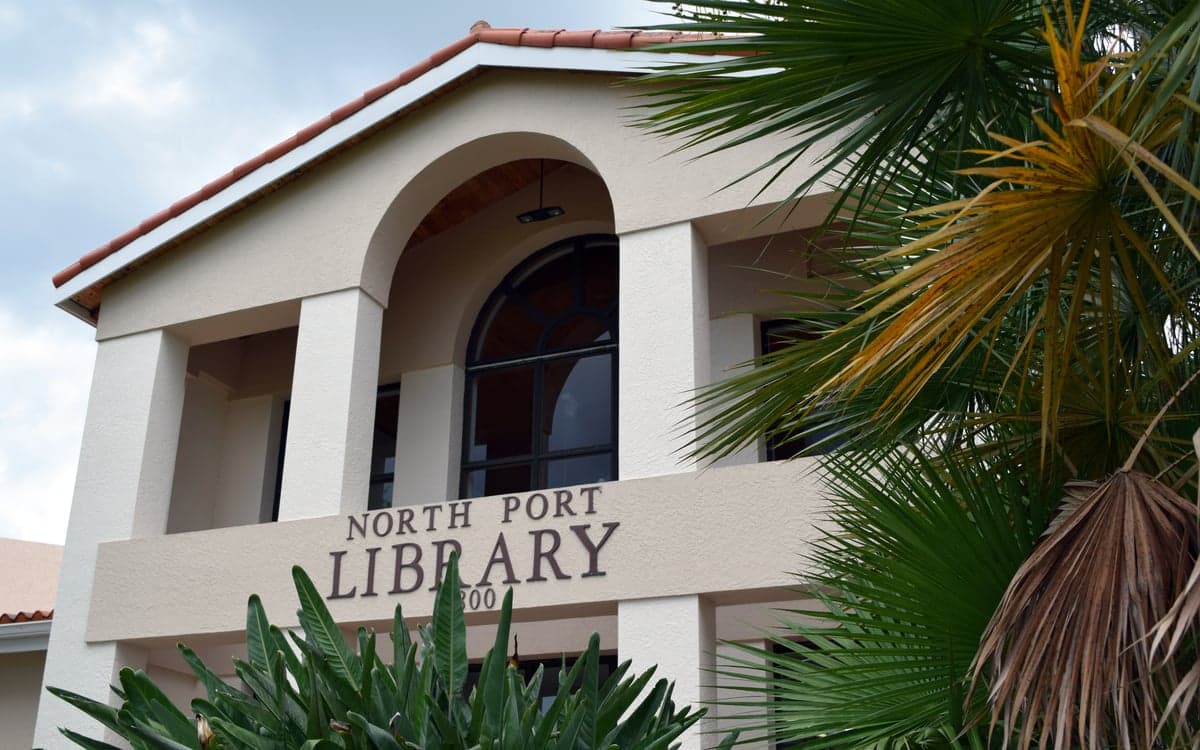
Photo: Wikipedia
Political ClimatePolitical Climate in North Port, FL
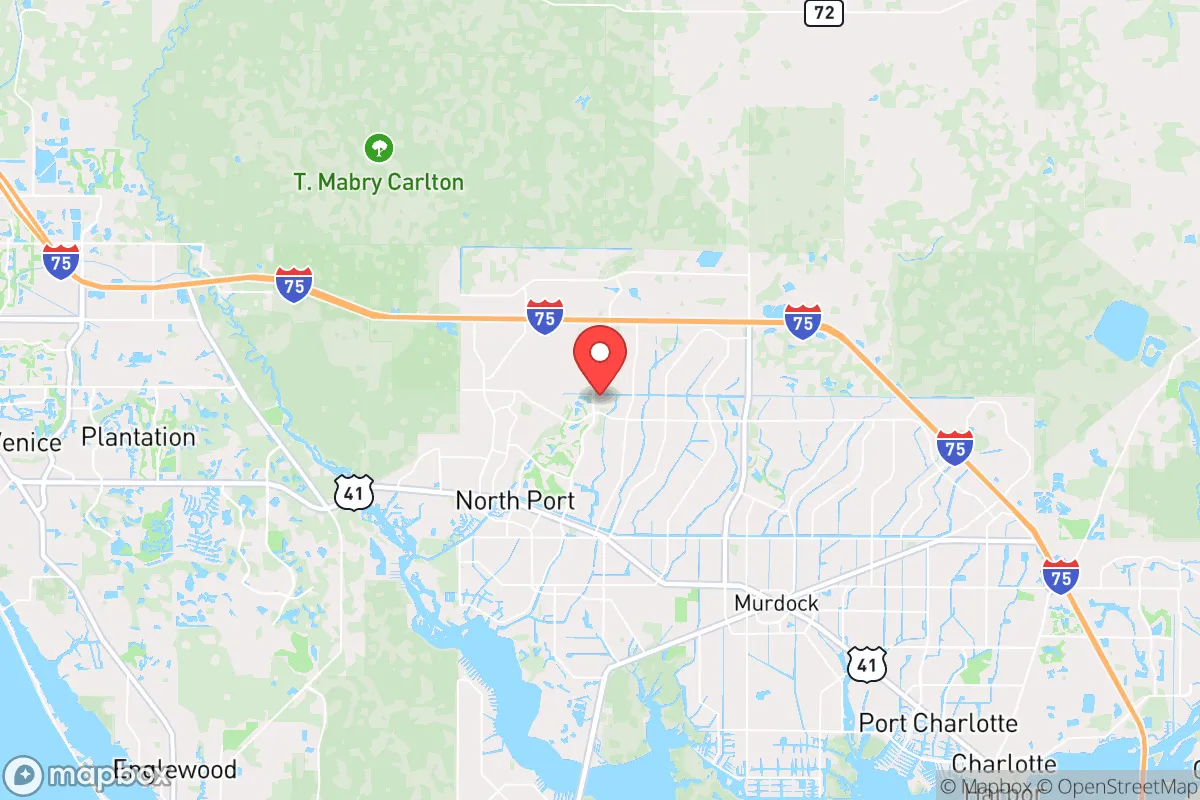
District shown is the primary district for this city’s centroid. Cities may span multiple districts.
Local Political AnalysisPolitical Analysis of North Port, FL
North Port has long been a solidly conservative community, and that hasn't changed much despite the rapid growth. The Cook PVI rating of R+11 tells you the real story here — this isn't a purple area or a swing district; it's a place where Republican candidates regularly win by comfortable margins. If you look at the 2024 presidential election, Sarasota County as a whole went about 58% for Trump, and North Port's precincts were even more lopsided in his favor. The political lean here is deeply rooted in a live-and-let-live, small-government mindset, and that's been the case since the city incorporated back in the 1960s. The trajectory, if anything, has been a slow hardening of that conservatism as more retirees and families from the Midwest and Northeast — people who are tired of high taxes and overregulation in their home states — move in. You don't see the same kind of progressive drift here that you do in places like Sarasota proper or even Venice, which have more of a coastal, artsy, retiree-with-money vibe. North Port is more working-class, more family-oriented, and frankly, more skeptical of government overreach.
How it compares
Drive 20 minutes west to Venice, and you'll notice a different political atmosphere — more affluent, more moderate, with a noticeable number of independent voters who split tickets. Head north to Sarasota, and you're in a city that's become a battleground, with a vocal progressive presence around the downtown arts district and the Ringling College area. But North Port? It's more like the inland towns of Arcadia or Wauchula in its political DNA, just with better infrastructure and newer homes. The contrast is starkest when you look at local elections: North Port's city commission races rarely feature candidates pushing for higher taxes, expanded public transit, or "equity" initiatives. Those conversations happen in Sarasota; they don't fly here. The surrounding unincorporated areas of Sarasota County are also deeply red, so North Port isn't an island — it's part of a broader conservative corridor that runs from Port Charlotte up through North Port and into the rural parts of the county.
What this means for residents
For someone who values personal freedom and wants to keep government out of their business, North Port is a breath of fresh air. You won't see the city council trying to impose mask mandates or business shutdowns like you did in some coastal towns during 2020. Property taxes are reasonable, zoning is relatively relaxed, and there's no appetite for the kind of progressive social engineering that's become common in bigger Florida cities. The school board is conservative, so you're not going to see controversial curriculum battles or critical race theory pushed in the classroom. That said, the rapid growth — North Port's population has nearly doubled since 2010 — is bringing pressure for more services and infrastructure, which inevitably means more government. The key question for residents is whether the city can manage that growth without adopting the kind of overreach that made them leave their home states in the first place. So far, the political culture has held the line, but it's something to keep an eye on.
One cultural distinction worth noting: North Port has a strong "don't tread on me" streak that goes beyond just voting Republican. You see it in the widespread support for Second Amendment rights — there are multiple gun ranges and firearms dealers in the area, and open carry is a common sight. You also see it in the resistance to any form of mandatory HOA-style regulations, even though some newer developments have them. The city's motto could easily be "leave us alone," and that's a big part of its appeal. Looking ahead, the biggest political flashpoint will likely be water management and development rights — as the city expands, there will be fights over property rights versus environmental regulations. If you're the kind of person who thinks the government should stay out of your backyard and your wallet, North Port is still one of the better bets in Southwest Florida. Just keep an eye on the city commission meetings, because that's where the real battles will be fought.

State Political ClimatePolitical Climate in Florida
State Political AnalysisPolitical Environment in the State
Florida is a solidly Republican state that has shifted rightward over the past two decades, with a current partisan lean of roughly +3 to +4 in presidential elections, though it remains a battleground for down-ballot races. The dominant coalition is a mix of conservative retirees, Cuban-American voters in South Florida, and rural and suburban whites across the Panhandle and interior, while Democrats hold sway in dense urban cores like Miami-Dade and Orange County. Over the last 10-20 years, the state has moved from a classic purple swing state to a reliably red one, driven by an influx of conservative-leaning transplants from the Northeast and Midwest, as well as a steady rightward drift among Hispanic voters, particularly in Miami-Dade.
Urban vs. rural divide
The political map of Florida is starkly divided. The major Democratic strongholds are Miami-Dade County (though it's trending right), Broward County (Fort Lauderdale), and Orange County (Orlando), which together produce massive vote margins for Democrats. However, the rest of the state is overwhelmingly Republican. The I-4 corridor, stretching from Tampa through Lakeland to Daytona Beach, is the classic swing region, but it has shifted red in recent cycles. Rural counties like Liberty, Holmes, and Dixie routinely vote 80%+ Republican. The Panhandle cities of Pensacola and Panama City are deeply conservative, while Jacksonville (Duval County) has become a competitive battleground, flipping from blue to red in 2024. The biggest story is Miami-Dade, once a Democratic firewall, which has shifted dramatically right—Trump won it in 2024 by a narrow margin, driven by Cuban-American and Venezuelan-American voters who are fiercely anti-socialist. Meanwhile, Tampa and St. Petersburg remain purple, with St. Pete leaning more liberal due to its younger, artsy population.
Policy environment
Florida’s policy environment is aggressively conservative and pro-freedom, with no state income tax, a right-to-work law, and a regulatory climate that encourages business growth. The state has a constitutional carry law (permitless carry of firearms) passed in 2023, and it maintains a strong Castle Doctrine and Stand Your Ground statute. Education policy is a major battleground: Governor Ron DeSantis signed the Parental Rights in Education Act (HB 1557, the "Don't Say Gay" law) in 2022, which restricts classroom instruction on sexual orientation and gender identity in grades K-3, and the Stop WOKE Act (HB 7) in 2022, which limits critical race theory in schools and workplace training. The state also expanded school choice dramatically, with universal Education Savings Accounts (ESAs) available to all students. On healthcare, Florida did not expand Medicaid under the ACA, and it passed a 15-week abortion ban in 2022, later tightened to a 6-week ban (HB 5) in 2023. Election integrity laws were strengthened with SB 90 in 2021, which added voter ID requirements, limited drop boxes, and restricted mail-in voting. The state also has a strong preemption law that prevents local governments from enacting their own gun control or sanctuary city policies.
Trajectory & freedom
Florida is becoming more free in many respects, particularly on economic liberty, gun rights, and parental rights in education. The 2023 constitutional carry law was a major expansion of Second Amendment rights, eliminating the need for a permit to carry a concealed firearm. The Parental Rights in Education Act and Stop WOKE Act have pushed back against progressive indoctrination in schools, though both have faced legal challenges. On medical autonomy, the state banned gender-affirming care for minors (SB 254) in 2023, and it has resisted COVID-19 vaccine mandates and mask mandates aggressively. However, there are concerns about government overreach: the state has used its preemption powers to punish local governments (e.g., stripping Disney of its special district status after the company opposed the Parental Rights Act), and the DeSantis administration has been criticized for targeting private businesses that require masks or vaccines. Property rights are strong, with no state income tax and relatively low property taxes, though insurance costs have skyrocketed due to litigation and hurricane risk. Overall, the trajectory is toward more personal freedom on most fronts, but with a heavy-handed state government that enforces its conservative vision.
Civil unrest & political movements
Florida has seen relatively little civil unrest compared to states like Oregon or New York, but there have been flashpoints. The Black Lives Matter protests in 2020 were smaller and less destructive than in other states, largely concentrated in Miami, Orlando, and Tampa. The state has a strong immigration politics dynamic: Governor DeSantis sent migrants to Martha's Vineyard in 2022 as a protest against federal border policy, and the state passed SB 1718 in 2023, which requires businesses with 25+ employees to use E-Verify and makes it a felony to transport undocumented immigrants into the state. There is no sanctuary city movement—state law preempts any such policies. On the right, the Moms for Liberty movement, which advocates for parental rights in education, is very active, particularly in suburban counties like Sarasota and Collier (Naples). Election integrity controversies have been minimal compared to other swing states, though there were disputes over the 2020 and 2022 elections, with Republicans alleging irregularities in mail-in voting. The most visible flashpoint for a new resident would be the political polarization in places like Miami, where you'll see competing protests over Cuba policy, and in Tallahassee, where the state capitol is a constant site of legislative battles.
Projection
Over the next 5-10 years, Florida is likely to become more conservative as in-migration continues from blue states like New York, California, and Illinois. These transplants tend to be moderate-to-conservative, often moving for lower taxes and less government overreach. The Hispanic vote, particularly in Miami-Dade and Osceola County (Orlando area), will continue to shift right, driven by Cuban, Venezuelan, and Nicaraguan communities who are deeply skeptical of socialism. The Democratic Party in Florida is in disarray, with no clear statewide leader and a shrinking base in rural areas. However, there are risks: the state's insurance crisis (property and auto) could drive out middle-class families, and the housing affordability issue in cities like Miami and Tampa could slow growth. Climate change and hurricane risk are long-term concerns, but they haven't yet affected migration patterns. A new resident moving in now should expect a state that is solidly red, with a government that actively promotes conservative values, but also one where local politics in cities like Orlando and St. Petersburg remain more liberal. The biggest wildcard is the 2026 gubernatorial race—if DeSantis leaves office, the next governor could be less aggressive, but the legislature will remain deeply conservative.
Bottom line for a new resident: If you're looking for a state that respects your Second Amendment rights, keeps taxes low, and pushes back against progressive ideology in schools and workplaces, Florida is a strong choice. You'll find a welcoming environment for conservative values in most of the state, but be prepared for the high cost of insurance and the occasional political drama in the state capitol. The cities are more purple, but the suburbs and rural areas are deeply red. Just know that the state government is not shy about using its power to enforce its vision—so if you value local control, you might find that frustrating. For most conservatives, though, Florida is about as good as it gets in 2026.
* Values derived from national, state, county, city and local statistics and may differ in a specific area. Last updated: 2026-04-19T07:30:57.000Z
Narrative content on this page is AI-generated and may contain mistakes. Verify any details that matter before acting on them.
ReloMaps may earn a commission from affiliate links at no extra cost to you.

