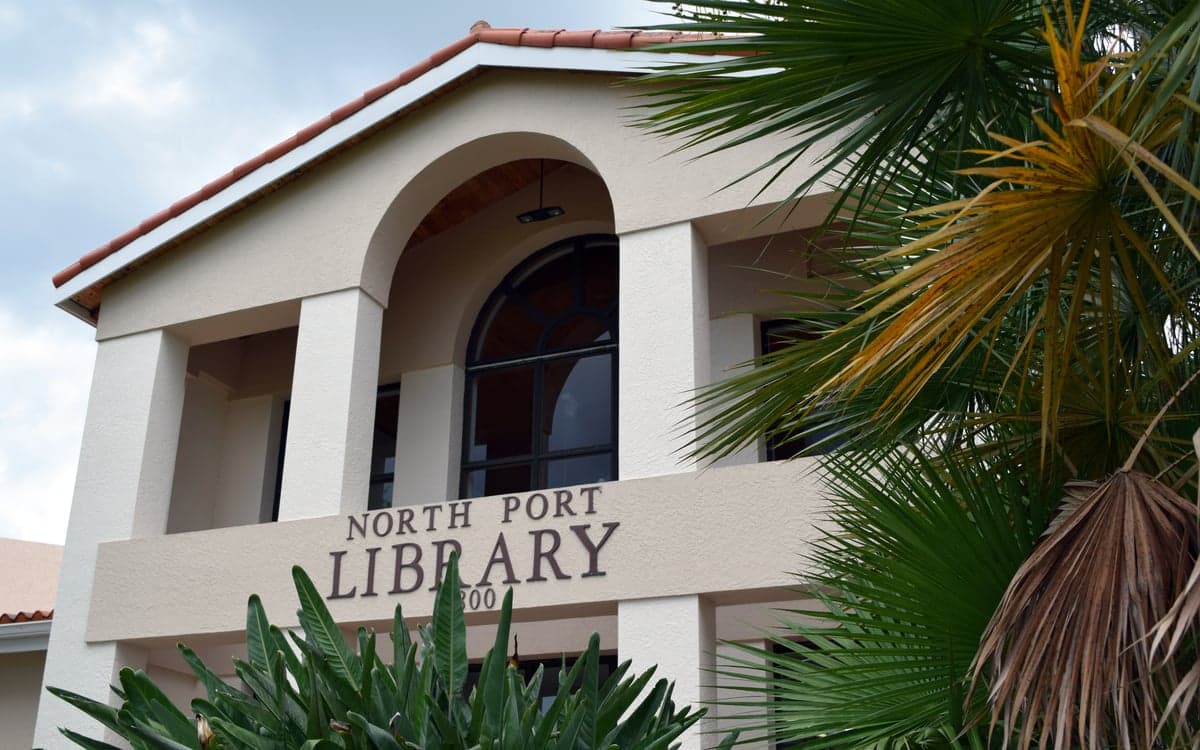
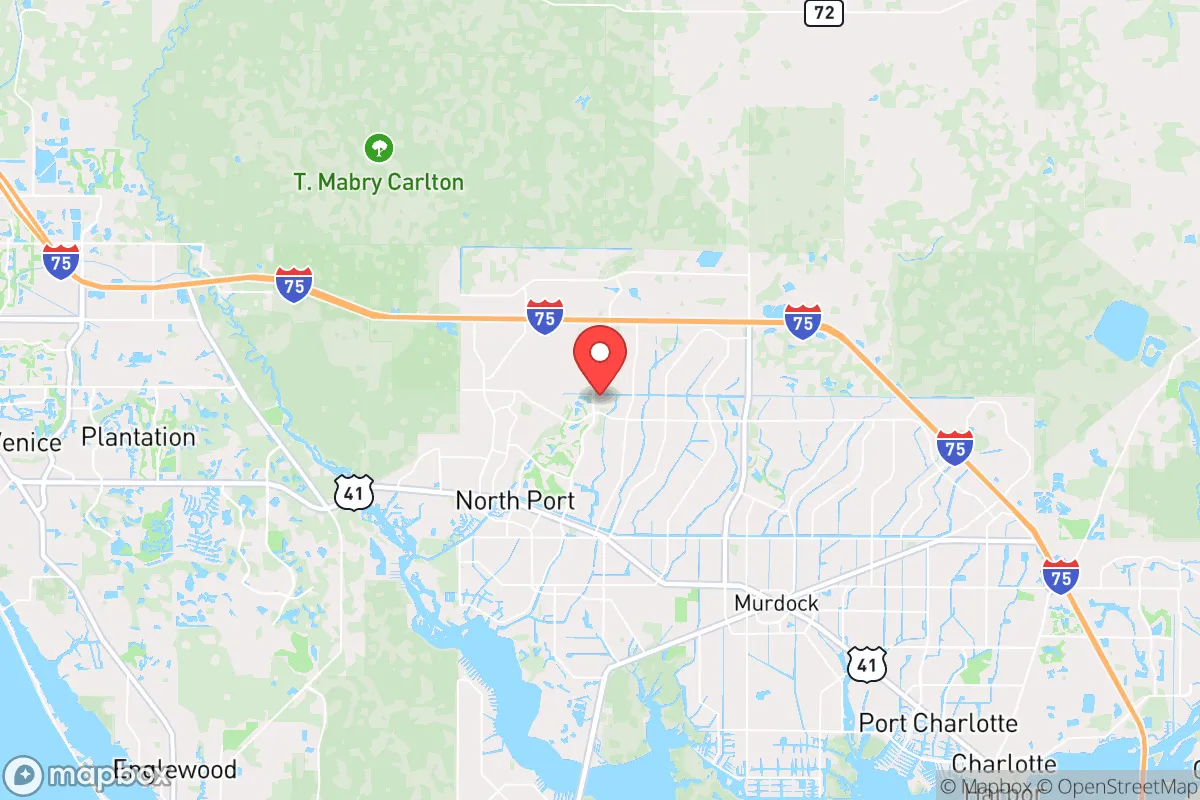
Photo: Wikipedia
Demographics of North Port, FL
Affluence Level in North Port, FL
A middle-class area roughly in line with national averages across income, home values, education, and employment.
People of North Port, FL
North Port, Florida, is a city of roughly 80,500 residents defined by its planned, mid-century origins and a population that remains predominantly white (77.8%) with a growing Hispanic minority (11.7%). It is a relatively young city by Florida standards, with a low foreign-born rate of just 3.9% and a modest college-educated share of 28.7%, reflecting its roots as an affordable, family-oriented suburb rather than a coastal resort or retirement magnet. The city’s character is shaped by its single-family home subdivisions, a largely car-dependent layout, and a demographic profile that is slowly diversifying from its original white, middle-class base. For a conservative-leaning audience, North Port represents a stable, low-density community where change is gradual and the population is still being defined by domestic in-migration rather than international influx.
How the city was settled and grew
North Port was not a historic settlement but a planned community born in the 1950s, when the General Development Corporation (GDC) began carving out residential lots from former ranch and timberland in Sarasota County. The original population was drawn by cheap land and the promise of a suburban lifestyle, marketed heavily to northern retirees and working-class families from the Midwest and Northeast. The first wave of settlers, mostly white and middle-aged, built homes in the North Port Estates area, the original core of the city, where large lots and unpaved roads defined the early landscape. By the 1960s and 1970s, the city’s growth was fueled by the construction of Interstate 75 and the expansion of nearby employment centers in Sarasota and Port Charlotte. The Heron Creek neighborhood, developed later as a golf-course community, attracted a slightly more affluent wave of retirees and second-home buyers, while the Bobcat Trail area became a hub for families seeking newer, more affordable homes. The city’s population remained overwhelmingly white through the 1990s, with little foreign-born presence, as the GDC’s marketing targeted domestic buyers almost exclusively.
Modern era (post-1965)
After the 1965 Immigration and Nationality Act, North Port saw minimal direct impact from new international migration, unlike coastal Florida cities. Instead, the city’s post-1965 growth was driven by domestic in-migration from the Northeast and Midwest, accelerating sharply in the 1990s and 2000s as the city annexed land and expanded its infrastructure. The Hispanic population, now 11.7%, began to grow noticeably in the 2000s, largely through secondary migration from other Florida cities (especially Miami and Tampa) rather than direct immigration. These families concentrated in the Warm Mineral Springs area, a historic spring-side district that attracted a mix of retirees and working-class Hispanic families drawn to lower housing costs and proximity to seasonal service jobs. The Black population, at 4.5%, is small but has a visible presence in the North Port Gardens neighborhood, a mid-2000s subdivision that drew some African-American families from Sarasota and Fort Myers seeking quieter suburban settings. East and Southeast Asian communities (1.7%) are scattered, with small clusters near the Price Boulevard corridor, where a handful of Vietnamese-owned nail salons and Chinese restaurants serve a regional customer base. The Indian-subcontinent population (0.3%) is negligible, with no distinct neighborhood concentration. The city’s white population, while still dominant, has aged in place, with many original GDC-era homeowners now in their 70s and 80s, while younger white families have moved into newer subdivisions like Isles of Capri and West Villages (a large master-planned community annexed in the 2010s).
The future
North Port’s population is heading toward modest diversification, but the pace is slow. The Hispanic share is likely to grow from 11.7% to perhaps 15-18% over the next decade, driven by natural increase and continued secondary migration from other Florida cities, with the Warm Mineral Springs area becoming a more defined Hispanic enclave. The white population will remain the majority but will continue to age, with younger white families increasingly choosing newer, amenity-rich developments like West Villages over the older, lot-heavy neighborhoods of North Port Estates. The Black and Asian shares are expected to remain small, as the city lacks the employment base or cultural infrastructure to attract significant new immigrant groups. The city is not tribalizing into distinct ethnic enclaves; rather, it is homogenizing around a low-density, car-dependent suburban template, with most neighborhoods remaining predominantly white and class-based rather than ethnicity-based. The foreign-born rate (3.9%) is unlikely to rise sharply, as North Port offers few of the job networks or ethnic institutions that draw new immigrants to larger metros. For a conservative-leaning mover, this means a community where demographic change is gradual, the political culture remains center-right, and the population is shaped more by domestic retirees and remote workers than by international migration.
North Port is becoming a slowly diversifying, still predominantly white suburb where the original planned-community character persists, but with a growing Hispanic minority and an aging white base. For someone moving in now, the city offers stability, low density, and a predictable demographic trajectory—change is coming, but at a pace that allows for adjustment, and the neighborhoods that defined the city’s past will continue to define its near future.

* Values derived from national, state, county, city and local statistics and may differ in a specific area. Last updated: 2026-04-19T07:30:57.000Z
Narrative content on this page is AI-generated and may contain mistakes. Verify any details that matter before acting on them.
ReloMaps may earn a commission from affiliate links at no extra cost to you.

