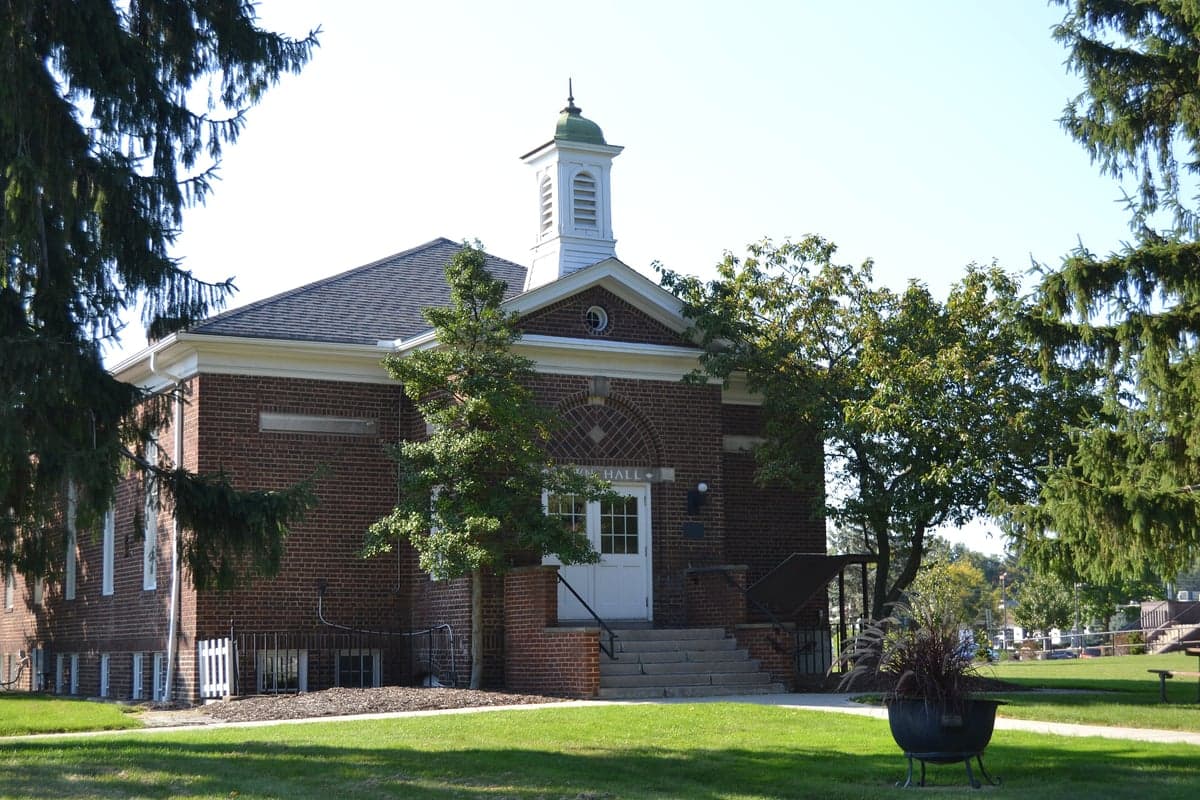
Photo: Wikipedia
Political ClimatePolitical Climate in North Olmsted, OH
District shown is the primary district for this city’s centroid. Cities may span multiple districts.
Political rankings in Ohio
- Most Conservative Cities in Ohio
- Most Liberal Cities in Ohio
- Best Liberal-Leaning Towns in the Midwest
- Safest Liberal-Leaning Towns in the Midwest
- Safest Conservative-Leaning Towns in the Midwest
- Affordable Small Towns for Conservatives
- Most Affordable Liberal-Leaning Small Towns in the U.S.
- Safest Conservative-Leaning Cities in the U.S.
- Most Conservative Counties in Ohio
- Most Liberal Counties in Ohio
Local Political AnalysisPolitical Analysis of North Olmsted, OH
North Olmsted, Ohio, sits squarely in the middle of the political road, with a Cook Partisan Voting Index of R+5 — exactly matching the statewide lean of Ohio. That means the city votes about five points more Republican than the national average, but it’s not a deep-red stronghold. In practice, this creates a genuinely competitive environment where both parties have a real shot in local races, and the overall feel is more pragmatic than ideological. Over the past decade, the city has drifted slightly rightward alongside the rest of Cuyahoga County’s western suburbs, but it remains a far cry from the solidly Democratic core of Cleveland proper or the reliably Republican exurbs like Medina.
How it compares
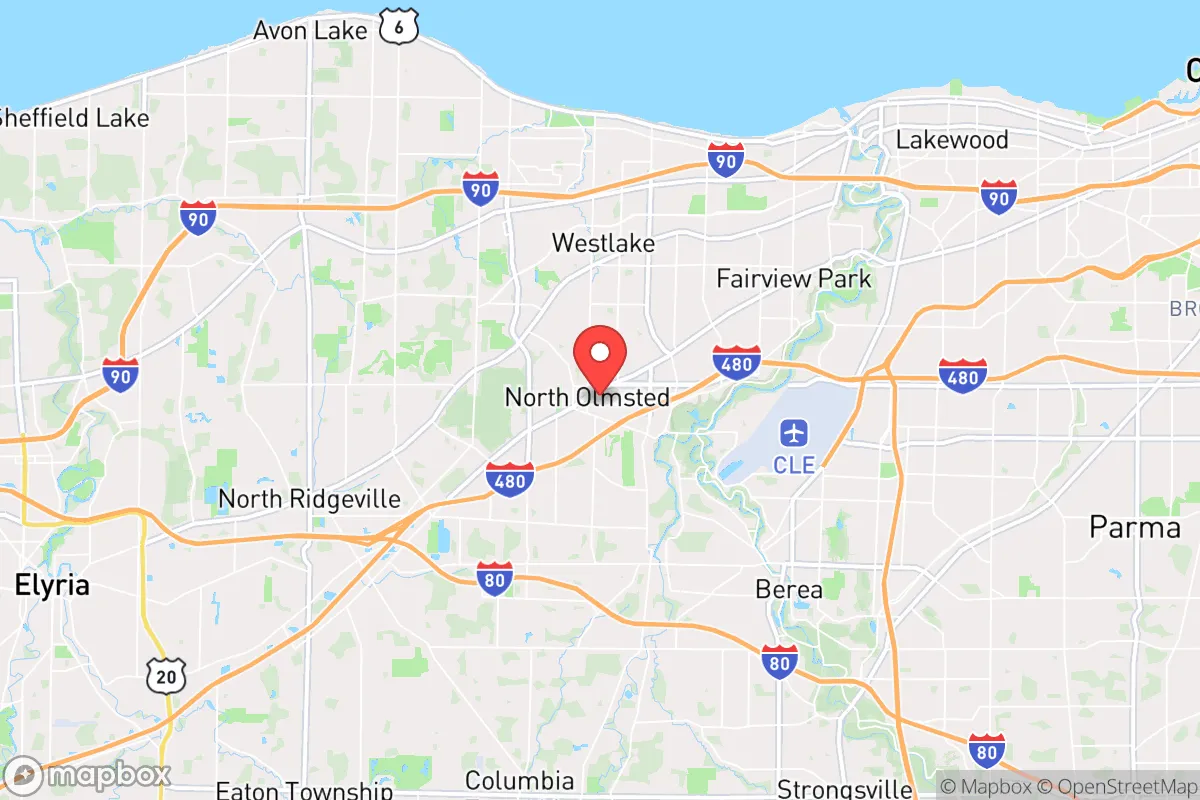
Compared to Ohio as a whole, North Olmsted is essentially a mirror image — the same R+5 PVI, the same mix of working-class and middle-class voters who swing between parties depending on economic messaging and candidate quality. But the comparison gets interesting when you look at nearby towns. Head east into Cleveland’s city limits, and you’ll find a D+28 PVI — a world apart. Drive south to Strongsville (R+8) or west to Avon (R+7), and you’ll see a noticeably more conservative tilt. North Olmsted sits in a kind of political buffer zone: less conservative than the outer-ring suburbs, but more Republican than the inner-ring ones like Lakewood (D+15). This makes it a bellwether for the broader region — if a candidate wins North Olmsted, they’re likely winning the competitive western suburbs as a whole.
What this means for residents
For conservative residents, the R+5 lean means their votes carry weight in local elections, but they won’t find the same deep-red comfort zone as in places like Brunswick or Wadsworth. School board and city council races here are genuinely contested, and the city’s Republican voters tend to be more moderate — fiscal conservatives who aren’t necessarily fired up about cultural wedge issues. For liberal residents, the environment is more welcoming than the numbers suggest. The city’s proximity to Cleveland means many residents work in the city and bring back more progressive views on transit, housing, and social services. You’ll see as many Harris signs as Trump signs in some neighborhoods during election season, and the local Democratic club is active and well-funded. Neither side dominates the conversation; it’s a place where you can have a neighbor with a “Let’s Go Brandon” flag and another with a “Black Lives Matter” sign, and both will wave at you on trash day.
What really sets North Olmsted apart from the rest of Ohio is its cultural pragmatism. The city has a strong union history — many residents work in manufacturing, healthcare, or education — and that labor influence keeps the politics grounded in kitchen-table issues like property taxes, road repairs, and school funding. You won’t find the same intensity around gun rights or abortion that you’d see in rural Ohio counties. The local government is famously efficient and nonpartisan; the mayor’s office has flipped between parties several times in the last 20 years without any dramatic policy shifts. Looking ahead, the trajectory is likely more of the same: a slow rightward drift as the city’s population ages and younger families move to cheaper exurbs, but nothing that will turn North Olmsted into a ruby-red suburb anytime soon. It’s a place where politics is real but not all-consuming — and that’s a rare thing in 2026.

State Political ClimatePolitical Climate in Ohio
State Political AnalysisPolitical Environment in the State
Ohio is a classic swing state that has shifted decisively rightward over the past two decades, now carrying a Cook PVI of R+5. The state voted for Donald Trump by 8 points in both 2016 and 2020, and by a similar margin in 2024, marking a stark departure from its bellwether days when it twice backed Barack Obama. The dominant coalition is a mix of working-class voters in small cities and rural areas, combined with a growing conservative exurban base, while the old Democratic strongholds in the industrial northeast and along the Lake Erie shore have eroded significantly. For a relocator, this means you’re moving into a state where Republicans hold all statewide executive offices, a supermajority in the state legislature, and both U.S. Senate seats, but where direct democracy via ballot initiatives still allows for occasional progressive wins, like the 2023 abortion rights amendment.
Urban vs. rural divide
The political map of Ohio is a study in contrasts. The three major metros—Cleveland, Columbus, and Cincinnati—anchor the Democratic vote, but only Columbus is growing and reliably blue. Cuyahoga County (Cleveland) still delivers huge Democratic margins, but its population decline means less statewide impact. Franklin County (Columbus) is the engine of the state’s Democratic future, voting for Biden by 30 points in 2020. Hamilton County (Cincinnati) is a genuine swing county, flipping from Obama to Trump and back to Biden, with the city itself trending left while its suburbs like West Chester and Mason remain conservative. The real story is the rural and exurban explosion: counties like Delaware (north of Columbus), Warren (north of Cincinnati), and Medina (southwest of Cleveland) have grown fast and voted 60-70% Republican. Meanwhile, the Appalachian southeast—places like Athens and Portsmouth—has flipped from blue to red as union Democrats became Trump Republicans. The northwest corner, around Toledo, is a fading blue island in a sea of red, with Lucas County barely holding for Democrats.
Policy environment
Ohio’s policy environment is broadly conservative but with notable exceptions. The state has a flat income tax of 3.5% (down from 4.8% in 2020), with a phase-down to 2.75% by 2026, and no tax on retirement income—a major draw for relocators. Sales tax is around 7.25% in most areas. Property taxes are moderate but vary wildly by district; a $300,000 home in Dublin (Columbus suburb) might pay $6,000 annually, while the same home in rural Geauga County pays half that. The state is a right-to-work state in practice, though not by law, and union membership has fallen to about 12%. Education policy is a flashpoint: the state has a robust school voucher program (EdChoice) that now covers most families, and a 2023 law banned DEI offices and mandatory diversity training at public universities. Healthcare is mixed—Medicaid expansion was accepted under Kasich and remains, but the state banned abortion at six weeks in 2019 (overturned by the 2023 ballot measure) and has strict parental consent laws for minors. Election laws have tightened: voter ID is now required (with a limited list of acceptable IDs), drop boxes are restricted to one per county, and early voting is 28 days but with limited weekend hours.
Recent policy direction
The last five years have seen Ohio move aggressively on several fronts. On gun and self-defense law, the state passed constitutional carry in 2022, allowing permitless concealed carry for adults 21 and older, and a "stand your ground" law in 2021. On parental and education rights, the 2023 "Parents Bill of Rights" (HB 8) requires schools to notify parents of any changes to a student’s health or well-being, and bans instruction on sexual orientation and gender identity in K-3. On speech, the state has no campus speech protections beyond the First Amendment, but a 2024 law (SB 83) requires public universities to adopt a "neutral viewpoint" policy for campus events. On privacy and surveillance, Ohio has no comprehensive data privacy law, but a 2023 law restricts the use of facial recognition by police without a warrant. On medical and bodily autonomy, the 2023 Issue 1 enshrined abortion access in the state constitution up to fetal viability, but the legislature has since passed a 24-hour waiting period and mandatory ultrasound. On property rights, the state is generally pro-development, with no statewide rent control and a 2023 law limiting local governments’ ability to regulate short-term rentals. On taxation, the trend is downward: the income tax is being phased out, and a 2024 law eliminated the state’s commercial activity tax for small businesses. On voting and ballot access, the 2023 law (HB 458) shortened the absentee ballot application window and banned paid ballot drop-off, though a 2024 court ruling restored some weekend early voting hours.
Civil unrest & political movements
Ohio has seen its share of political heat. The 2020 protests over George Floyd’s death in Columbus and Cincinnati were large but largely peaceful, though the state saw property damage in downtown Columbus. The 2023 abortion rights campaign (Issue 1) drew massive grassroots organizing on both sides, with over 700,000 signatures for the ballot measure. On the right, the "Ohio Freedom Alliance" and local Moms for Liberty chapters have been active in school board races, particularly in Delaware and Warren counties. Immigration politics are less heated than in border states, but a 2024 law (HB 180) requires local law enforcement to cooperate with ICE detainers, and Dayton saw a small sanctuary city ordinance that was quickly preempted by the state. Election integrity remains a live issue: the 2020 election in Ohio was smooth with no major controversies, but the 2024 primary saw a lawsuit over drop box access that went to the state supreme court. The most visible flashpoint for a new resident might be the "Let’s Go Brandon" flags and Trump 2024 signs still common in rural areas, contrasted with "Black Lives Matter" and "Trans Rights" banners in Cleveland Heights and Yellow Springs.
Projection
Over the next 5-10 years, Ohio is likely to become more Republican at the state level, but with a growing Democratic urban core. The population is aging and whitening, with the fastest growth in exurban counties like Delaware and Warren, which will only deepen the red. Columbus will continue to grow and become more Democratic, but it’s not enough to flip the state—Cleveland and Toledo are losing population. The big wildcard is the ballot initiative process: if Democrats can’t win the legislature, they’ll keep using Issue 1-style measures on abortion, marijuana (legalized in 2023), and potentially minimum wage or redistricting reform. The state supreme court is now 4-3 Republican, so expect conservative rulings on gerrymandering and election law. In-migration is modest—Ohio gains people from the Northeast and California, but loses them to the Sun Belt. A relocator moving in now should expect a state that is reliably red in statewide races, with a conservative policy environment that is stable but not extreme, and a direct democracy safety valve that keeps the most controversial issues from being settled purely by the legislature.
For a new resident, the bottom line is this: Ohio offers a conservative-leaning policy environment with low taxes, strong gun rights, and a business-friendly regulatory climate, but with the nuance that abortion access and marijuana are legal by popular vote. You’ll find a deep urban-rural split in daily life—your neighbors in Dublin or Mason will likely share your conservative values, while a trip to Cleveland or Columbus will show a different world. The state is politically engaged but not chaotic; the protests and movements are real but localized. If you’re looking for a place where your vote counts in a meaningful way (Ohio is still a swing state in presidential races, even if it leans red), and where state policy is moving in a direction you largely agree with, Ohio is a solid bet. Just be prepared for the weather and the fact that everyone will ask you which part of Ohio you’re from—and mean it as a genuine conversation starter.
* Values derived from national, state, county, city and local statistics and may differ in a specific area. Last updated: 2026-11-27T14:57:00.000Z
Narrative content on this page is AI-generated and may contain mistakes. Verify any details that matter before acting on them.
ReloMaps may earn a commission from affiliate links at no extra cost to you.

