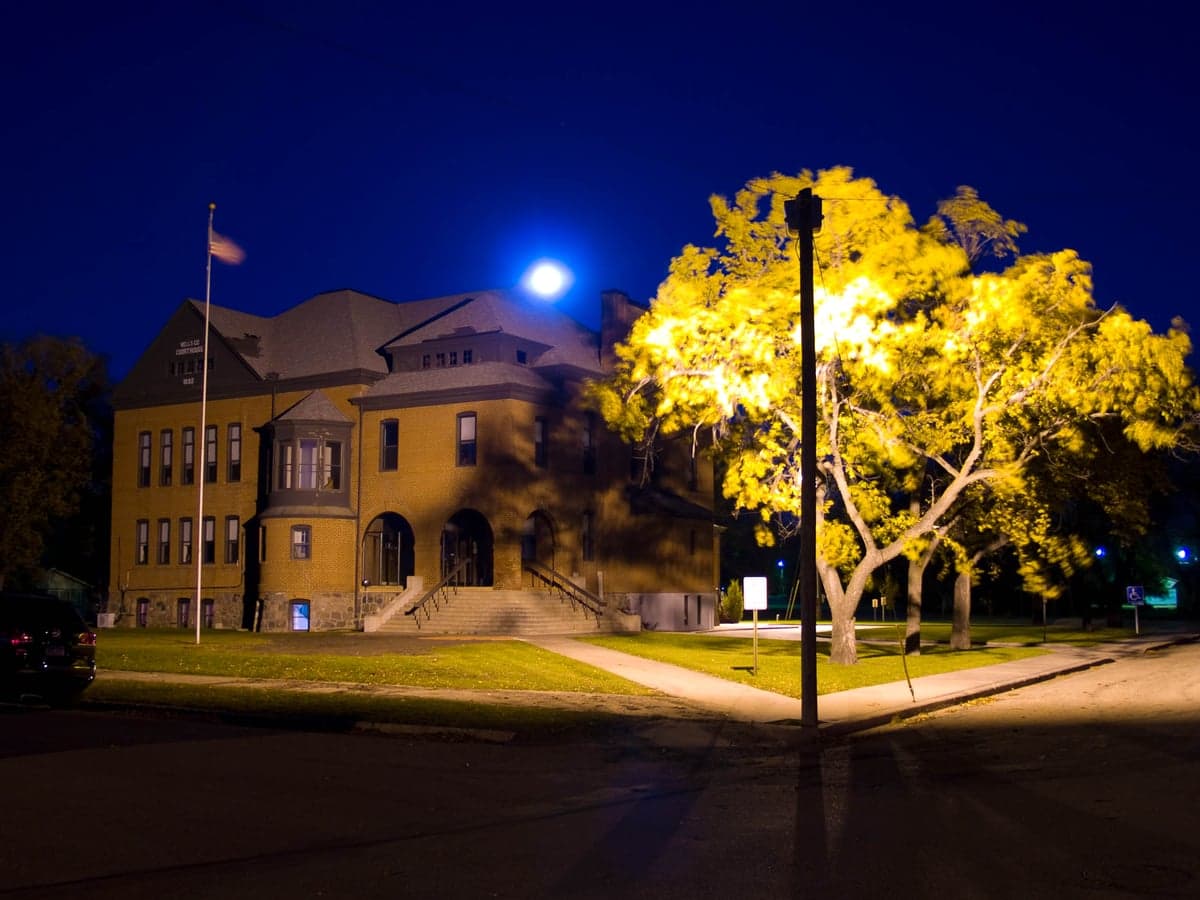
Photo: Wikipedia
Demographics of Wells County
Affluence Level in Wells County
A middle-class area roughly in line with national averages across income, home values, education, and employment.
People of Wells County
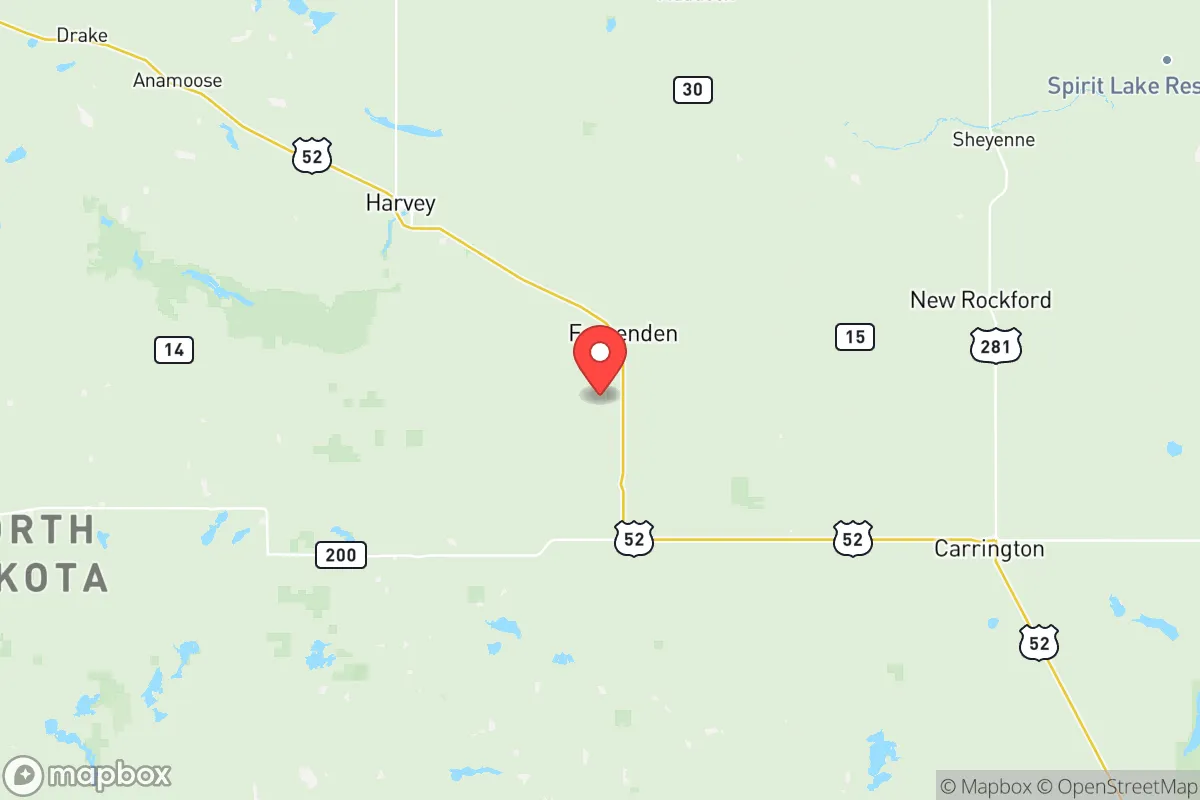
Wells County, North Dakota, is one of the most ethnically homogeneous rural counties in the United States, with a population of 3,942 that is 95.6% white and only 0.3% foreign-born. Its people are overwhelmingly descendants of German-Russian and Norwegian settlers who arrived in the late 19th and early 20th centuries, and the county today retains a distinctly Northern Plains character—quiet, agricultural, and deeply rooted in Lutheran and Catholic traditions. The county seat, Fessenden, along with Harvey, Bowdon, and Sykeston, serve as the primary population centers, each reflecting the heritage of the waves that built them. With a college attainment rate of just 22.3% and a Hispanic population of only 1.3%, Wells County is a place where demographic change has been minimal, and its identity remains tied to the land and the families who have worked it for generations.
Settlement & growth (pre-1960)
Before European settlement, the area now known as Wells County was part of the traditional territory of the Dakota (Sioux) people, specifically the Yanktonai and Sisseton bands. These nomadic groups followed bison herds across the rolling prairie, but their presence was dramatically reduced after the 1860s, when the U.S. government confined them to reservations following the Dakota War of 1862 and subsequent treaties. The county was officially organized in 1873, but significant white settlement did not begin until the arrival of the railroad in the 1880s.
The first major wave of settlers were German-Russian immigrants, who began arriving in the 1880s and 1890s. These were ethnic Germans who had lived for generations in the Volga River region of Russia, where they had been granted land and religious freedom by Catherine the Great. When those privileges were revoked in the late 19th century, they emigrated en masse to the Great Plains. In Wells County, they founded the towns of Sykeston (1886) and Harvey (1893), where they established German-speaking Lutheran and Catholic congregations. The German-Russians were known for their hardiness in the harsh climate and their skill at dryland wheat farming, which became the backbone of the local economy. A second wave of German-Russians arrived in the early 1900s, settling in Bowdon and Fessenden, where they built grain elevators and small businesses that still anchor the communities today.
Concurrent with the German-Russian influx were Norwegian immigrants, who began arriving in the 1890s and continued through the 1910s. They concentrated in the northern part of the county, particularly around Heimdal and Hamberg, where they established Lutheran churches and a strong tradition of cooperative grain marketing. The Norwegians and German-Russians coexisted largely peacefully, though they maintained separate social institutions—different churches, different fraternal lodges, and even different sections of the same cemeteries. By 1910, the county's population had peaked at over 9,000, driven by the homestead boom and the expansion of the Soo Line Railroad.
The period from 1920 to 1960 was one of steady decline. The Dust Bowl of the 1930s hit Wells County hard, as topsoil blew away and wheat prices collapsed. Many families, particularly younger ones, left for the West Coast or the industrial cities of the Midwest. The county population dropped from 9,000 in 1920 to 7,000 by 1940, and the trend continued after World War II as farm consolidation reduced the need for labor. By 1960, the population stood at roughly 6,000, and the towns of Martin and Kief had begun to shrink as their schools and post offices closed.
Modern era (post-1965)
The 1965 Hart-Cellar Act, which opened U.S. immigration to non-European countries, had virtually no impact on Wells County. The county's foreign-born population today is just 0.3%, and there are no significant immigrant enclaves anywhere in the county. Instead, the post-1965 story is one of continued domestic out-migration and aging. From 1970 to 2020, the county lost roughly 40% of its population, falling from 6,600 to 3,942. Young people have consistently left for college or jobs in larger cities like Bismarck, Fargo, and Minneapolis, leaving behind an older, more settled population.
The racial and ethnic makeup has remained almost entirely white. The Hispanic population, at 1.3%, is the only non-white group of any size, and it consists largely of a few families who work in the oil fields of the Bakken region to the west or in agricultural labor. There are no Black, Indian (subcontinent), or East/Southeast Asian communities of any statistical significance—each group registers at 0.0% or 0.2%. The county's few Asian residents are typically professionals, such as doctors at the hospital in Harvey or teachers in the Fessenden-Bowdon school district, and they do not form an enclave.
Suburbanization has not occurred in Wells County, as there are no major cities within its borders. The largest town, Harvey, has about 1,700 residents, while Fessenden has roughly 500. The county's economy remains dominated by agriculture—wheat, corn, soybeans, and cattle—along with a small but stable oil and gas sector in the western part of the county near the McLean County line. The population is older than the state average, with a median age of about 50, and many of the remaining residents are retirees or farmers approaching retirement.
The future
Wells County is projected to continue its slow population decline over the next 10 to 20 years, with the state demographer estimating a drop to roughly 3,500 by 2040. The county is not becoming more diverse; the Hispanic population may grow slightly as agricultural labor needs persist, but it is unlikely to exceed 3-4% given the lack of economic opportunities for new arrivals. The white population will continue to age, and the number of school-aged children will shrink further—the county's largest school district, Harvey, already enrolls fewer than 300 students.
There is no sign of a reversal through domestic migration. The Bakken oil boom, which brought some workers to western North Dakota in the 2010s, largely bypassed Wells County, and the county lacks the amenities—restaurants, entertainment, housing stock—that might attract remote workers or retirees from other states. The cultural identity of the county will remain tied to its German-Russian and Norwegian heritage, with annual events like the Harvey Harvest Festival and the Sykeston Sno-Ball continuing to draw former residents back for reunions. For someone moving in now, the county offers a quiet, safe, and deeply traditional rural life, but it is a place where the population is shrinking and the social fabric is thinning.
Wells County is becoming a quieter, older, and more homogeneous version of itself—a place where the past is more visible than the future. For a family or individual seeking a low-cost, low-crime, and deeply rooted community, it offers genuine advantages, but the trade-off is a shrinking tax base, fewer services, and a social life that revolves around church and family rather than a diverse or growing population. It is a county that has changed very little in 50 years, and that stability is both its greatest strength and its most significant limitation.

* Values derived from national, state, county, city and local statistics and may differ in a specific area. Last updated: 2026-10-30T16:18:48.000Z
Narrative content on this page is AI-generated and may contain mistakes. Verify any details that matter before acting on them.
ReloMaps may earn a commission from affiliate links at no extra cost to you.

