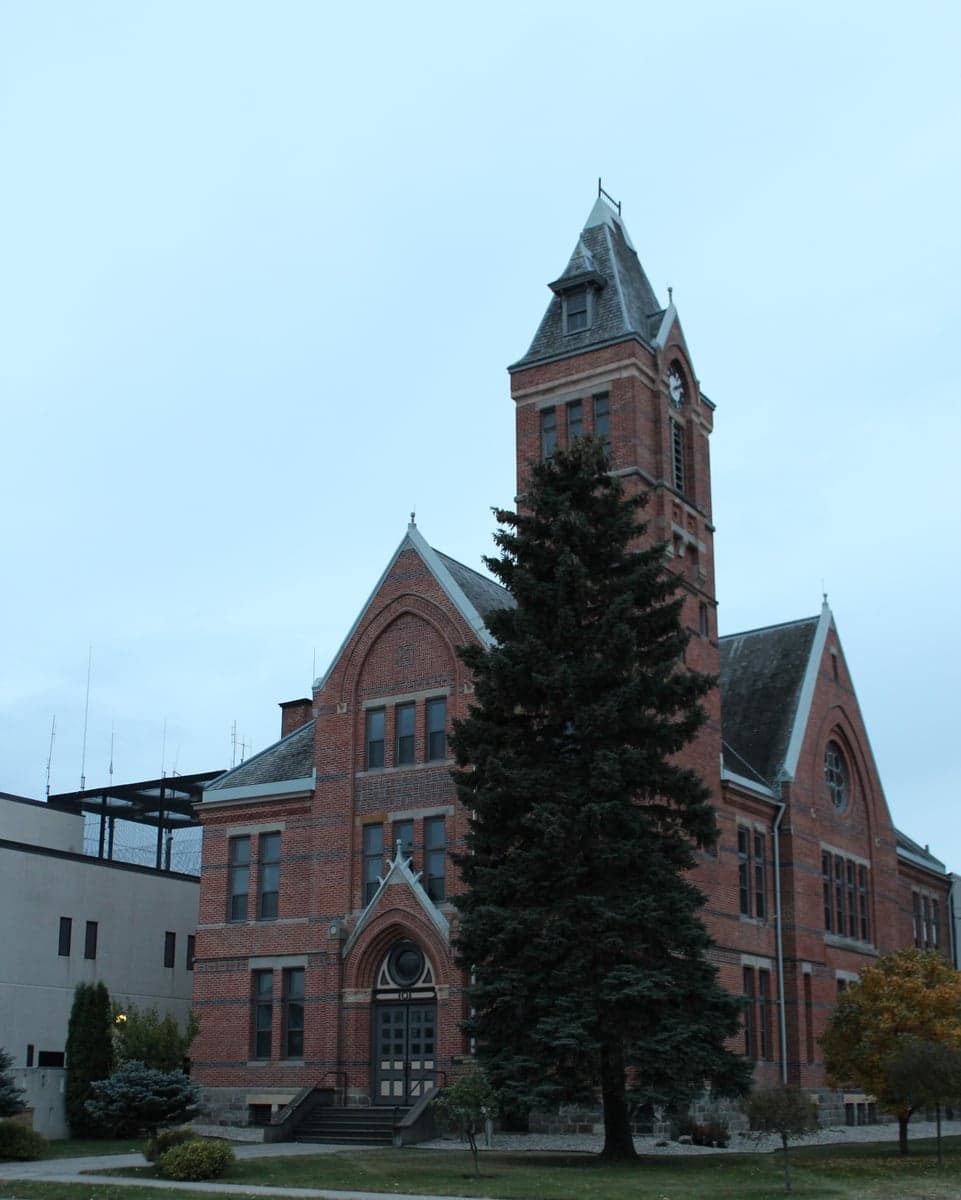
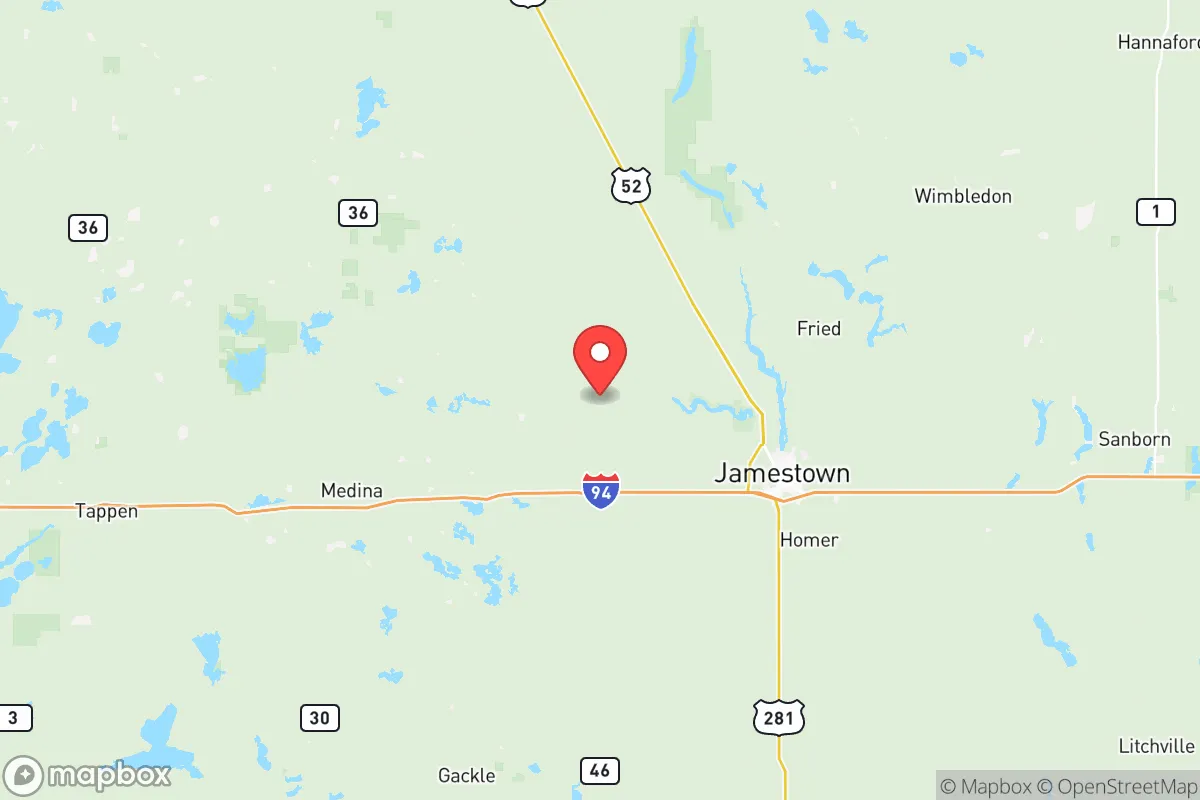
Photo: Wikipedia
Quality of Life in Stutsman County
A livable area that tracks near national norms for affordability, walkability, and neighborhood health.
What does Quality of Life tell us?
Quality of Life measures an area by evaluating factors like cost of living, nearby amenities, country club access, airport proximity, socioeconomic signals and neighborhood character. For large states, this is a general average — quality of life can vary dramatically between metro areas, suburbs, and rural communities within the same state.
What does this tell us?
Quality of Life measures an area by evaluating factors like cost of living, nearby amenities, country club access, airport proximity, socioeconomic signals and neighborhood character. For large states, this is a general average — quality of life can vary dramatically between metro areas, suburbs, and rural communities within the same state.
Cost of Living
33% below national average
105%
The Real Cost of Living in Stutsman County for 2026
| Tier | Individual | Family (4) |
|---|---|---|
| Survival | $12k | $22k |
| Comfortable | $39k | $57k |
| Luxury | $109k+ | $168k+ |
| Elite (Top 5%) | $157k+ | $243k+ |
Quality-of-Life Analysis
Stutsman County, North Dakota, offers a quality-of-life spectrum that ranges from the regional hub of Jamestown to quiet, unincorporated prairie settlements, drawing everyone from young professionals and families seeking amenities to farmers and retirees valuing space and low costs. With a cost of living index of 67—well below the national average of 100—and a median home value of $200,300, the county provides affordable entry points across its urban-to-rural continuum. The average commute of just under 15 minutes underscores the convenience of living here, whether in town or on the outskirts.
Largest town(s) & population centers
Jamestown is the county seat and by far the largest population center, home to roughly 15,000 residents. Daily life here revolves around a compact downtown with local restaurants, shops, and cultural venues like the National Buffalo Museum and the Stutsman County Memorial Museum. The city offers a full range of amenities—grocery stores, a hospital (CHI St. Alexius Health), public schools, and a branch of the University of Jamestown. Employment is anchored by healthcare, education, manufacturing (e.g., Bobcat Company’s production facility), and state government offices. For families, the Jamestown Public School District provides multiple elementary schools, a middle school, and two high schools. The median rent of $742 makes renting here notably cheaper than in larger North Dakota cities like Fargo or Bismarck.
Smaller towns & rural pockets
Outside Jamestown, the county is dotted with smaller communities that offer a quieter, more agrarian lifestyle. Buchanan (pop. ~90) sits along the James River and is primarily a farming and ranching hub with a small grain elevator and a post office. Kensal (pop. ~160) is a tight-knit village with a K-12 school, a few churches, and a strong sense of community centered on the annual Kensal Rodeo. Spiritwood (pop. ~50) is an unincorporated area near the Spiritwood Lake recreation area, popular for fishing and hunting. Woodworth (pop. ~50) and Ypsilanti (pop. ~100) are other tiny settlements where residents often commute to Jamestown for work or shopping. These areas lack major retail but offer deep quiet, open space, and direct access to farmland and wildlife management areas.
Cost & lifestyle range
The cost of living varies noticeably across the county, though all areas remain well below national averages. In Jamestown, the median home value of $200,300 buys a typical three-bedroom home in established neighborhoods like North Jamestown or newer subdivisions near the interstate. Renters pay a median of $742, with apartments concentrated near the university and downtown. In smaller towns like Buchanan or Kensal, home prices can be 10-20% lower—often under $150,000 for older farmhouses or fixer-uppers—but inventory is limited and financing may be harder to secure. Rural properties on acreage, especially near Spiritwood Lake, command a premium, sometimes exceeding $300,000 for lakefront parcels. The lifestyle trade-off is clear: Jamestown provides walkable amenities, schools, and healthcare within a 15-minute drive for most residents, while rural areas offer solitude, lower property taxes, and a slower pace but require driving 20-40 minutes for groceries or medical care.
Those who thrive in Stutsman County are typically people who value affordability, short commutes, and a strong sense of community—whether in the bustling county seat or the quietest township. Young families and professionals find opportunity in Jamestown’s job market and schools, while retirees and farmers gravitate toward the smaller towns and open countryside. The county’s low cost of living and minimal traffic make it especially attractive for remote workers or anyone seeking a lower-stress lifestyle without sacrificing access to essential services.

Crime in Stutsman County
Generally safer than 65% of comparable U.S. locations.
Violent CrimeViolent Crime Analysis
Property CrimeProperty Crime Analysis
Crime Analysis
Stutsman County, anchored by the city of Jamestown, presents a mixed safety profile that is notably safer than North Dakota's most crime-ridden urban corridors but still carries property crime rates that warrant attention. The county's violent crime rate of 234.1 per 100,000 residents sits below the national average, while its property crime rate of 1,467.8 per 100,000 exceeds the state average, driven largely by theft and vehicle break-ins in and around Jamestown. For prospective residents, the key distinction lies between the county seat and its smaller, quieter communities.
Crime in context
Stutsman County's violent crime rate is roughly 35% lower than the national average of 380 per 100,000, placing it in a safer tier than many rural counties nationwide. However, its property crime rate is approximately 20% higher than the North Dakota state average of about 1,220 per 100,000. This disparity is largely attributable to Jamestown, which accounts for the majority of the county's population and its reported thefts. By contrast, smaller towns such as Buchanan, Pingree, and Woodworth report negligible crime, with many years seeing zero violent incidents. The county's judicial system, overseen by the Southeast Judicial District, has not adopted the progressive prosecutorial policies seen in larger metro areas like Fargo or Bismarck, meaning offenders in Stutsman County face more traditional sentencing and supervision. This conservative approach to justice helps keep recidivism lower than in jurisdictions with lenient district attorneys, directly benefiting victims and public safety.
What residents experience
Daily life in Stutsman County is shaped by a low risk of violent confrontation but a moderate risk of property crime. Residents in Jamestown report that unlocked vehicles and sheds are common targets, with thefts from cars being the most frequent property crime. The Jamestown Police Department maintains a visible presence, and the county's sheriff's office covers the rural areas with a response time that averages under 15 minutes for priority calls. In the unincorporated areas and smaller towns like Kensal and Spiritwood, residents often leave doors unlocked without incident, a reflection of the tight-knit social fabric. The county's drug-related crime is primarily tied to methamphetamine and fentanyl trafficking along the Interstate 94 corridor, but these incidents are concentrated in Jamestown and rarely spill into residential neighborhoods. For families, the most tangible safety concern is property crime, not violence.
Neighborhood-level variation
Within Stutsman County, safety varies significantly by location. Jamestown's downtown core and areas near the interstate exits see the highest concentration of property crime, including shoplifting and vehicle break-ins. The city's north side, particularly around the University of Jamestown campus, is considered safer, with lower incident rates. The towns of Eldridge and Cleveland are among the safest in the county, with populations under 100 and virtually no reported crime. For those seeking a rural lifestyle with minimal risk, the areas surrounding Spiritwood Lake offer a low-crime environment, though seasonal tourism can bring a slight uptick in minor thefts. Overall, Stutsman County's crime landscape is manageable, with the caveat that property crime in Jamestown requires standard precautions—locking vehicles, securing outbuildings, and avoiding leaving valuables in plain sight. The county's traditional judicial philosophy, free from progressive experimentation, provides an additional layer of protection for law-abiding residents.
* Values derived from national, state, county, city and local statistics and may differ in a specific area. Last updated: 2026-07-09T16:45:49.000Z
Narrative content on this page is AI-generated and may contain mistakes. Verify any details that matter before acting on them.
ReloMaps may earn a commission from affiliate links at no extra cost to you.

