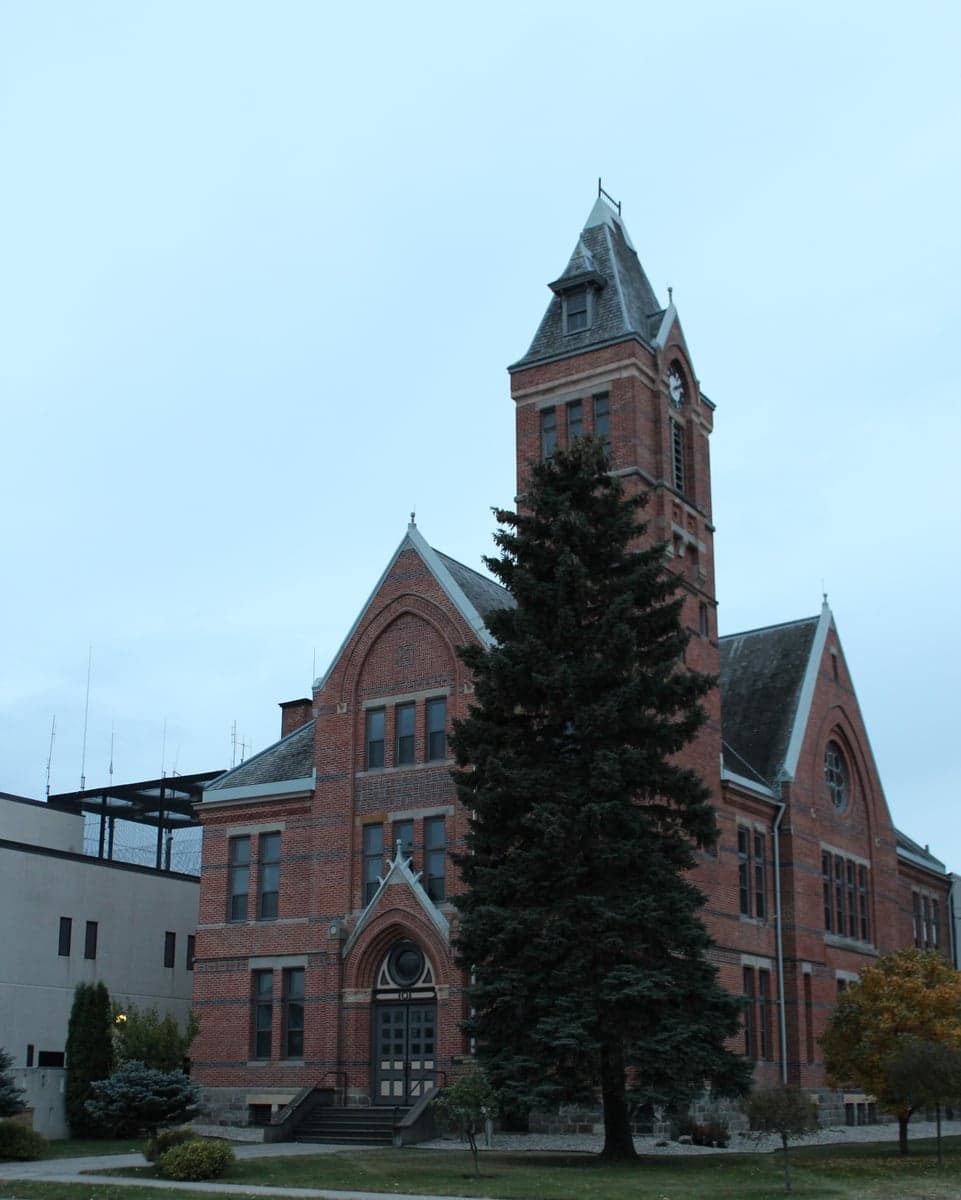
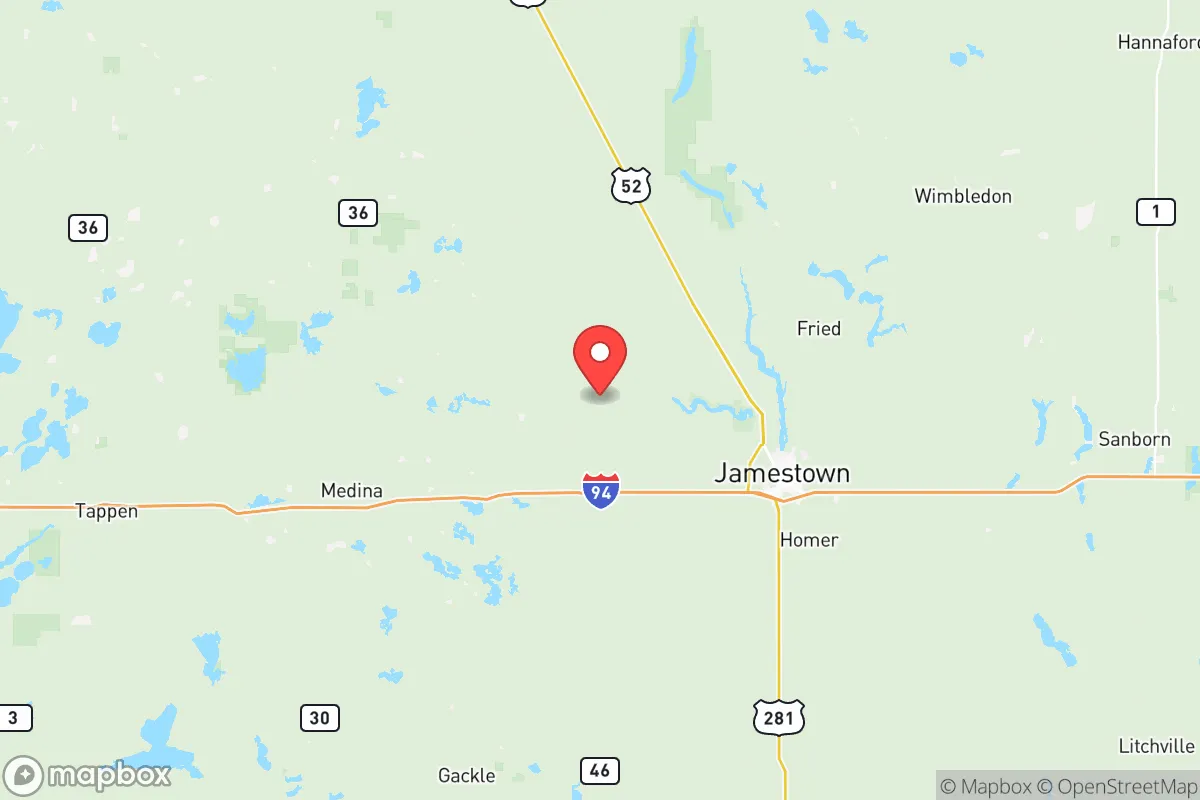
Photo: Wikipedia
Demographics of Stutsman County
Affluence Level in Stutsman County
A middle-class area roughly in line with national averages across income, home values, education, and employment.
People of Stutsman County
Stutsman County, North Dakota, is home to 21,525 residents, a population that remains overwhelmingly white (90.4%) and predominantly native-born, with only 1.6% foreign-born. The county’s identity is rooted in its agricultural heritage and the small-city anchor of Jamestown, the county seat, which concentrates the vast majority of the population. While the county has seen modest diversification in recent decades, its character remains distinctly Northern Plains—shaped by waves of European settlement, a stable rural economy, and a slow but steady demographic evolution.
Settlement & growth (pre-1960)
The area now known as Stutsman County was originally inhabited by the Dakota (Sioux) people, particularly the Sisseton and Wahpeton bands, who used the region for seasonal hunting and gathering. The first permanent non-Native settlement began with the arrival of the Northern Pacific Railway in the 1870s, which established Jamestown as a division point in 1872. The railroad’s construction drew a wave of laborers, many of them Irish and German immigrants, who laid track and built the early infrastructure.
The Homestead Act of 1862 was the primary engine of settlement. From the 1870s through the 1890s, land-hungry farmers from Norway, Sweden, Germany, and the British Isles poured into the county, filing claims on the fertile prairie. Norwegian immigrants were especially numerous, founding communities like Spiritwood and Pingree, where Lutheran churches and Norwegian-language newspapers persisted for generations. German-Russian immigrants—ethnic Germans who had lived in Russia’s Volga region—arrived in smaller numbers, settling near Kensal and Buchanan, where they brought wheat-farming expertise and a distinct cultural identity.
By 1900, the county’s population had surged past 10,000, driven by railroad expansion and the bonanza wheat farms that stretched across the flatlands. The city of Jamestown grew as a commercial and transportation hub, with grain elevators, banks, and Main Street businesses serving the surrounding farmsteads. Smaller towns like Montpelier and Woodworth sprouted along rail lines, each serving as a market center for a few hundred families. The Dust Bowl and Great Depression of the 1930s hit hard, causing out-migration, but the county’s population stabilized around 20,000 by 1950, sustained by a diversified agricultural economy that included cattle ranching and dairy farming alongside wheat.
Modern era (post-1965)
The 1965 Hart-Cellar Act, which reshaped U.S. immigration, had a minimal direct impact on Stutsman County. The county’s foreign-born population today stands at just 1.6%, far below the national average. The modest diversification that has occurred since the 1970s came primarily through domestic migration and refugee resettlement programs, not through chain migration from new source countries.
In the 1980s and 1990s, a small but visible Hispanic community began to form, drawn by seasonal agricultural work in the county’s potato and sugar beet fields. Today, Hispanic residents make up 3.0% of the population, with many concentrated in Jamestown, where they work in food processing plants and construction. The Black population, at 2.1%, includes a mix of African American families who moved from larger Midwestern cities for jobs in manufacturing and healthcare, as well as a small number of refugees from East Africa resettled through Lutheran Social Services. East/Southeast Asian residents (0.4%) and Indian subcontinent residents (0.1%) are present in very small numbers, mostly professionals employed at the University of Jamestown or at the North Dakota State Hospital in Jamestown.
Domestic migration has been the larger driver of change. From the 1980s onward, the county experienced a slow but steady outflow of young adults seeking opportunities in Fargo, Bismarck, or the oil fields of western North Dakota. However, this loss has been partially offset by in-migration of retirees and telecommuters drawn to the county’s low cost of living and quiet lifestyle. The population of Jamestown has remained stable at roughly 15,000, while smaller towns like Cleveland and Eldridge have seen significant decline, with many of their remaining residents commuting to Jamestown for work and services.
The future
Stutsman County’s population is projected to remain relatively flat over the next 10–20 years, with modest growth possible if the region attracts more remote workers or light manufacturing. The county’s racial and ethnic composition is likely to become slightly more diverse, but the pace will be slow. The Hispanic share may rise to 4–5% as agricultural and food-processing jobs continue to draw workers, and the Black population could grow if refugee resettlement programs expand. However, the county’s white population will remain dominant, and the foreign-born share is unlikely to exceed 3%.
The cultural identity of the county is evolving from a purely Scandinavian-German farming community to a more mixed rural-suburban character, especially around Jamestown. Younger residents are more likely to identify as simply “American” rather than with specific European ancestries, and the county’s festivals—like the Stutsman County Fair and the annual Scandinavian Hjemkomst Festival—are increasingly seen as heritage tourism rather than living traditions. The biggest demographic challenge is retention of young adults, as the county’s college-educated share (24.4%) lags behind the state average, and many graduates leave for larger cities.
For someone moving in now, Stutsman County offers a stable, safe, and affordable environment with a strong sense of community, but it is not a place of rapid demographic change or cultural dynamism. The county is becoming a quieter, older version of itself, with Jamestown serving as a regional service center for a slowly shrinking rural hinterland. New residents will find a welcoming but homogeneous population, where the dominant values are self-reliance, neighborliness, and a deep connection to the land.

* Values derived from national, state, county, city and local statistics and may differ in a specific area. Last updated: 2026-07-09T16:45:49.000Z
Narrative content on this page is AI-generated and may contain mistakes. Verify any details that matter before acting on them.
ReloMaps may earn a commission from affiliate links at no extra cost to you.

