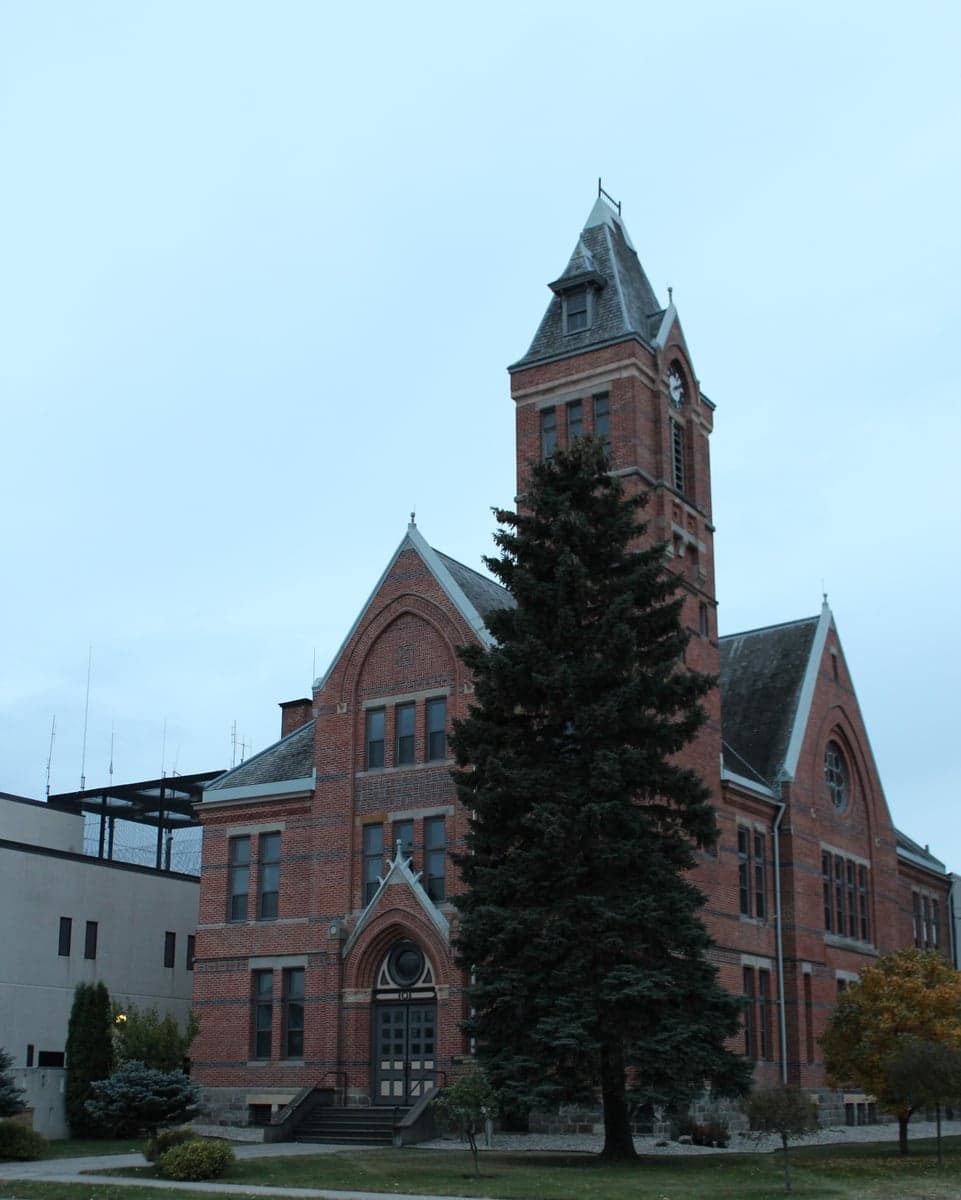
Photo: Wikipedia
Political ClimatePolitical Climate in Stutsman County
Showing state-level results — no local-only data available.
Local Political AnalysisPolitical Analysis of Stutsman County
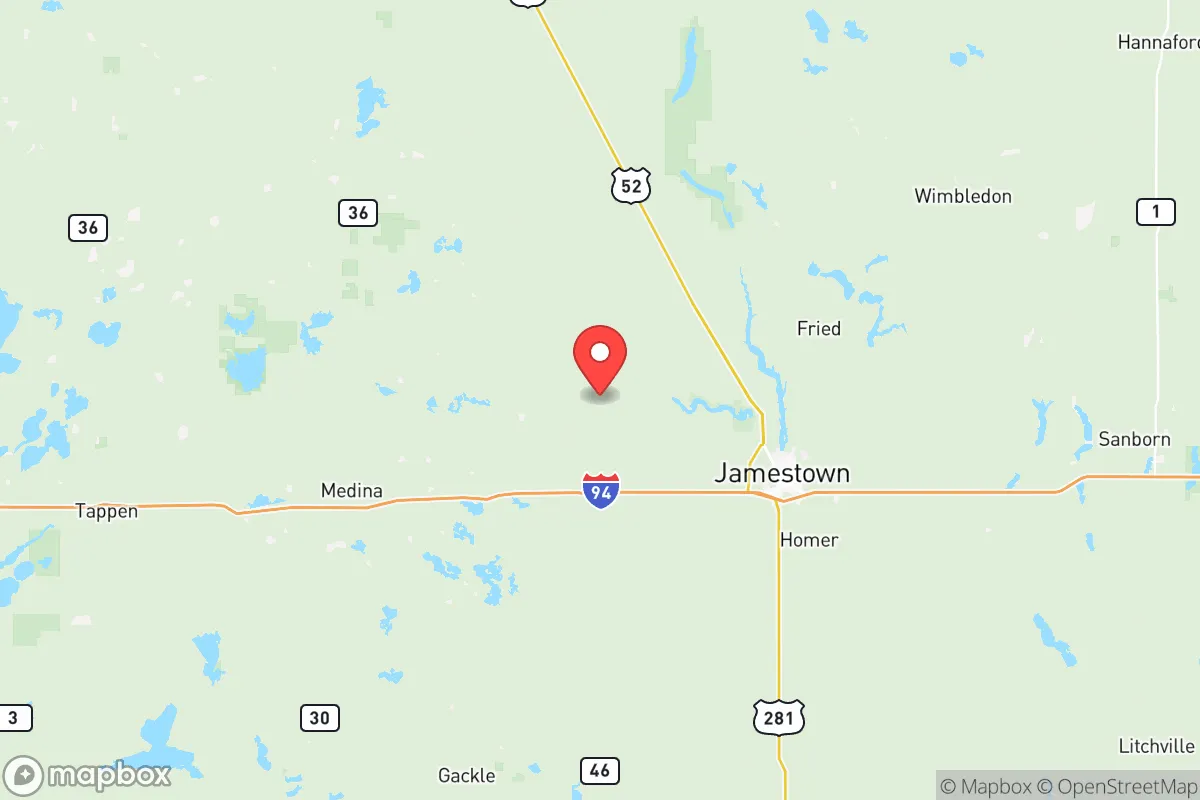
Stutsman County is a solidly Republican stronghold, with a Cook Partisan Voting Index (PVI) of R+18, meaning it votes about 18 points more Republican than the national average. This isn't a recent shift; the county has been reliably red for decades, though the margin has tightened slightly in presidential races since 2016 as the rural-urban divide has sharpened. The county seat, Jamestown, is the political and population center, and its precincts largely mirror the county's conservative lean, though the city's university area near the University of Jamestown and some downtown wards show a slightly more moderate or even Democratic-leaning tendency in local races. Outlying towns like Kensal, Pingree, and Buchanan are deeply conservative, often voting Republican by margins exceeding 70% in statewide contests. The only real "swing" precincts are in the rural townships immediately surrounding Jamestown, where farm policy and local infrastructure bonds can shift votes, but even those rarely break for Democrats in national elections.
How it compares
Compared to the rest of North Dakota, Stutsman County is slightly more moderate than the state's most conservative western oil-patch counties like McKenzie or Williams, which can hit R+30 or higher. But it's also notably more Republican than the state's eastern counties, like Cass (home to Fargo) or Grand Forks, which have larger urban and university populations and vote closer to R+10 or R+12. In the 2024 presidential election, Stutsman County gave the Republican ticket about 68% of the vote, while the state overall was around 67% — a near-perfect match. The key difference is that Stutsman's conservatism is more rooted in agriculture and small-town values than in the oil-driven libertarianism of the west. The county's Republican lean is stable, not trending further right, because there's little population growth or demographic change to disrupt the baseline. For context, the state's Cook PVI is not officially calculated, but based on recent results, it's estimated around R+20 to R+22, making Stutsman County a slightly less red mirror of the state as a whole.
What this means for residents
For conservative residents, Stutsman County is a comfortable place where their views on taxes, gun rights, and energy development are the mainstream. Local government, from the county commission to the Jamestown City Council, is dominated by Republicans, and policy debates tend to focus on fiscal restraint and agricultural support rather than social issues. For liberal or moderate residents, the political climate can feel isolating, especially in the smaller towns. There's no organized Democratic Party presence outside of Jamestown, and progressive candidates rarely run for local office. However, the county's political culture is generally pragmatic rather than ideological — people vote Republican, but they expect their representatives to deliver on roads, water projects, and hospital funding, not just party-line votes. The University of Jamestown provides a small but consistent liberal-leaning community, and the city's arts and nonprofit sectors offer spaces where political differences are less pronounced.
One cultural distinction worth noting is that Stutsman County's politics are deeply intertwined with the rhythms of farming and ranching. Policy debates here are less about national culture wars and more about crop insurance, ethanol mandates, and the cost of fertilizer. The county's Republican lean is reinforced by the fact that the Democratic Party has struggled to articulate a message that resonates with rural agricultural voters. In practice, this means that even in a deeply red county, there's room for independent-minded candidates who focus on local issues. The near-term future looks stable: Stutsman County will remain R+18 to R+20 for the foreseeable future, with no major demographic shifts on the horizon. The only wildcard is if Jamestown's population grows significantly, which could introduce more political diversity, but for now, the county's political character is set.

State Political ClimatePolitical Climate in North Dakota
State Political AnalysisPolitical Environment in the State
North Dakota is a deeply red state, with a Republican lean that has only intensified over the past two decades. In 2024, Donald Trump won the state by a margin of roughly 20 points, a shift from the 16-point margin in 2016, reflecting a consolidation of rural and small-town voters around the GOP. The state’s political identity is shaped by a mix of agrarian populism, energy-sector interests, and a strong libertarian streak, but the dominant coalition is now firmly conservative, with the Democratic-NPL (Nonpartisan League) party struggling to maintain relevance outside of a few tribal areas and the college town of Grand Forks. The trajectory since 2000 has been a steady march rightward, as the state’s oil boom in the Bakken region drew in a more conservative workforce and the national Democratic brand weakened in rural America.
Urban vs. rural divide
The political map of North Dakota is starkly divided between a handful of small urban centers and the vast, sparsely populated rural expanse. The largest city, Fargo, is the state’s most moderate area, but even it leans Republican—it voted for Trump by about 10 points in 2024, down from a 15-point margin in 2016, as the city’s growing population of younger professionals and college students at North Dakota State University has nudged it slightly left. Bismarck, the state capital, is reliably conservative, with a strong base of state employees and energy industry workers, while Minot and Williston, both in the oil patch, are deeply red, driven by a transient workforce of roughnecks and engineers who favor low taxes and minimal regulation. The rural counties, particularly in the western half of the state, are among the most Republican in the nation—McKenzie County, in the heart of the Bakken, gave Trump over 80% of the vote in 2024. The only blue dots on the map are the tribal reservations, like the Turtle Mountain Band of Chippewa in Rolette County and the Standing Rock Sioux Reservation in Sioux County, which vote heavily Democratic due to federal funding and tribal sovereignty issues. The divide is less about culture war and more about economic dependence: rural areas rely on agriculture and energy, both of which benefit from Republican policies, while Fargo’s diversifying economy—tech, healthcare, and education—creates a slightly more pluralistic electorate.
Policy environment
North Dakota’s policy environment is a textbook example of a low-tax, low-regulation state. There is no state income tax for individuals, a major draw for relocators, and the corporate income tax is a flat 4.31%. Property taxes are relatively high compared to the region, but the state offers a homestead credit for homeowners. The regulatory posture is business-friendly, especially for the energy sector—permitting for oil and gas drilling is streamlined, and the state has resisted federal environmental mandates. Education policy is locally controlled, with school choice limited to a few charter schools and a robust open enrollment system; the state has no voucher program, but homeschooling is lightly regulated. Healthcare is a mixed bag: the state expanded Medicaid under the Affordable Care Act in 2013, a move that was controversial among conservatives but has since been accepted, and the state has a strong network of rural hospitals. Election laws are among the most restrictive in the nation—voter ID is required, with a strict list of acceptable IDs, and same-day registration is not allowed. Absentee voting is available but requires an excuse, though the state has moved to no-excuse absentee voting in recent years. The overall posture is one of limited government, but with a pragmatic streak that has kept Medicaid expansion and a state-owned bank (the Bank of North Dakota) in place.
Recent policy direction
The last five years have seen North Dakota push further right on a range of issues, with the Republican supermajority in the legislature passing a series of laws that reflect a national conservative agenda. On gun rights, the state enacted constitutional carry in 2021, allowing permitless concealed carry, and has preempted local gun ordinances. On parental and education rights, the legislature passed a 2023 law banning instruction on gender identity and sexual orientation in K-3 classrooms, and a 2024 law requiring schools to notify parents of any changes in a student’s mental or physical health. Speech and privacy have been tightened: a 2023 law restricts public library content deemed “obscene” for minors, and a 2024 law requires social media platforms to verify the age of users. Medical and bodily autonomy is heavily restricted—abortion is banned after six weeks, with no exceptions for rape or incest, and a 2023 law prohibits gender-affirming care for minors. Property rights are strong, with a 2023 law limiting eminent domain for carbon capture pipelines, a flashpoint issue. Taxation has been cut further: the state eliminated the individual income tax in 2021, and the corporate rate was reduced in 2023. Voting access has been tightened: a 2021 law requires a Social Security number for voter registration, and a 2023 law bans ballot drop boxes. The direction is clear: a consolidation of conservative social policy and a continued rollback of taxes and regulations.
Civil unrest & political movements
North Dakota has seen its share of political flashpoints, most notably the 2016-2017 Dakota Access Pipeline protests at the Standing Rock Reservation, which drew thousands of activists from across the country and resulted in mass arrests and a heavy law enforcement presence. That event remains a touchstone for both environmental activists and tribal sovereignty advocates, and it has left a lasting divide between the state government and the tribes. More recently, the debate over carbon capture pipelines has sparked organized opposition from landowners and environmental groups, with protests in rural areas like Mercer County. Immigration politics are relatively quiet—the state has a small immigrant population, mostly in Fargo and Grand Forks, and no sanctuary policies. Election integrity controversies have been minimal, though the state’s strict voter ID laws have been criticized by Democrats as disenfranchising Native Americans. Secession or nullification rhetoric is rare, but there is a strong strain of anti-federal sentiment, particularly around land management and energy regulation. A new resident would notice a general political calm, with the exception of the occasional pipeline protest or legislative session that draws national attention.
Projection
Over the next 5-10 years, North Dakota is likely to remain deeply red, but with subtle shifts. The population is aging and slowly declining in rural areas, while Fargo and the oil patch are growing, driven by in-migration from other states. The Fargo metro area, which now accounts for nearly a third of the state’s population, will continue to moderate the state’s politics, but not enough to flip it—the city’s growth is attracting a mix of conservative-leaning professionals and a small but growing liberal base. The oil patch, meanwhile, is volatile; if energy prices stay high, the conservative tilt of the western counties will deepen, but a downturn could slow in-migration. The tribal populations are growing but remain a small share of the electorate. The biggest wildcard is the state’s aging population, which could push the state toward more moderate policies on healthcare and property taxes, but the Republican supermajority is unlikely to face a serious challenge. A relocator moving in now should expect a state that is politically stable, with a conservative policy environment that will only become more entrenched, but with a growing urban-rural divide that could produce occasional surprises in local elections.
For a new resident, the bottom line is that North Dakota offers a predictable, low-tax, and culturally conservative environment, but with a pragmatic streak that keeps things like the state-owned bank and Medicaid expansion in place. Conservatives will find a welcoming atmosphere with strong gun rights, school choice, and limited government, while liberals will face a hostile policy environment on social issues and a political culture that can feel insular. The key is to understand the urban-rural divide: Fargo is the most livable for a diverse range of views, while the rural areas are deeply traditional. If you’re looking for a place where your vote will matter in a national sense, this isn’t it—but if you want a state that is stable, affordable, and largely free of the political chaos of larger states, North Dakota delivers.
* Values derived from national, state, county, city and local statistics and may differ in a specific area. Last updated: 2026-07-09T16:45:49.000Z
Narrative content on this page is AI-generated and may contain mistakes. Verify any details that matter before acting on them.
ReloMaps may earn a commission from affiliate links at no extra cost to you.

