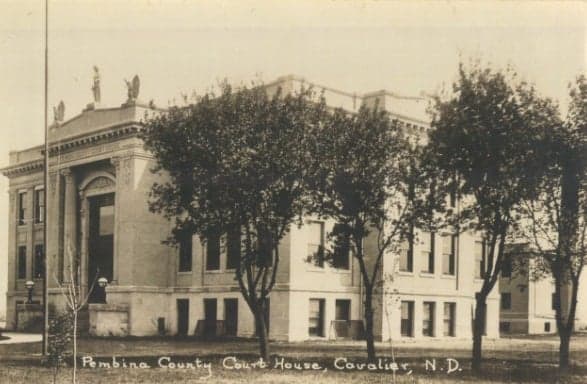
Photo: Wikipedia
Strategic Assessment of Pembina County
Strong survivability profile. Good buffer from population centers, with manageable environmental and tactical risks.
What does the Strategic Assessment tell us?
Our Strategic Assessment grades tactical survivability of an area. Major population centers, military targets, fallout zones, natural disasters, and border exposure all drive risk — lower exposure means a more defensible position in a crisis.
This is heavily inspired by Joel Skousen's Strategic Relocation book. Highly recommended you checkout the book ($)What does this tell us?
Our Strategic Assessment grades tactical survivability of an area. Major population centers, military targets, fallout zones, natural disasters, and border exposure all drive risk — lower exposure means a more defensible position in a crisis.
This is heavily inspired by Joel Skousen's Strategic Relocation book. Highly recommended you checkout the book ($)Strategic Pillars

Key Distances
Strategic Assessment Analysis
Pembina County, North Dakota, offers a unique strategic profile for those prioritizing resilience and self-sufficiency, largely due to its extreme northern location and low population density. Situated along the Canadian border and the Red River Valley, the county presents a blend of geographic isolation and access to critical infrastructure that makes it a serious consideration for disaster-preparedness-minded relocators. Its position away from major metropolitan centers and high-value strategic targets provides a baseline level of security that is difficult to find elsewhere in the continental United States.
Geographic position and natural advantages for long-term security
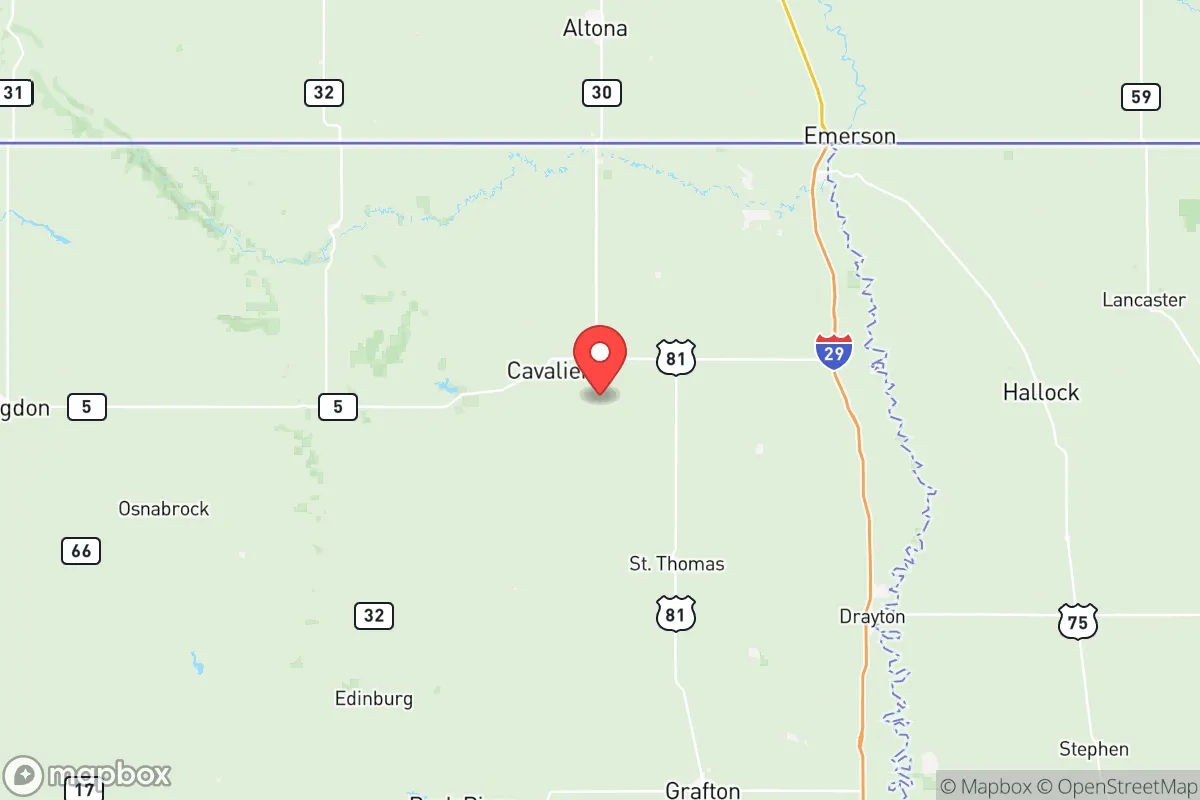
Pembina County's primary strategic asset is its location. The county sits at the northeastern corner of North Dakota, bordered by Minnesota to the east and the Canadian province of Manitoba to the north. The nearest major U.S. city is Grand Forks, roughly 70 miles to the south, while the nearest Canadian city of significance is Winnipeg, about 60 miles north. This buffer from large population centers—coupled with the county's own population of just over 6,800 people spread across 1,121 square miles—means a relocator is far removed from the immediate fallout zones of a major metropolitan area. The terrain is predominantly flat, agricultural land, which offers long sightlines and reduces the risk of natural disasters like wildfires or landslides. The Red River and the Pembina River provide a reliable surface water source, and the region's cold climate naturally limits the activity of pests and pathogens. For someone seeking a location with a low probability of being a primary target in a conflict, Pembina County's remoteness is a clear advantage.
Risks, exposures, and proximity to fallout-relevant landmarks
While Pembina County is distant from major cities, it is not without its own risk profile. The most significant man-made risk comes from its proximity to the Pembina County State Line Border Crossing, a major port of entry for commercial traffic between the U.S. and Canada. This crossing, along with the nearby Neche and Walhalla border crossings, could become chokepoints for movement or targets in a cross-border disruption scenario. Additionally, the county lies within the broader region of the Bakken oil fields, with pipelines and rail lines carrying crude oil through the area. A derailment or pipeline rupture near towns like Cavalier or Drayton could pose a localized environmental hazard. The flat, open terrain also makes the area vulnerable to severe winter storms, blizzards, and extreme cold, which can isolate communities for days. There are no nuclear power plants or major military installations within the county, but the Grand Forks Air Force Base (home to drone operations) is roughly 70 miles south, placing Pembina County on the periphery of any potential strike on that facility. The primary natural risk is flooding from the Red River, which has historically affected low-lying areas around Pembina and St. Thomas during spring snowmelt.
Practical resilience for a relocator: food, water, energy, and defensibility
For a relocator focused on self-sufficiency, Pembina County offers a strong foundation. The region is part of the fertile Red River Valley, one of the most productive agricultural zones in North America. Local access to grains, legumes, and livestock is excellent, and the county is dotted with small farms and rural homesteads. Water is abundant from the Red River and its tributaries, though well water quality varies and should be tested. The county's energy grid is connected to the broader regional system, but the low population density means that power outages from storms can take longer to repair. Wood for heating is available from the Pembina Gorge and other wooded areas, but the primary heating fuel is propane or natural gas. Defensibility is a mixed picture: the open farmland offers little natural cover, but the sparse population means a relocator can secure a property with good sightlines and limited neighbors. The county seat, Cavalier, has a small hospital and basic services, but for major medical care or specialized supplies, a drive to Grand Forks or Winnipeg is necessary. The local economy is tied to agriculture and border services, so a relocator should plan to be largely self-reliant for food production and medical preparedness.
Overall, Pembina County presents a viable option for the strategic relocator who values isolation and agricultural self-sufficiency over proximity to urban amenities. Its greatest strength is its low likelihood of being a direct target in a major conflict, balanced against the practical challenges of extreme winter weather and distance from advanced medical care. For a family or individual willing to invest in robust winter preparedness, off-grid energy systems, and a deep pantry, this corner of North Dakota offers a defensible, resource-rich environment that is hard to match in the lower 48. The key is to understand that resilience here means embracing the harsh climate and the necessity of self-reliance, not expecting the comforts of a suburban lifestyle.

* Values derived from national, state, county, city and local statistics and may differ in a specific area. Last updated: 2026-06-17T01:15:59.000Z
Narrative content on this page is AI-generated and may contain mistakes. Verify any details that matter before acting on them.
ReloMaps may earn a commission from affiliate links at no extra cost to you.

