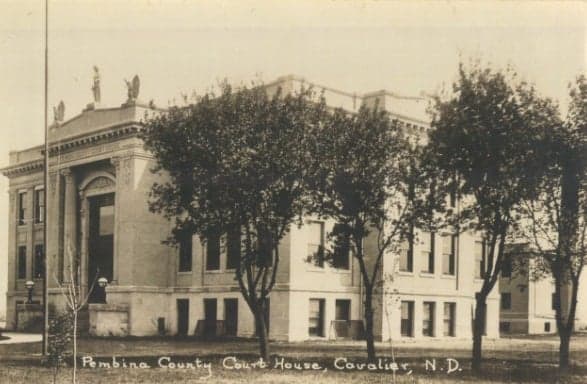
Photo: Wikipedia
Quality of Life in Pembina County
A livable area that tracks near national norms for affordability, walkability, and neighborhood health.
What does Quality of Life tell us?
Quality of Life measures an area by evaluating factors like cost of living, nearby amenities, country club access, airport proximity, socioeconomic signals and neighborhood character. For large states, this is a general average — quality of life can vary dramatically between metro areas, suburbs, and rural communities within the same state.
What does this tell us?
Quality of Life measures an area by evaluating factors like cost of living, nearby amenities, country club access, airport proximity, socioeconomic signals and neighborhood character. For large states, this is a general average — quality of life can vary dramatically between metro areas, suburbs, and rural communities within the same state.
Cost of Living
48% below national average
201%
The Real Cost of Living in Pembina County for 2026
| Tier | Individual | Family (4) |
|---|---|---|
| Survival | $11k | $21k |
| Comfortable | $23k | $33k |
| Luxury | $121k+ | $187k+ |
| Elite (Top 5%) | $144k+ | $224k+ |
Quality-of-Life Analysis
Pembina County, North Dakota, offers a distinct quality-of-life spectrum that ranges from the modest commercial hub of Cavalier to the quiet, unincorporated prairie settlements along the Canadian border. With a cost of living index of 52 — roughly half the national average — the county attracts a mix of agricultural families, border-service workers, and retirees seeking a low-cost, low-crime lifestyle. The character of daily life shifts noticeably between the county’s largest town, its smaller communities, and its deeply rural pockets, each appealing to different priorities around convenience, space, and community scale.
Largest town(s) & population centers
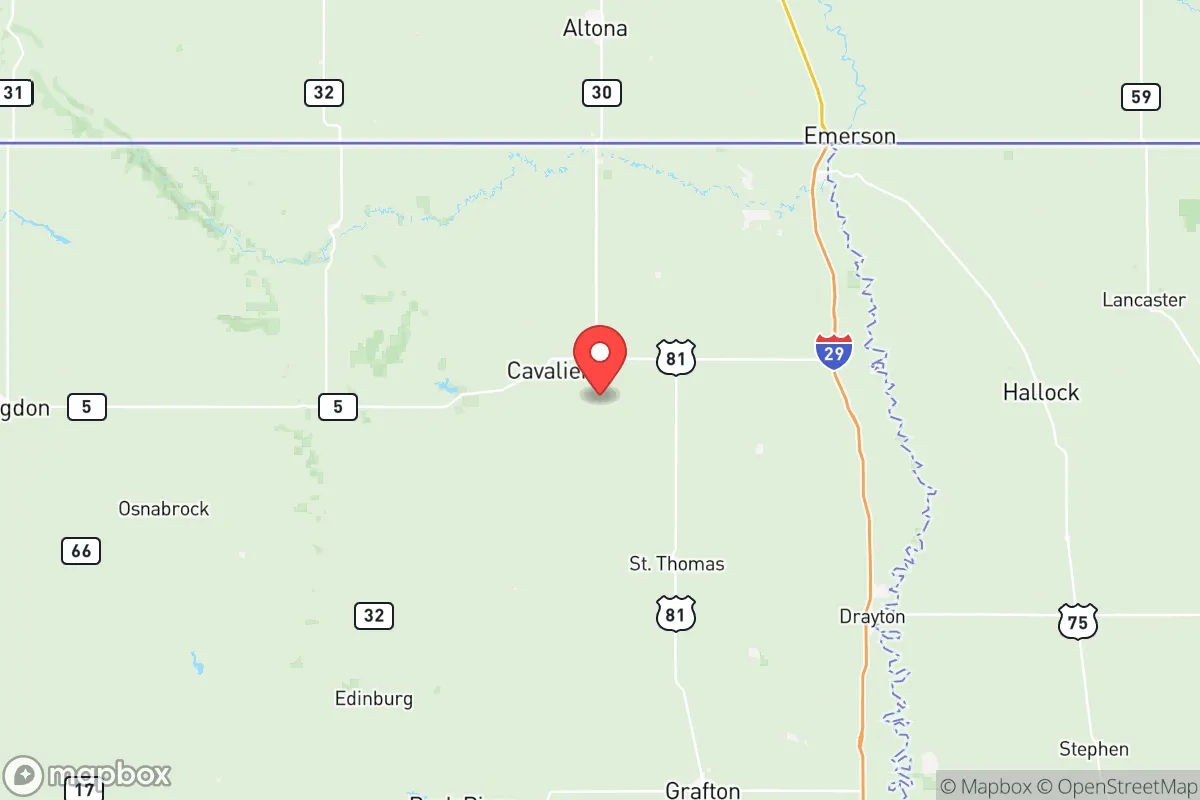
Cavalier, the county seat and largest town (population roughly 1,300), serves as the primary commercial and administrative center. Daily life here centers on a compact downtown with a grocery store, hardware store, medical clinic, and the Pembina County Courthouse. The town’s proximity to the Pembina Gorge State Recreation Area provides immediate access to hiking, mountain biking, and cross-country skiing, making it a draw for outdoor-oriented residents. Walhalla (population ~900), located along the Tongue River, is the second-largest population center and offers a similar small-town rhythm with a stronger agricultural identity, anchored by grain elevators and the Walhalla School District. Both towns provide essential services — K-12 schools, basic retail, and local healthcare — but residents typically drive 30–45 minutes to Grand Forks for major shopping, specialized medical care, or airport access. The average commute across the county is just under 18 minutes, reflecting how most employment — in farming, border customs, or local government — remains within the county itself.
Smaller towns & rural pockets
Beyond Cavalier and Walhalla, the county’s smaller communities offer a quieter, more isolated version of rural life. Pembina, the namesake town at the Canadian border (population ~500), is defined by the Pembina Port of Entry, one of the busiest land border crossings in the region. Daily life here is shaped by border-related employment and a sparse retail environment — residents often cross into Manitoba for groceries or fuel. Neche (population ~35) and St. Thomas (population ~300) are even smaller, with little more than a post office, a church, and a handful of homes. These pockets are overwhelmingly agricultural, with grain farming and cattle operations dominating the landscape. Unincorporated areas like Bathgate and Hamilton consist of scattered farmsteads and a few dozen residents, offering maximum privacy and minimal services. For those seeking land, quiet, and a self-sufficient lifestyle, these rural pockets provide some of the lowest property costs in the state — median home values sit at just $116,600 countywide, and many older farmhouses sell for well under $100,000.
Cost & lifestyle range
The cost of living in Pembina County is uniformly low by national standards, but the lifestyle trade-offs vary significantly by location. At the convenience end of the spectrum, Cavalier offers the most amenities — a grocery store, pharmacy, bank, and a small hospital — with median rents around $692 per month and home prices typically between $100,000 and $150,000 for a single-family home. At the opposite end, Neche or Bathgate offer virtually no local retail; residents must drive 20–30 minutes to Cavalier or 45 minutes to Grand Forks for basic errands. Housing in these areas can be strikingly cheap — a habitable older home on a few acres may sell for $50,000–$80,000 — but utility costs, septic maintenance, and winter heating can offset the savings. The lifestyle range is essentially a trade-off between convenience and solitude: Cavalier and Walhalla provide a functional small-town life with neighbors nearby, while the border towns and rural townships offer deep quiet and land at the cost of daily driving.
Pembina County is best suited for people who value low costs, outdoor recreation, and a slower pace — and who are comfortable with long drives for anything beyond the basics. Retirees on fixed incomes, remote workers with stable internet (fiber is available in Cavalier and parts of Walhalla), and agricultural families will find the county’s affordability and space unmatched. Those who need frequent urban amenities, diverse dining, or a fast-paced social scene will likely feel constrained. For the right resident, the county delivers a quality of life that is both inexpensive and deeply connected to the northern plains landscape.

Crime in Pembina County
Generally safer than 65% of comparable U.S. locations.
Violent CrimeViolent Crime Analysis
Property CrimeProperty Crime Analysis
Crime Analysis
Pembina County, North Dakota, is a rural border community where property crime rates are notably higher than the state average, while violent crime remains relatively low. The county recorded a violent crime rate of 234.1 per 100,000 residents and a property crime rate of 1,467.8 per 100,000 in the most recent reporting period. These figures place Pembina County in a mixed position: safer than many urban areas but with property crime concerns that residents in towns like Cavalier, Drayton, and Walhalla should take seriously.
Crime in context
Pembina County’s violent crime rate of 234.1 per 100,000 is slightly above the North Dakota state average of roughly 200 per 100,000 but remains well below the national average of approximately 380 per 100,000. The property crime rate of 1,467.8 per 100,000, however, exceeds both the state average (around 1,200) and the national average (roughly 1,300). This means residents face a higher-than-expected risk of theft, burglary, and vehicle break-ins, particularly in unincorporated areas and smaller towns with limited law enforcement coverage. The county’s location along the Canadian border and major highways like Interstate 29 contributes to transient traffic that can drive property crime, especially in communities near border crossings such as Pembina and Neche.
What residents experience
Daily life in Pembina County is generally quiet, but property crime is the primary safety concern for most households. Theft from vehicles, farm equipment theft, and burglaries of seasonal or vacant homes are the most common incidents reported to the Pembina County Sheriff’s Office. Violent crime is rare and typically involves domestic disputes or alcohol-related altercations rather than random stranger attacks. Residents in the county seat of Cavalier benefit from a more visible law enforcement presence and a tighter-knit community that helps deter crime, while smaller, more remote towns like St. Thomas and Bathgate may experience longer response times and higher vulnerability to property offenses. The county’s judicial system operates under the Northeast Judicial District, which covers a broad rural area; unlike some urban districts with progressive prosecutors, this district tends to apply traditional sentencing standards, which is a positive factor for public safety and victim justice.
Neighborhood-level variation
Crime risk in Pembina County varies significantly by location. The town of Pembina, situated directly on the U.S.-Canada border, sees elevated property crime due to its port of entry traffic and transient population, making it the highest-risk area in the county. Walhalla and Drayton also report above-average property crime rates, driven by their positions along major transportation corridors. In contrast, Cavalier and the rural agricultural areas surrounding Mountain and Akra experience the lowest crime rates, with violent incidents being extremely rare. For those considering relocation, choosing a home in or near Cavalier offers the best balance of safety and access to county services, while properties along the border corridor require more diligent security measures. Overall, Pembina County is a safe place to live by national standards, but newcomers should prioritize securing outbuildings, vehicles, and seasonal properties against theft.
* Values derived from national, state, county, city and local statistics and may differ in a specific area. Last updated: 2026-06-17T01:15:59.000Z
Narrative content on this page is AI-generated and may contain mistakes. Verify any details that matter before acting on them.
ReloMaps may earn a commission from affiliate links at no extra cost to you.

