Political ClimatePolitical Climate in Mclean County
Showing state-level results — no local-only data available.
Local Political AnalysisPolitical Analysis of Mclean County
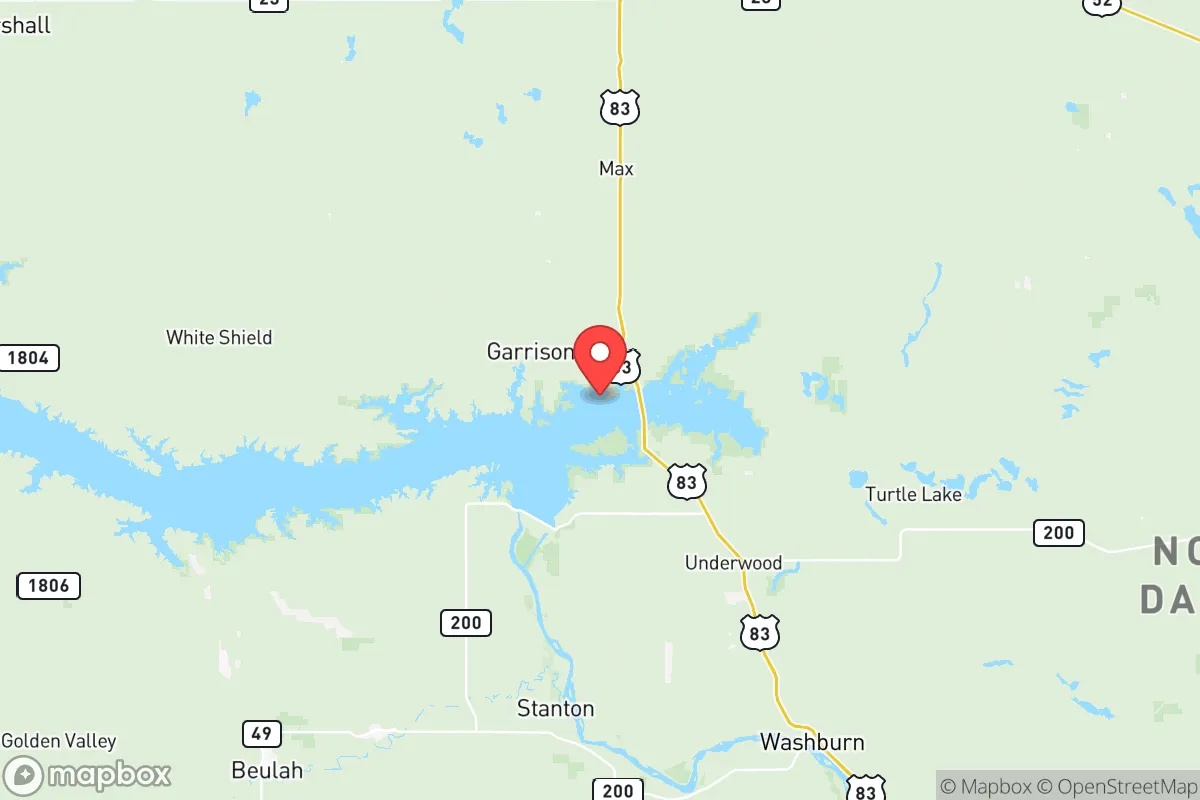
McLean County is a reliably Republican stronghold, with a Cook Partisan Voting Index (PVI) of R+18, making it significantly more conservative than the national average. The county has consistently voted for Republican presidential candidates by wide margins, and this trend has held steady in recent cycles, with no signs of a major shift toward the left. While the county is deeply red, there are subtle variations in political leanings across its communities, with the more populated areas like Washburn and Garrison showing slightly more moderate tendencies compared to the deeply conservative rural precincts around Turtle Lake and Underwood.
How it compares
Because North Dakota as a whole lacks a published Cook PVI, it's hard to make a precise statewide comparison, but McLean County is widely understood to be more conservative than the state average. The county's R+18 rating places it among the most Republican counties in the state, alongside areas like Slope and Golden Valley counties. In contrast, the state's few blue-leaning pockets—such as Grand Forks and Fargo—are far more liberal, but they have little influence on McLean County's politics. Within the county, the city of Washburn (the county seat) sometimes sees closer races due to a mix of government workers and a small but active Democratic-NPL presence, while Garrison (home to a large hydroelectric dam) has a union-influenced workforce that can produce slightly more competitive local elections. Meanwhile, the farming communities around Mercer and Coleharbor are reliably deep red, often voting Republican by 30-point margins or more.
What this means for residents
For conservative residents, McLean County offers a political environment where their views are the clear majority, with local government, school boards, and county commissions typically reflecting conservative priorities like limited regulation, support for energy development (especially oil and coal), and Second Amendment rights. Liberal residents, while a distinct minority, are not isolated; they can find community in the more moderate precincts of Washburn and Garrison, and the county's small size means that personal relationships often transcend political differences. The practical impact of the county's lean is most visible in policy: the county has resisted stricter land-use regulations, and local officials tend to prioritize agricultural and energy interests over environmental or urban-style development concerns. For newcomers, the political climate is straightforward—if you lean right, you'll feel at home; if you lean left, you'll need to be comfortable being in the minority, but you won't face hostility.
Culturally, McLean County's politics are intertwined with its identity as a rural, resource-based economy. The county is a stronghold for the state's oil and coal industries, and local sentiment generally favors energy development over environmental restrictions. This is a place where the "North Dakota nice" ethos tempers political disagreements—neighbors might disagree on national politics but still help each other with harvest or a broken-down truck. The county's trajectory is stable: there's no sign of a purple shift, and the R+18 rating is likely to hold for the foreseeable future, driven by an aging, predominantly white population and a economy tied to agriculture and energy. For anyone moving here, understanding that the political culture is deeply conservative but not aggressively partisan is key to fitting in.

State Political ClimatePolitical Climate in North Dakota
State Political AnalysisPolitical Environment in the State
North Dakota is one of the most reliably Republican states in the country, with a deep-rooted conservative lean that has only solidified over the past two decades. The state hasn't voted for a Democratic presidential candidate since Lyndon B. Johnson in 1964, and in 2024, Donald Trump carried it by over 20 points. The dominant political coalition is a blend of rural populism, oil-patch libertarianism, and traditional prairie social conservatism, with the state GOP holding supermajorities in both legislative chambers. Over the last 10-20 years, the biggest shift has been the near-total collapse of the old Democratic-NPL (Nonpartisan League) coalition, which once held real sway in the eastern farm counties and union-heavy towns like Grand Forks and Minot. That coalition has been replaced by a more uniform Republican dominance, though the state still has a strong streak of independent-mindedness that shows up in ballot measures and local elections.
Urban vs. rural divide
The political map of North Dakota is less about a sharp urban-rural split and more about degrees of rural conservatism. The largest city, Fargo, is the state's most politically moderate area, but even it leans Republican in most races. Cass County, home to Fargo and its suburbs like West Fargo, voted for Trump by about 15 points in 2024 — a margin that would be considered competitive in many states but is notably left of the rest of North Dakota. The state's second-largest city, Bismarck, is more conservative than Fargo, reflecting its role as the state capital and a hub for government and energy workers. The western oil patch, centered around Williston and Dickinson, is deeply conservative and reliably produces some of the highest Republican margins in the state, driven by a transient workforce that skews young, male, and libertarian-leaning. The northeastern corner, around Grand Forks and the Red River Valley, was historically a Democratic-NPL stronghold thanks to organized labor and sugar beet cooperatives, but that has faded significantly; Grand Forks County now votes Republican by double digits. The only real outlier is the Turtle Mountain and Standing Rock reservations, where Native American communities consistently vote heavily Democratic, though their population is too small to shift statewide results.
Policy environment
North Dakota's policy environment is shaped by a philosophy of limited government and low taxation, but with a pragmatic streak that reflects the state's agricultural and energy base. There is no state income tax, a major draw for relocators, and the state relies heavily on oil and gas revenue, property taxes, and sales taxes to fund services. The regulatory posture is business-friendly, particularly for energy extraction and agriculture, with a permitting process for oil and gas that is among the fastest in the nation. Education policy is locally controlled, with school choice options limited to charter schools and open enrollment within districts; there is no private school voucher program as of 2026. Healthcare policy has been shaped by the state's rural nature, with a strong emphasis on telemedicine and critical access hospitals, though the state did expand Medicaid under the Affordable Care Act in 2013 after a voter-initiated measure. Election laws are relatively straightforward: voter ID is required, but the state offers no-excuse absentee voting and early voting in many counties. North Dakota is the only state without voter registration — eligible voters simply show up with ID on election day, a system that has been in place for decades and enjoys broad bipartisan support.
Recent policy direction
The last few years have seen North Dakota's legislature push a distinctly conservative agenda, particularly on cultural and social issues. In 2023, the state passed one of the nation's most restrictive abortion bans, with exceptions only for rape, incest, and medical emergencies, after a trigger law took effect following the Dobbs decision. Gun laws are among the most permissive in the country: the state has constitutional carry (no permit needed for concealed carry), preemption laws that prevent local governments from enacting their own restrictions, and a "Stand Your Ground" self-defense law. On education, the legislature passed a bill in 2023 requiring schools to post curriculum materials online and allowing parents to challenge instructional materials, part of a broader parental rights movement. Property rights are strongly protected, with the state having a robust "right to farm" law that limits nuisance lawsuits against agricultural operations. On privacy and surveillance, North Dakota has been relatively hands-off, though the state did pass a law in 2023 restricting the use of facial recognition technology by law enforcement without a warrant. Voting access remains broad by national standards, with no major restrictions passed in recent sessions, though the state did tighten rules around ballot initiatives after a series of citizen-led measures on marijuana and Medicaid expansion.
Civil unrest & political movements
North Dakota has seen its share of political flashpoints, most notably the Dakota Access Pipeline protests at the Standing Rock Reservation in 2016-2017, which drew thousands of activists from across the country and became a national symbol of Indigenous rights and environmental activism. The protests were met with a heavy law enforcement response, including the use of water cannons in freezing temperatures, and left a lasting scar on the state's political landscape. Since then, the state has seen a quieter but persistent organizing effort from environmental and tribal groups, though no protests of that scale have recurred. On the right, the state has a small but active militia and constitutionalist movement, particularly in the western counties, though it has not produced the kind of visible confrontations seen in other states. Immigration politics are relatively low-key, as North Dakota has a very small foreign-born population, though there have been debates over refugee resettlement in Fargo and Bismarck, with some local opposition. Election integrity has not been a major flashpoint here; the state's unique no-registration system and relatively small population mean that election administration is generally seen as smooth and trustworthy, even by national standards. There is no serious secession or nullification movement in North Dakota, though the state has occasionally flirted with resolutions asserting state sovereignty over federal lands.
Projection
Over the next 5-10 years, North Dakota's political trajectory is likely to remain deeply conservative, but with some interesting undercurrents. The biggest demographic shift is the continued growth of Fargo and its suburbs, which are attracting younger, more educated residents from out of state, many of whom are moderate or even left-leaning. This could slowly moderate the state's politics at the margins, particularly on economic issues, but the effect will be muted by the fact that Fargo is already the most liberal part of the state. The oil patch is likely to remain a conservative bulwark, though its population is volatile and tied to energy prices. The rural areas, particularly in the east and north, are aging and losing population, which could amplify the conservative vote share even as the total number of voters declines. On policy, expect continued battles over abortion access, with potential ballot measures to restore some protections, and ongoing debates over property tax reform as the state's reliance on oil revenue creates boom-and-bust cycles. The state's political culture is likely to remain pragmatic on fiscal matters and deeply conservative on social issues, with a strong libertarian streak that resists federal overreach.
For someone moving to North Dakota, the practical takeaway is that you will be living in a state where conservative values are the default in both public policy and daily life. If you are a conservative, you will find a political environment that aligns closely with your views on taxes, guns, and regulation, with a government that is generally responsive to conservative priorities. If you are a liberal, you will find yourself in a clear minority, but not an unwelcome one — North Dakotans tend to be polite and live-and-let-live in personal interactions, even if the politics are lopsided. The lack of a state income tax and the relatively low cost of living are concrete benefits for anyone, regardless of political affiliation. The key thing to understand is that North Dakota's politics are not just about party labels; they are rooted in a culture of self-reliance, neighborliness, and a deep skepticism of government overreach that transcends left and right. That culture is likely to persist, even as the state's demographics and economy evolve.
* Values derived from national, state, county, city and local statistics and may differ in a specific area. Last updated: 2026-06-22T20:02:14.000Z
Narrative content on this page is AI-generated and may contain mistakes. Verify any details that matter before acting on them.
ReloMaps may earn a commission from affiliate links at no extra cost to you.

